Imagine printing your entire wardrobe at home. It sounds like science fiction, right? Yet the ability to 3D print clothes is becoming reality. This technology is already making waves from high-fashion runways to DIY workshops.
Can you actually 3D print clothes? Yes, absolutely. The process covers a wide spectrum. You can create fully-formed, intricate dresses printed as a single piece. Or you can print detailed patterns and logos directly onto traditional fabrics.
This guide explores how the technology works. We’ll look at its impact on fashion sustainability and the real challenges we still face. You’ll also learn how to start experimenting yourself. As experts in the fashion industry, we’ve seen firsthand how technology reshapes production. TZ Streetwear leads the way in exploring these new frontiers.
From Pixels to Polyester: How Does 3D Printing Clothes Work?
Understanding how to 3D print clothes starts with grasping a basic digital-to-physical workflow. The process transforms a digital design into a tangible object. This concept is revolutionizing how we create apparel.
The Basic Workflow: Design, Slice, Print
The process follows three simple steps. First, designers use CAD (Computer-Aided Design) software to create a digital file of the garment or textile. This is where creative vision takes shape. It’s much like how designers use modeling software to create a 3D model of the dress.
Next, this 3D model goes to a “slicer” program. The slicer cuts the digital model into hundreds or thousands of thin, horizontal layers.
Finally, the slicer’s instructions go to the 3D printer. The printer builds the object layer by layer. It extrudes molten material until the final piece is complete.
Two Core Methods in Fashion
Two primary techniques have emerged for creating 3D printed apparel in fashion:
- Printing Interlocking “Fabrics”: This method involves printing chainmail-like structures, flexible meshes, or interlocking geometric tiles. These pieces are printed from flexible filaments and often assembled into larger garments. The result is a textile with unique movement and structure that’s impossible to create with traditional weaving or knitting.
- Printing Directly onto Textiles: A more accessible approach is printing 3D designs directly onto existing fabric. A piece of fabric, like tulle or cotton, is secured to the printer bed. The printer then extrudes a design onto its surface. This adds texture, branding, and complex patterns to conventional clothing.
The Promise: Why 3D Printing is Called Fashion’s Sustainable Revolution
The excitement around 3D printed apparel isn’t just about futuristic looks. It’s rooted in the technology’s potential to solve the fashion industry’s most pressing problems. Sustainability and waste top that list.
Unprecedented Sustainability
Printing clothes to order fundamentally changes the production model. It eliminates the guesswork of mass production. Brands only create what has already been sold. This drastically reduces waste from unsold inventory that plagues the industry.
Additive manufacturing is also inherently material-efficient. Unlike subtractive methods, where patterns are cut from large fabric rolls creating significant waste, 3D printing only uses the exact amount of material needed. A European Commission study noted that this process could save up to 90% of natural resources. This is especially true when using recyclable and biodegradable materials like filaments derived from corn starch (PLA) or recycled plastics.
The Era of Hyper-Personalization
Imagine clothing that fits you perfectly, not just “off the rack.” With 3D printing, garments can be created to a person’s exact body measurements. These are captured via a simple 3D scan from a smartphone.
This opens the door for consumers to become co-creators. They can adjust designs, choose patterns, and have a garment printed specifically for their body and style. Fashion moves from a one-size-fits-all model to a one-of-a-kind experience.
Unleashing Design Complexity
3D printing frees designers from traditional manufacturing constraints. The technology can produce incredibly intricate geometric patterns, complex lattice structures, and organic forms. These would be impossible to cut and sew.
This freedom is why 3D printing revolutionizes fashion design and production. It allows for a new visual language in apparel that merges art, architecture, and technology.
The Reality Check: Can You Actually Wear 3D Printed Clothes?
The potential is immense. However, we must ground our expectations in current reality. As industry experts, we know the practical hurdles that prevent 3D printed clothes from filling every closet just yet.
The Challenge of Materials: Comfort and “Drape”
The primary limitation is the material. Most consumer-grade 3D printers use plastic filaments like TPU (Thermoplastic Polyurethane) and PLA (Polylactic Acid). While TPU is flexible, neither material can yet replicate the softness, breathability, or elegant “drape” of natural fibers. Cotton, silk, and wool remain superior in these areas.
A fully printed garment often feels more like a wearable sculpture. It’s stiff, heavy, and not ideal for everyday comfort. This is the biggest challenge for the future of 3D printing clothes.
Durability and Care: Can You Wash It?
Practicality is key. How do you care for a 3D printed garment? Washability is a major concern. Flexible TPU prints are relatively durable. But PLA can become brittle and warp or even melt in hot water or a tumble dryer. Hand-washing in cool water is typically required. This makes them less convenient than traditional clothing.
Cost and Speed: Mass Market vs. Haute Couture
Printing a single, complex dress can take hundreds, if not thousands, of hours. The cost of specialized filaments and sheer print time make it prohibitively expensive for mass production.
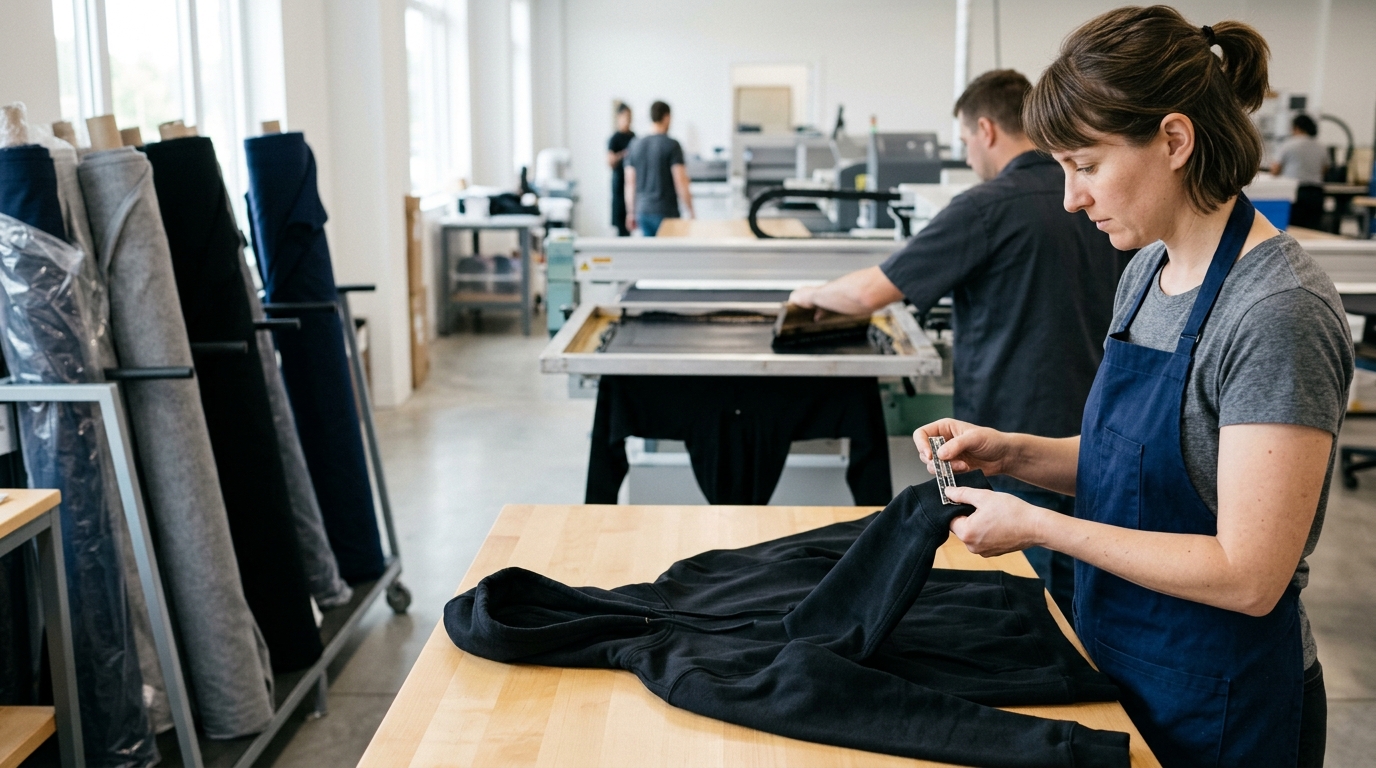
For large-scale graphic apparel, established techniques like screen printing are vastly more efficient and cost-effective. For brands considering production, understanding these trade-offs is essential. Exploring the full craft introduction of apparel manufacturing reveals the best tool for each job.
For standard items, the most practical solution remains partnering with an expert manufacturer. If you need a custom hoodie manufacturer, for example, traditional methods still provide the best balance of quality, cost, and speed.
Your First Project: A Beginner’s Guide to 3D Printing on Fabric
The best way to understand the potential and limitations of 3D printing clothes is to try it yourself. Printing directly onto fabric is an accessible and rewarding first project.
What You’ll Need: The Maker’s Toolkit
Getting started requires a few key items. You don’t need a high-end industrial machine. A standard desktop printer will work perfectly.
- Hardware: An entry-level FDM (Fused Deposition Modeling) 3D printer like a Creality Ender 3 or a Prusa Mini is perfect for this.
- Filament: Flexible filament is essential for wearable items. Thermoplastic Polyurethane (TPU) is the go-to choice due to its excellent flexibility and durability.
- Fabric: Tulle or other mesh-like fabrics are ideal for beginners. The molten plastic can easily flow through the holes and grip the material, creating a strong bond. A simple cotton T-shirt also works well.
- Software: You’ll need a 3D modeling tool and a slicer. For beginners, Tinkercad is a free, web-based modeling tool. For slicing, Ultimaker Cura or PrusaSlicer are industry standards and also free.
Step-by-Step: Printing Your First Design on a T-Shirt
Based on our hands-on experience, here’s a simplified workflow to get you started.
- Design Creation: In a program like Tinkercad, create a simple, flat design. A geometric pattern or your initials are great first choices. Extrude it upwards by 1-2mm to give it 3D thickness. Export the file as an .STL.
- Slicer Settings: Import your .STL file into Cura or PrusaSlicer. The key here is ensuring good adhesion. You may want to slightly increase the print temperature (by 5-10°C) and the flow rate (to 105-110%) for the first layer.
- Preparing the Printer: Use binder clips or painter’s tape to secure your T-shirt or fabric swatch to the printer’s build plate. Pull it taut and ensure there are no wrinkles. The nozzle can catch on them and ruin the print.
- The “Pause at Height” Trick: A common method is to print the first 1-2 layers directly on the print bed, then use a “Pause at Height” command in your slicer. When the printer pauses, you carefully place your fabric over the initial printed layers and resume the print. The printer continues printing on top of the fabric, locking it in place.
- Removal and Finishing: Once the print is finished and the bed has cooled, carefully unclip your fabric. You should have a crisp, flexible design permanently bonded to your T-shirt.
Pro-Tips and Common Mistakes to Avoid
- Tip: Always run a small test print on a scrap piece of the same fabric first. This helps you dial in your temperature and adhesion settings.
- Mistake: Using a stiff filament like PLA. It will feel like a solid piece of plastic and will likely crack or peel off when the fabric is flexed.
- Mistake: Not securing the fabric properly. If the fabric is loose, it will move during printing, causing a messy failure that looks like spaghetti.
The Future of Your Wardrobe: What’s Next for 3D Printed Clothes?
The technology to 3D print clothes is evolving rapidly. What seems experimental today may become commonplace tomorrow. Innovations in materials and processes drive this change.
Advanced Materials Science
The holy grail is developing new filaments that perfectly mimic traditional textiles. Researchers are actively working on bio-polymers, cellulose-based filaments derived from wood pulp, and other composite materials. These promise to deliver the softness, breathability, and drape we expect from our clothes.
“4D Printing” and Smart Textiles
The next frontier is “4D printing.” This involves printing with smart materials that can change their shape or properties when exposed to a stimulus like heat, light, or moisture. Imagine a jacket that tightens for a perfect fit in the cold. Or shoes that adapt their ventilation based on your body temperature.
Decentralized Manufacturing
The ultimate vision is a shift away from centralized, global supply chains. In the future, you might download a design from your favorite brand and have it printed at a local “fab lab” or even at home. This model of on-demand, localized production could dramatically reduce waste, shipping costs, and the carbon footprint of the fashion industry. It makes the concept of 3D printed clothing a true game-changer.
Frequently Asked Questions (FAQ) about 3D Printed Clothes
Is 3D printed clothing comfortable to wear?
It depends on the material and design. Garments made entirely of plastic filament can be stiff and less breathable. However, flexible filaments like TPU and designs printed on traditional fabric are becoming much more comfortable and wearable.
Can you wash 3D printed clothes?
Yes, but with care. It’s best to hand-wash in cool water. Some materials, like PLA, can warp with heat, so avoid hot water and tumble dryers. Garments made with TPU on fabric are generally more durable.
How much does it cost to 3D print clothes?
The cost varies wildly. A small design on a T-shirt might only cost a few dollars in filament. A full, complex dress from a high-end designer could cost thousands due to design time, expensive materials, and extremely long print times.
What is the best filament for 3D printing clothes?
Thermoplastic Polyurethane (TPU) is the most popular choice. It’s strong, flexible, and durable, making it ideal for creating wearable items that need to move with the body.
Will 3D printing replace traditional clothing manufacturing?
It’s unlikely to replace it entirely, especially for mass-market goods. Instead, 3D printing will likely coexist as a powerful tool for customization, haute couture, rapid prototyping, and creating unique, complex designs that are impossible with traditional methods.