A clothing supplier is a crucial factor for your brand to stand on the ground. It is often a challenge. The supplier that you use directly impacts the quality of the product, the costs involved, and the level of customer satisfaction.
This guide will let you learn how suppliers are by looking into various types of clothing suppliers. We will introduce the techniques you can use to locate them. We will also give you organized steps to make the right choice.
This strategy will help you establish a reliable supply chain. Having a strong collaboration with a well-performing clothing supplier is essential for your victory.
Grasping the Terrain: The Main Types of Clothing Suppliers
Before you dive into the research, you first need to become familiar with the main types of suppliers. Their operations are different from one another. Choosing the correct clothing supplier is the beginning. It has to fit your company’s goals and financial plan.
Wholesale Suppliers
Wholesale suppliers are vendors who sell blocks of finished clothing as a package to you. You sell these items with your own tags. This option is ideal for new stores that need the products quickly.
They come with lower minimum order quantities. This means you can buy a few items at first instead of thousands. The delivery time is thus, much accelerated.
The trade-offs consider that you are not allowed to rearrange the designs. The clothes can resemble those from other stores. Consequently, it can be difficult for your brand to be distinctive.
Clothing Manufacturers (Cut and Sew)
The manufacturers of clothing are the persons who create the custom clothes mainly. You can give them your own design, for example, in a tech pack. In this case, they are also called cut and sew.
So, you can enjoy the luxury of being the master of your designs. You can create unique pieces, thus empowering your brand.
Nevertheless, most of the time the manufacturers prefer large-order production or the so-called “minimum.” The making process is generally longer too. Some of the technical knowledge required from your side provides guidance on garment-making.
Dropshipping and Print-on-Demand (POD) Suppliers
This model means you don’t hold any inventory on the product yourself. When a customer orders a product, the supplier will make and send it directly to them.
This is the least risky and easiest way to start. You don’t need to manually pay for the upfront costs, it is flexible to try out many designs and ideas without obstacles.
You will make lower profits per item. Moreover, you cannot control the quality of the product and the shipping time. The items are a lot of times very basic such as t-shirts and hoodies.
Supplier Models Comparison
| Attribute | Wholesale | Manufacturer (Cut & Sew) | Dropship/POD |
|---|---|---|---|
| Customization Level | Low (Branding Only) | High (Full Design) | Low (Print Only) |
| MOQ | Low to Medium | High | None |
| Cost Per Unit | Medium | Low (at scale) | High |
| Profit Margin | Medium | High | Low |
| Scalability | Good | Excellent | Limited |
| Required Expertise | Low | High | Low |
Where to Locate Trustworthy Clothing Suppliers
By now, you should have a clear picture of the type of partner you want, and it’s time to start searching for them. Locating the right clothing supplier can be simple when you already know the places to check. Here are some of the best locations you can start searching for clothing suppliers.
Online B2B Marketplaces
Big online shopping sites are great for connecting your brand with thousands of suppliers. They are an easy start point for your research.
Alibaba is the king of the online marketplace for finding international suppliers. You can even get a supplier for almost any item. If you are a retailer looking for fashionable goods to sell without delay, sites like Wholesale7 and Tasha Apparel should be your priority because they offer fast-fashion alternatives.
Supplier Directories and Networks
These are the structured lists of suppliers often checked to measure quality. They can be more dependable than a wide-open marketplace.
Some companies are devoted to linking brands with the right factory. The use of supplier matching agencies or networks can be very effective. They usually have teams to manage the relationship on your behalf. This is especially beneficial if you are working with foreign partners.
Trade Shows and Industry Events
Trade shows are events where you will get to meet clothing suppliers. You will also have an opportunity to check their products’ quality with your hands and eyes. This is the best way to establish a true relationship.
Mega occasions like Magic in Las Vegas and Texworld in New York City are the biggest microscosmos of the textile industry featuring hundreds of manufacturers and wholesalers sharing one shelter. This is an excellent opportunity for you to meet a lot of potential partners.
Social Media and Professional Networks
You can also find new suppliers on social media. For example, use Instagram to search for hashtags such as #clothingmanufacturer or #wholesalesupplier. Many young and modern companies do their marketing online.
LinkedIn is another excellent resource. You can get in touch with people in the clothing sector. You can show a list of clothing suppliers you have found the most helpful so far.
The Executive Vetting Checklist: 7 Steps to Pick Your Best Partner
The search for suppliers is only the first part. The next step is to check them one by one thoroughly. According to our experience, the best agreements begin with a thorough checking procedure. Use this checklist to avoid typical pitfalls and to select a reliable clothing supplier.
Step 1: Adapt Communication & Professionalism

The first thing to do is to drop emails or messages to your preferable choices. The response rate is important. Is the response clear and professional? Well, an excellent partner would be more than happy to see you asking questions. Unclear communication or late replies during the negotiations would be a clear sign of things to come.
Step 2: Verify Business Legitimacy
Just conduct plain checks. Does the supplier have a website? What is the contact address and telephone number? Find out the business registration details to ascertain they are a true company.
Step 3: Analyze MOQs and Pricing Structure
Evaluate their most minimum orders to see if they are in line with your budget and business plan. Request for a detailed price list. Check if they have bulk buying discounts. Ask about all expenses for which you have to pay. They may be route setup or shipping taxes, etc.
Step 4: THE SAMPLE TEST
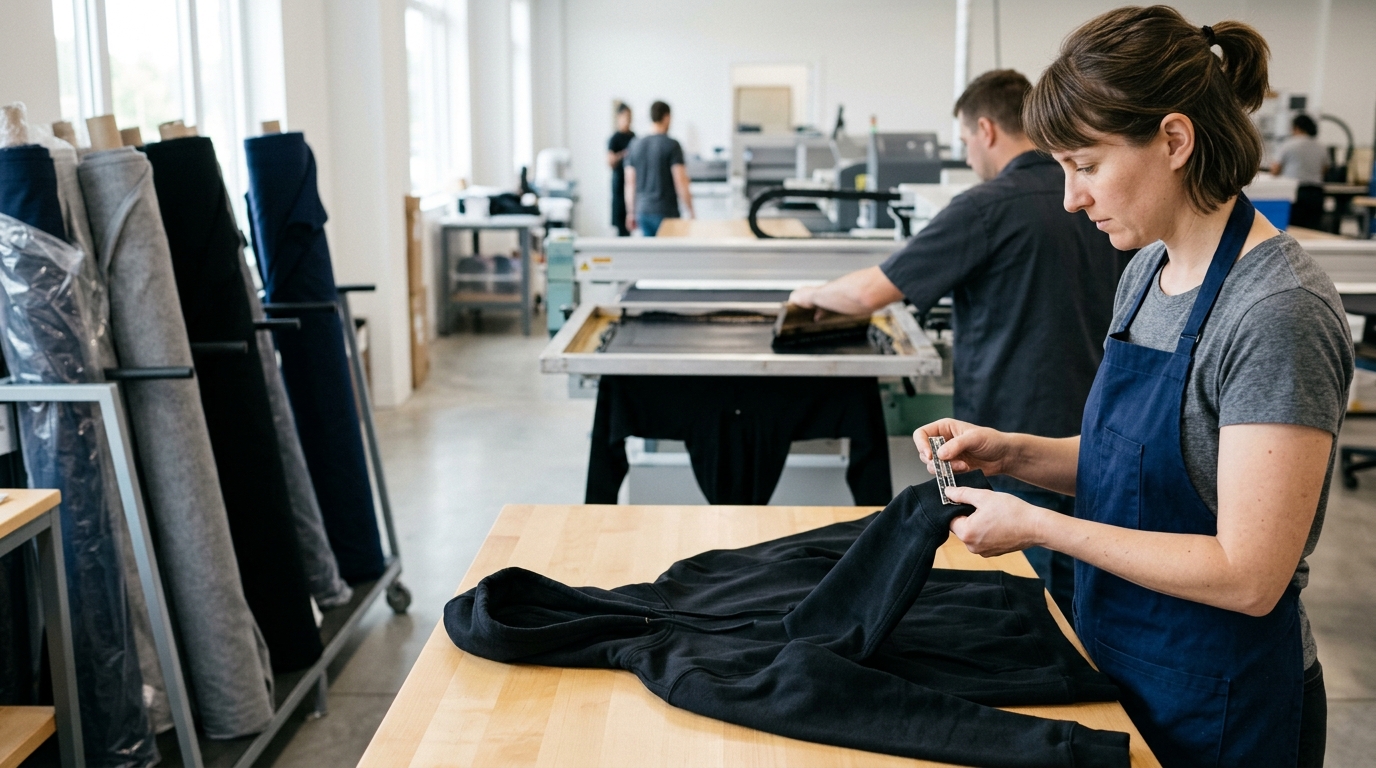
This is the most fundamental step. You must not place an order for bulk items without receiving a sample first. Check all the aspects when you get it. Examine the fabric’s quality, stitching, fit, color accuracy, and if a print is included, check its quality. This sample represents the best work they can do.
Step 5: Check Production Capacity and Lead Times
Inquire about their machine capacity. What is the volume of pieces they produce in a month? On the average, what is the ratio of the order time to the delivery time? You should look for a partner who can grow along with your business.
Step 6: Request References or Case Studies
A good clothing supplier is proud of their products. They should be able to share what other clients have said about their service. Getting the summary of other brand owner’s experiences can help you a lot.
Step 7: Understand Their Customization Capabilities
If you are making a unique product, you need a skilled partner. Ask what types of customization they offer. A full-service supplier like TZ Streetwear can handle everything from design help to production. The above example shows that the partner you are considering is a capable and experienced one.
How to Create a Long-Term Strong Supplier Relationship
Choosing a supplier is only the first step in the process. Thus, it is the start of a partnership. The way you manage this relationship will determine its success. A good relationship helps you run the business smoothly.
Communication is Key
Be explicit about your methods of communication. Remain the same and be kind. A good supplier is a partner so treat them accordingly. Do not be a biting customer who is continually imposing last-minute demands.
Provide Crystal-Clear Tech Packs
A tech pack is a detailed documment about your design. It is the best option to include all the measurements, fabrics, colors, and stitch types. Making sure that the apparel manufacturing company has a good tech pack is crucial for their design to be done correctly. This minimizes mistakes and saves time and money for everybody.
Co-Develop Products and Innovate
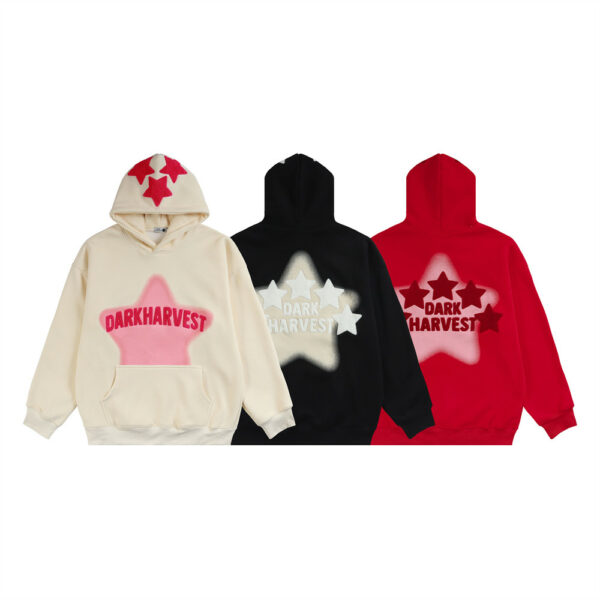
Regard your supplier as a team member. Seek their ideas on whether there are any new materials or production methods. When developing a product, a close working relationship with a custom hoodie manufacturer can result in a significant improvement in the final product. You can utilize their expertise as a resource.
Pay On Time, Every Time
This is the easiest way to build trust and in return, you become a valued customer. Settling your dues on time will also result in the orders you make being prioritized. It is a simple act of respect that will have a long-lasting impact.
Conclusion: Your Supply Chain is Your Foundation
Picking the correct clothing supplier is a careful procedure. It is not just about research and scrutiny; good relationship-building plays a vital role as well. Take your time; this is a critical process that you should not rush through.
The relationship you have with your supplier is the spine of your business. A solid and dependable partnership will in time be a ground to your success and growth in the clothing brand sector.
A Few Questions You Might Have about Clothing Suppliers.
What is a good MOQ for a starting clothing brand?
A good MOQ for a startup is typically between 50-200 units per style or color. This number is reasonable and manageable for a new business. Some suppliers may even offer a smaller number, but the cost per item is likely to be higher. Always make sure the minimum order aligns with your financial plan.
How much should I budget for samples?
It is usually the case that the price of a sample will be higher than the price of each piece in a bulk order. The common price for the sample is 1.5 to 3 times the bulk unit cost plus shipping. This additional cost is the supplier’s compensation for producing just one piece.
Should I use a domestic or overseas clothing supplier?
The decision is yours, and the answer depends on what you prioritize. A domestic supplier with faster shipping, easier communication, and better oversight of quality is the most suitable if you choose this route. On the other hand, an overseas supplier, usually from Asia, would benefit you the most due to the lowered production costs. But you should be prepared for longer shipping times plus language barriers with them.
What is a tech pack? Do I need one?
A tech pack is a complete guide that is designed for your clothing. It lists all the details like measurements, materials, colors, logos, and tags. When working with a clothing manufacturer to make a custom product, a tech pack is a must. It helps to prevent mistakes and guides your design ideas accurately into the real product.
Can I find clothing suppliers with no minimum order?
Yes, it is possible. Print-on-Demand (POD), as well as many dropshipping suppliers, have no minimum order, as they produce items one by one. Some wholesalers will also sell a few “pre-packs” containing a limited number of sizes. In truth, however, clothing manufacturers will generally require a significant minimum order before they can start production.


-600x600.jpg)