Did you know cotton makes up over 75% of the t-shirt market? It’s loved for its comfort, durability, and style. Choosing the right t-shirt material is key. It should look good and feel great against your skin.
Knowing about t-shirt materials is important. It helps you pick stylish t-shirts that are comfortable all day long.
We’ll look at the top t-shirt materials by softness and style. You’ll learn about tri-blend’s luxury and cotton’s classic appeal. Finding the right material can make your clothes more comfortable and stylish.
Key Takeaways
- Cotton remains popular for its balance of comfort and style.
- Tri-blend fabrics are recognized as the softest t-shirt material.
- CVC offers improved softness compared to traditional cotton.
- Understanding different fabrics helps in selecting stylish t-shirts.
- Factors such as breathability and moisture-wicking properties matter.
Understanding T-Shirt Materials
The market offers a wide range of t-shirt materials to meet different needs. A good t-shirt fabric guide helps us understand the differences. Natural fibers like cotton and linen are popular for their comfort and breathability.
For example, Upland cotton makes up about 90% of global cotton production. It’s known for being soft and durable. Egyptian cotton is celebrated for its high-quality long-staple fibers, making it a premium choice.
Pima cotton, including Supima®, is known for its superior quality and excellent printability. Organic cotton is softer than regular cotton and better for the environment.
Synthetic fabrics, like polyester and spandex, have their own benefits. Polyester is durable and good at wicking away moisture, making it great for athletic wear. It’s also wrinkle-resistant, which is a plus for casual and active wear.
Blended fabrics combine the best of natural and synthetic fibers. Ringspun cotton, for example, is finer, stronger, and softer than regular cotton. Knowing these fabric characteristics helps us choose the right material for our needs.
When picking t-shirt fabrics, consider factors like absorbency, breathability, and care needs. Fabrics like linen and flannel have unique benefits. Linen is hypoallergenic and breathable, while flannel is warm and cozy in winter.
The choice of fabric depends on the intended use. Some materials are better for casual wear, while others are more suitable for formal or athletic wear.
| Fabric Type | Characteristics | Ideal Use |
|---|---|---|
| Cotton | Soft, breathable, sustainable | Casual wear, business shirts |
| Polyester | Durable, moisture-wicking | Athletic wear, casual styles |
| Linen | Absorbent, breathable | Summer wear, casual outings |
| Flannel | Warm, soft | Winter clothing, loungewear |
| Blended Fabrics | Combines natural and synthetic benefits | Versatile for various occasions |
Why Comfort Matters in T-Shirt Selection
Comfort in t-shirts is key when picking out clothes. The right fit is essential. It’s important to think about your body shape and style preferences.
There are different fits like slim, classic, or relaxed. These fits cater to various body shapes, making you feel more comfortable.
Natural fibers like cotton and linen are great for warm weather. They are breathable and soft. Cotton absorbs moisture well, keeping you cool all day.
Synthetic materials like polyester are durable. They are lightweight and wick away moisture. This makes them perfect for both active and casual wear.
Blended fabrics offer the best of both worlds. They mix natural fibers with synthetic ones. This blend is soft, durable, and stretchy.
Brands are now using tri-blend fabrics. These have 50% cotton, 25% polyester, and 25% rayon. They are soft, breathable, and stretchy.
CVC blends are also popular. They mix cotton and polyester in different ratios. They are softer than traditional blends and cost-effective.
| Material Type | Comfort Level | Breathability | Durability |
|---|---|---|---|
| Cotton | High | Excellent | Moderate |
| Polyester | Moderate | Good | High |
| Tri-Blend | Very High | Excellent | High |
| CVC | High | Good | High |
| Linen | High | Excellent | Moderate |
Ranking T-Shirt Material for Softness
Understanding the softness of t-shirt materials involves looking at several factors. These include the fabric’s composition, weave, and weight. Knowing how these elements affect softness helps people choose the right shirts. The softness ranking shows the differences between tri-blend, CVC, and cotton fabrics.
Factors Affecting Softness
Several key factors influence the softness of t-shirt materials:
- Fabric Composition: The mix of fibers greatly affects softness. For instance, tri-blend fabrics, made of cotton, polyester, and rayon, are very soft.
- Weave Type: The way a fabric is woven can change its feel. Softer fabrics often have looser weaves.
- Fabric Weight: While heavier fabrics might not always feel softer, their weight impacts how they feel on the skin.
Comparative Analysis of T-Shirt Fabrics
Comparing leading t-shirt materials shows clear differences:
| Fabric Type | Softness Ranking | Key Characteristics |
|---|---|---|
| Tri-Blend | 1 | 50% cotton, 25% polyester, 25% rayon; soft and form-fitting. |
| CVC Cotton | 2 | 60% cotton, 40% polyester; softer than traditional blends. |
| Cotton | 3 | Classic softness from cotton plants; hypoallergenic and breathable. |
This fabric analysis for softness shows tri-blend fabric is often the softest. This ranking helps guide consumers to the softest t-shirt materials that meet their needs.
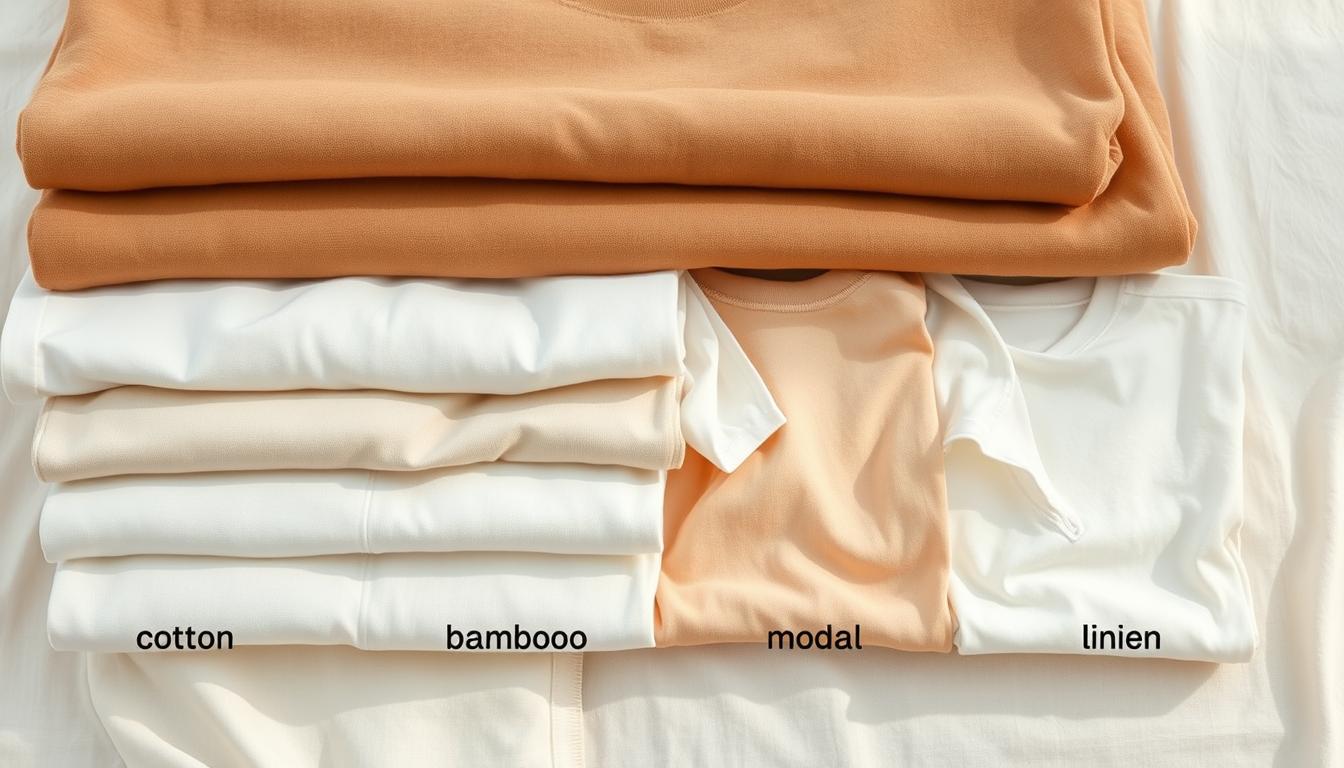
Top T-Shirt Material Choices for Style
Fashion t-shirts are key to personal style. The right fabric can make a big difference. It affects how the shirt feels and looks, which is vital for a stylish outfit.
Cotton is a top pick for its comfort and breathability. It works well for both formal and casual shirts. Oxford cloth is great for those who want something durable and elegant. It’s perfect for any occasion.
Linen is best for summer because it’s cool and breathable. It’s also good for people with sensitive skin. When it gets colder, flannel t-shirts keep you warm and cozy.
Twill fabrics have a special weave that adds class. They might be pricier, but they make any outfit look better. Polyester is more affordable and is often used in outdoor clothes because it dries quickly and doesn’t wrinkle.
Oversized tees are now trendy, showing that comfort and style can go together. Bamboo and hemp are becoming popular for their eco-friendly nature. Tencel is also a hit for its green credentials and luxurious feel.
Tri-blend and CVC fabrics are popular for their stylish looks. Tri-blend has 50% cotton, 25% polyester, and 25% rayon. It’s light and has a soft, heathered look. CVC has 60% cotton and 40% polyester, making it durable and soft. Knowing about these fabrics helps you make choices that are both stylish and comfortable.
Tri-Blend: The Softest T-Shirt Material
Tri-blend t-shirts are the softest fabric you can find today. They mix cotton, polyester, and rayon for ultimate comfort and style. Each material adds something special, making these shirts a hit with many people.
They are not just soft but also last long, perfect for daily wear.
Characteristics of Tri-Blend Fabrics
Tri-blend t-shirts usually have 50% cotton, 25% polyester, and 25% rayon. This mix makes a fabric that’s both light and feels luxurious. The tri-blend has:
- Lightweight and breathable – Great for hot weather and staying active.
- Heathered appearance – Looks fashionable and textured.
- Looser weave – Offers a comfy and relaxed fit.
- Silky feel – Rayon adds a silky touch and better drape.
These features make tri-blend t-shirts a top pick for those who want comfort and style. Most people love them, with 93% giving them four or five stars.
Best Brands Offer Tri-Blend Tees
Looking for the best tri-blend brands? American Apparel, Bella+Canvas, and Next Level are leaders. They’re known for their soft, fitting tees that meet high standards. Next Level, for example, recycles a lot of fabric, showing they care about the planet and quality.
Tri-blend t-shirts are not just trendy but also eco-friendly and comfy. For more info, check out the softest t-shirt material to help you choose.
CVC: Chief Value Cotton Explained
Chief Value Cotton, or CVC, is a great choice for those looking for quality without spending too much. It’s made of 60% cotton and 40% polyester. This mix makes CVC t-shirts soft yet strong, making them a favorite among many.
Knowing the benefits of CVC helps you choose the right shirt for your needs.
Benefits of CVC T-Shirts
CVC t-shirts have many advantages over regular cotton shirts:
- Affordability: CVC is often cheaper than pure cotton.
- Softness: The blend is softer than 100% cotton, perfect for everyday wear.
- Durability: Polyester makes the shirt last longer and resist wear and tear.
- Less Shrinkage: The polyester helps the shirt keep its shape after washing.
Popular CVC T-Shirt Options
There are many CVC t-shirts available, thanks to top brands. Here’s a table showing some of the best options:
| Brand | Model | Composition | Key Features | Price Range |
|---|---|---|---|---|
| Next Level | 3600 Cotton/Polyester T-Shirt | 60% Cotton / 40% Polyester | Soft fabric, retail fit, and side-seamed. | $10 – $15 |
| Gildan | 64000 Adult CVC T-Shirt | 60% Cotton / 40% Polyester | Classic fit, double-needle stitching. | $8 – $12 |
| Bella+Canvas | 3001CVC Unisex T-Shirt | 60% Cotton / 40% Polyester | Retail fit, super soft, and eco-friendly. | $12 – $18 |
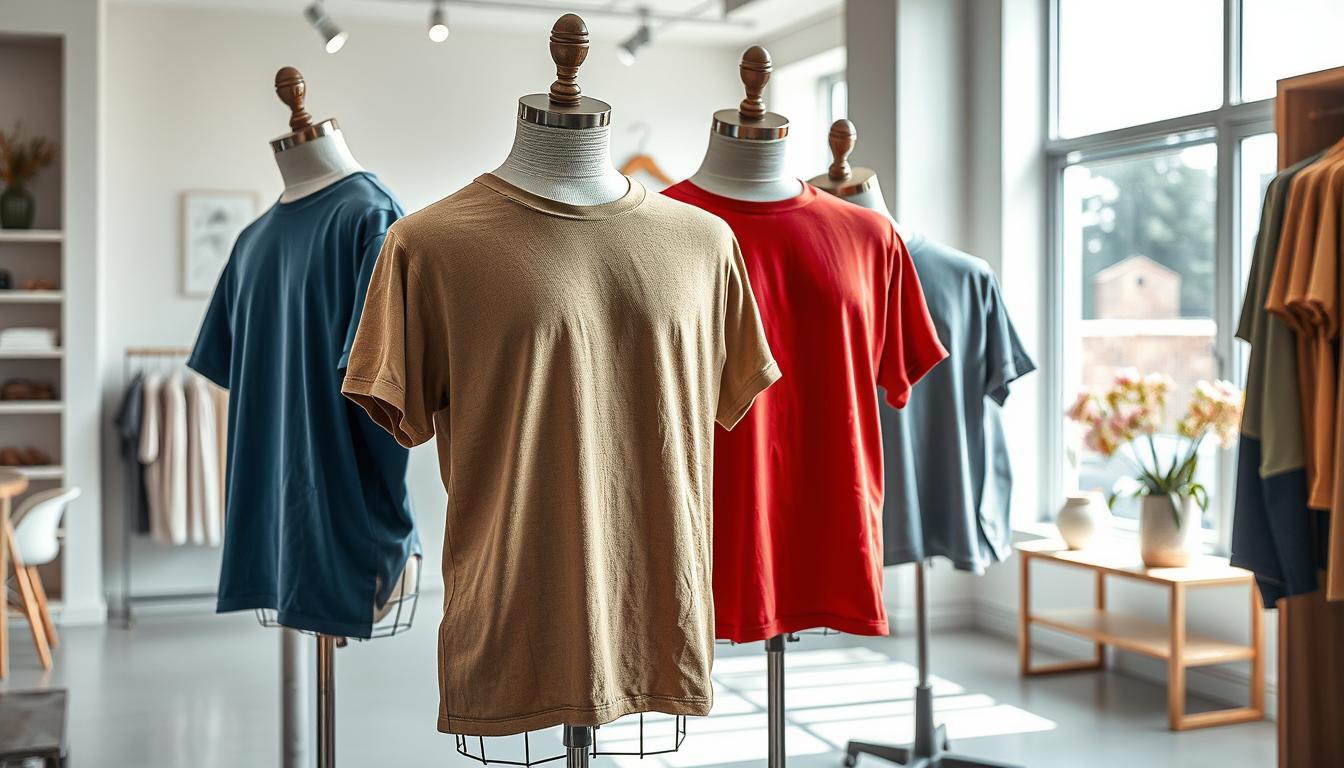
Traditional Cotton: The Classic Choice
Traditional cotton is at the heart of classic cotton t-shirts, loved for its comfort and ability to breathe. The benefits of cotton fabric are many, making it a top pick for t-shirt designs. It’s great at soaking up moisture, keeping wearers cool in warm weather.
Cotton has long been the gold standard for t-shirt materials. Its ability to hold vibrant designs well is unmatched. Traditional t-shirts fit right in for everyday wear, work, and even special events.
Yet, cotton has its downsides. It can wrinkle and shrink when washed or dried with too much heat. Taking good care of your cotton tees can help avoid these problems, keeping them looking and feeling great.
| Feature | Benefits of Cotton Fabric | Limitations |
|---|---|---|
| Breathability | Excellent moisture absorption | Wrinkles easily |
| Comfort | Soft feel against the skin | Can shrink if not cared for properly |
| Print Compatibility | Allows for vibrant designs | May not be as durable as synthetic blends |
Classic cotton t-shirts are a big hit in the market, mixing comfort with style. Brands like Gildan are known for their quality and wide range. So, classic cotton t-shirts are a must-have in any wardrobe.
Benefits of Polyester in T-Shirts
Polyester t-shirts are popular for good reasons. They are strong and last long, perfect for outdoor activities or working out. Polyester also pulls moisture away from your skin, keeping you dry when you’re sweating a lot.
Durability and Moisture-Wicking Properties
Polyester is very durable, better than many other fabrics. It doesn’t wrinkle easily, making it great for t-shirts and outdoor gear. Plus, it’s easy to care for because it dries fast and needs less maintenance.
Even though polyester isn’t as breathable as natural fibers, it’s good for outdoor use. It keeps you cool and dry during exercise or in warm weather. It might hold smells longer than cotton, but it’s a trade-off for its benefits.
Mixing cotton and polyester can make a fabric that’s both comfy and durable. Polyester t-shirts are essential for anyone who values both style and function in their workout clothes.
Choosing the Right Blend for Your Needs
Understanding t-shirt fabric blends is key to picking the right material. The mix of fabrics affects comfort, durability, and how well the shirt wears. For example, tri-blend shirts are popular. They mix 50% cotton, 25% polyester, and 25% rayon. This blend is soft, breathable, and great for all-day wear.
Understanding Blend Ratios
Knowing the fabric blend ratios is important when buying a t-shirt. The table below shows common blends, their ratios, and benefits:
| Fabric Type | Blend Ratio | Key Benefits |
|---|---|---|
| Tri-Blend | 50% Cotton, 25% Polyester, 25% Rayon | Exceptional softness, breathability, and comfort |
| CVC (Chief Value Cotton) | 60% Cotton, 40% Polyester | Soft feel, durable fabric, enhanced breathability |
| Cotton-Polyester | 50% Cotton, 50% Polyester | Wrinkle resistance, durability, and easy care |
| Cotton-Spandex | 95% Cotton, 5% Spandex | Stretchy, fits well, and feels comfortable |
| Rayon Blend | Various Ratios | Breathable, wicks moisture, and feels cool |
Common Blended Fabric Types
There are many t-shirt fabric blends for different needs. Here are some popular ones:
- Cotton-Polyester: Durable and wrinkle-free, good for any occasion.
- Tri-Blend: Soft and comfy, perfect for casual wear.
- CVC: Soft and durable, ideal for daily use.
- Flannel: Warm and stylish, great for cooler weather.
- Linen: Breathable and hypoallergenic, perfect for hot weather.
Conclusion
Choosing the right t-shirt material is key for comfort and style. We’ve looked at top materials like Tri-blend, CVC, and cotton. Tri-blend is the softest, CVC is comfy and durable, and cotton is breathable.
When picking a t-shirt, think about how you’ll use it. Do you want something casual for everyday or something fancy for events? Knowing what you need helps you choose the right fabric. Look for quality from brands like TUOZHEN and Aika Sportswear. For more info, check out this resource.
Making smart choices makes your wardrobe better. By understanding these materials, you can pick the best for any day. Take charge of your t-shirt shopping and feel great in your clothes every day.
FAQ
What are the best t-shirt fabrics for comfort?
Natural fibers like cotton and linen are top choices for comfort. They are also great when blended with other materials. These blends, such as tri-blend and CVC, offer softness and breathability.
How do I choose the right t-shirt material for athletic activities?
For sports, synthetic materials like polyester and spandex are best. They are durable and keep you dry. Blends that include these can improve fit and performance.
What is the difference between CVC and regular cotton?
Chief Value Cotton (CVC) is a mix of 60% cotton and 40% polyester. It’s softer and more durable than regular cotton. Plus, it’s often cheaper without losing comfort.
Are tri-blend t-shirts worth the price?
Yes, tri-blend t-shirts are worth it. They combine cotton, polyester, and rayon for unmatched softness. This blend ensures a cozy fit, making them a smart choice for style and comfort.
What should I consider when selecting a fabric blend?
Think about the mix of materials and how they affect the shirt’s feel and durability. Blends like cotton-polyester or cotton-spandex serve different needs. Choose based on your lifestyle.
Why is moisture-wicking important for t-shirts?
Moisture-wicking materials, like polyester, keep you dry during exercise. They draw sweat away from your skin. This helps control temperature and boosts comfort.
Can I find fashionable t-shirts that are also comfortable?
Definitely! Stylish t-shirts often use lightweight rayon blends or tri-blend. These materials are soft and look good. Look for designs that focus on fit and style.