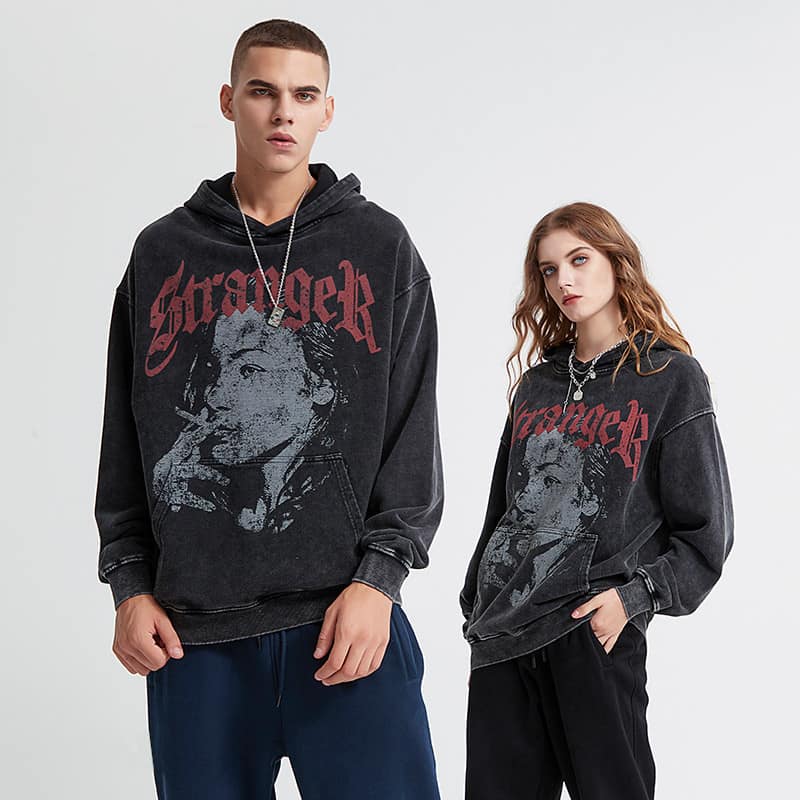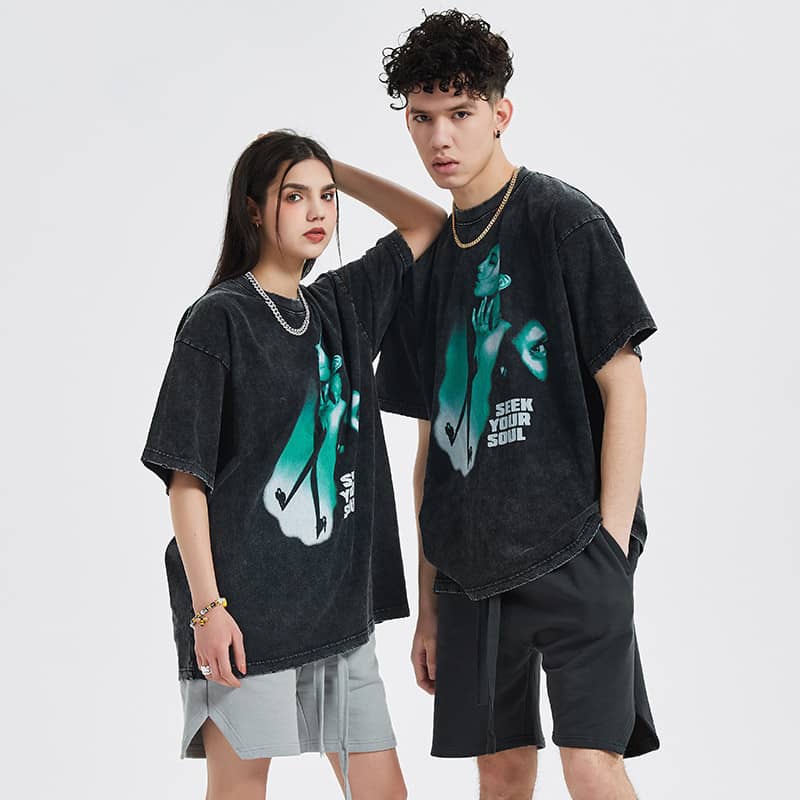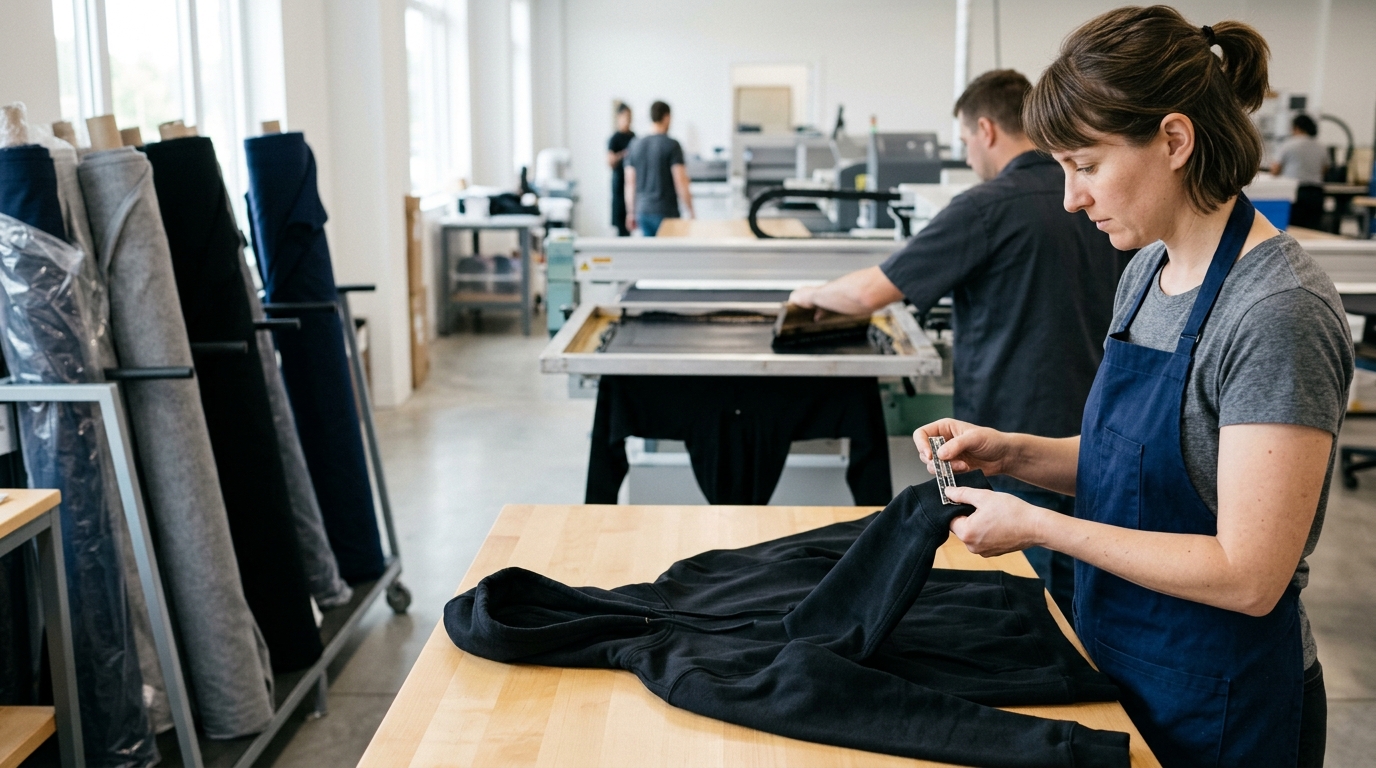
Do you have a really cool design? Now your main task is to find the correct way to apply it to the hoodie or t-shirt perfectly. The custom apparel industry basically lives on several formidable clothing print technologies. Choosing the right one seems like a very complex task.
There are mainly three key players in the industry: Screen Printing, Direct-to-Garment (DTG), and Direct-to-Film (DTF). Each has merits. The purpose of this guide is to explain the clothing print methods and clear the air for you. The information you will learn will help you decide based on your design, budget, fabric, and order size.
Every fashion creator should have a basic understanding of the key textile printing techniques. At TZ Streetwear, we offer brands these references every day. We help to convert great ideas into quality, wearable products. Our guide has practical expertise built-in to support your brand.
The Central Clothing Print Methods: A Comparative Examination
Before you choose the right technology, you need to get a better picture of the prevailing trends. This is the basis for your informed choice. The initial viability of each method depends on the perception of the costs, convenience, the feel obtained, and its properties including design capabilities. Let us now look at the most popular ones.
Screen Printing: The Traditional Bulk Player
Screen printing involves forcing the ink through a mesh screen that lays on top of the fabric. This is similar to a stencil. For each color, there will be a separate screen. The time-consuming process of setup is caused by this.
- Suitable for: Large quantities (50+ units), simple designs that only need a few colors, and bold logos that add to the eye-catchiness.
- Perks: The most cost-effective way to print for massive orders, extremely durable prints, and bright colors on dark shirts.
- Cons: High setup costs, works only for simple color designs or complicated photos with multiple colors, and requires minimum order quantities.
Brands in bulk need to investigate the details about high-quality screen printing. This will ensure your bulk orders are correct.
Direct-to-Garment (DTG): For Photorealistic Detail
Direct-to-Garment (DTG) works like a high-tech inkjet printer for clothes. A printer sprays water-based inks directly onto the shirt. The fabric fibers absorb the ink. This creates incredible detail.
- Best For: Details like complex, multi-color designs, images, gradients, small batches, and one-off custom prints.
- Pros: Superior detail and color range, a soft feel, and no setup costs per design.
- Cons: It is costly for large quantities, it works best on pure cotton, and dark colors can appear dull on fabrics without the proper white base.
Direct-to-Film (DTF): The All-Rounder and Newcomer
Direct-to-Film is a new technology riding on a popularity wave. The process is a transfer print of the design image onto a special film, which is then posterized with adhesive powder and pressed on the shirt with heat.
- Best For: Many vibrant fabrics (cotton, polyester, blends), small to medium runs, designs that stretch.
- Pros: Very versatile as it works on any fabric and color combination, looks spectacularly colorful, and creates resilient flexible prints.
- Cons: It feels a little bit smooth and plastic-like compared to DTG, and it is not as breathable.
Dye Sublimation: For Big, Impression-making Prints
Dye sublimation takes advantage of molecular physics to transfer the dye from its solid state through a gas to an object in the form of particle clusters. The result is a permanent dye that is stronger than a standard ink. This clothing print method is the only one you can find which offers such unique features.
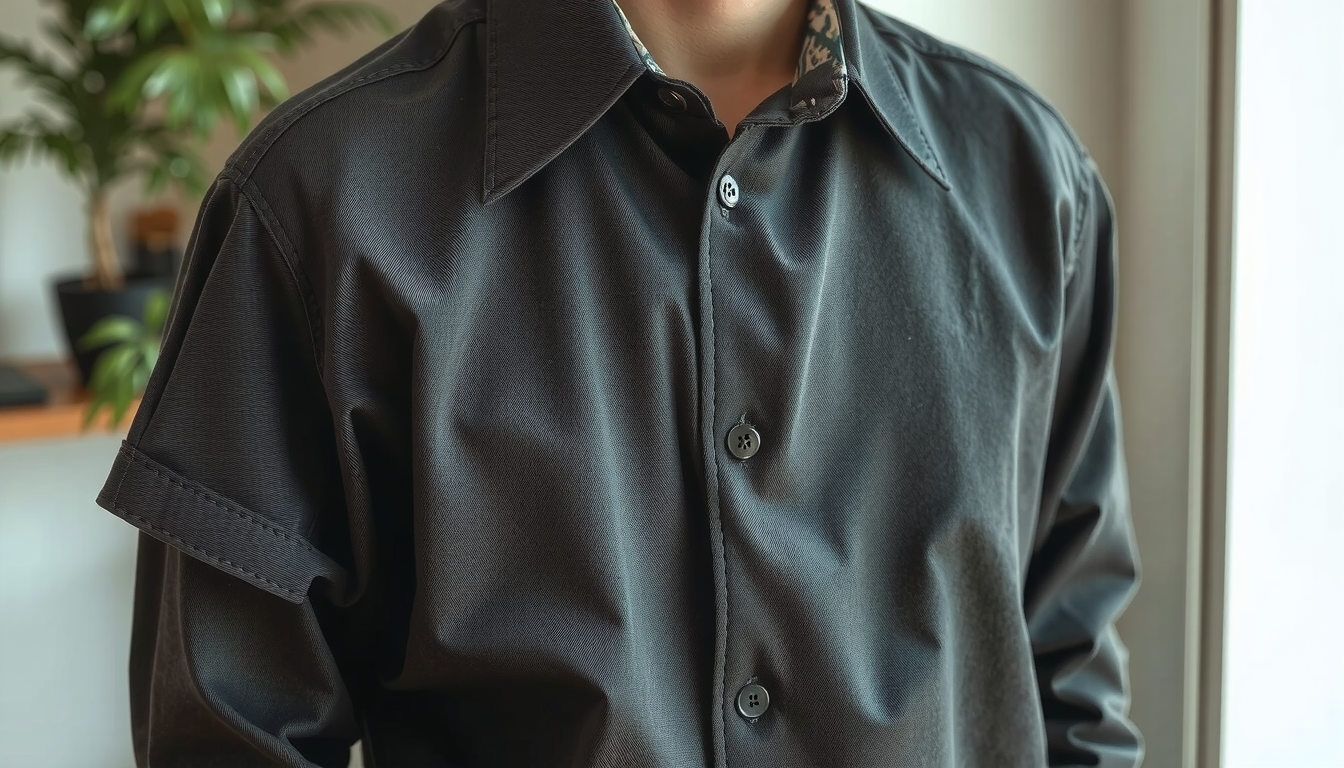
- Best For: All-over-designed (AOD) sportswear, items made from 100% polyester or high-polyester blends, and applicable for sublimation in the entire garment.
- Pros: The print is completely permanent and will not crack, peel or fade. The material is really soft and has no texture.
- Cons: It can only be applied to light-colored polyester-demographic fabrics. It will not work on cotton.
How to Decide the Best Clothing Print Method: Your Guideline for Decision Making
Learning the methods is one step ahead. Finding the proper one for your project is the real challenge. We established a simple framework to be your guide. Thus, you will adjust your clothing print selection to match your targets.
The 5 Key Factors in Your Decision
Bear these factors in mind while deciding on the method. They will guide you in narrowing down the choices.
- Order Quantity: Need only one test shirt or plan a 500-piece run? DTG/DTF is great for small orders. The screen shines for bulk orders.
- Design Complexity: A simple logo that is one-color or full-color a photo? Screen printing is good with simple graphics. DTG wins in section complex design.
- Fabric Type: What is the fabric of the shirt you want to use? DTG prefers 100% cotton. Sublimation requires polyester. DTF works with almost anything.
- Desired Feel and Durability: Would you rather a print that is soft and part of the fabric (DTG, Sublimation) or a bold and durable top-layer (Screen Print, DTF)?
- Budget: Stay away from setup fees for small projects (DTG/DTF)? Or reduce per-piece cost on large orders (Screen Print)?
The Ultimate Clothing Print Comparison Chart
We have consolidated these factors into a comparison chart. Having the information on printing types in one place is a big help to brand planning.
| Printing Method | Best for Quantity | Design Complexity | Fabric Compatibility | Feel/Durability | Typical Cost |
|---|---|---|---|---|---|
| Screen Printing | 50+ | Low (1-4 colors) | Cotton, Blends, Poly | Thick, Very Durable | Low per piece at scale |
| Direct-to-Garment | 1-50 | High (Full Color) | 100% Cotton (Best) | Very Soft, Good Durability | Moderate per piece |
| Direct-to-Film | 1-100+ | High (Full Color) | Almost Any Fabric | Smooth, Very Durable | Moderate per piece |
| Dye Sublimation | 1-100+ | High (Full Color) | 100% Polyester (Light) | No Feel, Permanent | Moderate per piece |
A Brand Owner’s Guide on Print Selection
The clothing print method selection is more than a brand owner’s technical choice. print is defining the product. Here are some strategic questions we want our partners to think about.
- “Who is my customer?” Are they going to buy a comfy, soft printed hoodie indicating the use of DTG? Or a bold, screen printed event shirt that is more appropriate? The experience of the end-user is the number one factor.
- “What is my business model?” Is the method of avoiding stock using print-on-demand? DTG and DTF are brilliant. Do you plan to keep inventories for faster shipping and lower costs? Standard screen printing for bulk orders is the way to go.
- “What garment am I printing on?” A 100% cotton shirt has different options than a polyester blend hooded sweatshirt. For personalized hoodies, engage a proficient hoodie manufacturer who is versed with material and print details.
From Concept to Closet: Your In-Store Clothing Print Workflow
Outstanding ideas need great delivery. A professional pre-production setup will guarantee your design to be 100% right from the screen to the fabric. This would definitely save you from mistakes that would cost a lot.
Preparing Art for a Flawless Print
To do professional clothing print, you have to ensure that your artwork is of good quality. There are no exceptions.
- File Types: For designs with clean lines and solid colors like logos, use Vector files (AI, EPS, SVG). They scale infinitely without losing quality. For photos or detailed art, use PNG or PSD.
- Resolution: This is crucial especially when it comes to all images that need to be created at a minimum of 300 DPI at the final print size. This can be a preventative measure for blurry, pixelated results.
- Color Mode: You view RGB colors on your screen, but printers use CMYK. Convert files to CMYK for more accurate final printed colors.
- Transparency: For DTG and DTF printing, your design file (usually PNG) needs a transparent background. Otherwise, you’ll get a solid color box around your artwork.
Working With a Manufacturer
A clear communication with your print partner is key. This is how you come up with the exact thing that you have in your mind.
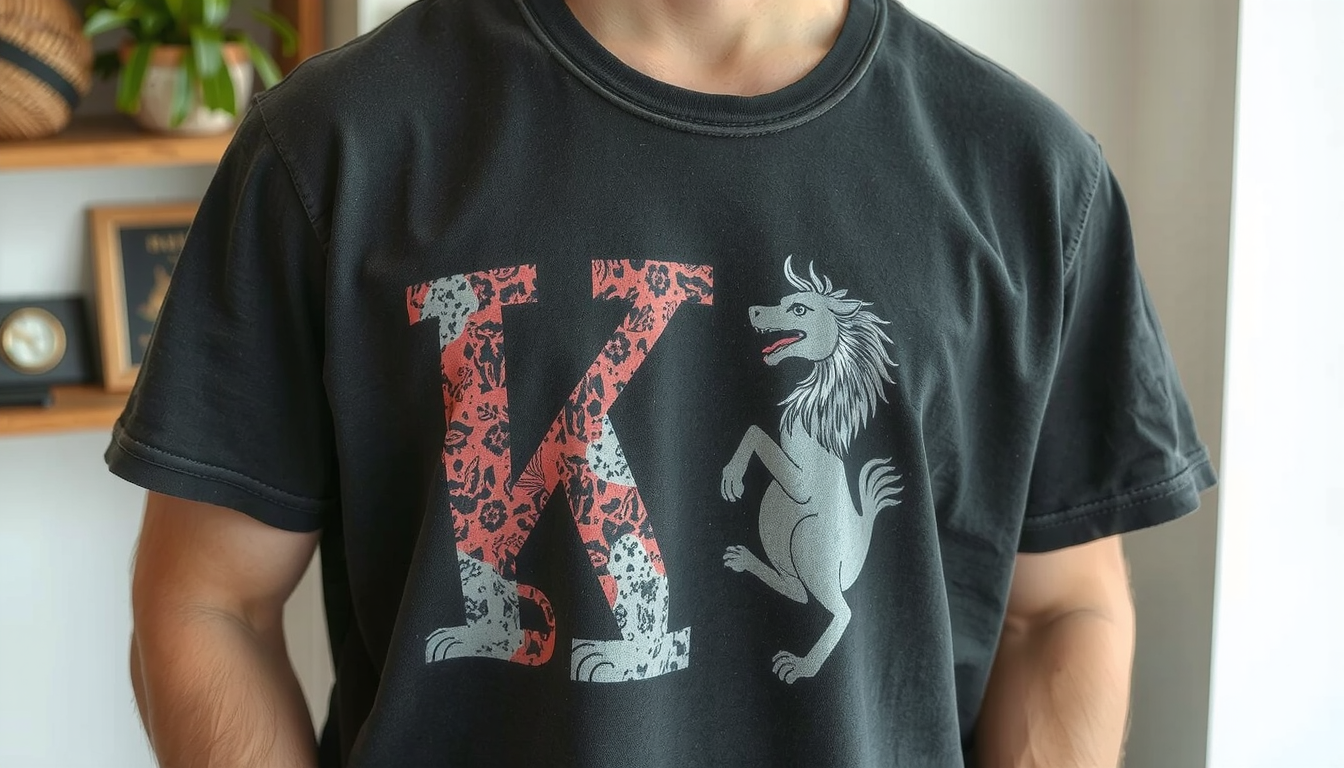
- Provide a Tech Pack: This is the professional standard. A tech pack is a blueprint document. It details your design’s size, colors (using Pantone codes), and garment specs.
- Ask for a Sample: Simply do not forget this on bulk orders. Some physical pre-production samples are the only way to approve material, feel, and location before the complete run.
- Communicate Clearly: Each detail should be discussed. Print placing should be in inches away from the collar. Don’t forget to use the specific Pantone (PMS) color codes.
New brands are required to get to know the full production journey. Our guide on craft introduction for new brands gives a broader scope of the entire process.
Understanding the Common Patterns in Clothing Print
In addition to simple logos, think about how different print styles can elevate your apparel.
- Graphic/Logo Placement: The classic print placements are on the left side of the chest, center chest, full back, and sleeves.
- All-Over-Print (AOP): This is the die-sub process. The die goes from seam to seam across the entire fabric like a big bold graphic.
- Classic Patterns: Traditional designs like floral, geometric, and animal patterns never go out of style. Check out The Most Commonly Used Patterns in Clothing Printing for your next collection ideas.
Clothing Printing is Smart and Sustainable
The apparel industry progressively morphs. The primary aim of the clothing print is sustainability and efficiency.
We are witnessing a shift towards the water-based and environmentally friendly products. This brings down the environmental damage of production. The manufacturing of printed goods on-demand using DTG and DTF not only provides the power to do that but also removes waste from overproducing.
The most appropriate clothing print means the application of the commitment to quality, the unique application of style, and adherence to the core values of your brand. Your choice is of the essence. You will be on track towards realizing your creative vision.
Clothing Print FAQ: Common Questions
What is the most durable clothing print method?
If overall durability against cracking and fading is your main concern, then screen printing (with plastisol inks) and dye-sublimation (also known as sublimation) are practically the only methods available. Dye-sublimation is permanent because it dyes the fabric fibers, so it is not a point process. A properly cured screen print makes a strong long-lasting bond to the fabric underneath.
Can I print an intricate photo onto a black t-shirt?
Of course! Direct-to-Garment (DTG) is the best solution for this sort of task. A digital DTG printer needs to first print on a white base on the t-shirt to create a bright canvas. Then it goes ahead and prints the full-color image right on the fabric which will enhance the visualization through the process of layering.
What is the cheapest printing method for just one t-shirt?
The two most economical for one item are Direct-to-Garment (DTG) or simply Heat Transfer Vinyl (HTV) and they have no setup fees just like screen printing. It makes them ideal for one-off custom projects, samples, or gifts.
What is the main difference between DTG and DTF printing?
The main difference is their application methods. DTG uses water-based ink that is injected directly into the fabric’s fibers, which is perfect for cotton as it provides a really soft feel. DTF utilizes a plastic film on top of which ink is printed. This film gets heat press bonded to the garment. This creates a layer that is slightly thicker and flexible on materials such as polyester.
What file format is best for clothing print designs?
It really depends on the design. For graphic designs with solid colors and lines, like logos and text, vector files (.AI, .EPS, .SVG) are always best. They can be resized to any size at all without losing quality. For photographic or highly detailed images with gradients, use high-resolution files (.PNG with transparent background at 300 DPI).