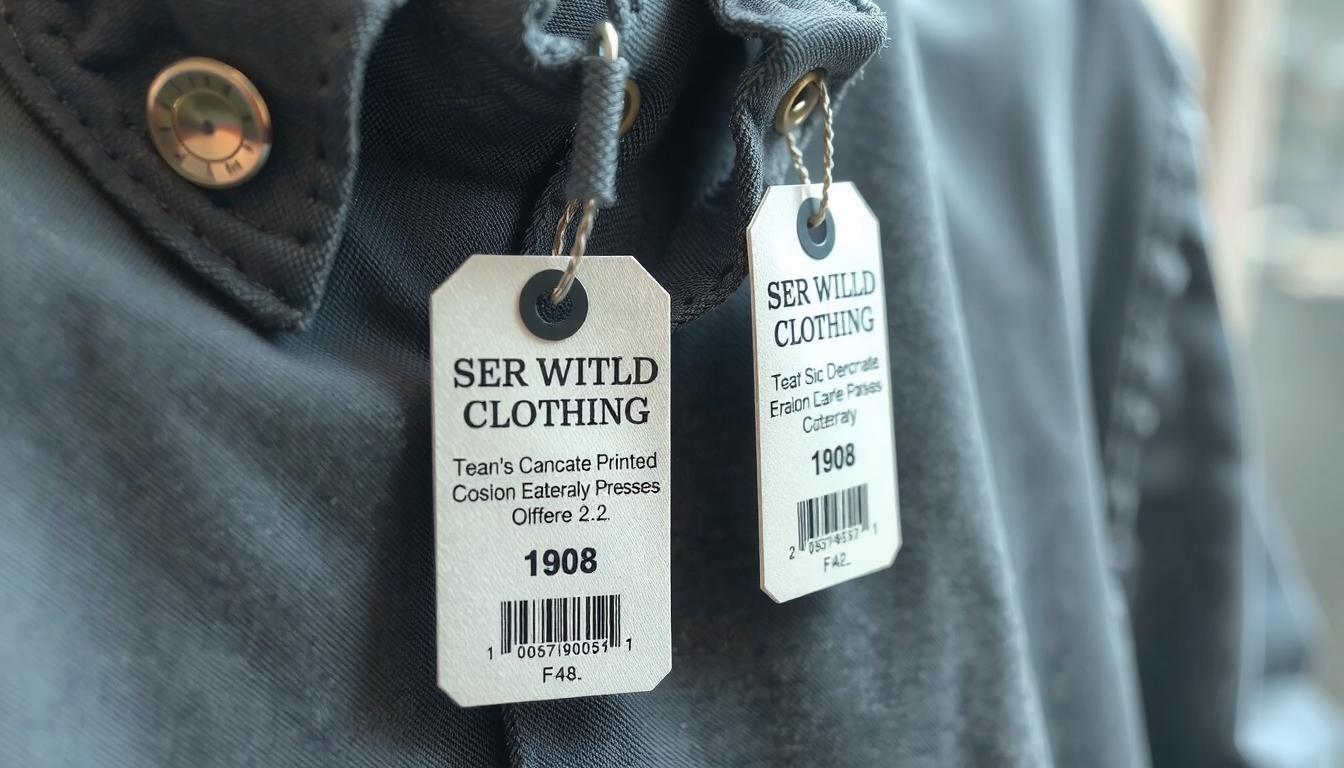
It is significant for you to make your clothes look professional. Custom printed clothing tags are one of the ways. They show more than just the name of the brand. They indicate the character and level of quality of a brand.
This guide is a one-stop shop for everything you want. We will go through materials, design tips, and how to order. You will be able to make the right decisions for your brand.
The Importance of Custom Tags Over Generic Tags for Your Brand
Custom tags that are good are an investment. They sell your brand rather than just being a cost. They create a sense of belonging for the customer starting with the first touch.
Your Brand’s Silent Ambassador
A decent tag automatically reflects a brand’s worth. It tells the customers that you are meticulous. Customers recognize this detail subconsciously before they even try on the items. Thus, your whole product range appears to be more professional.
Making Brand Awareness and Remembering Easier
A special tag design makes your brand more interesting. It helps your logo and design to be more remembered. When the clients notice that tag, they would think about your brand.
The Core Information Centre
Tags are not only used for fashion purposes but also to provide crucial information. They must state the size, care steps, and legal info. A good practice of this makes your brand more professional. This first branding step is key in our guide on how to start a brand.
Tag Types and Their Benefits: A Guide to Understanding Them
Picking the right tag seems to be a challenge, but have some fun doing it! In this guide, we will break your options so that you can easily choose the right tag that fits your product, budget, and brand.
Printed vs. Woven: What’s the Difference?
The major difference comes from the making process. Printed tags are recommended for intricate and colorful designs. The printing technique used is top of the material.
Woven tags have the pattern interlaced with the fabric itself. This factor brings a luxurious touch and also increases durability. They are ideal for a premium look.
Selecting Material and Method
The material and method you choose define how the tag will eventually appear and feel. A brief analysis of common options for custom printed clothing tags might help you.
| Tag Type/Material | Best For | Pros | Cons | Feel/Look |
|---|---|---|---|---|
| Printed Satin Polyester | Complex logos, bright colors, care labels | Very smooth, clear print, cheap | May be shiny, fraying edges if not cut properly | Smooth, silky, professional |
| Printed Cotton | Vintage or natural brands, tees | Soft, breathable, eco-friendly feel | Colors can be less bright than satin, slight shrinkage possible | Soft, natural, comfortable |
| Woven Damask | Premium branding, outerwear, denim | High-end look, sturdy, soft touch | Costly, no photo-like detail | Premium, textured, sturdy |
| Heat Transfer (Tagless) | T-shirts, activewear, kids’ clothing | Super comfortable (no scratchy tag), clean look | Needs a heat press, may fade after many washes | None (part of the fabric) |
| Hang Tags (Cardstock) | Store branding, storytelling, pricing | Effective for brand story, big visual impact | Customer removes it, extra cost and work to attach | Varies by paper type |
Fold Types Unveiled
The way a tag is folded determines the technique for stitching it on your products.
- No Fold (Flat Lay): Sewn on all 4 sides. It is suitable for patches or hem labels.
- Centerfold: Folded in half. It is usually sewn into a seam, like a neckline.
- End Fold: The ends are turned under. Sewn down on the left and right sides.
Certain materials are better for some design variants. For instance, the high-quality satin labels from specialty printers would be ideal for fine details on a centerfold tag.
Making a Custom Clothing Tag That Sells
An excellent tag is beyond just a logo. It’s a smart design piece. But it should be clear, legal, and attractive.
The Best Tag Structures
Every tag should include at least some essential features. Consider it to be a small but significant design map for your brand.
- Brand Logo: This is the hero. It must be visible and easy to identify.
- Size Info: Ensure it is readable. Use simple, clear font for “S,” “M,” “L,” etc.
- Care & Content (The Legal Stuff): This is obligatory. In the United States, the Federal Trade Commission (FTC) has regulations. You have to mention the fiber content (such as 100% Cotton), country of origin, and your brand name (or RN number). You should include the symbols that people generally use for care steps (wash, bleach, dry, iron) to avoid any confusion.
Design Best Practices Make The Impact
- Typography & Legibility: Select fonts that are easy to read even when they are small. Pro tip: Avoid very thin, or fancy script fonts. They can become hard to read when printed or woven small.
- Color & Contrast: Your text and logo should be visible. A dark logo on the dark tag will not be seen. Test your color mixes.
- Information Hierarchy: Show the eye the way. First, you should display the logo, and then the size. The care info can take the least size.
- Negative Space: Do not overload the custom printed clothing tags with info. A clean and simple design is often the first sign of luxury and professionalism. Visiting supplier websites to see customization options can give you excellent layout ideas.
The Ordering Process: A Step-by-Step Guide
Getting custom tags for the first time can be a little intimidating. We will clarify the procedure in detail so that you can circumvent pitfalls.
5 Steps to Get from Design to Finished Tag
- Finalizing Your Design & Tech Pack. Complete your design according to the right format. Most suppliers require a vector file like AI (Adobe Illustrator) or PDF. A high-resolution PNG might work as well.
- Finding the Suppliers. Select a supplier who is the best fit for your needs. Check the reviews, ask for samples of their work, and check for the Minimum Order Quantity (MOQ).
- Submitting Your Design & Requesting a Proof. Always obtain a proof. It’s a digital mock-up of your final tag. It will let you see how the colors, text, and layout will look.
- Approve the Sample. One time, we caught a major color mistake at the physical proof stage. Our blue logo was completely wrong. Approving the sample saved us from making thousands of incorrect tags. This step is of huge importance.
- Place Your Full Order. As soon as you’ve given the go-ahead to the sample, you’ll be able to make a complete order. Confirm beforehand the production time (lead time) and the shipping information.
Your First Batch Mistakes Not to Make
- Ordering Too Many: Your brand may evolve. Start with a lower MOQ if you can. It’s preferable to reorder than to be stuck with a bunch of old branding.
- Ignoring the Material’s Feel: A tag that is scratchy could ruin a super-soft t-shirt. It’s essential for you to have material samples before placing the order.
- Forgetting about the Bleed & Cut Lines: Bleed is the extra space surrounding the design. It ensures that the design reaches the very edge after a cut. The supplier would give you the exact amount of bleed you should add.
Attaching the Tags to Your Garments
After acquiring your beautiful new tags, it’s time for the final step, attaching them to your products.
Laying the Finishing Touch on Your Products
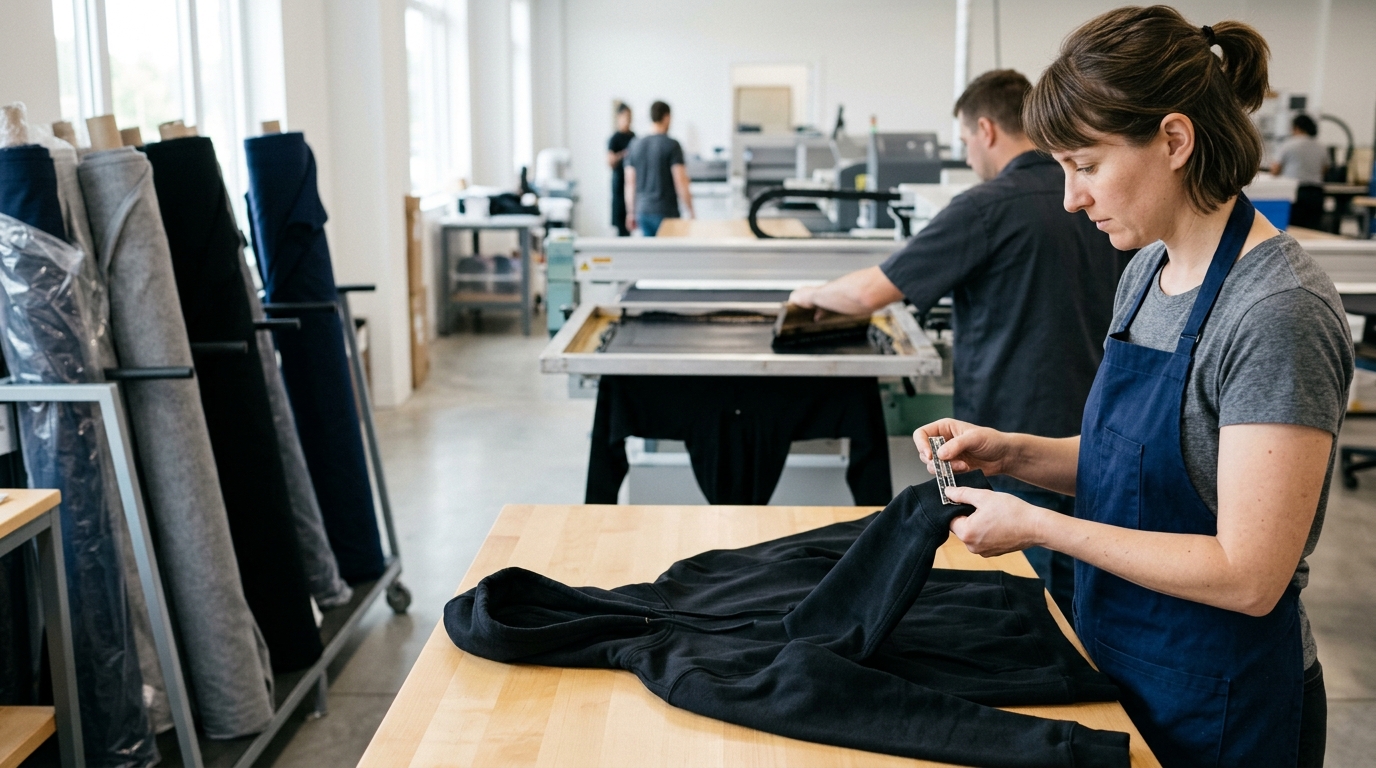
Professional application is the key element. Whether you are sewing in a woven label or using a heat press for a tagless transfer, a clean finish matters as it reinforces your brand’s quality. A badly attached tag can make a great-looking garment look cheap.
For brands that want to make a whole product line from the garment to the branding, working with a custom hoodie manufacturer is the right choice to ensure that every detail including your new custom printed clothing tags is done right.
Your Tags Are Ready: Go Build Your Brand
You have been introduced to custom printed clothing tags in the ‘why’ and the ‘how’ way. You are well informed about the materials, design requirements, and ordering process. An excellent tag is a minor detail that leads to an enormous change. It is a form of investment in your brand’s quality, storyline, and future.
As you proceed with building your brand, you can find all the resources that we provide at TZ Streetwear to be of great help.
Frequently Asked Questions (FAQ)
What is the average cost for custom printed clothing tags?
Prices fluctuate tremendously. The cost is a function of the material, quantity, colors, and supplier. For a large order of the simple printed labels, costs can be as low as a few cents per tag. Conversely, they can range up to a dollar for a small number of detailed woven labels. It’s always advisable to obtain a few quotes from different suppliers.
What’s the difference between a clothing tag and a clothing label?
Most of the time, people use this phrase interchangeably. A “label” often refers to a fabric tag that is either sewn or heat-pressed inside the garment that has the brand and care info. A “tag” can also refer to the cardboard hang tag that is in a store. This guide covers both printed fabric labels and hang tags.
Can I use an iron to apply all types of tags?
No. Only use an iron for tags that are specifically made as “iron-on” or “heat transfer” labels. These come with a special glue that bonds with heat. Ironing a normal sew-in tag will most likely melt the tag and damage your clothing.
What is a “tagless” tag?
A “tagless” tag is another term for a heat transfer label. Instead of sewing a fabric tag, the brand information is printed on a special sheet. The sheet is then pressed with heat directly onto the shirt fabric. This is a very popular option for comfort.
What is the best type of tag for a t-shirt brand?
For maximum comfort, a tagless heat transfer label is the main neck label’s best choice. If you want a more premium or vintage feel, a soft printed cotton label is a great option. Many brands use both a tagless label for comfort and a custom hang tag for retail style.