Introduction
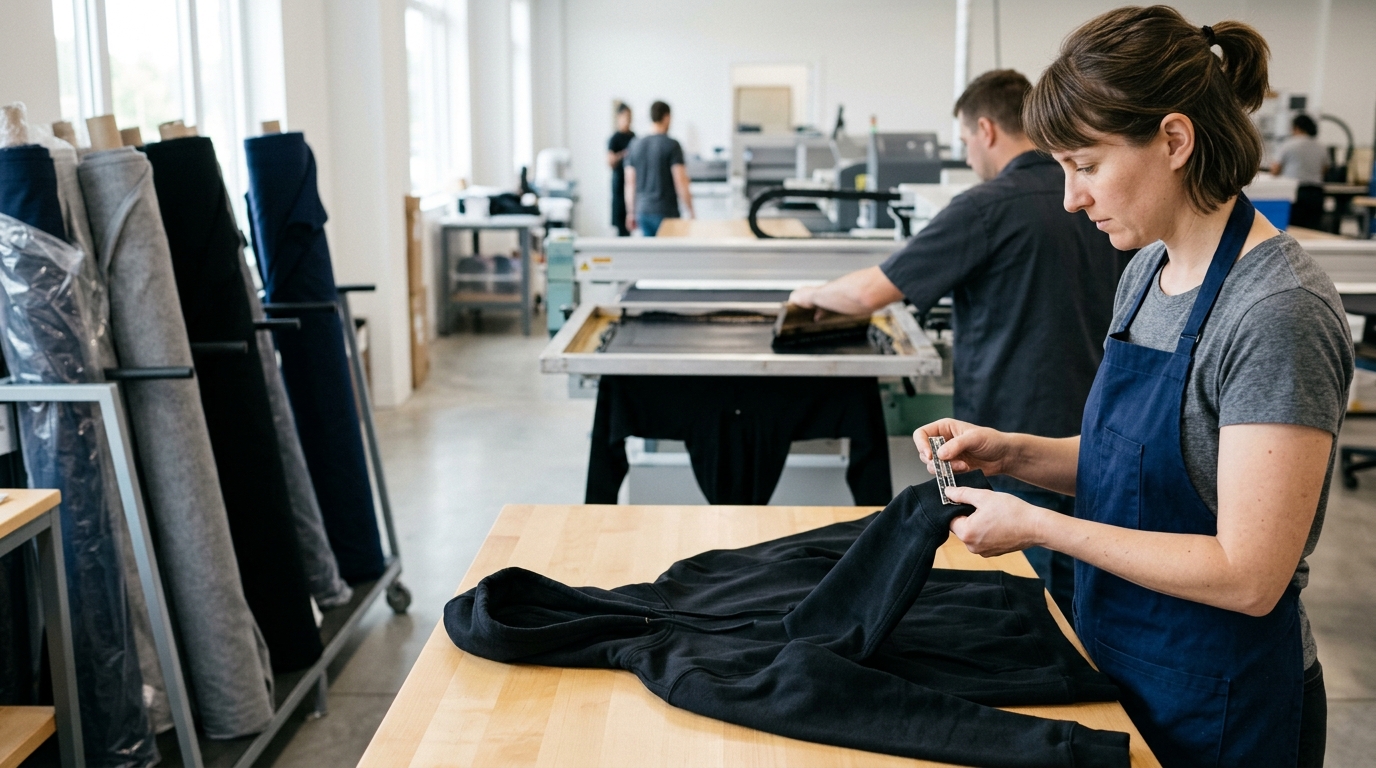
Clothing Manufacturing Costs are equally complex and will be the topic of our first podcast with brands wanting to truly compete in this ever-changing fashion world. Whether you are a new brand planning to launch your first range of clothing or an existing label wanting to cut down on costs for production, knowing what exactly influences manufacturing costs is imperative. Here is the entire list of clothing elements manufacturing costs, we explain how clothing prices can be pushed up if you are saying YES to any one or more.
Note: A close approach between China (Dongguan) and US on cost comparison – We have focused specifically on these two countries in this article so that people get a general idea but comparing with other country. We also give a real-life cost overview for manufacturing 100 hoodies, so you will have the right kind of insight to your project decisions.
I. Understanding the Basic Elements of Clothing Manufacturing Costs

Material Costs
- Types of ClothingMaterials: The fabric that has been used and the kind of material determines greatly how much a t-shirt is going to cost. Fabrics can be cotton, polyester,wool,silk and so on. Each has a different price level which in turn is driven by variables like fibre quality, weaving or knitting processes & finishing techniques..
- Sourcing and Quality:Good stuff costs a little more than so-so; bad-quality, flimsiness Sourcing/Quality-classier material is Exhibit A, but nasty shit won’t get you much in the way of satisfaction from customers. Organic cotton for example may be costlier than conventional since they are made out of sustainable farming.
- Bulk ClothingPurchasing: As the name implies, buying in bulk can save costs on individual units through purchasing economies of scale. Suppliers will often give you a discount if you order in bulk, which can really minimize the cost of materials overall.
Labor Costs
- Regional Wage Differences:Labor prices fluctuate widely within regions. For example, in China or Vietnam labor costs are much lower than the ones of a US or Germany from Western. The most salient examples of this involve differences in living standards and economic conditions.
- Skilled vs. Unskilled Labor:The labor cost depends on the complexity of the garment. An example of this is that goods such as intricate design and shop-front will be more costly than simple, mass production.
- Labor Laws and Regulations:Each country has its own employment laws that impact costs. Countries that have higher minimum wages, overtime pay and greater benefits for workers under strict labor laws tend to result in high costs of Labour.
Production Process Costs
- Cutting and Sewing:It is the very basic steps of garment manufacturing. Cost will be different due to more detail of designing, good efficiency for manufacture and level of skills from workers.
- Printing and Embroidery:Logo or pattern printing; additional costs are incurred when artwork is reproduced. Screen printing, digital printed and embroidery are so many techniques have a different cost on each of them.
- Quality Control:Making sure every piece of clothing is up to standards requires extra money. This involves checks, quality testing and also ensuring safety standards are maintained.
Logistics and Shipping Costs
- Transportation:Shipping Method (Air, Sea or Express Courier): Different method of shipment also play an integral part in the overall costing and delivery time. Air freight is faster but more costly than sea freight, whereas express couriers like DHL will be quicker at a higher price.
- Customs and Duties:Customs and DutiesImport/export taxes could make the total price even higher. Trade terms are country-specific, and can be adjusted due to trade agreements that reduce tariffs.
- Warehousing:Holding goods before they ship to retailers or customers adds costs from rent, security and handling.
Overhead Costs
- Factory Maintenance and Utilities:This includes regular maintenance of the factory so that it continues to run smoothly, and utility bills including electricity, water; gas etc.
- Equipment and Machinery:The depreciation of machinery (technically an asset) as well as the cost to maintain it also increase overhead. Furthermore, buying expensive machinery that is efficient would be a long-term cost savings but it comes with purchase costs.
- Administrative and Management Expenses:Payments to the managerial positions, office supplies cost, insurance premiums paid and other miscellaneous administrative expenses also form a part of overall cost structure.
II. Detailed Cost Analysis: Producing 100 Hoodies
So lets use an example: lets make sense of what it cost to produce 100 hoodies at a fabric weight of say380gsm. Congratulations we will enquire into what it costs to produce these hoodies in the United States and Dongguan, China.

In China (Dongguan):
Material Costs:
- Fabric: 1.4 meters per hoodie at $5 per meter
- Total for 100 hoodies: 140 meters × $5 = $700
- Accessories (e.g., zippers, drawstrings): $0.5 per hoodie
- Total for 100 hoodies: $0.5 × 100 = $50
- Embroidery: $1 per hoodie
- Total for 100 hoodies: $1 × 100 = $100
- Total Material Costs: $700 (fabric) + $50 (accessories) + $100 (embroidery) = $850
- Fabric: 1.4 meters per hoodie at $5 per meter
Labor Costs:
- Sewing and assembly: $3.5 per hoodie
- Total for 100 hoodies: $3.5 × 100 = $350
- Total Labor Costs: $350
- Sewing and assembly: $3.5 per hoodie
Logistics and Shipping Costs:
- DHL Express: $9 per hoodie
- Total for 100 hoodies: $9 × 100 = $900
- Air Freight: $7.5 per hoodie
- Total for 100 hoodies: $7.5 × 100 = $750
- Sea Freight: $2.15 per hoodie
- Total for 100 hoodies: $2.15 × 100 = $215
- DHL Express: $9 per hoodie
Total Cost Analysis:
- Using DHL Express:
- Total Cost: $850 (materials) + $350 (labor) + $900 (shipping) = $2100
- Cost per Hoodie: $2100 ÷ 100 = $21.00
- Using Air Freight:
- Total Cost: $850 (materials) + $350 (labor) + $750 (shipping) = $1950
- Cost per Hoodie: $1950 ÷ 100 = $19.50
- Using Sea Freight:
- Total Cost: $850 (materials) + $350 (labor) + $215 (shipping) = $1415
- Cost per Hoodie: $1415 ÷ 100 = $14.15
- Using DHL Express:
Selling Price: To ensure profitability, manufacturers typically sell at 1.3 times the production cost.
- DHL Express: $21.00 × 1.3 = $27.30 per hoodie
- Air Freight: $19.50 × 1.3 = $25.35 per hoodie
- Sea Freight: $14.15 × 1.3 = $18.40 per hoodie
III. Comparative Analysis: United States vs. China (Dongguan)

In the United States:
Material Costs:
- Similar to China, assuming the same quality of materials and volume discounts.
Labor Costs:
- Higher labor costs due to higher wages.
- Estimated at $15 per hour with each hoodie requiring 2 hours of labor.
- Total for 100 hoodies: 2 hours × $15 × 100 = $3000
Logistics and Shipping Costs:
- Domestic shipping costs will be lower than international shipping but may still vary.
- Estimated at $5 per hoodie.
- Total for 100 hoodies: $5 × 100 = $500
- Domestic shipping costs will be lower than international shipping but may still vary.
Total Cost Analysis:
- Total Cost: $850 (materials) + $3000 (labor) + $500 (shipping) = $4350
- Cost per Hoodie: $4350 ÷ 100 = $43.50
Selling Price:
- Selling Price: $43.50 × 1.3 = $56.55 per hoodie
IV. Factors Influencing the Choice of Manufacturing Location
Cost Efficiency:
If you need to reduce costs as much as possible for your injection molded part, then molding in China is probably the way to go due the lower labor and potentially low material costs.
If you use sea freight from China, the hoodie is $14.15 relative to the US where one would pay as much as $43.50 per hoodie.
Quality Control:
Closer proximity to the manufacturing site:Ensures better quality control and quicker response relating to any production concerns. This can be a killer issue for high-end or custom products where quality is the most (or even only) important thing.
Logistics and Lead Time:
Manufacturing domestically may be desired if short delivery times are required, even though it would require paying higher prices. Alternatively, if you are able to organise ahead of time and have a longer lead times manufacturing in China with sea freight is likely the best option for your situation.
Regulations and Compliance:
Compliance with Local laws must be undertaken. U.S. manufacturers also must comply with stringent labor laws (and often union standards), leading to higher costs but more consistent ethics than in countries that maintain comparatively lax regulations..
As a result, manufacturers in China can offer more competitive than their counterparts elsewhere but only until you confirm compliance to international labor and environmental standards.
Brand Image and Customer Perception:
For customers who highly value products made in the U.S., manufacturing here can be cost-effectiveicrously expensive but they are prepared to pay a premium for it.
On the flip side, price sensitive consumers may choose less expensive goods made in the China.
V. Conclusion
The selection of manufacturing location is an optimization problem between cost, quality, logistics and compliance performance. This in-depth breakdown of costs demonstrates the stark contrast between manufacturing hoodies domestically (USA) versus overseas production to China. This way, you can have a general idea of what to expect and make adjustments as needed according to your business objectives and customer needs.
This guide offers you a full overview of what to think about when choosing where your base for manufacturing should be, based on whether cost efficiency is the more important thing or quality control and faster delivery times are larger interests. With the fashion industry worldwide in constant flux, staying abreast of manufacturing costs and trends is essential if you are to maintain your competitiveness and profitability.