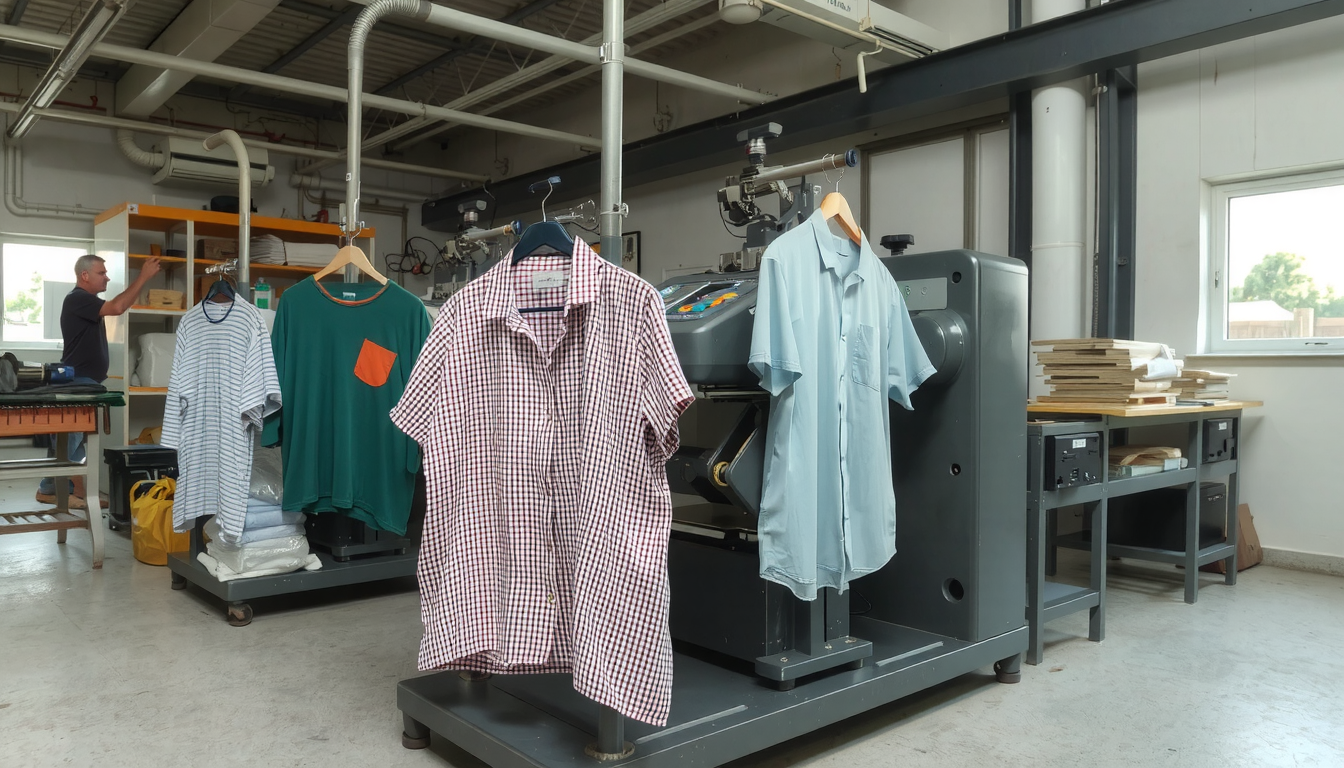
If you are starting a clothing brand or a custom apparel business, it is only natural that you expect excitement. But turning a good idea into a real product is not an easy task, and it takes many crucial decisions. None other than the choice of the equipment is one such decision. To pick the best clothing printing machine can be a challenging task. There are numerous technologies, terms that could baffle you, and price ranges that make it difficult to select.
However, this guide will serve as your beacon in the dark. We will present a simple and professional overview of the major types of garment printing machines that are currently on the market. By the time you finish reading, you will have made significant progress on understanding the core differences and actual costs. You will be able to pick the ideal clothing printing machine that matches your particular goals and budget with self-confidence.
The Top Competitors: A Quick Look at Printing Technologies
Before anything else, let us start from the very beginning. The custom apparel industry operates with four major technologies. They all have distinctive uses, costs, and other features. The five technologies you will learn about today are the mainframe of promotional methods.
The dilemma for you will be solved with our simple chart that compares the four technologies. You can easily see which ones will be suitable for your particular business model.
| Technology | Best For | Feel on Garment | Initial Cost |
|---|---|---|---|
| DTG (Direct-to-Garment) | Full-color photos, small batches, print-on-demand | Very soft, breathable, minimal feel | High |
| DTF (Direct-to-Film) | Versatile fabrics (cotton, poly, blends), vibrant colors on darks | Flexible, smooth, slightly raised film layer | Medium-High |
| Screen Printing | Bulk orders (50+), simple graphics, best cost-per-unit at scale | Slightly raised, durable ink layer | Medium |
| Heat Transfer Vinyl (HTV) | Simple text/logos, names/numbers, hobbyists, low startup | Thicker, distinct layer on top of the fabric | Low |
DTG vs. DTF vs. Screen Printing: Which One is the Best?
In most professional setups, the decision is made between three core technologies. These technologies are Direct-to-Garment (DTG), Direct-to-Film (DTF), and traditional Screen Printing. They are all powerful yet they can only be applied effectively in certain scenarios. By comparing the three, we will determine which is the perfect one for you.
Direct-to-Garment (DTG) Printing
Picture a DTG machine as a special device that is similar to an inkjet printer, but it is meant for fabrics. You place a t-shirt on a platform, send a digital file from your computer, and the device injects water-based inks directly into the cotton fibers.
- Pros: Excellent for very realistic effects and unlimited colors. The ink soaks into the fabric, creating a very soft, breathable print. Ideal for one-off prints and small custom batches with no setup fees per design.
- Cons: DTG works best on 100% cotton or high-cotton blends. Dark garments need to be pre-treated with spray before they can be printed. This adds a step and a cost. The cost of ink may be high, and it takes a longer time for the process to print compared to screen printing.
Direct-to-Film (DTF) Printing
DTF has turned out to be a new technology that astonishes people with its advantages and versatility even though it is still new. The process is to print a design onto a special transfer film. After that, you apply a powdered adhesive to the ink, cure it, and heat-press the transfer onto the garment.
- Pros: The foremost advantage of DTF is flexibility. You can transfer it on any fabric like cotton, polyester, leather, nylon, and blends. The prints are stretchy, durable, and absolutely colorful. A lot of companies deal with T-shirt printing machines for small businesses that have this technology.
- Cons: It is a multi-step process and more hands-on work than DTG. There are steps like you print, powder, cure, and press. The print which is final sits on the fabric, thus it feels less breathable than that of DTG. It resembles a soft screen, high-end of the norm.
Traditional Screen Printing
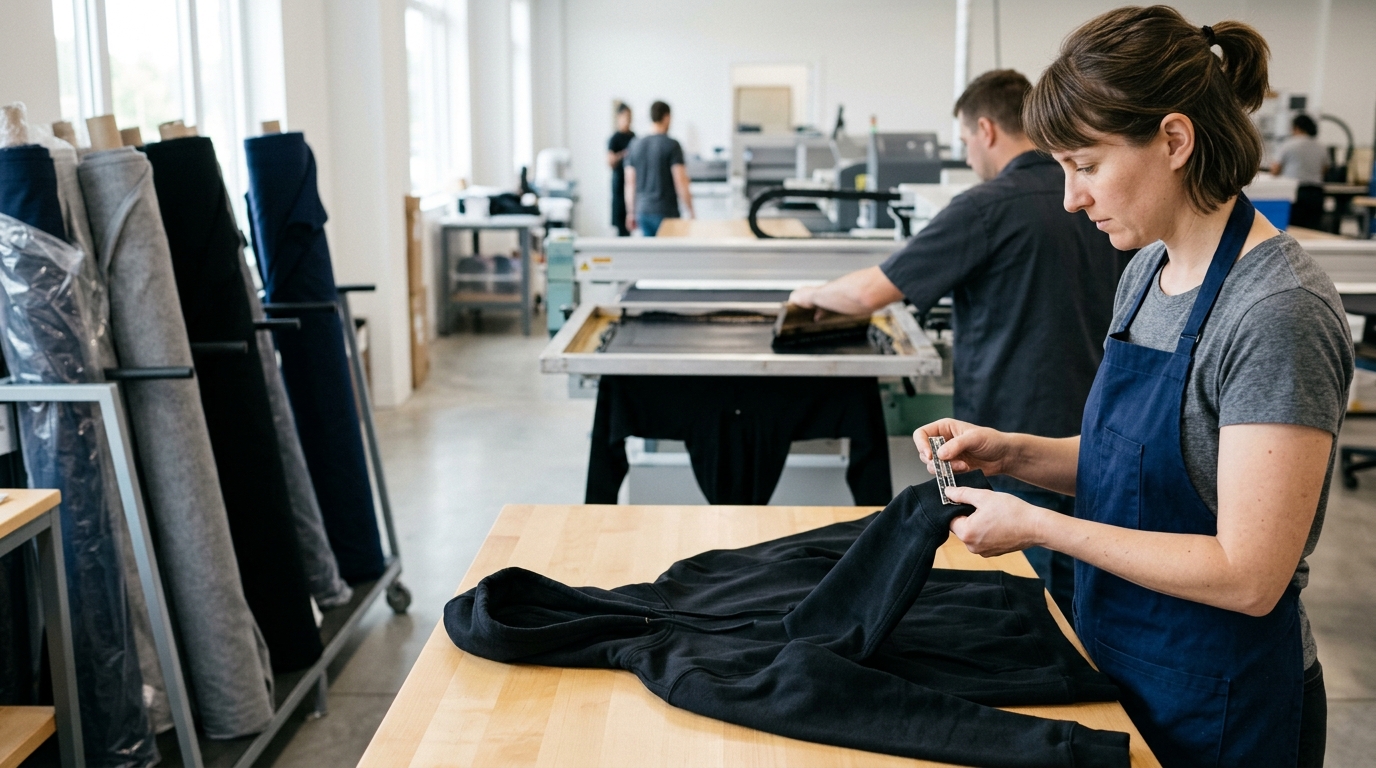
Screen printing is the one and only true method of garment decoration. The process of traditional screen printing is to force ink through a stencil mesh screen onto the fabric. You need to have separate stencils for each color in the design.
- Pros: It is unmatched for high volume orders. The prints are highly durable that bring a spectacular display of colors. Top apparel labels still rely on this technique.
- Cons: It is quite hard to get off the ground and it takes a long time. This makes it impractical for one item or small runs. The number of colors available is limited by the number of screens you can set up. A high number of brands still use these screen printing services for high-volume needs.
How to Choose a Clothing Printing Machine According to Your Business Model
The technical specifications alone do not tell the whole story. Of paramount importance is the match between the machine you are thinking of getting and your business objectives. Let’s pair these technologies with situations of different companies.
The Etsy Side-Hustler or Hobbyist
You want to get off the ground with minimal expenditures and offering easy operation. You want to be unique but do not require mass production. This should be a high-quality heat press with a vinyl cutter, (for HTV) to create simple and bold design with a small investment and easy learning curve. A low DTF printer is the one that gives you full color, the next step after that.
The Print-on-Demand E-commerce Brand
As a reference model, it will be easy to explore many designs that you have zero inventory. High detail is required and the ability to readjust to production of single items is necessary. A desktop DTG printer is a traditional choice that softens the feel of cotton. Nevertheless, a small compact DTF printer is an option that is becoming more popular and versatile. With this, you can go beyond polyester to blended fabrics.
The Local Custom T-Shirt Shop
You have the special order for a single custom birthday T-shirt, a nearby company needing 50 T-shirts, or all of it. Manners and speed represent the most vital. A DTF printer which is strong, on the contrary, it is one the most universal clothing printing machines for this type. No fabric or color is difficult for it. Also, a pro-grade DTG machine is excellent if your main market is concentrated on high-end cotton clothing. Your brand will be shaped by this decision, hence it is wise to read more about how to start a brand and choose your craft.
The High-Volume Apparel Brand
Your primary objective is maximizing production and cutting cost per unit down to the minimum. You print hundreds or thousands of the same design. The industry standard for this is the automated screen printing press. For high-volume digital needs, also take industrial-scale DTG printers like the DTG Digital M6 into account that can print on multiple garments at once.
Beyond the Initial Price: Assessing the Real Cost
A common flaw for startup owners is underestimating the overall cost of owning such businesses. Only the price of the clothing printing machine is said to be the starting point. Based on what we have seen, new owners often make the mistake of overlooking the perpetual costs which are integral to the making of a real operational budget.
The worldwide custom t-shirt printing industry made about USD 4.3 billion last year. It’s expected to grow significantly in the future. Thus, apart from the opportunities, there is also a clear necessity to have accurate financial planning to achieve success.
Here is a realistic breakdown of what to consider:
- Initial Investment: The machine is a primary asset.
- Essential Consumables: These will be your recurring costs.
- Inks: The heart of your printer. Costs vary from $150-$250 per liter depending on the machine and design.
- Pre-treatment Fluid: The must-have for dark garments DTG printing.
- DTF Film & Adhesive Powder: These are the essential stock for every DTF operation.
- Screens, Emulsion & Ink: Key items for screen printing.
- Ancillary Equipment: One of the primary needs is a heat press of high quality. It serves both for curing DTG ink and applying DTF transfers. You should also have a computer with design software (Adobe Creative Suite, CorelDRAW) for professionals. For DTG, a pre-treatment machine that is dedicated can save a lot of time.
- Ongoing Maintenance: Digital printers have to be maintained on a regular basis. Therefore, you can expect to budget for cleaning solutions and replacement parts such as wiper blades and capping stations. For your peace of mind, you may also want to consider a service contract.
- Operational Costs: In addition, do not forget about electricity, the physical space, or rent for your setup, and the value of your time.
Top Factors You Should Consider Before Buying
By now, you have assessed both the technology and your business model. In order to make a wise final purchase, adhere to this checklist. Subscription of the questions listed below, you need to operate on a fully informed perspective.
- Print Quality & Resolution (DPI): Is the level of the details you promised that high? Photo-realistic prints require higher resolutions than plain text designs.
- Production Speed: Get real, how many t-shirts or hoodies do you really need to print per hour or day in order to make profit?
- Physical Footprint: Are you going to provide space that is climate-controlled and dedicated? Room is required for machine installation, heat press, supplies, and workflow area. The machines are often bigger than you think from what you see on the internet.
- Maintenance Requirements: Are you willing to commit? DTG and DTF printers require daily and weekly cleanings to prevent expensive clogs. This issue cannot be neglected.
- Training & Support: What type of customer support, training, and warranty does the manufacturer give? Quality post-purchase assistance is critical for you when you first start off.
Our Recommendation in Conclusion
There is no such thing as a single “best” clothing printing machine. The ultimate clothing printer is the one that fits your products, production volume, budget, and business goals exactly.
Your choice of technology is foundational for your brand. Through the frameworks and comparisons posed in this guide, we urge you to do an in-depth analysis of your requirements. You can make the best choice that will lead to a successful business that you will be able to start from scratch. For a broader scope of resources regarding building your apparel business, we at TZ Streetwear are glad to provide assistance and help you succeed.
Frequently Asked Questions
Q1. What is the simplest clothing printing machine for a total novice?
A: For complete beginners, a vinyl cutter and a heat press are the simplest and cheapest. If you are looking for full-color digital print, then the panel of the DTF (Direct-to-Film) printer machine is getting user-friendly and thus, increasingly enterprising. They are a wonderful entry.
Q2. Is it possible to print on dark-colored clothes with any machine?
A: Not all the machines are as easy to work with on this type. DTG and DTF machines are only for dark garments as they need to start with a white ink base layer that is printed first. This is how the colors become brighter. Screen printing works very well on dark fabrics too. However, sublimation printing is not appropriate for this task due to the fact that it only works on light-colored polyester fabric.
Q3. How much does a good clothing printing machine cost?
A: The price varies a lot with the different technologies and also the scale of operations. A hobbyist vinyl cutter and heat press setup might not exceed $500. Entry-level, business-oriented DTF and DTG printers may usually cost from $3,000 to $8,000. For serious production, commercial, high-volume machines can be priced from $15,000 to $250,000 or more, depending on the specifications.
Q4. If I buy a DTG or DTF printer, do I still need a separate heat press?
A: Yes, without doubt. A heat press is crucial for both. When using DTG, the heat press cures the ink into the fabric fibers after printing. In the case of DTF, the design is transferred from the film to the garment. Thus, it is not an underestimation but a fact.
Q5. What are the most durable prints of clothing?
A: If done properly, traditional screen prints, and superior DTF transfers are very durable. They can outlast the garment many times through tons of washes. DTG prints, too, are quite resilient with a nice soft feel. However, they might undergo a little bit of fading in the long run through the wash cycles that are slightly quicker than a thick screen print.