
Discover the fun of drawing a hoodie, a must-have in everyone’s wardrobe. Our guide will show you how to turn simple sketches into this fashion essential from the 1970s1. Loved by everyone from music legends to students, the hoodie has made its mark1. Follow our step-by-step tutorial to capture a hoodie’s essence on paper.
The word “hoodie” got popular in the 1990s, but the style goes way back to medieval Europe1. Invented by Champion in the 1930s for workers, now it’s loved by all1. We encourage you to make your hoodie design your own by using your favorite colors and patterns2.
- Gain insight into the hoodie’s rich history and cultural significance1.
- Master a 6-step drawing guide to create your own hoodie art2.
- Learn how to personalize your drawings, reflecting your unique style2.
- Understand how to draw realistic textures and fine details on your hoodie2.
- Discover how hoodies went from workwear to high fashion items1.
- Unleash your creativity and share your artwork with a community of fellow enthusiasts2.
Introduction to Drawing a Hoodie on a Person
Drawing can turn simple sketches into amazing visuals, focusing on fashion like hoodies. It’s key for both new and seasoned artists to grasp the hoodie sketch basics to excel in drawing clothing.
Since the 1930s, hoodies have been both practical and symbols in urban culture. They became very popular in the 1970s and a staple by the 1990s3. Our guide teaches you to draw a hoodie on a person well.
Drawing a hoodie takes steps to capture its relaxed look and feel. It includes learning to draw fabric texture, shadowing, and highlighting4. We’ll share important steps and tips to improve your art.
- Knowing basic shapes helps show how a hoodie fits a person5.
- To draw a hoodie, outline the hood, pocket, and sleeves. Notice how fabric moves3.
- Using Perlin noise in digital tools makes folds look real3.
- Adding logos or zippers shows your style in person drawing3.
Try customizing your hoodie drawings to make them unique. Use pencils or digital tools, but keep practicing the basics.
Fashion design combines looks, use, and personal style, especially in hoodies. Our guide will help you sketch hoodies beautifully and uniquely!
The History of the Hoodie in Fashion
The hoodie has an interesting story in the world of fashion. It started in ancient Greece and Rome, where hooded clothes were a key part of daily life6. These garments evolved through the Middle Ages. Monks, peasants, and nobles all wore them6. The modern hoodie, as we know it, began in the 1930s. Champion created the first version to keep New York workers warm67.
By the 1970s, the hoodie became a symbol of style, thanks to hip-hop culture in New York7. This era highlighted the hoodie’s sleek look and function7. The term “hoodie” became well-known in the 1990s. It then represented youth culture in both the USA and the UK7.
The hoodie’s significance comes from fashion, societal shifts, and cultural acceptance. It fits in many places, from Silicon Valley to protest scenes6. Despite some negativity, the hoodie remains a sign of anonymity, rebellion, and fashion.
| Decade | Significant Event in Hoodie History | Cultural Impact |
|---|---|---|
| 1930s | Creation of the first modern hoodie by Champion | Utility wear for working individuals |
| 1970s | Adoption by hip-hop culture in New York | Rise as a symbol of urban street style |
| 1990s | Term ‘hoodie’ becomes popular; associated with youth cultures | Symbol of youth rebellion and casual lifestyle |
| 2000s | Symbolic uses in social movements | Iconic representation in protests for justice and equality |
The hoodie is everywhere today, loved for its style and comfort. It fits into both high fashion and everyday streetwear. This confirms its place as a top garment in the fashion world6.
Essential Materials for Hoodie Drawing
To start your hoodie drawing journey, you need the right materials. We’ll guide you through picking the best tools, why good paper is key, and talk about coloring options.
Choosing the Right Drawing Tools
Begin with pencils and erasers. Pencils help sketch your design. Erasers fix mistakes as you improve your drawing. A black marker makes your hoodie’s outlines sharp and clear. These tools improve your drawing skills, making everything you draw pop out8.
The Importance of Quality Paper
The paper you use is just as important as your tools. Good paper prevents smudges and won’t tear easily. It makes sure your work looks its best.
Optional Coloring Supplies
Coloring supplies like crayons and markers make your drawing stand out. Colors add depth, turning simple sketches into vibrant art. This is great for all artists, from kids to beginners, wanting to use more colors98.
Using different art supplies makes drawing more fun and engaging for everyone9.
| Drawing Tool | Importance | Usage |
|---|---|---|
| Pencil | Essential for initial sketches | Sketching the basic outline and details of the hoodie |
| Eraser | Critical for corrections | Refining sketches and rectifying mistakes |
| Quality Paper | Provides a durable base | Supports multiple revisions and fine detailing |
| Black Marker | Highlights final outlines | Defining sharp edges and key features of the hoodie |
| Coloring Supplies | Adds depth and vibrancy | Bringing the drawing to life with colors |
Knowing about these tools helps you begin your drawing project with more confidence and skill. It improves your ability to create detailed art of hoodies and more8.
Step-by-Step Guide: How to Draw a Hoodie on a Person
Welcome to our easy-to-follow fashion sketching guide on character design. This guide is perfect for beginners wanting to get better and pros honing their skills. We’ll guide you through each step of drawing a hoodie on a person. From the basic sketch to adding details, we make sure learning is fun and fulfilling.
Sketching the Base: Head and Torso
Start with an oval for the head and a bigger, slightly odd-shaped oval for the torso. This is your character’s basic frame. Keep the balance and size right to make your sketch look real. This method is used by almost all artists when they draw someone wearing a hoodie10.
Defining the Hoodie: Sleeves and Hood
Next, focus on the hoodie’s key parts. Draw the sleeves with smooth, curvy lines to show the fabric’s natural fall. For the hood, make sure it looks big and falls right over the head and shoulders. Paying attention to these details will make your character look more lively.
Adding Character: Facial Features and Hair
When designing your character, start with the face. Draw eyes as ovals, eyebrows as curved lines, a simple mouth, and a detailed nose. Each feature should match well with the others11. Then add hair, thinking about its texture and how it suits the character’s personality.
Final Touches: Drawstrings and Cuffs
To finish your drawing, add the drawstrings at the hood’s neck and cuffs on the sleeves. These small details bring your sketch to life. Draw each carefully to show the hoodie’s style and material. Make sure they match your character’s style and mood11.
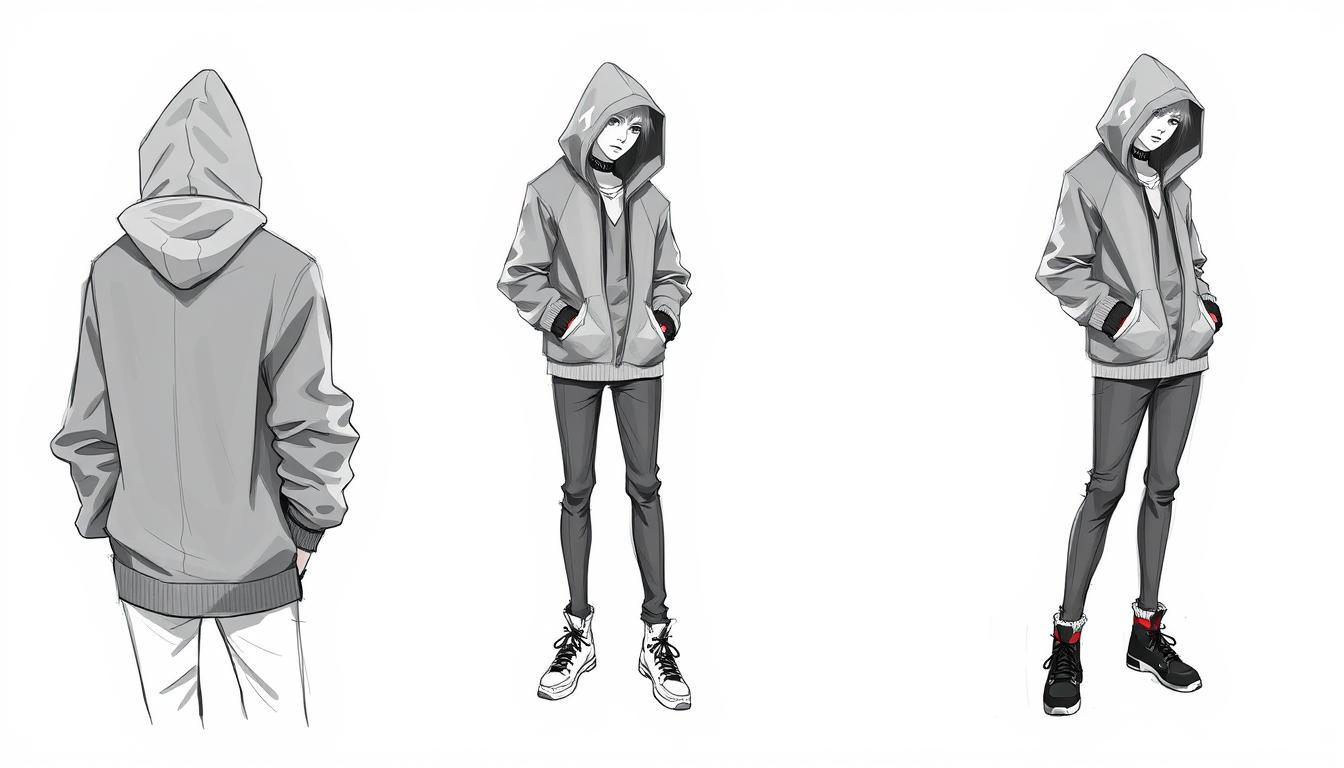
A PDF tutorial is available for download, so you can practice anytime11. Try to spend 30 minutes on this tutorial for a quick yet thorough learning11. You might start coloring the hoodie with basic shades like gray or blue. Then, add bright colors as you like11.
By using this guide, you’re not just learning to draw. You’re learning to tell stories with your art. Each stroke helps bring your character’s story to life. Enjoy your sketching journey!
Drawing the Facial Features and Hands
Starting with the eyes, they are often the most expressive part. Many guides simplify this process, which might lead to less realistic results12. It’s crucial to begin with a basic shape and refine it, paying attention to the eye socket12.
Artists strive for realism by focusing on how unequal our eyelids are. This method adds depth and authenticity to a character’s look12.
When drawing hands in pockets, they can show if a character is relaxed or defensive. Understanding basic shapes and how fingers work together in a pocket is key. Artists note the value of capturing joints and skin folds accurately, without making them too complex13.
“Drawing hands and facial expressions are interconnected through the story they jointly narrate about a character’s personality and emotional state.”
Artists improve by studying anatomy and practicing regularly. These steps are vital for drawing realistic faces and hands effectively14. Using different tools, they refine their shading and texturing skills for better expressions and hand movements14.
Our goal is to bring characters to life with their expressions. By sharing these tips, we hope to inspire others to create more vibrant and emotionally engaging illustrations.
Adding Details and Textures to the Hoodie
To get good at realistic drawing, knowing how to add details and textures is key. This is especially true for fashion sketches of clothes, like hoodies. Let’s explore how to bring a hoodie’s texture and details to life.
Capturing Realism: Clothing Folds
Focusing on clothing folds will make a hoodie look more real. These folds show the fabric’s quality and how it moves with the person wearing it. It’s essential to notice how the hoodie creases at stress points like elbows and waist. These areas show motion and shape15.
Use fashion sketching to draw folds of different thicknesses and directions. This shows how the hoodie naturally drapes over the body15. Careful shading and blending will help make your drawings pop.
Illustrating the Hoodie’s Pocket and Hem
The pocket of the hoodie is key for adding texture. It should look usable but cool, wider at the top and narrower at the bottom. Use stippling or cross-hatching for the texture, especially where it’s shadowy, to give a 3D effect16.
The hem also offers a chance to add texture. Short, various strokes can imply ribbing for a tight, real look. Show whether the hoodie fits tight or loose in these parts16.
Adding special details, like embroidery, brings a unique touch to the hoodie. Simulate embroidery stitches to enhance the beauty and realism of cuffs and hems17.
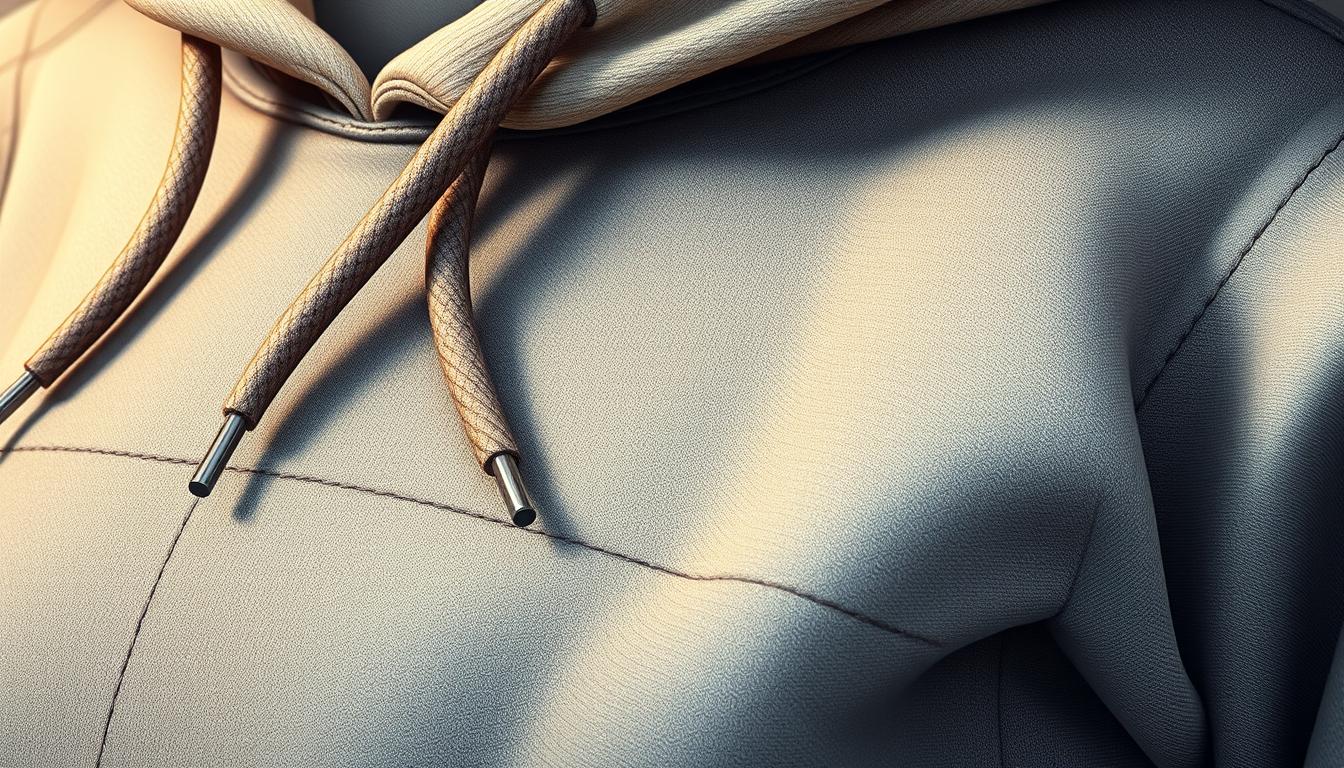
By mastering these detailing techniques, you can improve your realistic drawings a lot. Keep practicing and observing to make each piece of art look true and lively.
Conclusion
We have explored the art of fashion illustration together, focusing on sketching a hoodie. This experience was more than just about drawing. It was a celebration of creativity and successful illustration. We broke down the hoodie into basic shapes, making it easier to draw accurately18.
New artists learned to highlight the hoodie’s essential shape. They captured its essence without getting lost in details18.
We looked at hoodies from various angles to better understand their structure. This showed our commitment to accurately depicting fabric in motion18. Drawing hoodies on kids, we added fun elements and bright colors. This suited their energetic vibe1819. For adults, we aimed for a realistic look that shows how casual wear fits different body types. Drawing a hooded figure with a mask taught us to carefully work with shadows and fabric distortion near the face mask18.
Our journey in art continues, pushing us towards growth and mastery. By using vibrant and meaningful colors, we connect with color psychology in our art19. We draw from a variety of inspirations, like the 1930s or circus themes, to enrich our creativity19. Each hoodie we sketch improves our skills, helping us create not just drawings, but whole galleries of imaginative art. Let’s keep moving forward on this creative path together!
FAQ
What basics should I know before starting my hoodie illustration?
First, get to know how a hoodie and a person’s shape looks. Learn how to draw fabric folds and how they hang.
Can I start drawing a hoodie on a person if I’m a beginner?
Yes! Our guide is perfect for beginners and kids. It has easy steps and tips to help you draw a hoodie no matter your skill.
Why is it important to use quality drawing materials?
Using good materials makes a big difference. With a fine pencil, you get sharp lines. Erasers let you fix mistakes easily, and good paper makes your art look better.
Where can I learn about the history of the hoodie?
Our guide has a section all about the hoodie’s history. You’ll learn how it went from basic clothing to a fashion symbol.
How can I add more realism to my hoodie drawing?
Focus on the fabric’s texture and fine details like folds. Pay attention to how light and shadow play on the fabric to make it look real.
What areas should I pay attention to when drawing the face and hands?
It’s important to get the eyes right and keep facial features balanced. Also, show how hands look, especially if they’re in the hoodie’s pockets.
Are there any tips for drawing the hoodie’s drawstrings and pocket?
For drawstrings, use little ovals for the tips and a curve for the string. Make the pocket wider at its base and add lines for a ribbed look.
How can I practice and improve my fashion illustration skills?
Practice often! Follow our basics, try different styles, and draw various clothing items. Watching how clothes fit on people can also boost your abilities.









-600x600.jpg)