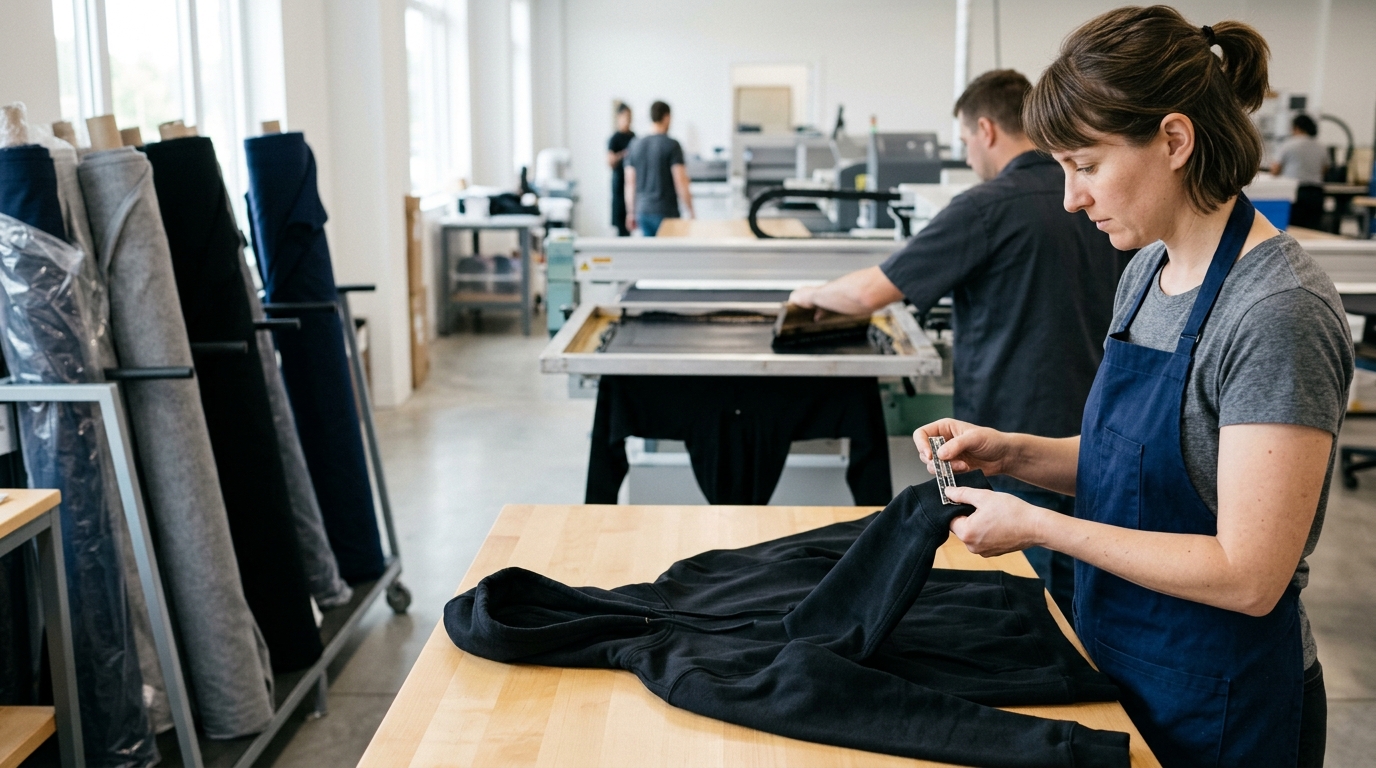
Typing in “clothing print shop near me” in a search box. A long list of options appears before your eyes. Making the right choice, however, can be tough. What are the signs that a company is going to do a great job?
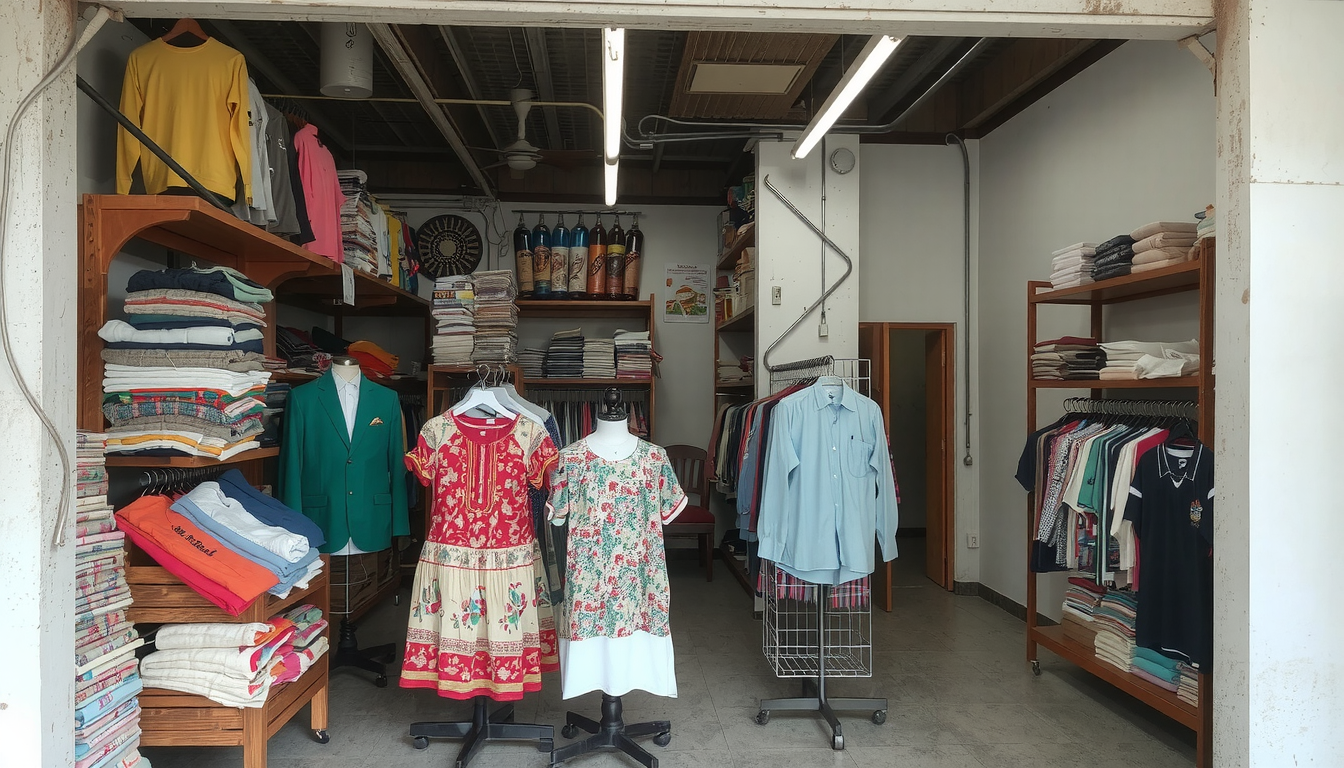
This guide is your solution. We will show you the route to follow. You will find out about different printing methods. We will illustrate how you can discover workshops around you. We will also assist you in analyzing their quality. Additionally, we will provide you with tips on preparing your artwork for print.
At TZ Streetwear, we are practitioners who have been making clothes for several years. We feel it is necessary to pass this knowledge on to you. This guide is both easy-to-follow and practical. You will find the most suitable partner for your job.
Local vs. Online Shops
Your first option is between a local store and a giant online company. They are not necessarily better than each other. Which one is the better choice is dependent on what you need for the project.
A local clothing print shop has the most personal spirit. It’s an opportunity to talk to someone face-to-face. The online-only service is functional on a much larger scale. Thus, it can affect prices and options.
Here is a simple table to help you compare:
| Factor | Local Print Shop | Online-Only Service |
|---|---|---|
| Turnaround Time | Often faster. Can offer rush or same-day service. | Standard shipping times apply (days to weeks). |
| Hands-On Service | You can visit, see samples, and feel the fabric. | You rely on website photos and descriptions. |
| Minimum Orders | Often flexible. Good for both small and large jobs. | May have strict minimums or be better for single items. |
| Price | Can be competitive. May have higher costs for small jobs. | Often cheaper on very large orders due to their size. |
| Product Variety | Good selection, but may be limited to popular brands. | Huge online catalogs with many brands and styles. |
| Design Support | More personal help. Can work with you on an idea. | Usually requires you to use an online design tool. |
Understanding Printing Methods
Awareness of the common printing types makes it easy to speak with the store. It also assists with selecting the best one for your design. You will be able to determine what fits your budget and how many items you need. Asking for the right things is easier when you search for custom apparel printing near you.
Screen Printing: For Bulk Orders
Screen printing is a process that pushes ink through a mesh screen onto a t-shirt. A stencil is used to block out areas on the screen for your design. The shop will then make a dedicated screen for each color used in the design.
This way is the best choice for large orders. Typically at least 25 items. It is suitable for logos and simple designs that use only one or two colors.
The prints appear very bright and are quite durable. For large quantity orders, this is the most economical method due to the setup work. However, it is not appropriate for ordering single shirts. It is also extra for designs that have many colors. Each color adds to the set price.
DTG: For Full-Color Designs
Direct-to-Garment, or DTG, printing is similar to an inkjet printer for garments. The printer sprayed a special type of ink on the garment. This ink soaks into the fabric fibers.
DTG becomes the right choice for small orders. You can make very colorful designs that have a lot of details. There is no restriction for minimum orders.
The result is a print with unlimited colors and that much detail. The print even feels softer on the shirt. The main downsides are that colors can look less bright on dark garments. Furthermore, it is also more expensive than screen printing on large orders.
Heat Transfer Vinyl: For Names and Numbers
With Heat Transfer Vinyl (HTV), a machine cuts the design from a colored material sheet called vinyl. The design is then transferred onto a T-shirt. A heat press applies it using heat and pressure.
For simple names and numbers, HTV is indeed the best choice, which can be found on sports jerseys. Moreover, it is also perfect for making a single custom product in no time.
The outcome is a robust and bold graphic that works with a variety of fabrics. This includes cotton and polyester. The design can, however, sometimes feel a little bit thick on the shirt. So, it is not good for images that are complicated.
Embroidery: For a Professional Finish
Embroidery is the method used to sew a design into a garment with thread and needle. The electronic embroidery is now done with a machine that is made with a computer. The results are perfect.
This technique adds a luxury element and a professional appearance. The best use of embroidery is logos placed on caps, polo shirts, and jackets.
Embroidery stands out by being durable and giving a top-quality feeling. That’s why it isn’t the best choice for a picture or very complicated art. The cost depends on the stitch count. Therefore, larger and detailed ones become costlier.
How to Find a Great Print Shop
By now you already have an idea of what to look out for. So, here is how to find a good clothing print shop nearby.
Step 1: Use Smart Search Terms.
A standard search will not give you the right results. Search for “screen printing in my town” or “custom hoodie printing near me” instead. You can also try out “same day t-shirt shop.” This way you will find better results.
Step 2: Check Google Maps and Reviews.
Use the map to see which shops are the truly local ones. First, check for the star rating then read customers reviews. Be on the lookout for photos of items they worked on. Customers or even the shop may upload these.
Step 3: Look at Their Website and Social Media.
Go for a professional shop that has a good, user-friendly website. Look for a gallery showing their recent work. They should also list the services they offer, like screen printing or DTG. Some shops are quite precise about their capacities. Such are those located in Kansas City or Union, New Jersey.
Step 4: Read Reviews with Care.
Avoid making the usual mistake of relying solely on the star rating. Also, read some positive and negative comments. Look for ideas about whether or not print quality and customer service were satisfactory. Did they stick to the time they promised? This is how you find a dependable local clothing print shop.
Your Vetting Checklist: 7 Questions
When you get a shortlist of shops, it’s time to reach out to them. The key is asking the right questions to get the best partner. That will also help you to avoid problems. Here are seven important questions we suggest asking a clothing print shop near you.
-
“What is your minimum order quantity (MOQ)?”
This is the very first question to ask. It makes sure they can effectively handle the project. Whether you need one shirt or one hundred. -
“Can I see or feel a sample of a similar print?”
Quality might be tricky to estimate from online. Seeing an actual sample lets you check the print’s touch. You can also ensure color brightness and durability. -
“What is your standard turnaround time, and do you offer rush services?”
Your order must be completed on time. Inquire about their regular production schedule. Also, ask if they can cut down the time for an extra fee if you have a tight deadline.
-
“What are your artwork requirements?”
Confirm about the file types (like .AI or .PNG) and resolution (DPI) that you need. Getting this right from the start will not delay anything. -
“Can you provide an all-inclusive quote?”
You wish to avoid charges that come as a surprise. Ask for a quote that includes everything: garment, setup fees, printing, and other costs. For example, some professionals such as T Shirt Screen Printing Kansas City suggest that a transparent estimate prevents hidden fees. -
“What garment brands and styles do you offer?”
If you already have a specific shirt or hoodie in mind, be sure to ask whether they can get it. Most shops have a popular brand that they offer. But, it is still paramount to inquire. This is especially true if you are looking for a custom hoodie manufacturer. -
“What is your proofing process?”
A quality shop will provide a digital mockup, or proof, of your design on the shirt. This will be your chance to approve size, colors, and placement. You will do this before they print the entire order.
Preparing for a Perfect Print
Just a little work in the pre-printing phase can mean a lot. The better the info and files you provide your printer with, the better the result will be.
Get Your Artwork Right
Always use vector files for logos and simple graphics. These are the only formats (.AI, .EPS, .SVG) that are scale-free. For raster images, use high-res files (like .PNG, .PSD) which are 300 DPI at final print size. If you are a complete newbie, check out our guide to how to start a brand for design basics.
Know Your Garment
Shirt fabric directly relates to the print. For instance, a design on 100% cotton will appear different from the same one on 50/50 cotton-polyester blend. In this regard, a print shop can suggest the best fabric to use based on your selected printing method.
Be Clear On Your Vision
Prior to reaching out to a shop, it is vital that you have a clear perspective of your aim. You should be able to determine where you want the design to be placed on the shirt i.e. front, back or sleeve. The size of the design is also an essential detail that you should work out beforehand thus enabling the shop to give you an accurate quote and ultimately a better final product.
Frequently Asked Questions
Here are answers to some of the questions people have the most. These questions come up when looking for a clothing print shop nearby.
How much does it cost to print a custom t-shirt?
The price is based on several factors. The print type, quantity of the order, and colors in your design. The shirt quality is also part of the equation. One DTG shirt can range between $20-$30. But, in a bulk screen printing order, for instance, the shirts can be below $10 each. Custom quotes should always be requested.
Can I bring my own shirts to a print shop?
Some shops do have this option, while others do not. Most shops prefer to use their own garments. They are aware of their fabrics and inks reaction thus helping them guarantee the quality of the print. It is recommended to contact the shop first.
What’s the difference between screen printing and digital printing?
Screen printing is perfect for bulk prints with a limited color selection. It is durable and cost-efficient when done in large quantities. Whereas Digital Printing (DTG) is ideal for complex, colorful designs on small orders. It does not take any setup fee and the fabric feels soft after printing.
How long does custom clothing printing take?
The standard order will typically take 5-10 business days. However, when you want a printing service from a local clothing print shop near me, you might often have faster options to choose from. Numerous local shops provide rush or even same-day services for extra charges.
Do I need a finished design to contact a print shop?
No, you do not always have to possess a finished file. Almost all print shops have designers who can assist. They can either clean up your idea or design a new one for you at a fee. It helps to have a solid assurance of what you want to make.