Have you ever wondered why the “perfect fit” often feels so hard to find? In the quest for comfort and style, we ask: Could the secret to the perfect hoodie sizing lie in mastering the art of precise measurement?
For fashion entrepreneurs and wholesale buyers, knowing how to measure a hoodie is crucial. While large is a popular hoodie size in the United States, closely followed by medium and extra-large, it’s obvious that one size does not fit all1. Our bodies are unique, and our apparel should be too. By measuring for sizes from XS to XXXL, we cater to every individual. This ensures no one is left out1.
Hoodies are more than just numbers. They’re about ensuring you move comfortably and your style is on point2. Whether it’s a cozy fleece or a cool cotton blend, finding the right size means looking at the material and design. This stops an “oversized” hoodie from being a fashion fail2.
Key Takeaways
- Accurate hoodie measurements cater to a diverse clientele, ranging from XS to XXXL1.
- A hoodie size chart should consider personal preferences for movement and style2.
- Fabric choice, such as 100% cotton, can necessitate sizing adjustments due to shrinkage2.
- Common sizing mistakes, like equating t-shirt and hoodie sizes, can lead to ill-fitting apparel—measure with care2.
- Awareness of size label nuances, like “oversized” or “long body,” ensures informed size selection2.
Understanding the Importance of Proper Hoodie Measurement
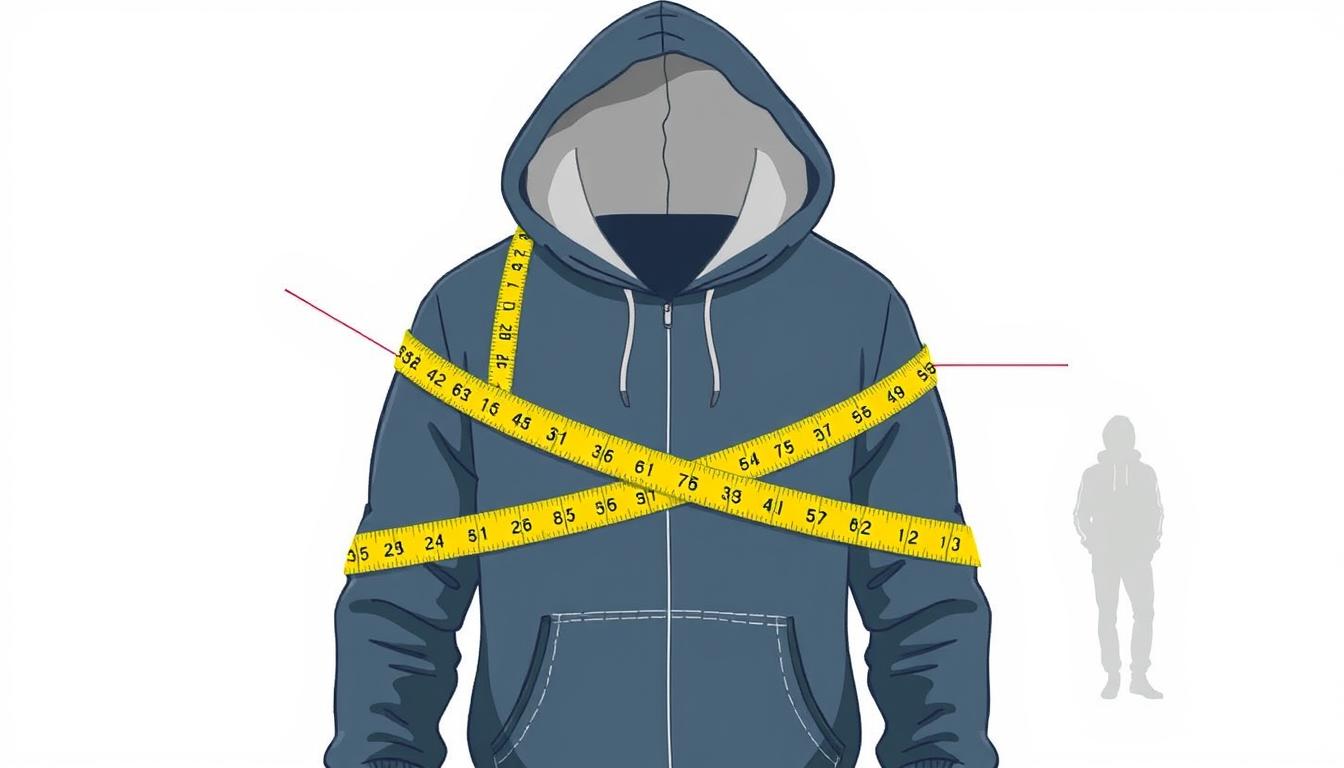
Knowing how to measure a hoodie correctly is key to our brand’s approach. It’s not just about making sure it fits. It’s about producing clothes that people really want to wear. Clothes that make them feel good and comfortable.
Why Accurate Measurements Matter
Getting the right measurements is vital for customer happiness and keeping them coming back. For example, being precise with hoodie sizes means crafting the perfect hoodie fit for all body types. Measurements for chest, waist, and hip are critical to serving each customer well. Women’s options range from 30-42 inches across the chest, for weights between 88-209 lbs, promoting inclusivity3.
Men’s hoodies, on the other hand, range from 32-46 inches for chest and 28-42 inches for waist. This allows for weights between 110 and 264 lbs3. These specifics highlight the hoodie measurement importance, showing our dedication to varied sizes with accuracy and kindness.
The Basics of Hoodie Sizing
Starting with hoodie sizing means looking at standard charts and noticing the little differences for certain looks. Like, some might choose a hoodie that’s bigger by one or two sizes for a looser style3. In the U.S., large is most popular, then medium. This prefers comfort and flexibility in hoodies4.
When ordering for groups, it’s wise to follow a sizing ratio of 1-2-3-3-1 across different sizes. This ensures most people find a good fit4. Such planning helps with stock and keeps customers happy by offering hoodies that fit well.
Learning about sizing helps in offering clothes that meet today’s needs. Whether making a close-fitting hoodie or a looser one, each choice is precise. This way, every product we make meets our high standard of perfection.
Essential Tools for Measuring Your Hoodie
To get your hoodie to fit just right, you need the proper tools. A correct measuring tape and a good place to measure are key. These steps help make sure your hoodie fits you well.
Selecting the Right Measuring Tape
Picking the best measuring tape is important. You need one that’s flexible and won’t stretch, so you can measure accurately. Make sure it’s long enough for the biggest parts of your hoodie, like the chest and bottom edge.
Preparing Your Workspace
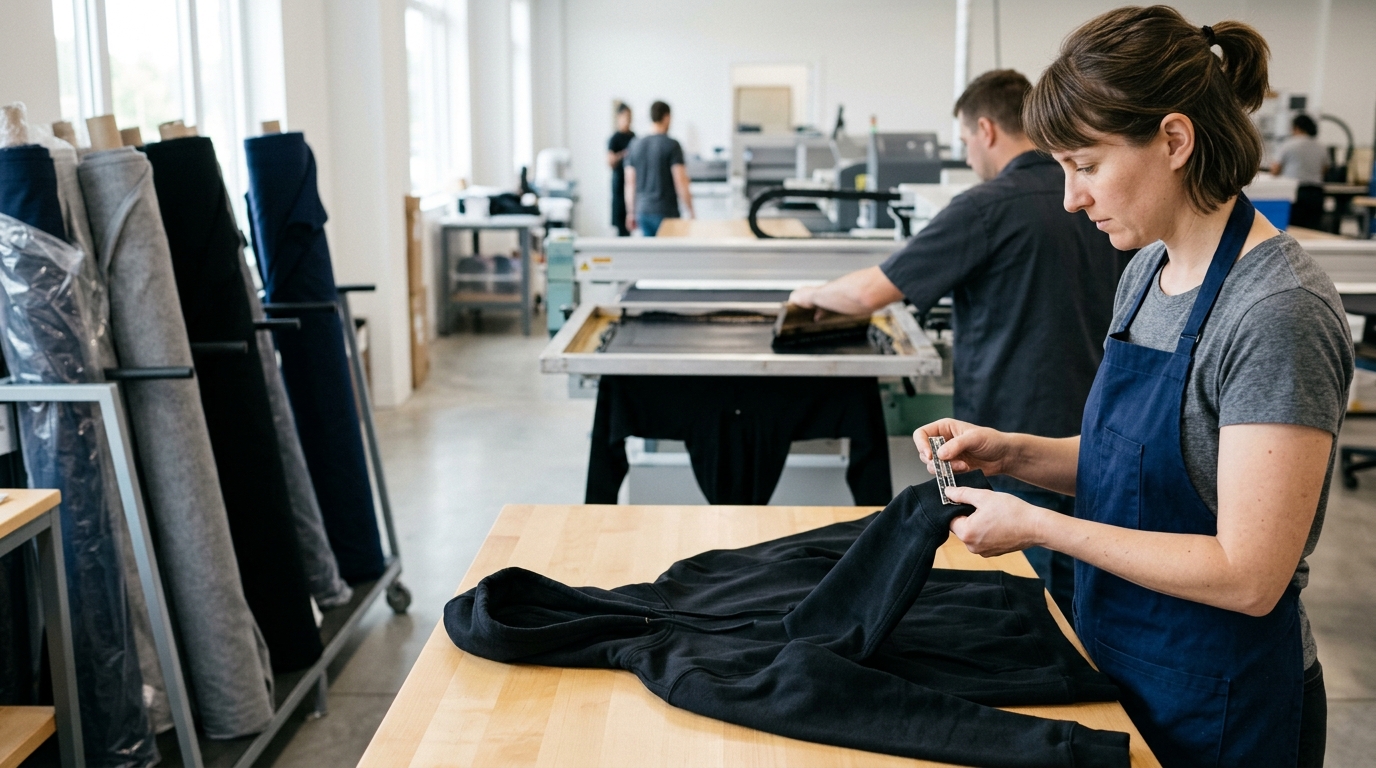
A good space for measuring is critical. Use a big, flat surface like a table to lay out your hoodie without folding it. This way, you can measure different parts accurately, from the chest to the sleeves.
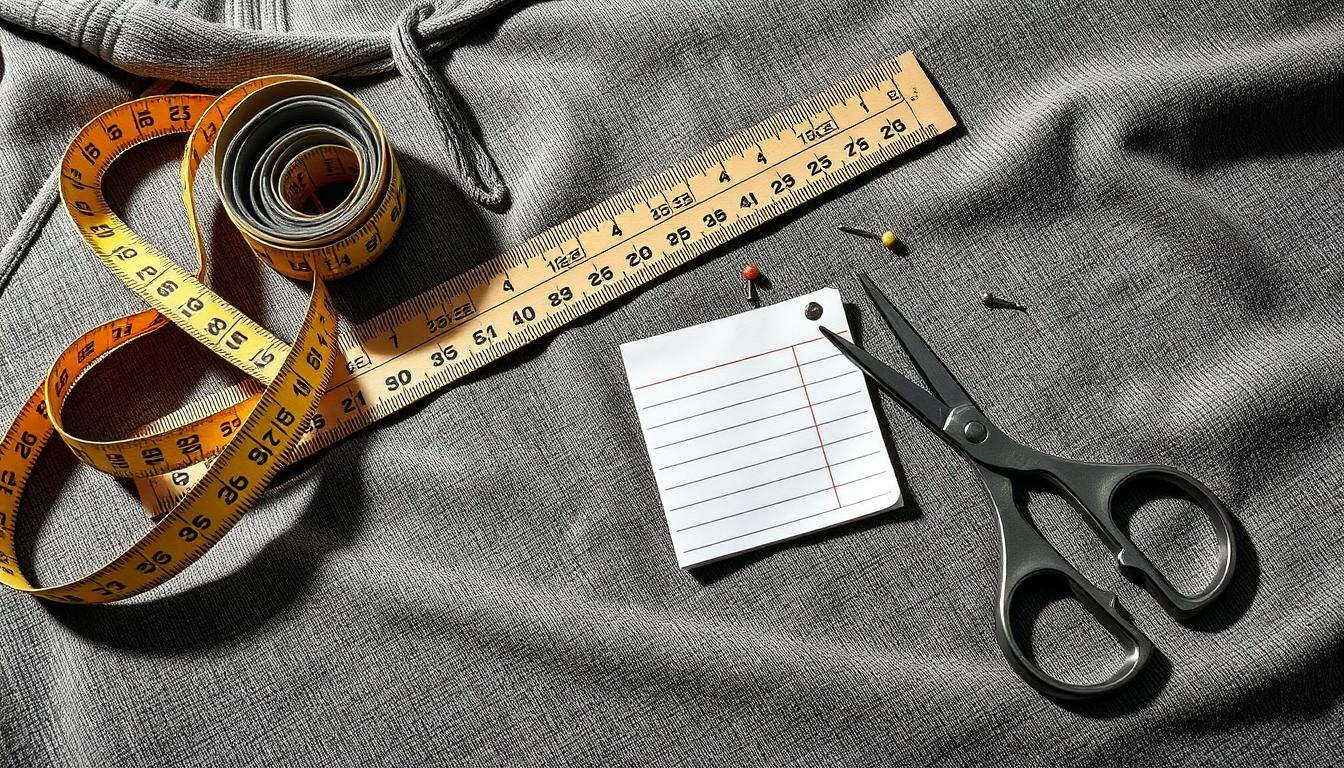
Once you have the right tape and space set up, you can start measuring carefully. Paying attention to the length of the sleeves and the width of the chest is crucial. Getting the sleeve length right adds to the hoodie’s style and comfort5. Also, knowing that size XL fits a 44-46 inch chest helps pick the right size6.
Choosing the right tools and measuring your hoodie carefully matters a lot. It ensures your hoodie will fit perfectly. This makes the hoodie not just comfortable but also stylish.
Step-By-Step Guide on How to Measure a Hoodie
Our guide will show you how to accurately measure a hoodie. It’s ideal for either personal use or for a fashion brand’s collection. Knowing the correct way to measure a hoodie’s size is key.
First, place the hoodie flat on a surface. Make sure you smooth out any wrinkles. This helps you get the real size of the hoodie. Now, let’s go over how to measure each important part:
- Chest Width: Measure under the armholes from one side to the other. Then, double this for the total chest size. For example, a size M usually is between 38-40 inches (97-102 cm)7.
- Sleeve Length: Begin at the shoulder seam, go down to the cuff end. The tape must follow the sleeve’s curve.
- Body Length: Measure from the top shoulder point near the collar, straight to the hoodie’s bottom.
The hoodie’s style, like pullover or zip-up, can change the measurements a bit. Zip-ups, for example, might fit differently since they’re meant to be more snug8.
| Size | Chest Width (inches) | Sleeve Length (inches) | Body Length (inches) |
|---|---|---|---|
| Small | 34-36 | 32 | 26 |
| Medium | 38-40 | 33 | 27 |
| Large | 42-44 | 34 | 28 |
| X-Large | 46-48 | 35 | 29 |
| XX-Large | 50-52 | 36 | 30 |
Using these steps to measure a hoodie will give you the most accurate results. This ensures you can match it with sizing charts or know what fits your customers. A good hoodie fits just right, allowing for movement and covering the torso well.
By following these tips, you’ll get reliable sizing info. This helps make customers happy and reduces returns because of size problems.
Comparing Hoodie Measurements to Size Charts
First, take accurate measurements of your hoodie. Next, compare them with the hoodie size charts from different brands. This helps to find the perfect fit, considering the size variations across brands.
Deciphering Brand-Specific Size Guides
Each brand’s size chart is key to finding the right hoodie size. For example, a large in one brand could be medium or small in another9. Youth sizes change a lot, clearly defined for each age from 3 to 14 years10. Women’s sizes, from 6 to 20, also include specific bust size information for a better fit10.
Finding the Perfect Fit Among Various Hoodie Styles
Looking into styles, there’s a choice for everyone. A slim-fit hoodie has precise measurements for chest, length, and sleeves for a sharper look10. On the other hand, brands like BluzUp offer oversized hoodies for a comfy or stylish oversized look9. Always measure yourself and consult these brand-specific charts before buying to ensure your choice fits well and meets your style needs9.
| Size Category | Chest (inches) | Length (inches) | Waist (inches) | Sleeve (inches) |
|---|---|---|---|---|
| Youth 3-4 | 22-24 | 15 | 10 | 14 |
| Women’s 10 | 32-34 | 27 | 15 | 24 |
| Men’s L | 44-46 | 30 | 18 | 26 |
Conclusion
We have journeyed through hoodie history and modern practices, showing how important it is to find the perfect fit. We’ve moved from simple rope measurements in the Middle Ages11 to using advanced CAD software today11. This shows us the evolution from basic hoodie types to today’s diverse styles like unisex pullovers and zip-ups6. We learned that every detail, from sizing to fabric choice, impacts the overall quality of a hoodie.
Talking about hoodie sizes isn’t just about numbers; it’s about making customers happy and keeping them loyal11. Our guide helps entrepreneurs and wholesalers make choices that fit what their customers want612. By knowing each hoodie’s unique size, material, and care needs, we can meet the needs of many customers6.
Choosing the right hoodie, whether it’s snug or loose, made of heavy fleece or light cotton6, is something we all share. We look forward to new advances that will make even better hoodies for casual wear, exercise, or to make a statement12. Use what we’ve shared to ensure your brand succeeds, one great hoodie at a time.
FAQ
Why is it important to accurately measure a hoodie before purchasing?
Getting the right measurements helps make sure the hoodie fits well. This matters a lot for those who care about quality and making their customers happy.
What are the fundamental measurements needed for hoodie sizing?
You need to know a few key sizes: chest, waist, hips, sleeve length, and hoodie length. These help find the most comfortable and good-looking fit.
What tools do I need for measuring a hoodie properly?
You’ll need a soft measuring tape and a smooth surface. Having someone to help you can also make it easier to get accurate measurements.
How do I select the right measuring tape for hoodie measurement?
Pick a measuring tape that’s flexible and long enough to measure the hoodie’s widest parts accurately.
What steps should I follow to accurately measure my hoodie?
Measure the chest, sleeve, and body length first. Remember, the type of hoodie, like pullover or zip-up, affects the measurements too.
How do I compare my hoodie’s measurements to the size chart?
Check your hoodie’s measurements against the brand’s chart. Think about how tight or loose you want it. Also, consider how the material might shrink or stretch.
What should I consider when preparing my workspace for measuring a hoodie?
Make sure you have a clean and flat area, like a table, ready. This helps you take accurate measurements without mistakes.
How do I decide between a tight or loose-fitting hoodie when using size charts?
Think about what style you like, what’s in fashion, and how you plan to wear the hoodie. This will guide you to choose the right fit.
Should I account for the material of the hoodie when measuring for size?
Absolutely, since the fabric can change the fit. It’s wise to pick a size that allows for any stretching or shrinking.
Can I trust the measurements provided by different brands?
Different brands might have small differences in sizing. Always compare their size chart with your measurements for the best fit.