Have you ever found it super hard to get a hoodie that fits just right from an online store? With so many brands and sizes, ensuring a good fit without trying it on is tough.
We get how frustrating this can be, so we’re here to offer a hand. More than 35,000 online sellers use Size.ly for creating accurate size charts1. In today’s world where shopping online is king, having precise measurements in your listings is key. It helps reduce returns by providing a fit that’s snug yet comfortable1.
Now, let’s talk about a big problem: inconsistent sizing. Some sweatshirts only list chest size, making them too big for petite women, while men might find them comfy1. Because sizes vary a lot between brands, always check the size chart before buying online. It’s not just a tip—it’s a must1.
Armed with a measuring tape and this guide, you’re all set to master online shopping. With the right info, you can make sure your next hoodie is a perfect match for what you want and need.
Key Takeaways
- Understand the importance of accurate measurements for a perfect hoodie fit.
- How Size.ly aids over 35,000 online sellers in creating reliable size charts1.
- Why recording measurements to the nearest 1/4 inch significantly impacts fit1.
- Navigate the complexities of unisex, men’s, and women’s sweatshirt sizing with confidence1.
- Learn why consulting size charts is vital for online purchases due to varying manufacturer sizes1.
Understanding Hoodie Sizing Fundamentals
Finding the perfect hoodie size is key for comfort and style. We’ll look at hoodie sizing basics, including different types and how they affect your choice.
Importance of Correct Fit
A good-fitting hoodie should be 2-4 inches larger than your chest size. This ensures comfort2. Avoid common mistakes like incorrect measurements, ignoring brand size charts, and not accounting for shrinkage in cotton sweatshirts2.
Differences Between Unisex, Men’s, and Women’s Sizing
Unisex hoodies are roomy, fitting various body types well. Men’s hoodies offer more room in the shoulders and chest. Women’s versions are snugger at the waist and bust23. Knowing these differences helps choose the right size, as your usual t-shirt size may not work2.
Key Measurements for An Accurate Size
Key measurements are vital in finding your hoodie size:
- Neck circumference
- Shoulder width
- Chest breadth — add 2-4 inches for the right fit2
- Sleeve length
- Length from collar to hem
Compare your measurements to brand size charts for the best fit2. Sizes can differ greatly between brands. For example, Ninghow’s sizes range from XS to XL, which fits chest sizes from 32 inches to 46 inches3.
To sum up, understanding hoodie sizing—whether unisex, men’s, or women’s—helps you make a choice that fits well and suits your style. Always check key measurements and brand size charts for a great buy23.
Preparing to Measure Your Hoodie
When getting ready to measure, being precise is key. This ensures your measurements are spot on. First, we’ll lay out the hoodie to get started.
Laying Out the Hoodie Correctly
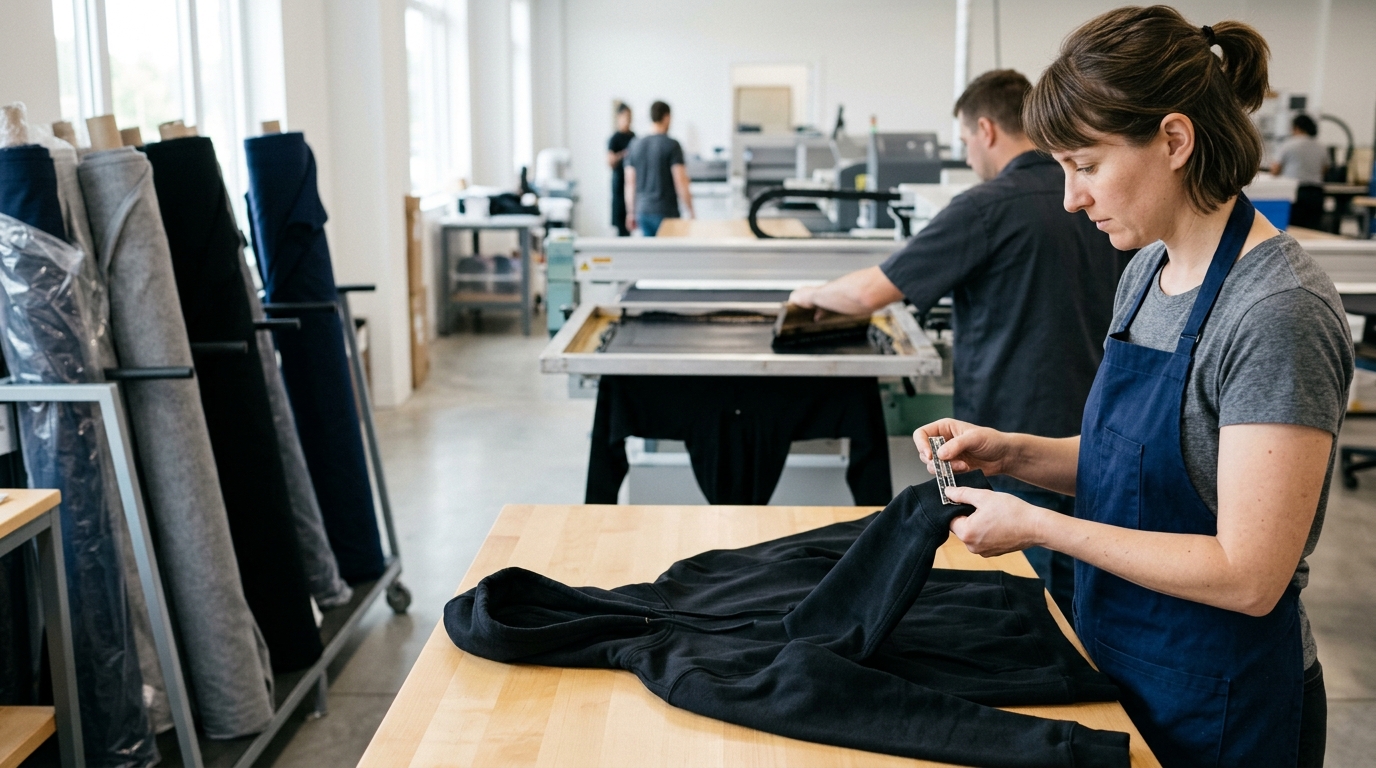
The first step is to lay your hoodie out flat. Make sure the front side is up. This helps avoid any mistakes in your measurements. Laying out clothing flat is crucial. Smooth out all creases or wrinkles because they can mess up your measurements. Remember, it usually takes about 5 weeks to order hoodies4. So, you want to measure correctly from the start to avoid any delays.
Choosing the Right Tools for Measuring
Choosing the right measuring tools comes next. A flexible tape measure that’s at least 36 inches long works best. This tool is perfect for all sizes, from kids to adults1. When you’re measuring, lay the tape measure flat on the hoodie. Measure to the nearest 1/4 inch for the best accuracy1.
- Youth Hoodies: Chest ‘To Fit’ size ranges from 24 inches to 38 inches. This covers ages 3-14 years4.
- Ladies’ Hoodies: Bust ‘To Fit’ sizes go from 32 inches to 46 inches. There’s a good range for all body types4.
- Adult Slim-Fit Hoodies: Sleeve length can vary from 25.2 inches to 30.7 inches. This fits a variety of arm lengths and preferences4.
Following these steps makes your measuring process accurate and smooth. Starting right is the secret to perfect results!
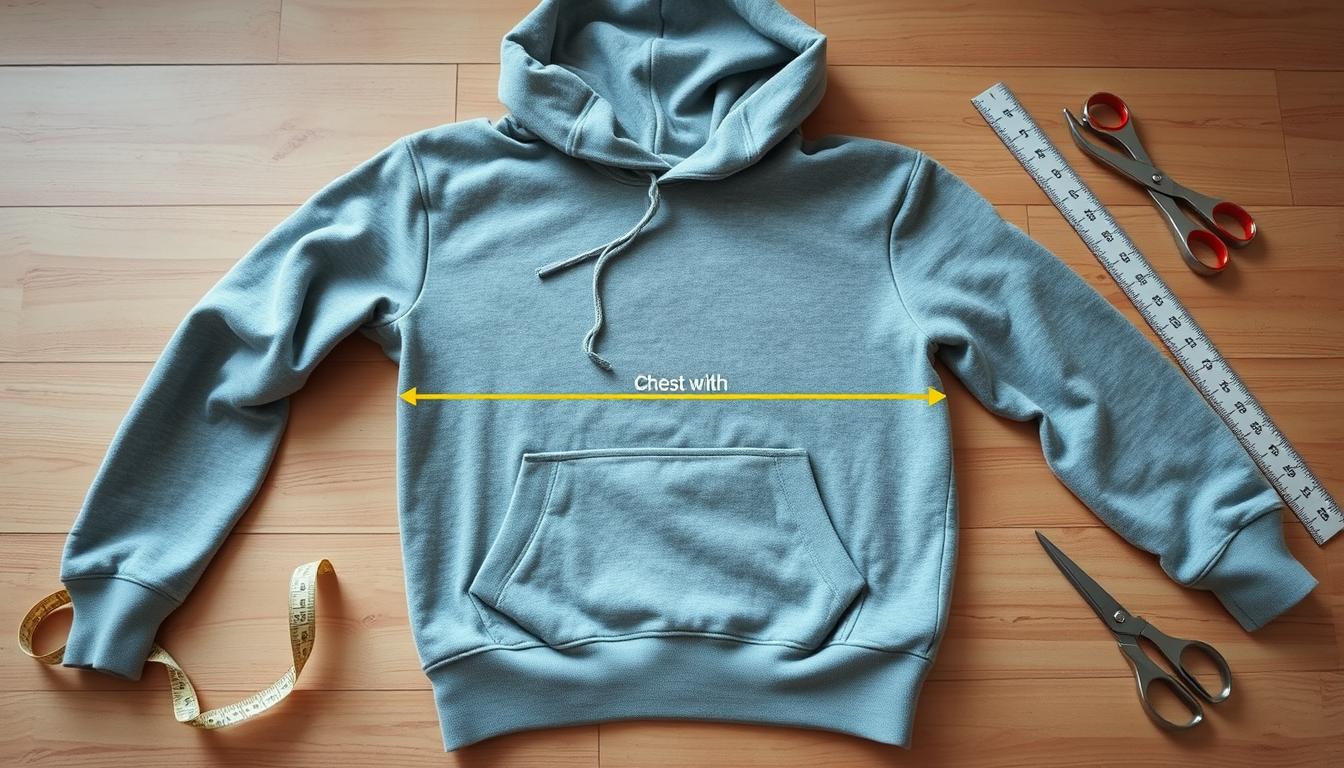
How to Measure Hoodies for Accurate Sizing
Measuring hoodies right is key for teams or online shops. You need a good measuring guide to make sure every hoodie fits perfectly. This mix of comfort and style is what we’re aiming for. So, let’s learn to measure hoodies the right way.
Start by placing the hoodie flat and making it smooth. Here’s what to do next:
- Measure the neck-to-shoulder length: Start from the middle of the neck and extend the measuring tape to the shoulder seam.
- Sleeve length: Measure from the top shoulder point right down to the wrist edge.
- Shoulder-to-shoulder width: Place the tape measure at one shoulder edge and extend it to the other.
- Chest circumference: Wrap the measuring tape around the fullest part of the chest, just below the arms.
- Front length: Position the tape at the highest point on the shoulder and measure straight down to the desired hemline.
- Measure the hem and sleeve cuff: Ensure to measure outside the elastic areas to account for freedom of movement and additional layers.
Always double-check your measurements for accuracy. Match your hoodie’s size with size charts for the best fit. The most common sizes bought in the US are medium and large, but all sizes from XS to XXXL5 are needed.
For group orders, consider these ratios:
- Small: right for 7% of people
- Medium: 28% prefer this size because it’s comfy
- Large: chosen by 30%, for a comfortable, slightly larger fit
- Extra-Large: fits 20% of people, giving more space
- XXL and XXXL: picked by 14% for an oversized feel
Adjust these numbers based on what your group needs, including very large or small sizes.
For retailers, offering a variety of sizes means you can cater to more people. This reduces returns due to wrong sizes5. With correct hoodie dimensions on hand, compare to size charts to pick the best sizes6.
Comparing Your Measurements with Size Charts
After you measure your hoodie, compare your numbers with official size charts. This is key for finding a hoodie that fits well. Size charts help ensure your sweatshirt is comfy and suits your style.
Interpreting Standard Sweatshirt Sizing Charts
Size charts might seem complex, but they’re essential for getting the right hoodie size. They show measurements for the chest, waist, and sleeve length. For example, a large size often fits a 42-44 inch chest across different brands. This helps you pick the right size for you7.
Different hoodie styles, like crewnecks or zip-ups, may fit differently2. Make sure the sleeves reach your wrist, and the bottom covers your waistband for a good fit2.
When to Upsize or Downsize Based on Measurements
Deciding to go bigger or smaller is crucial for the perfect fit. If you’re between sizes, choosing the bigger one usually offers a relaxed feel2. Also, cotton sweatshirts might shrink, so consider a larger size2.
Look for terms like “Oversized” or “Slim Fit” in size charts. They show the hoodie might fit differently from usual2. For kids’ hoodies, check measurements carefully. They match chest sizes with kids’ ages for a great fit4.
| Size | Chest (inches) | Length (inches) | Sleeve (inches) | Fit Type |
|---|---|---|---|---|
| Medium | 39-41 | 27 | 33 | Standard |
| Large | 42-447 | 28 | 34 | Loose |
| X-Large | 45-477 | 29 | 35 | Oversized |
Remember, the type of sweatshirt affects your size choice. Oversized hoodies give a roomier fit than standard pullovers. Think about if you prefer snug or loose7.
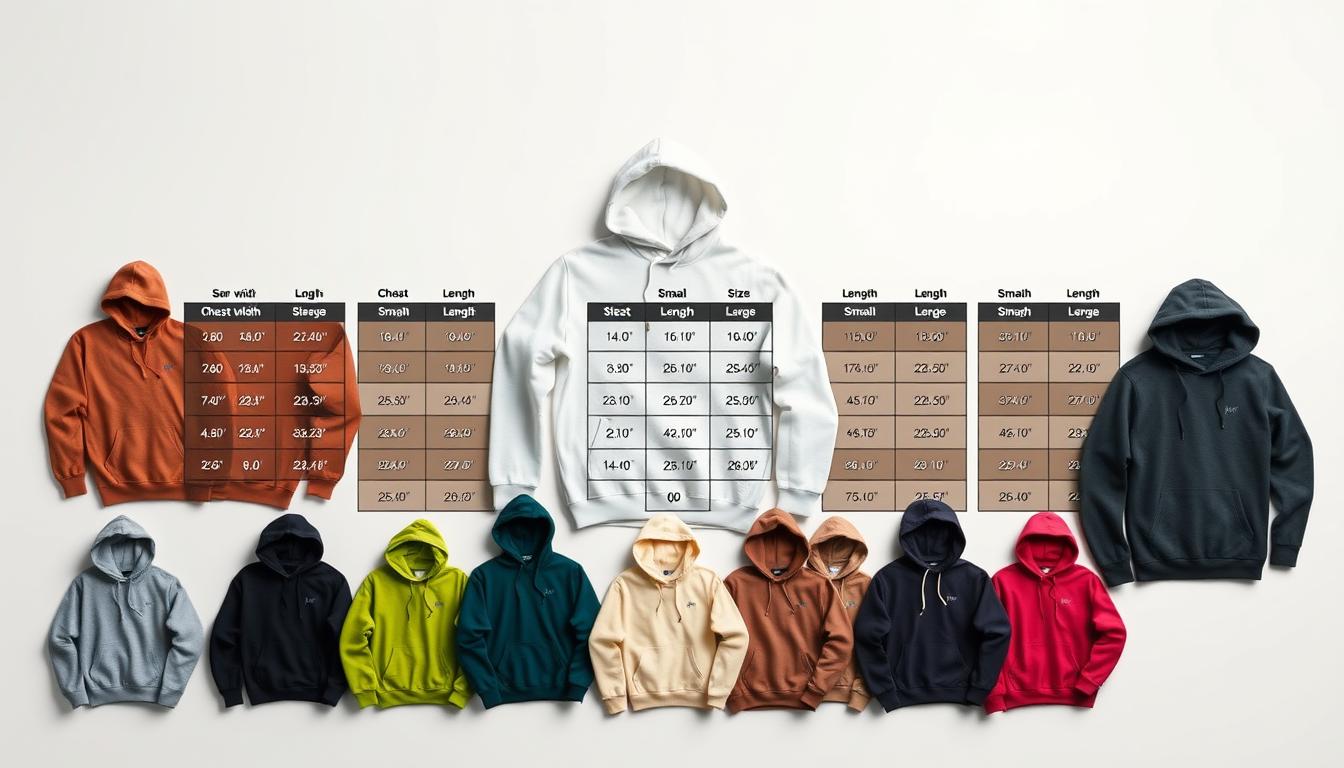
Using size charts is crucial for picking the right hoodie. It helps you find one that fits well and looks great. The right hoodie can improve how you look and feel.
Tips and Tricks for Online Shopping
When buying sweatshirts online, knowing how to measure is key. This reduces returns and keeps customers happy. In America, the most bought top size is large, at 30%. Medium is next, at 28%8. Sellers use this info to stock their shops right, meeting what customers want.
Tools like Kiwi Sizing AI Size Recommender make sizing easier for online shops. A good stock mix might be 1 small, 2 mediums, 3 larges, 3 extra-larges, and 1 double extra-large8. This 1-2-3-3-1 mix matches most group needs well. For single items, shops should match their sizes to the market and brand specifics. Extra-large is 20% of sales8.
For better fits, here are some tips: Men need to know their neck, chest, hips, and crotch sizes9. Details like sleeve length, waist, and thigh size help too. For women, key measures are the bust, under-bust, hips, and inseam. Bra sizing needs special care. Add 4 or 5 inches to the band size, depending on its evenness9.
Clear size charts and detailed product info help online shops. This reduces sizing questions and complaints, reducing returns. It improves the online shopping experience. Since brands differ in size, it’s wise to check the brand’s own chart before buying. This ensures a perfect fit and happiness with your choice.
Conclusion
In closing our detailed guide, let’s remember how crucial measuring success is for the perfect hoodie fit. This journey showed that understanding your unique size needs is key. For instance, an XL hoodie fits chests 44-46 inches wide, while a large fits the 42-44 inches range. But, brands often vary7. Similarly, Ninghow’s sizes from XS to XL cover various shapes, showing how fits differ for unisex, men’s, and women’s styles3.
When you measure your body’s key areas, like shoulder width or cuff size, finding the right hoodie becomes easier3. It’s not all about the measurements. It’s also about how you feel wearing it. For fashion entrepreneurs and wholesale buyers, using sizing charts and reading customer reviews is crucial. They help find the right fitting hoodie that matches your style73.
We’re here to guide you to the perfect hoodie fit. Materials like cotton, fleece, and synthetics change how a hoodie feels7. But the real value is in its comfort and style on you. Follow our Fit Guide and what customers say. Use this knowledge when you shop for sweatshirts online. It’ll change your buying experience and reduce returns from size issues. We’re happy when you’re happy. Together, we make fashion simple and fun!
FAQ
How do I measure hoodie sizes correctly?
To start, lay the hoodie flat and smooth out any wrinkles. Measure from the neck to shoulder, sleeve length, shoulder width, and chest. Use a flexible tape for this.
What’s the difference in fitting between unisex, men’s, and women’s hoodies?
Unisex hoodies usually have a roomier fit for all body types. Men’s and women’s hoodies have distinct cuts. Women’s tend to be more fitted. Always check the brand’s size chart to find your best fit.
Why is it important to measure for the correct hoodie fit?
Measuring helps you get the right size for both comfort and style. The right fit looks better and feels better, whether tight or loose.
How can I ensure I’m using the right tools for measuring a hoodie?
Use a long, flexible tape measure. Make sure the hoodie lies flat without any twists. Accurately measure all the important spots.
How should a hoodie be laid out for measuring?
Place it on a flat surface, facing up. Smooth out any wrinkles or folds to get the right measurements.
What are some essential measurements for determining the right hoodie size?
Key measurements are the neck, chest, waist, sleeve, and length from shoulder to hem. Getting these right leads to a good fit.
How do I choose the correct size when comparing my measurements with size charts?
Line up your measurements with the brand’s chart. Think about how you want the hoodie to fit. Decide if you need a size up or down based on what you find.
What tips can you offer for online shopping to ensure the correct hoodie size is selected?
Ensure size charts are clear on your website. Use sizing tech to help customers. Remember, brands fit differently, so always check their charts.
How can I minimize returns when buying hoodies online?
Measure yourself carefully and compare it to the provided size charts. Consider the hoodie’s style. Look at reviews and follow the retailer’s advice for sizing.
Can I trust the size guide provided by different brands?
Brands follow their own size guidelines. Always look at their specific size charts for accuracy. Measure a hoodie you like and compare it to get the best fit.