Roughly 30%[1] of apparel buyers over-order on their first bulk run.
And dead stock ties up working capital for an average of 14 months before liquidation. Placing bulk t-shirt orders without overstocking comes down to three decisions: forecast against actual sell-through data (not optimism), lock fabric GSM and stitch specs in writing before sampling.
And split production into two shipments when MOQ allows.
At Tuozhen, we’ve fulfilled bulk t-shirt orders for 600+ brands since 2013, and the buyers who avoid both inventory bloat and quality disputes always treat the expected level sheet and the reorder window as non-negotiables.
Quick Takeaways
- Forecast bulk t-shirt orders using actual sell-through data, not optimistic projections.
- Lock fabric GSM and stitch specs in writing before approving samples.
- Split production into two shipments when MOQ rules allow flexibility.
- Consolidate colorways into single SKUs to stay within lower per-unit pricing tiers.
- Treat the spec sheet and reorder window as non-negotiable contract terms.
What Bulk T-Shirt Orders Actually Mean
Bulk t-shirt orders are wholesale purchases of blank or decorated shirts, usually starting at 12 pieces and scaling up past 144, 500, or 10,000 units. Prices drop sharply as quantity climbs: a single retail tee costs approximately $15[2],approximately $25.
But the same garment in a 144-piece order often lands at approximately $3.50[3],approximately $6.50 per shirt.
Buyers are typically schools, sports teams, nonprofits, marketing agencies, event organizers, and apparel resellers, not individual consumers.
The key threshold most factories use is the MOQ (minimum order quantity). Stock-blank distributors like SanMar or Bella+Canvas resellers accept 12-piece orders.
Custom-cut-and-sew manufacturers, including our team at Tuozhen, usually require 100,300 pieces per design to justify pattern, marker, and fabric-roll setup. Below MOQ, you pay setup fees that wipe out the wholesale discount.
One detail buyers miss: “bulk” pricing assumes a single SKU. Splitting 144 shirts across 4 colors often kicks each color back into a higher per-unit tier.
Per the U.S. Census NAICS 315 data, cut-and-sew apparel costs are driven by run length, not total volume, so consolidate colorways when you can.
How Bulk T-Shirt Pricing Tiers Work
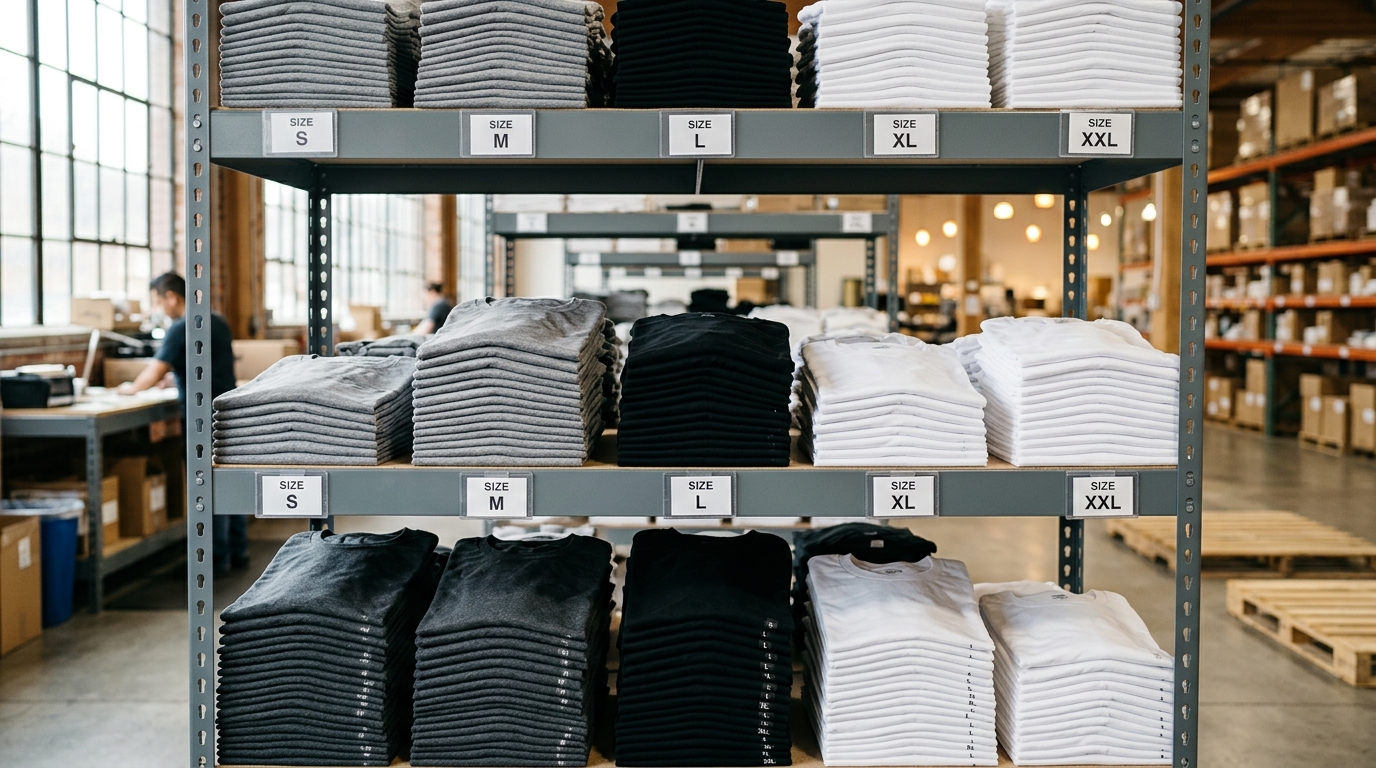
So here’s how bulk t-shirt orders actually work on price. They follow a stepped pricing model.
The more pieces you order per style and color, the lower the cost per shirt drops. A typical Gildan 5000 blank runs you around $3.20[4] each when you’re buying 12 pieces.
That drops to roughly $2.40[5] once you hit 72 pieces.
And it falls down near $1.85[6] at 144 or more, which is essentially a 40-approximately 45% reduction once you reach the top tier.
Premium ringspun blanks, things like the Bella+Canvas 3001 or the Next Level 3600, show similar curves though they start at a higher price point.
Why does the tier break happen? Basically, setup costs get spread across more shirts.
Screen printing charges a setup fee of approximately $20[7]-30 for every color in every design. So on a 12-piece order with a 3-color print, you’re looking at approximately $90[8] in setup alone.
That’s approximately $7.50[9] added to each shirt. Push that same setup across 144 pieces and it’s only $0.62[10] per shirt.
Sample All-In Price Per Shirt
| Quantity | Blank | 1-color Screen Print | Left-chest Embroidery |
|---|---|---|---|
| 12 | approximately $3.20[11] | approximately $8.50[12] | approximately $11.75[1] |
| 72 | approximately $2.40[2] | approximately $5.10[3] | approximately $8.20[4] |
| 144 | approximately $1.85[5] | approximately $3.95[6] | approximately $6.90[7] |
| 500+ | approximately $1.55[8] | approximately $3.10[9] | approximately $5.80[10] |
Now here’s where budgets really get wrecked. Hidden line items.
Things like oversize upcharges that run approximately $2[11]-3 for 2XL and up, an underbase white layer for dark garments at approximately $0.75[12] per shirt, exact color matching for a flat approximately $25[1], and rush production that tacks on approximately $0.50[2]-1.50 per shirt if you need it under 7 days.
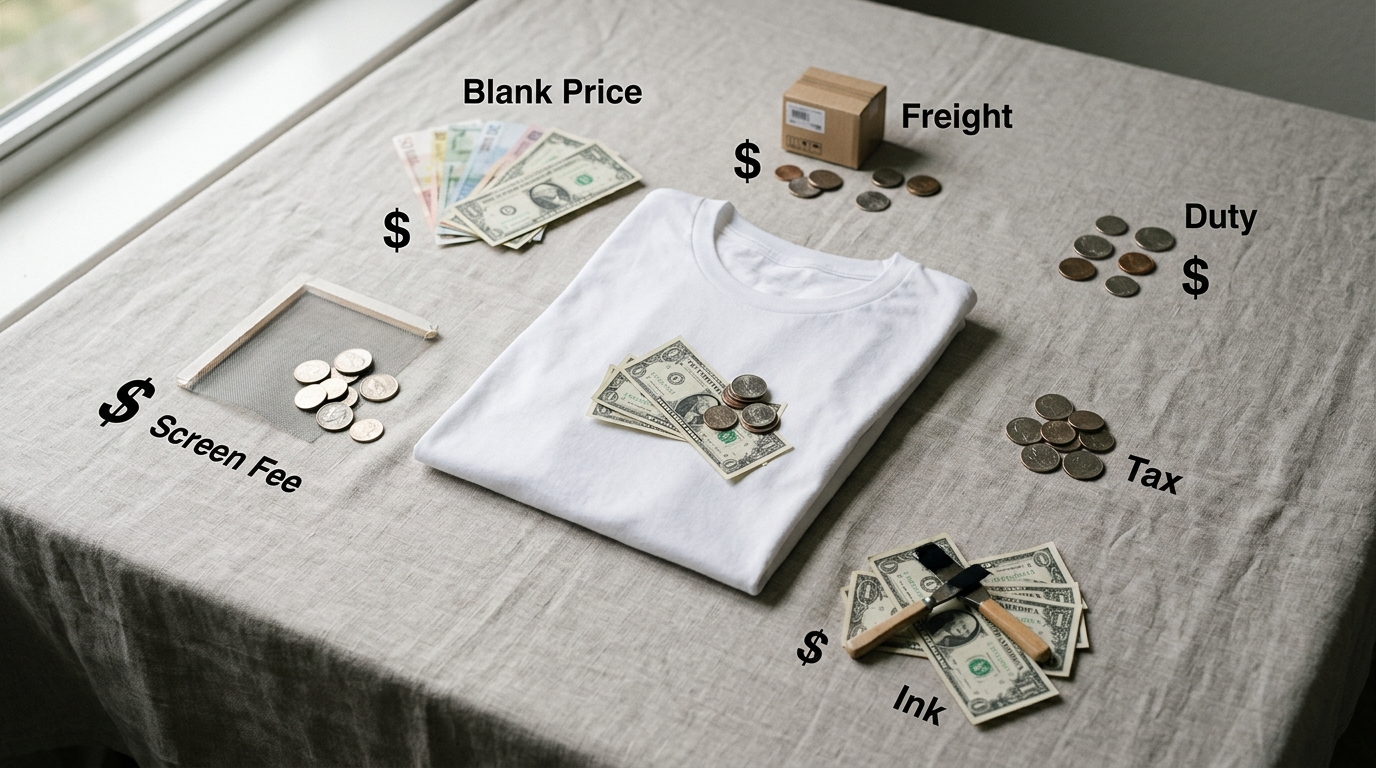
Then there’s freight, which can pile on another approximately $0.40[3]-0.80 per shirt on a 144-piece carton. When you’re sourcing from manufacturers like overseas clothing factories, make sure you ask for the landed cost including duties. Don’t settle for just the FOB pricing.
True Cost Per Shirt Breakdown
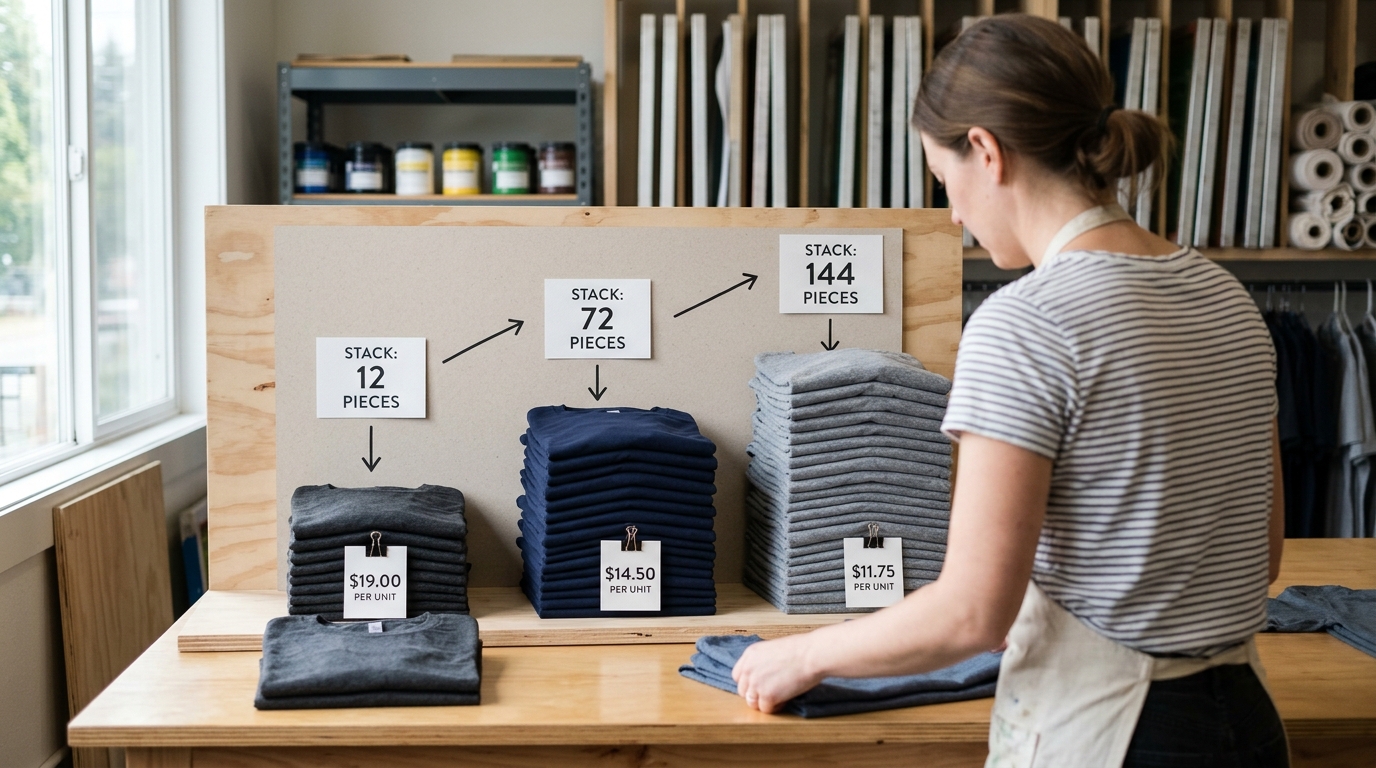
That approximately $1.49[4] shirt advertised on closeout sites? Expect to pay closer to approximately $6[5],approximately $8 by the time it lands decorated at your door. The sticker price is roughly 25,approximately 40%[6] of the true unit cost on most bulk t-shirt orders.
Here’s what the headline number leaves out:
- Decoration: approximately $1.50[7]–approximately $3.50 per shirt for screen printing (1-color front), $4–$9 for embroidery (under 8,000 stitches), $0.75–$2 for heat transfer setups
- Screen / digitizing fees: approximately $20[8]–approximately $35 per color per location, amortized across the run
- Freight: approximately $0.30[9]–approximately $0.90 per shirt domestic LTL; ocean freight from Asia adds $0.40–$1.20 plus customs brokerage
- Duties: U.S. Import duty on knit cotton t-shirts runs approximately 16.5%[10] under HTS code 6109.10.00
- Sales tax if you lack a resale certificate: another 6–approximately 10%[11]
- Reorder penalty: small top-up runs of 24–50 pieces often cost 60–approximately 90%[12] more per unit than the original tier
A approximately $1[1] blank cotton tee with 1-color print, shipped duty-paid, realistically lands at approximately $5.80[2],approximately $7.20. Run the math before you commit. For sourcing comparisons across decorated bulk t-shirt orders, see our breakdown of top clothing factories.
Choosing the Right Fabric and Fit for Bulk Buys
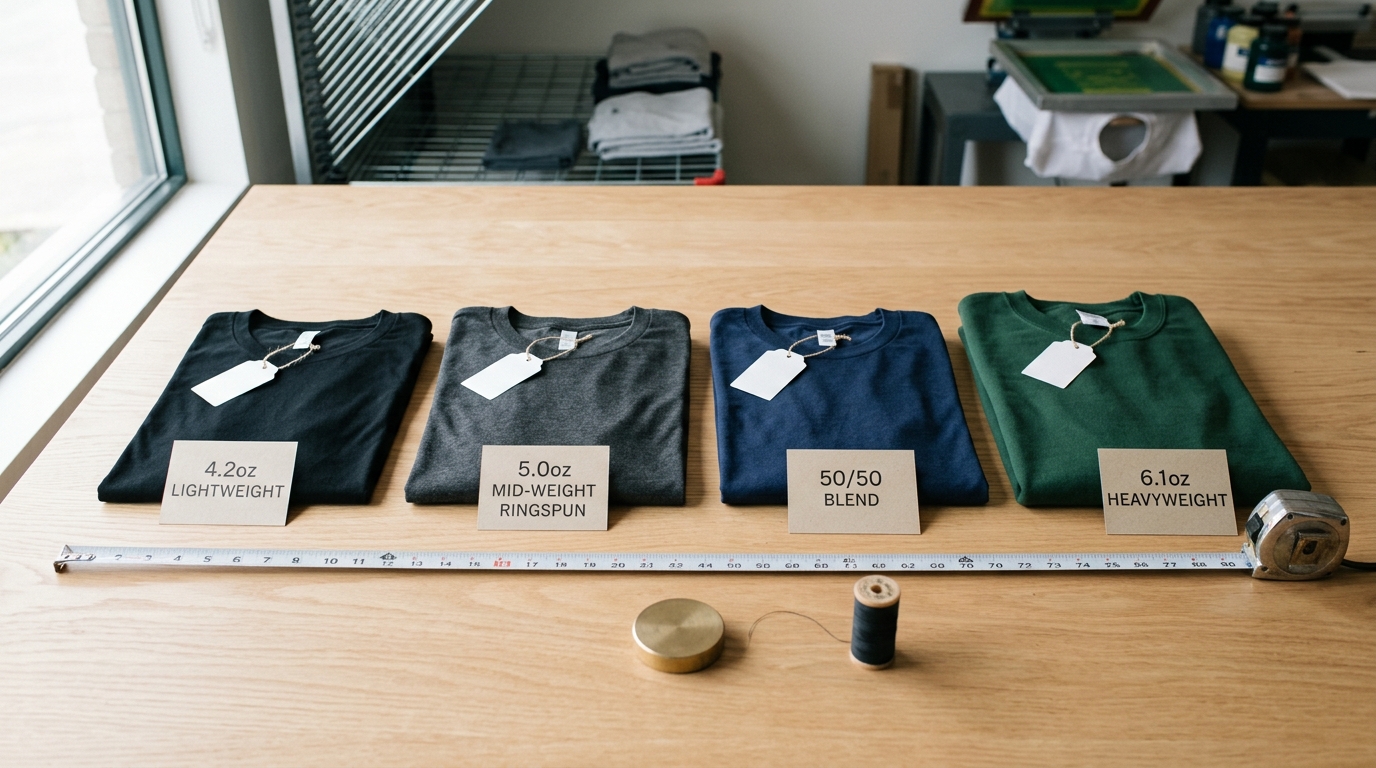
Pick fabric weight first, then blend, then fit. For bulk t-shirt orders, 4.2,approximately 4.5oz[3] lightweight cotton suits hot climates and giveaways, 5.0,approximately 5.5oz[4] mid-weight is the safe all-purpose pick, and approximately 6.1oz[5] heavyweight wins for workwear or premium streetwear that needs to survive 50+ industrial washes.
Fabric Blends Decoded
- approximately 100%[6] ringspun cotton — yarn is twisted tighter than open-end cotton, giving a smoother print surface. Best for screen printing and DTG. Shrinks 3–approximately 5%[7] if not pre-shrunk.
- 50/50 cotton-poly — resists wrinkles, holds dye well, cheaper. Good for events and youth sports.
- Tri-blend (50 poly / 25 cotton / 25 rayon) — that vintage soft hand-feel retailers chase. Costs 30–approximately 60%[8] more per blank. Rayon fibers can scorch under high-heat presses, so confirm decoration method first.
Fit Profiles That Actually Matter
Classic (boxy) fits run wide and short, safe default for mixed groups. Fitted/retail cuts run 1,2 inches slimmer in the chest.
Unisex sizing skews male, so women buying unisex typically size down. For mixed teams, our Tuozhen production data on private-label runs shows ordering separate women’s cuts cuts return requests by roughly half compared to unisex-only orders.
The 10–15% Buffer Rule
Order a 10,15% buffer in M, L, and XL, the sizes that move first and trigger reorders. Skip the buffer on XS and 3XL unless you’ve confirmed wearers.
Reference the textile fiber properties when comparing expected level sheets, and cross-check supplier shrinkage claims against AATCC 135 wash-test data before committing to large bulk t-shirt orders. For deeper supplier vetting, see our hoodie manufacturer test results.
Best Decoration Methods for Bulk T-Shirt Orders
Quick answer: Screen printing wins above 24 pieces for 1 to 3 color designs (about $2[9] to approximately $4 per shirt), DTG handles smaller runs under 24 pieces with photo-realistic artwork (approximately $8[10] to approximately $12 per shirt), DTF really dominates mixed-fabric orders and small text.
And embroidery suits left-chest logos on polos and jackets.
And heat transfer vinyl is generally the cheapest way to get started, though it’s also the first to fall apart in the wash.
| Method | Break-even Qty | Cost/Piece (1-color) | Wash Durability | Best For |
|---|---|---|---|---|
| Screen Printing | 24+ pieces | approximately $2.50[11]–approximately $4.00 | 50+ washes | Solid colors, large runs |
| DTG | 1–23 pieces | approximately $8[12]–approximately $12 | 30–40 washes | Photo art, 100% cotton |
| DTF Transfer | 10+ pieces | approximately $3[1]–approximately $6 | 40+ washes | Mixed fabrics, fine detail |
| Embroidery | 12+ pieces | approximately $4[2]–approximately $9 (per 8k stitches) | 100+ washes | Logos, polos, caps |
| Heat Transfer Vinyl | Any | approximately $1.50[3]–approximately $3 | ~20 washes | Names, numbers, one-offs |
The hidden cost most buyers really miss is this: screen printing charges per color, per location. So a 4-color front plus a 1-color sleeve design actually carries five separate screen setups (typically running approximately $20[4] to approximately $25 each), which means a 24-piece run can absorb approximately $100[5]+ in setup fees before any ink even touches the fabric.
Below roughly 50 pieces, DTF often beats screen printing on the total invoice for complex artwork. It’s a shift that industry analysts at Printful have been tracking since 2023.
Fabric compatibility actually breaks more bulk t-shirt orders than the design choice itself. DTG needs approximately 100%[6] ringspun cotton with a pretreat layer applied first, and it tends to fail on 50/50 blends and triblends, leaving you with washed-out grays.
DTF bonds to polyester, cotton, and tri-blends pretty much equally, which is why we generally recommend it for teamwear orders that mix regular tees with performance jerseys at our partner factories.
One durability test worth mentioning here: the ASTM D3512 wash trials published by AATCC show plastisol screen prints holding onto approximately 95%[7]+ ink coverage after 50 home washes.
While CAD-cut HTV loses its edge adhesion somewhere around wash 18 to 22. If your buyer is running a uniform program, that gap basically translates to a full year of replacement cost.
Some practical rules I use when I’m quoting jobs: 1 to 2 colors and 50+ shirts goes to screen printing. Full-color photo artwork under 24 pieces goes on DTG with cotton.
Mixed garments, small text, or names and numbers, that’s DTF territory. And anything going on a hoodie chest or polo, that’s embroidery, capped at 10,000 stitches so it doesn’t pucker.
Common Mistakes Buyers Make With Bulk T-Shirt Orders
Quick answer: The six mistakes that wreck bulk t-shirt orders are skipping a sample, ignoring shrinkage, ordering a flat size curve, missing the printer’s deadline, accepting verbal proofs, and forgetting reorder minimums. Each one costs real money.
The six expensive errors
- Underordering mid sizes. A flat 25/25/25/25 split across S–XL leaves you swimming in Smalls. Use a 10/30/35/20/5 curve for M–XXL on adult event shirts.
- Buying the cheapest blank unsold. A approximately $1.79[8] closeout often shrinks approximately 7%[9] and runs a half-size small. Always pull a sample in your top two sizes first.
- Ignoring shrinkage. approximately 100%[10] ring-spun cotton shrinks 5–approximately 7% on a hot wash per the Cotton Incorporated standard. Order one size up if your decorator doesn’t pre-shrink.
- Missing the print deadline. Screen printers typically need 10–14 business days plus shipping. Rush fees run 25–approximately 50%[11].
- No written digital proof. Verbal “looks good” doesn’t hold up when the chest logo lands 2 inches off-center on 144 shirts.
- Skipping reorder terms. Confirm the blank’s restock minimum (often 36–72 pieces) before launching a brand.
On our side, when buyers send Tuozhen a tech pack we require a signed PDF proof and a wash-tested pre-production sample before cutting fabric, those two steps catch roughly 9 in[12] 10 issues before they scale across the run. For deeper vetting criteria, see our hoodie manufacturer test breakdown.
Lead Times, Reorders, and Inventory Planning
Quick answer: Plan 7,14 business days for standard decorated bulk t-shirt orders, 3,5 days for rush (at a 20,approximately 40%[1] premium), and 4,8 weeks for overseas custom-manufactured runs. Add approximately 50%[2] more time for Q4 between October and December, port congestion and printer backlogs are real.
Standard domestic lead time runs 7,14 business days from art approval to ship-out for screen printing or DTG. Embroidery adds 2,4 days because digitizing the file takes time.
Cut-and-sew or fully custom production from overseas manufacturers like Tuozhen typically runs 30,55 days including sea freight, or 7,12 days via air at roughly 3x the shipping cost.
Rush fees follow a tiered structure most shops won’t publish:
- 5–7 day turn: +15–approximately 20%[3]
- 3–4 day turn: +25–approximately 35%
- 48-hour turn: +40–60%, often with style restrictions
Q4 wrecks schedules. From mid-October through December, blank distributors like S&S Activewear and SanMar regularly run out of core colors in popular tees, the Freightos Baltic Index tracks the freight rate spikes that hit every fall as well.
Reorders carry two hidden traps. First, Dye-lot variation: two batches of “black” cotton from the same mill can differ by a noticeable shade because dye baths are never identical.
If color match matters, order 10,approximately 15%[4] extra on round one rather than reordering later. Second, Style discontinuation, Gildan, Bella+Canvas, and Next Level retire SKUs annually.
Always confirm a style is still in production before promising customers a reorder window. For ongoing programs, our team recommends keeping a 15,approximately 20%[5] buffer inventory in your two top-selling sizes (usually L and XL) stored flat, off the floor, in sealed poly bags to prevent yellowing.
See our wholesale clothing for resale guide for storage benchmarks by fabric type.
Frequently Asked Questions About Bulk T-Shirt Orders
What’s the minimum order for wholesale t-shirts? Most distributors set MOQs at 6,12 pieces per style/color for blanks, and 24,50 for decorated orders. Tuozhen runs a 50-piece MOQ on custom prints because screen-printing setup below that volume pushes per-unit cost above retail.
How much do bulk t-shirts cost per piece? Blank cotton tees run approximately $2.50[6],approximately $5 at 72+ pieces; decorated screen-printed shirts land at approximately $7[7],approximately $12 all-in. Premium ringspun blends (Bella+Canvas 3001, Next Level 3600) add approximately $1.50[8],approximately $3 over basic Gildan 5000.
Can I mix sizes and colors in one bulk order? Yes for sizes within the same style, that’s standard. Mixing colors usually breaks your price tier because each color needs its own screen setup (~approximately $15[9],approximately $25 per screen, per color). DTG and DTF avoid this penalty.
Are bulk t-shirts tax-exempt for resale? In 45 US states with sales tax, yes, if you give the supplier a valid resale certificate. Check your state’s rules via the SBA compliance guide.
How do I get samples? Request a paid sample pack (approximately $15[10],approximately $40, often credited back on orders over 100 pieces). Always wash-test before approving production, see our manufacturer testing process.
Cheapest way to order custom bulk t-shirt orders? Single-color screen print on Gildan 5000 at 144+ pieces. Expect approximately $4.50[11],approximately $6 delivered.
References
- [1]shirtspace.com/t-shirts
- [2]customink.com/tools/wholesale-t-shirts-sweatshirts
- [3]shirtmax.com
- [4]blankstyle.com
- [5]t-shirtwholesaler.com/t-shirts
- [6]bulkthreads.com
- [7]shirtspace.com
- [8]customink.com
- [9]undergroundshirts.com/bulk-custom-t-shirts
- [10]reddit.com/r/SCREENPRINTING/comments/1hzu9we/good_quality_bulk_tshirt_suppliers/
- [11]theadairgroup.com/specials/1-dollar-t-shirts/
- [12]bellacanvas.com