Transforming an idea into clothes with your design is something you would be very thrilled to do. You have a design. You visualize it, for example, a t-shirt or hoodie, with your design. But now, how do you obtain it? The available options for printing designs on apparel can complicate one’s decision.
A guide book would be able to deliver the information you need accurately. We will present you with the most popular printing methods currently in use. We will support you in selecting the one that you prefer for your work. We will even show you how to make your art while preparing it for optimal results. So, we start now.
The Main Approaches for Printing
In order to print designs on clothing, it is essential to be familiar with the different methods. Every procedure has its distinctive benefits. According to the latest report, the custom global t-shirt printing market is estimated to be worth more than USD 4.3 billion. It’s a world that keeps expanding. It is a perfect domain for designers to work in.
Getting to know the basic printing methods is the first thing to do. Our guide describes these popular printing techniques. For that, we will also give you a brief description of how they function. This background information is necessary so that you can make an informed decision for your brand or your project.
Direct-to-Garment (DTG) Printing
Direct-to-Garment printing is just like printing on a shirt using the very big inkjet printer. It’s more often known as the DTG printer. What the printer does is spray the fabric of the clothing with water-based ink. As a result, the ink gets absorbed into the shirt’s fibers.
This method is recommended for using designs with multi-colored schemes. It is a reliable technique when you require very small sized details such as pictures. It is also good for printing on a very small number of items. The DTG print is hardly seen at all when you touch it. With proper care, it lasts quite a long time.
Screen Printing (Silkscreen)
Screen printing is one of the oldest methods for printing designs on clothing. In this technique, a stencil that is called a screen is used. The device that the screen will push will get the ink directly on the garment. If your design has more than one color, you need a separate screen for each color.
This method works very well with simple designs. It can easily be used with only a few colors and that strategy is more efficient in the case of bulk printing. Because of this, in larger prints, it becomes cheaper. The ink is visible on the surface of the fabric. So, you will feel it when you touch it. Furthermore, screen prints have a reputation for their robustness and for lasting long.
Direct-to-Film (DTF) Printing
Direct-to-Film is a flexible and very modern way of printing. DTF for short. First, the design onto a special kind of film is printed. Then, it is placed on the clothing. A heated press is then used to complete the process. This process shifts the design on the film to the fabric.
DTF is fantastic because it is applicable on numerous fabrics. Major of these are cotton and polyesters. The colors are bound to shine fresh. It is not necessary to compare the sharp features of a design with others when DTF takes the place of other printing methods.
Heat Transfer Vinyl (HTV)
Heat Transfer Vinyl is a method of cutting your design in a sheet of colored vinyl. HTV for short. The cut design is then placed on the garment. A heat press applies it.
HTV is one of the best techniques for sports jerseys, where you want the same text, numbers, and logos and logos. The design is created from scratch and there is a possibility of combining cool effects. You can have glitter, a metallic look, or even a glow-in-the-dark effect. The print feels like a thin, plastic layer on the shirt. It is very durable.
Comparison Table: Choosing Your Method
| Method | Best For (Design Complexity) | Ideal Fabric | Feel & Finish | Durability | Cost-Effective Volume |
|---|---|---|---|---|---|
| DTG | Photos, many colors, details | 100% Cotton | Soft, ink is in fabric | Good | 1 – 20 |
| Screen Printing | Simple graphics, 1-4 colors | Cotton, Blends | Thicker, ink on fabric | Excellent | 50+ |
| DTF | Any complexity, sharp details | Cotton, Polyester, Blends | Smooth, thin layer | Very Good | 1 – 100+ |
| HTV | Text, numbers, simple logos | Cotton, Polyester, Blends | Plastic-like layer | Excellent | 1 – 20 |
How to Choose the Right Print Method
At this point, you have acquired knowledge of the available main options. Now, how do you go about selecting the right one? The decision is based on the specifics of your project. To reach a resolution, consider these four simple questions.
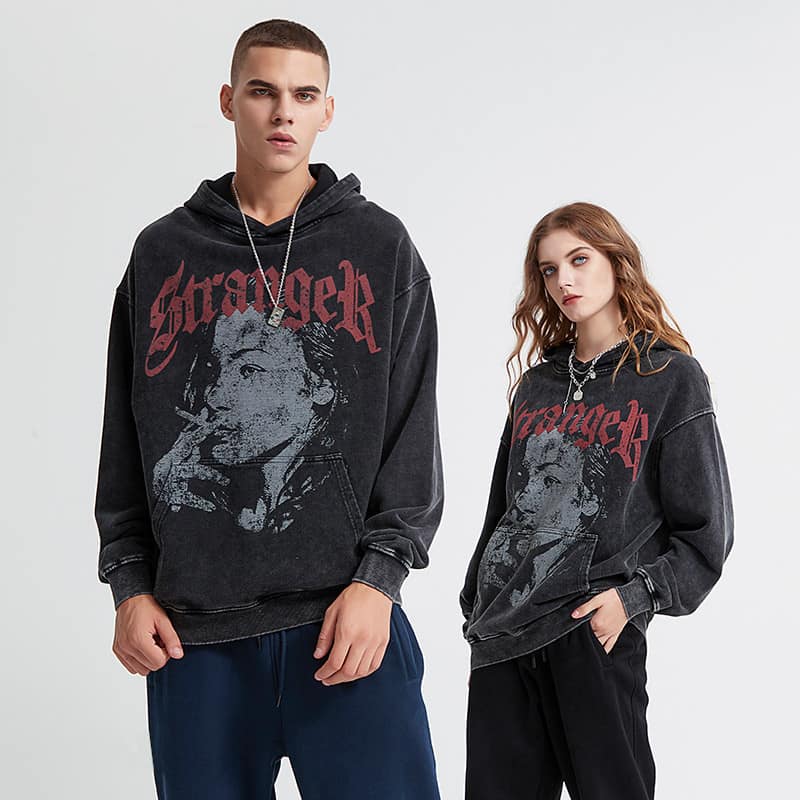
Our experience shows us that DTG works wonders for photos. However, a quality dark hoodies screen print is unbeatable for striking streetwear. The decision of which technique to go for in fashion design is imperative.
Question 1: How Complex Is Your Design?
The particulars concerning your design are the principal factor.
* Simple Logos & Text (1-3 colors): Screen Printing or HTV can provide you with the best choices. They can produce very clean results that really pop.
* Photos & Complex Art (Many colors): DTG or DTF are designed specifically for that purpose. They would be able to handle gradients and unlimited colors without any sweat.
Question 2: What Is Your Order Quantity?
The volume of items that you plan to print would be a guide for your budget.
* One-offs or Small Batches (1-20 items): DTG, HTV, and DTF are excellent options for those who want to stay at low costs since they have low initial expenses.
* Large Bulk Orders (50+ items): Screen printing is the most budget-friendly. The per-shirt prices decline as the quantity produced increases.
Question 3: What Fabric Are You Printing On?
Practically every print method that you choose will not work on every single material. Various printing techniques for fabric exist. The fabric is a key factor.
* 100% Cotton: The best choices are generally the DTG and Screen printing on natural fibers, such as cotton.
* Polyester & Blends: DTF and HTV are efficient on synthetic fabrics like polyester. For 100% white polyester, sublimation is an option.
Question 4: What’s Your Top Priority?
Consider what is the most important aspect of your final product.
* Softest Feel: DTG is the silver medalist. The ink becomes part of the shirt.
* Maximum Durability: Screen Printing is the king of long-lasting prints.
* Lowest Cost at Scale: Screen Printing offers the best price for large orders.
* Best All-Around: DTF is the newcomer with the strongest backing. It is bright, excellent, and mostly compatible with different fabrics. It also accommodates a range of orders, small to medium.
Preparing Your Design File for Flawless Prints
A good print goes hand in hand with a fantastic file. Correctly initiating the designer’s file is often neglected by beginners. Nonetheless, this is the key to time, money, and stress saving. An appropriate file is crucial in both good clothing prints.
Vector vs. Raster: Which to Use?
There are two main types of image files.
* Raster (JPEG, PNG): These files are made of tiny squares called pixels. They are best for DTG printing. The quality depends on the resolution.
* Vector (AI, EPS, SVG): These files use math to create lines and shapes. You can make them any size without losing quality. They are best for Screen Printing and HTV.
The Golden Rule: Resolution
Your file should have a high resolution for clear, sharp prints. The standard is 300 DPI (Dots Per Inch) at the final print size.
Think of it like a photo. If you stretch a small photo, it gets blurry. The same thing happens with your design if the resolution is too low.
Color Modes: RGB vs. CMYK
Your personal computer screen and a printer produce colors differently.
* RGB (Red, Green, Blue): For digital screens this is the mode. These run your monitor or phone.
* CMYK (Cyan, Magenta, Yellow, Black): On the printing end this is the mode. Printers mix these four colors to yield what is on your design.
The designs will appear brighter on your monitor than they will on the shirt. It would be better to design in CMYK mode. You can also convert your file to CMYK before sending it to the printer.
Checklist for a Print-Ready File
Before you send your design, run through this quick list.
* Is the file 300 DPI at the planned print size?
* Is it saved in the right format? For example, a PNG with a clear background for DTG?
* Is all text converted to outlines or shapes? This stops font problems.
* Have you zoomed in to check for any mistakes or stray marks?
Bringing Your Vision to Life
Once your design is ready, it’s time to make it real. Partnering with a professional printer can make the process smooth and easy. This is how you go from a digital file to a finished product.
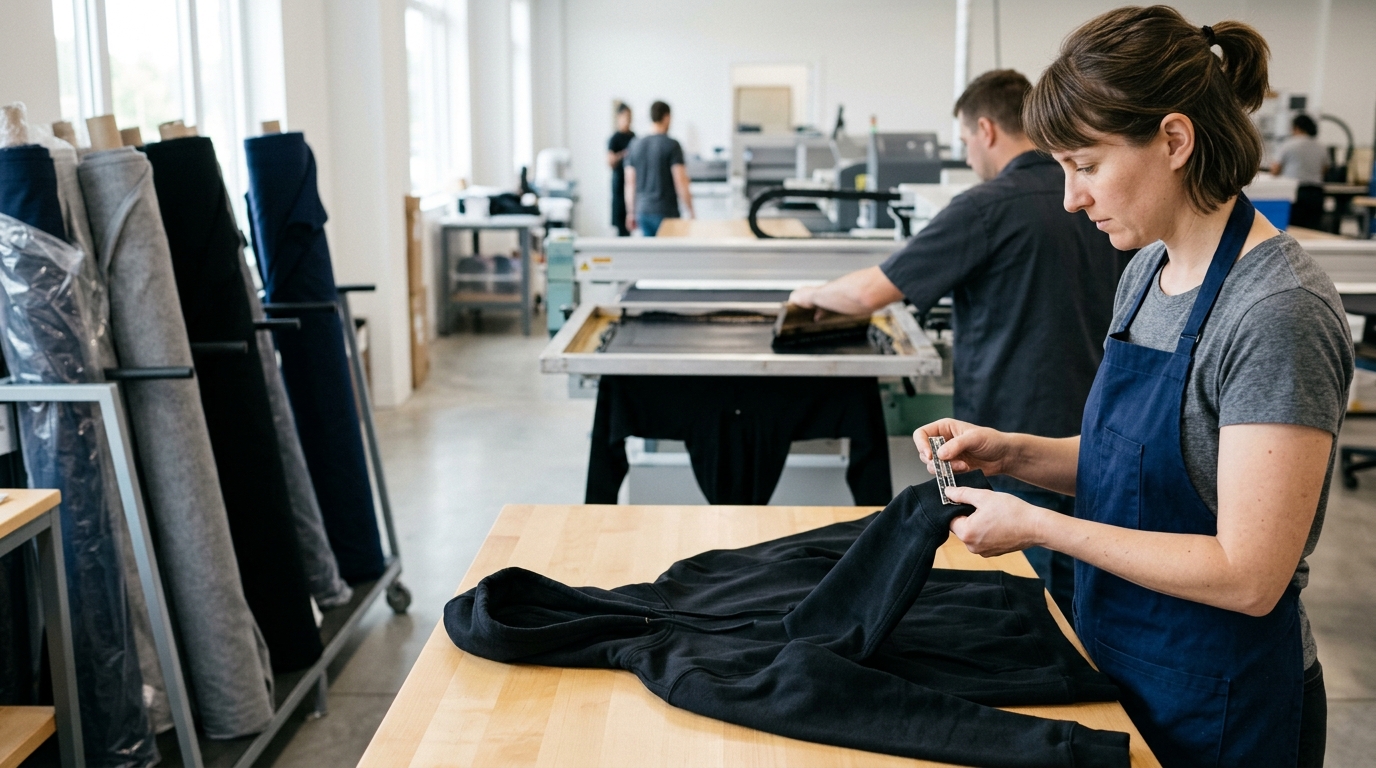
When you submit a design, a good partner reviews your file first. We check the resolution and colors. This ensures your final custom hoodie looks as good in real life as it does on your screen.
Step 1: Finding the Right Partner
Start looking for a printer that does exactly what you need. Some focus on streetwear, while others do corporate apparel. Check out their portfolio and read customer reviews.
Step 2: Submitting Your Design
To get a price quote, you will need to provide some information. This includes your design file. You also need the type of clothing you want. Tell them how many you need. Share your preferred print method. This is a key step in the journey of how to start a clothing brand.
Step 3: The Mockup and Approval
A digital mockup will be sent to you by your printer. The mockup is a digital picture of what your design will look like on the t-shirt. Be extra careful to check it both accurately and thoroughly. For big orders, you can sometimes request a physical sample. This is very important when dealing with a custom hoodie manufacturer.
Step 4: Production and Delivery
When you accept the mockup, your order is scheduled to production. The printer will update you on the time frame. For those creating a whole bonanza, working with an expert manufacturer is beneficial. Companies like TZ Streetwear can make this entire process much simpler.
Frequently Asked Questions
Here are answers to some common questions about how to print designs on clothing.
1. What is the most durable method for printing on clothing?
Regarding the durability of the designs screen printing is often seen as the most durable method. The ink cures and forms a very strong bond to the fabric. It is also quite resistant to washing and wear. Particularly for designs with solid colors.
2. Can I print a design on a black or dark-colored shirt?
Yes, you can. Methods like screen printing and DTF work great on dark garments. For DTG printing, a layer of white ink is printed first. This white underbase acts like a primer. It makes the colors on top look bright and vibrant.
3. What is the most eco-friendly clothing printing option?
DTG printing is often regarded as an eco-friendlier option. It uses inks that are non-toxic and water-based. It prints directly onto the item. This makes it less wasteful than the screen setup and cleaning process of traditional screen printing.
4. How much does it cost to print one custom t-shirt?
A single shirt can cost as low as $15 or up to $35. The price greatly depends on the print method and manufacturer. It also varies when it comes to the shirt, the company, and so on. However, DTG and HTV are the major choices, since they are suitable for one-off prints. This is because they do not have high setup fees.
5. How do I make sure my printed design doesn’t wash off?
First, choose a quality printer who cures the ink correctly. Second, follow the care label on the garment. This usually means washing the shirt inside out in cold water. Use a gentle soap. Tumble dry on low, or hang it to dry. Never iron directly on the printed area.