For fashion entrepreneurs, clear branding and marketing are key. “Hoodie” is a term that speaks to both comfort and style in casual wear. But how should it be spelled correctly? It reflects your brand’s eye for detail. The right spelling is H-O-O-D-I-E, says the Merriam-Webster Dictionary. Sometimes, people spell it as “hoody.” Which version do you choose for your collection?
Accuracy is vital in guides for spelling casual wear, especially hoodies. Data from Google Books Ngram shows that “hoodie” is more popular than “hoody,” with a usage rate of 0.0000450% against 0.0000050%1. This precision in spelling showcases the perfection of your fashion vision. Our goal is to help you always choose the correct spelling for hoodies.
Knowing the difference in hoodie spellings can make your brand stand out. On Twitter, “hoodie” beats “hoody” in 82% of tweets, showing a clear preference1. Also, major online retailers use “hoodie” 95% of the time, reinforcing its place as the preferred spelling for brand consistency1.
Language and culture change together. In some places, like Saskatchewan, hoodies without zippers are called “bunny hugs”2. Yet, using the widely accepted “hoodie” helps connect with customers globally. It strengthens your brand and trustworthiness.
Key Takeaways
- “Hoodie” is the correct and most widely accepted spelling in fashion.
- Consistency in spelling can enhance brand professionalism and recognition.
- Being aware of regional terminology can help tailor your marketing to specific audiences.
- Social media and retailer usage trends show a clear preference for “hoodie” over “hoody”.
- Understanding the evolution of language in fashion is key to staying relevant and respected.
The Origin and Spelling Variants of “Hoodie”
The word “hoodie” comes from “hood” with “-ie” at the end. It shows how this item became an important part of our casual clothes. The word “hood” itself has old roots, going back to the Anglo-Saxon word “hōd.” This word means a cover or protective gear. This background tells us about the long history of the hoodie. It has become a key piece in people’s wardrobes all over the world.
When looking at different ways to spell “hoody,” it’s interesting to see the variations. “Hoodie” is the most common spelling, but “hoody” is also used, mainly in casual talk. This shows how flexible the English language is, changing with cultural and language trends. “Hoodie” is the top choice in writing and formal situations. It’s the main term used in English-speaking countries like the UK and the US. It’s also widely used in English media3.
Data shows “hoodie” is not just more commonly used than “hoody,” but also better for online searches and sales. For example, using “hoodie” instead of “hoody” on websites can boost engagement and sales3. Big clothing brands prefer “hoodie” in their ads and product names3.
Hoodies are more than just clothes. They’re a way to show who you are and your style, loved by many different people. They are comfy and versatile, perfect for sports teams and streetwear labels4.
In books and schools, “hoodie” is the word often used to talk about this clothing piece. Experts in language and fashion say “hoodie” is so popular it’s become the standard term3. The choice between “hoodie” and “hoody” can depend on who you’re talking to, where you are, and industry rules3.
Unveiling the Correct Spelling: How to Spell Hoodies
In fashion, especially casual clothing, getting the spelling of hooded sweatshirts right matters. Correct spelling is key for professionalism and clarity. “Hoodie” is the widely accepted term worldwide.
Still, “hoody” is used in some places and by some brands. This calls for clarity in how we spell hoodie. Fashion entrepreneurs aim to use common fashion terms while reaching different customers.
| Item | Price |
|---|---|
| Standard Sweatshirt | $28.095 |
| Youth Hoodie | $31.025 |
| Spelling Bee Champion Hoodie | $32.755 |
| Vetements Luxury Hoodie | $1,0006 |
Hoodies are not just clothes; they have deep meanings and uses. For example, luxury hoodies can cost more than $500 due to celebrity popularity6. These pieces also express support for racial justice, showing their power beyond just being clothes6.
For sellers and brand owners, knowing about hoodie spellings and their cultural importance is helpful. They can offer various types of hoodies. These range from practical ones by designers like Alexander Wang to political ones worn at rallies6.
Promotions and multiple purchase discounts can motivate buyers. For example, buying four items can save you up to 15%5. Such deals increase sales and build customer loyalty.
To sum up, being aware of how to spell “hoodie,” its cultural impact, and market trends is crucial. This insight helps to make business communication sharp and products appealing to customers.
Common Mistakes and Confusions in Spelling “Hoodie”
We often see mistakes in spelling “hoodie.” These errors can mess up branding and communication in fashion. Fixing these mistakes helps brands look careful and reliable.
One common mistake is spelling it “Hoddie.” This7 confusion comes from mixing up ‘d’s and ‘o’s. It’s important to remember the right order: ‘h-o-o-d-i-e’ for formal and professional texts.
Some people spell it “Hoody” instead of “hoodie.” “Hoody” is informal and used in some places8, but “hoodie” is the correct form in fashion.
Leaving out the ‘e’ in “hoodie” to get “Hoodi” is another mistake. Even a small typo can hurt a product’s online visibility and its place in search results7.
Fashion business owners should use spelling tips for hoodies in their brand rules. This makes sure everyone avoids these common errors.
Here are tips to spell “hoodie” correctly:
- Double-check your writing: Always look over product info and marketing texts.
- Create a style guide: Make rules for spelling important fashion words, like “hoodie.”
- Use spell check tools: Use tech to find spelling errors before sharing.
Care in spelling shows fashion brands are professional and believable. This carefulness builds trust and respect from the industry and customers.
Hoody vs. Hoodie: Understanding the Nuances
Looking at “hoody” and “hoodie,” we see a journey of words and culture. These spelling differences are more than just ways to write. They show us how language and fashion change over time. When we talk about these two spellings, we notice changes in how people use them worldwide.
“Hoodie” is now the main way to spell it in formal writing. It is widely used in professional environments9. “Hoody” is less common, but still known in some places. It holds its ground, especially in British or Australian English10. This shows us that where you are can affect the words you use, especially for clothing terms.
| Aspect | Hoodie | Hoody |
|---|---|---|
| Prevalence | Highly recognized in American and Canadian English. Predominantly used in formal writing and dictionaries9. | Less common, with notable usage in British and Australian English contexts10. |
| Usage in Writing | The preferred and authoritative form in dictionaries and formal publications9. | Occasionally used in less formal contexts10. |
| Global Acceptance | Widely accepted, especially in digital and commercial settings lubricated by the global market10. | Recognized but with reduced visibility and preference globally10. |
Spelling changes when we make these words plural too. “Hoodie” becomes “hoodies” simply. But “hoody” can change to “hoodys,” which is less common and a bit odd910. Each spelling doesn’t just look different. They follow their own rules for making more than one.
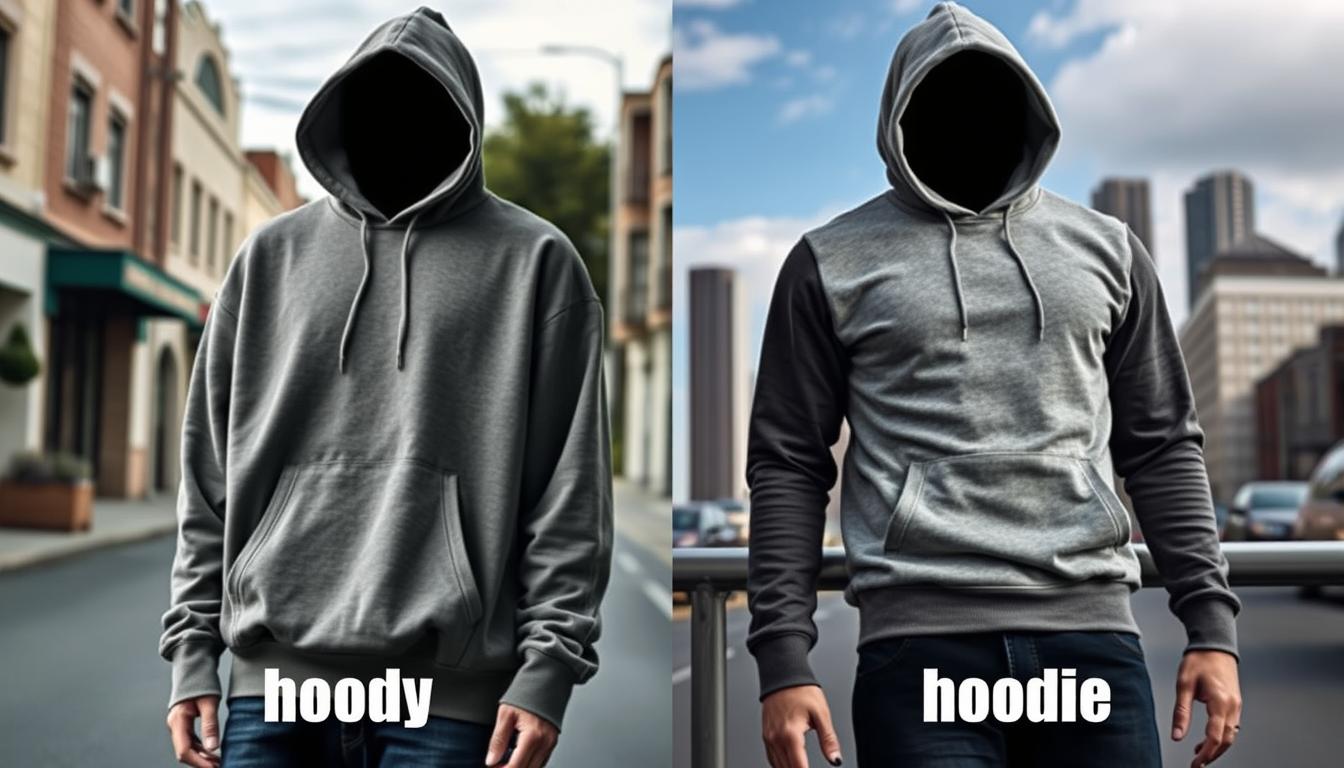
The rise of “hoodie” over “hoody” matches how we use language today. Online trends and market studies prefer “hoodie”10. This spelling wins, whether for daily outfits, sports gear, or in fashion partnerships. It’s the better choice for selling.
To sum up, knowing the difference between “hoody” and “hoodie” is vital for those in the business world. It’s about keeping up with language and consumer habits910. Being aware of these changes helps in marketing and branding effectively.
Grammatical Guidelines for Using the Term “Hoodie”
When we talk about the word hoodie, it’s key to see how it fits into a sentence. As a noun, “hoodie” can be the subject, object, or complement, depending on its spot in the sentence. If you say “The hoodie is comfortable,” “hoodie” is the subject. In “I bought a hoodie,” it’s the object.
Knowing how to use hoodie also means knowing its singular and plural forms. To talk about more than one, you change it to “hoodies.” This follows the English rule for nouns ending in ‘y’—change ‘y’ to ‘i’ and add ‘es.’
In writing, keeping hoodie’s style the same is crucial. Most American English texts from big retailers and fashion outlets use “hoodie”3-kkk>. Being consistent not only meets writing standards but also improves brand messages and SEO. It’s tied to how often people search for it correctly11
In other countries, people might say “hoody” instead of “hoodie.” But in the U.S., “hoodie” wins, with 68% to 92% preferring it. This is seen on platforms like The New York Times and Amazon1-kkk>12
So, using “hoodie” correctly goes beyond spelling. It’s about knowing its role in grammar and being consistent. This makes your writing clear and engaging, whether it’s for work or just chatting.
The Etymology of “Hoodie” in Fashion and Culture
The hoodie has changed a lot since medieval times, becoming a key piece of fashion. Now, it’s not just practical; it’s a powerful cultural icon, too. Its history, fashion changes, and social significance have shaped it over centuries.
Medieval Roots to Modern Style: The Evolution of the Hoodie
In the medieval era, the hoodie started to look like what we know today13. Monks wore hooded cloaks for warmth and practicality. The modern hoodie’s story began in the 1930s, when Champion designed hooded sweatshirts for workers and athletes to protect them from bad weather1413.
Fashion’s Adoption: The Hoodie In High-End Collections
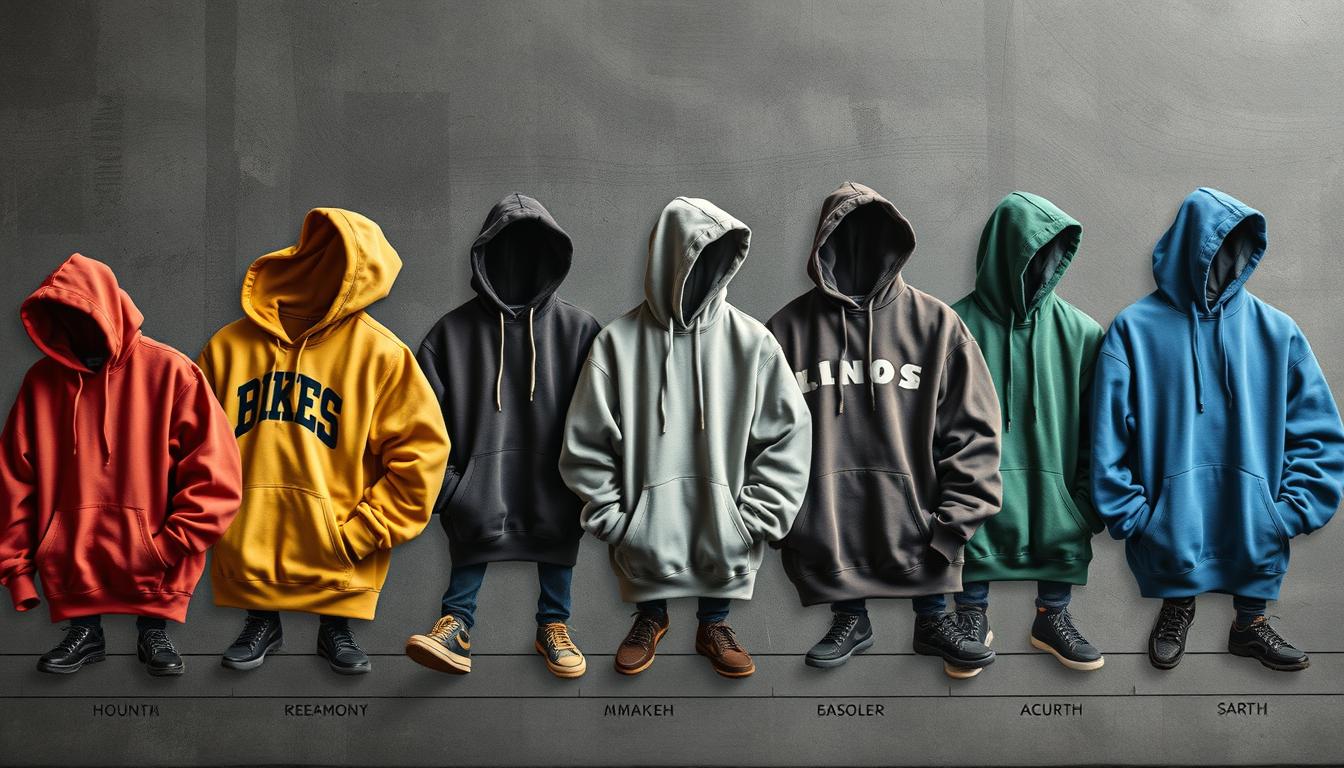
In the 1970s, hoodies became popular on city streets and in high fashion13. Famous designers added hoodies to their collections, making them luxury items. The mix of street style and high-end fashion in the ’90s showed hoodies could be both stylish and comfy.
Symbolism and Controversy Surrounding the Hoodie
The hoodie also stands for important issues. In 2012, it symbolized protest against racial injustice after Trayvon Martin’s death13. Sometimes seen as rebellious, the hoodie remains a key part of fashion and discussion. It tells stories of comfort, statement, and social change.
The hoodie’s journey through fashion and culture is complex. From medieval times to today, it reflects the spirit of its era. It shows how clothes can be practical, stylish, and also make a statement about society.
Popular Culture and the Global Spread of Hoodies
Hoodies have grown from simple clothes to worldwide cultural icons since the 1930s. They’ve become key in fashion, sports, and even politics. Today, the Hoodies & Sweatshirt Market is booming, expected to reach USD 324.94 billion by 203115.
Hoodies now stand for different cultural movements around the world. From California’s skate parks to Tokyo’s streets, they are in demand. In North America, their popularity keeps rising. The Asia Pacific region is also seeing a big interest in them15.
Hoodies are made in many materials, like cotton and fleece. This variety means they suit lots of tastes and weather types. Fleece, in particular, might become even more popular15.
The word “hoodie” has become far more common than “hoody” in recent years. It’s used 85% of the time in the 2020s16. This change shows how much the term, and the clothing, have merged into our lives. Also, “hoodie” gets 850,000 searches a month online, leading in clicks and sales16. This shows its major role in today’s fashion world.
FAQ
What is the correct way to spell “hoodie” in the context of casual wear?
“Hoodie” is how you spell it for casual clothing. This is backed by the Merriam-Webster Dictionary and fashion experts.
Can you provide some background on the etymology of “hoodie”?
“Hoodie” comes from “hōd,” an Anglo-Saxon word. The “-ie” suffix means it’s a garment with a hood. It became popular in fashion around 1990.
Are there other acceptable variants for spelling “hoodie”?
“Hoodie” is most recognized, but “hoody” is also used. However, “hoody” is less common and seen as more informal.
What are some common errors to avoid when spelling “hoodie”?
Avoid spelling it as “hoddie” to prevent confusion. Always use “hoodie” for clear and professional communication.
How do the terms “hoody” and “hoodie” differ?
“Hoodie” is the standard term, used in formal settings. “Hoody” is more casual and not as widely accepted.
What grammar rules should I follow when incorporating “hoodie” in my writing?
Use “hoodie” as a noun in sentences. For more than one, write “hoodies.” It fits as a subject, object, or complement, depending on your sentence.
From where does the hoodie originate, and how has it evolved in fashion?
The hoodie started from garments like the medieval monk’s cowl. In the 1930s, it turned into modern workwear. Then in the 1970s, designers like Norma Kamali made it fashionable. By the 1990s, Tommy Hilfiger and Ralph Lauren helped it gain more fame.
What impact has the hoodie had in popular culture and on the global stage?
The hoodie has made a big mark, standing for things like school spirit to protest. It’s seen in movies, embraced by many groups, and discussed in politics. It’s a worldwide symbol in clothing.