Printed clothing labels are indispensable to your brand. These are the custom-made tags featuring your logo and other information attached to your apparel. These labels do much more than merely sticking onto the cloth. They are instrumental in brand development and a way to express your regard for product quality to your customers.
Choosing the ideal label may give the impression of being difficult. However, this handbook is a great tool for you to follow through. We will lead you through every step, starting from selecting materials and moving on to finding suppliers.
In this guide, you will discover:
* Why printed labels are perfect for you.
* Available materials you can choose from.
* A comparison of printed labels and woven ones.
* Labeling design and ordering tips.
* Eco-friendly solutions for your brand.
Why Go for Printed Labels?
For a number of clothing brands, printed clothing labels are a perfect match. They give you a wide range of perks that will, in turn, make your products qualify as professional. Here are the main reasons to choose them.
- Incredible Detail and Full Colors: Printing provides an opportunity to use very intricate details. It is the best choice for elaborately designed logos, tiny text, or designs that involve color blends. You can achieve a quality that is similar to photographs which no other methods can provide.
- Cost Effective: Printed labels are typically more affordable than woven styles. This remains true especially with those complex designs that have more colors or are smaller orders. With the push of a button, small businesses can get a professional aspect without spending a fortune.
- Gentle and Comfy: Printed labels are smooth to the touch and inline with the skin. Thus, they fit clothes that are worn close to the body. With soft printed labels that are without a tag, heat transfer types are especially good for shorts, baby clothes, and underwear.
- Short Lead Time: In most cases, the printing process is shorter than the weaving method. If you are in need of badges urgently you can get them printed far quicker.
Dive Deep into the Label Types
The material you select for your printed clothing labels will determine their appearance, feel, and durability. When comparing the various types of clothing labels, match the material to the style of your clothes and brand. There are multiple options available, but some of the most accessible materials such as TPU, satin, and cotton have undeniable advantages.
Satin Polyester Labels
Satin polyester is the leading option. It has a smooth silky surface that appears elegant. The feel of silk is perfect on the skin.
These labels are durable and also, they take ink very well, which gives you bright hues. They are suitable for brand labels on dresses, shirts, and care labels with washing tips.
Cotton Labels
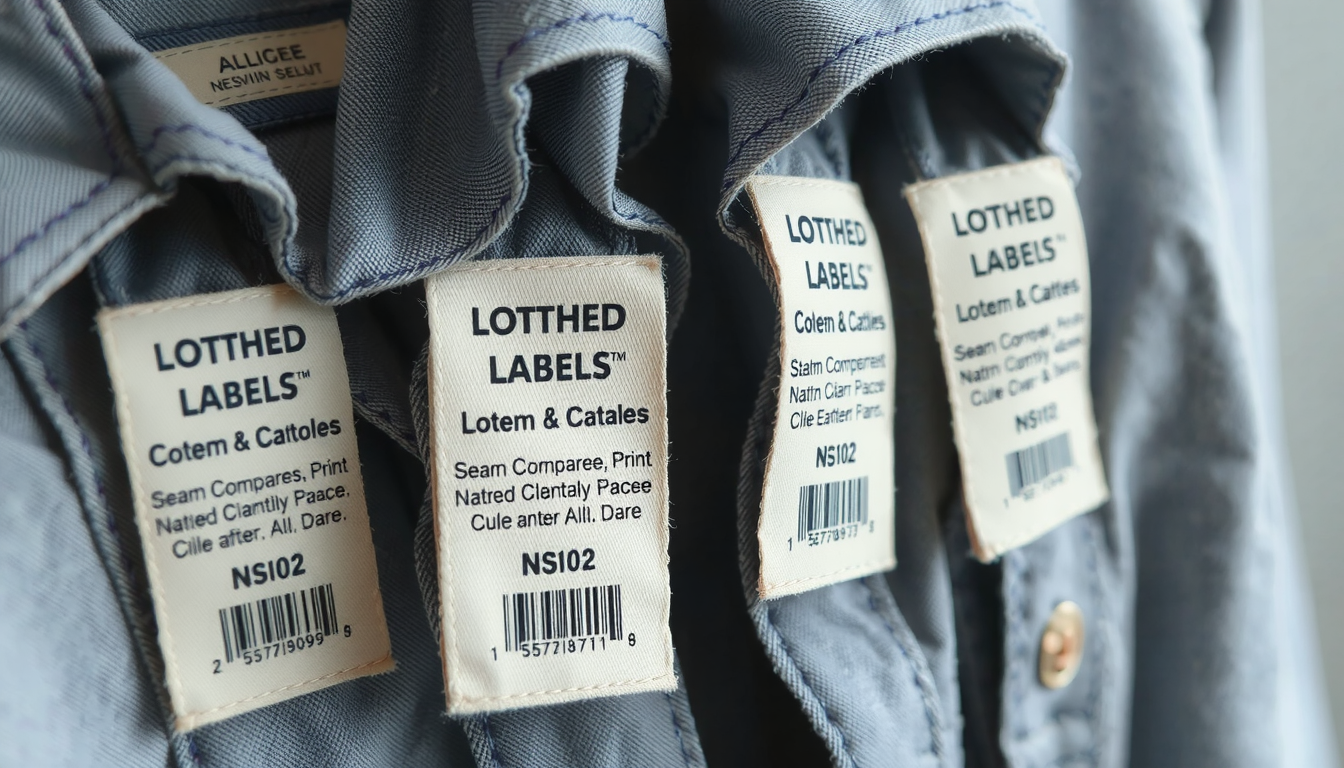
Cotton labels feature a soft, natural, and matte finish. They are very eco-friendly and heritage brands, of course, would prefer them.
Put cotton labels on organic t-shirts, handmade articles, and kids’ clothes. The qualities they bring forth are comfort and top-notch quality that the customers love.
TPU Labels
TPU stands for Thermoplastic Polyurethane. These rubbery, soft, and flexible labels have not only the stated properties but are also transparent or frosted, that adds up to a very nice, minimalist look.
TPU is very durable and waterproof. This is what mainly makes it the number one choice for swimwear, activewear, and underwear overall flex and moisture resistance.
Heat Transfer (Tagless) Labels
Heat transfer labels are not ordinary tags. Ink is printed on the special paper which is then moved directly to the garment by heat press. The result is a “tagless” feel.
They are the ultimate choice for comfort. Think t-shirts, sports clothes, and any kids’ clothing void of annoying labels.
Tyvek Labels
Tyvek is a special kind of material that feels like paper, but it is much stronger. It is very lightweight, resistant to tears, and water.
Because of its excellent durability, Tyvek is very often used for the info tags of jackets, work clothes, or even mattresses. Furthermore, it can bring a construction or simple look to a brand.
Printed vs. Woven Labels: A Head-to-Head Showdown
One major consideration for brand owners is whether to choose printed or woven labels. Both choices come with solid advantages. The best option comes down to design, budget, and the brand’s identity. Even if printed labels are the best choice for details, specialist suppliers, who often talk up the superior feel and durability of woven products.
The table below summarizes the key differences to help you decide.
| Feature | Printed Clothing Labels | Woven Labels |
|---|---|---|
| Detail & Clarity | Great for photo-like images, fine text, and color blends. | Good, but complex designs can lose clarity. Best for simpler logos/text. |
| Durability | Good, but ink may fade after many (50+) washes, depending on the method. | Great. The design is woven in, so it will last as long as the garment. |
| Feel & Texture | Smooth and flat against skin (especially heat transfer). | Can have more texture and a premium, solid feel. |
| Cost | Usually lower, especially for multi-color designs and smaller amounts. | Higher starting cost. Can be cost-effective for very large, simple runs. |
| Production Time | Faster. | Slower due to loom setup and weaving process. |
| Best For… | T-shirts, detailed logos, care labels, startups on a budget, activewear. | High-end clothes, jackets, heritage brands, simple & bold logos. |
In the short run, your option is simply the one that comes first. Choose printed clothing labels if you want to be very detailed with your logo or if you are looking for a cheap solution fast. Woven labels, on the other hand, are the right choice for you if you are building an upscale brand, where lasting quality and a classic, textured feel are most important.
The Brand Owner’s Handbook
It is easy to design and order your printed clothing labels when you follow the main steps. This playbook will lead you from the design idea to the actual product.
Step 1: Finalize Your Design
Before contacting a supplier, it is important to have your design ready. This includes your logo, brand name, and any other required information like size or fabric content.
Our experience says that simple designs work best. Here are some basic tips:
- Keep it readable: Always ensure that the text is clear enough to be read, no matter how small it is.
- Vector is best: Create your design in vector format. AI or EPS files are the best choices. This guarantees that your image is resizable without losing its quality.
- Think about the fold: Think about how the label would be attached. A center fold label will require a different layout than a flat, end fold label.
- Color matching: For your brand’s exact colors, use Pantone (PMS) codes in your design file. This will help the printer to match the colors exactly.
- Less is more: Don’t overcrowd the label with too many things. It is not a billboard but rather an accent piece. A simple but strong design frequently has the greatest impact.
Step 2: Choose the Right Supplier
Getting a good supplier is vital. Go for a partner who gets you as a brand owner. Companies that have low MOQs (Minimum Order Quantities) and provide material samples, along with a commitment to communication are the best partners.
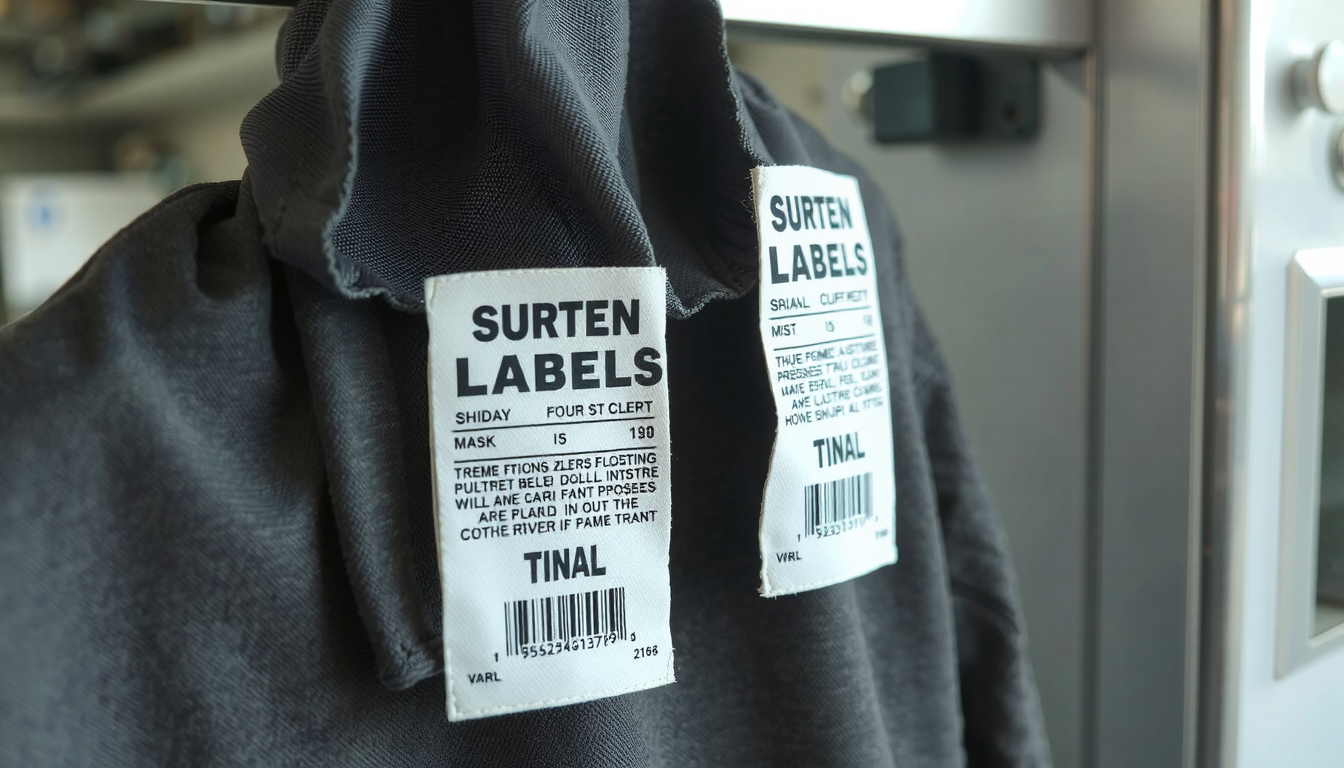
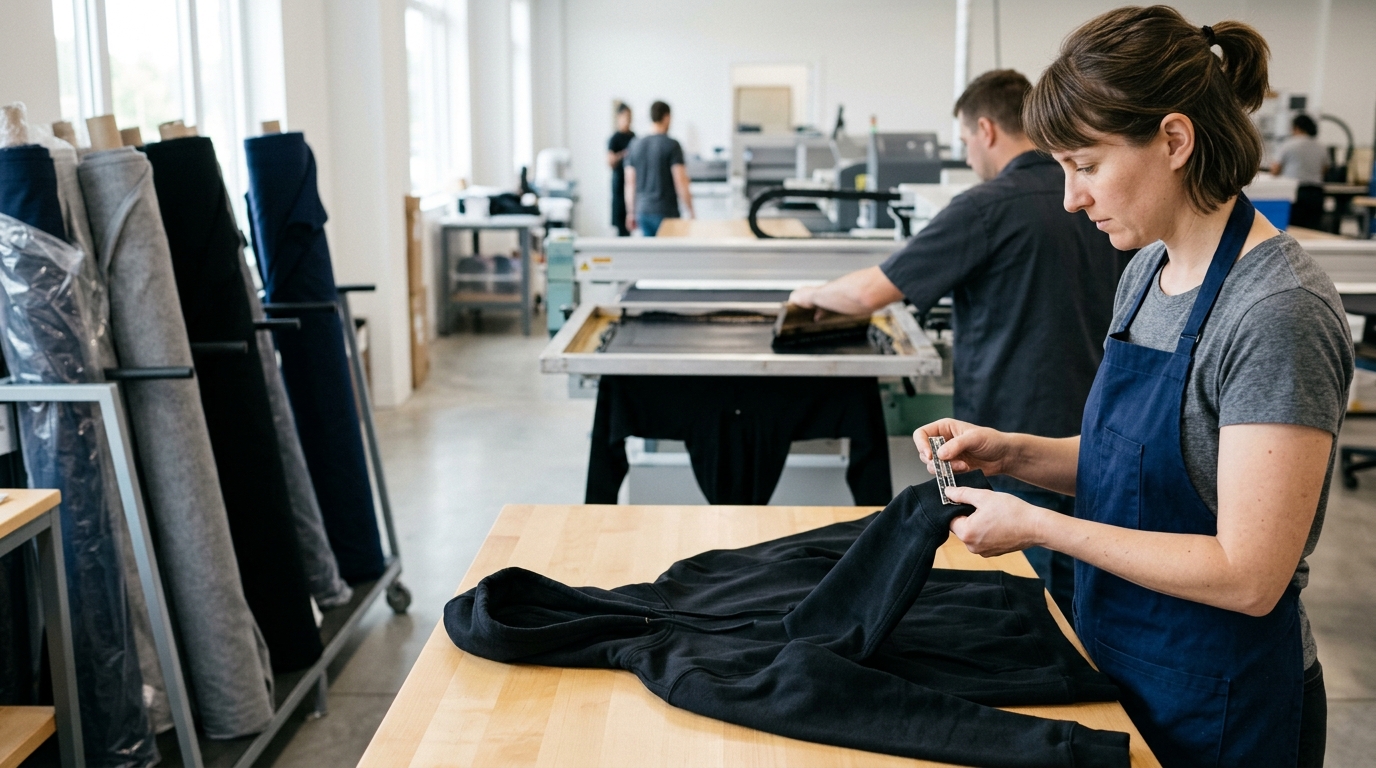
You can work with a label maker or a full-service manufacturer. A full-service partner can eliminate intermediary steps. They can set up the entire production chain – from creating a custom hoodie to sourcing and applying a suitable printed clothing label for it.
Step 3: Proofing and Production
Don’t skip proofing. The typical mistake is to approve a design without asking for a sample. Your supplier should give a digital proof which is a computer picture of your label.
Even better, ask for a physical sample. This allows you to see and feel the final product. You can check the colors, print quality, and material before you commit to a full order. This small step prevents costly errors. This attention to detail is a key factor in creating a strong brand. Read on in our guide for brand craft introduction.
The Sustainability Factor
The customers you have today want to know the journey of their products. Choosing eco-friendly printed labels is a wonderful way of demonstrating your brand’s concern for the environment. It connects your brand with the environmental values of today and it is a great marketing tool.
Key Sustainable Options
Doing what’s right for the environment and building a brand might be easier than you thought. Here are some of the most viable options for sustainable labels:
* Recycled Materials: Go for labels made from recycled polyester or other reclaimed fibers. This not only helps with waste but also saves materials.
* Organic Cotton: Make use of GOTS-certified organic cotton. It is grown without the use of harmful pesticides which makes it natural and compostable.
* Water-Based Inks: Try to work with suppliers that use water-based inks. These avoid the harsh chemical solvents that some traditional printing inks have.
Look for certifications such as OEKO-TEX Standard 100. They give the assurance that the final label is tested and does not contain many substances harmful to human health.
Conclusion: Making Your Mark
The label is often the last thing to go in but it says a lot about your brand and quality. It is a minor detail that creates a striking difference.
When you opt for the correct label material, design, and supplier for your printed clothing labels, you create a brand experience that is professional both inside and outside. Thus it makes it easy for you to connect with your customers and realize your vision. Are you set on creating your brand from the scratch? While at it, check out more services and resources at TZ Streetwear.
Frequently Asked Questions
How durable are printed clothing labels?
Durability is tied to the specific material and the chosen print method. Quality satin or polyester printed labels withstand as many as 50+ washes. Heat transfer labels are almost indestructible since they merge with the fabric. But mostly, printed labels are really good for most clothing while woven ones are the best for durability.
Can I get a sample before a large order?
Sure, absolutely. A professional supplier will offer a digital proof to confirm the design with you. Most of them create a physical sample too, just to get a small fee. Our recommendation is to always obtain a physical sample to check the color, feel, and quality before ordering a complete run.
What is the minimum order for custom labels?
Minimum order quantities (MOQs) are variable among suppliers. Some may place high order limits of either 500 or 1000 pieces. However, several suppliers now associate with new companies and might provide low MOQs, sometimes 50 or 100 labels. Doing so makes branding straightforward for new companies.
What is a main label? Is it the same as a care label?
The main label stands for branding. It carries the logo and it is typically found at the back of the clothing. A care label has important information like the fabric and washing instructions that the consumer needs to know. Often you can use one printed label to combine your brand logo and care info.
Are tagless labels good for t-shirts?
For numerous brands, definitively. Tagless labels transfer the ink directly onto the fabric via heat. There are no tags to rub or irritate the skin. It is a more comfortable shirt and ultimately a better customer experience, which is why they work perfectly for t-shirts, sportswear, and kids’ clothes.