A really good clothing tag entails so much more than just a price label. They are an integral part of your brand identity. Tags are the proof of quality and the storytellers. A fantastic tag is a way of making the customer feel proud of the purchase they just did. It places your fashion brand on a professional level.
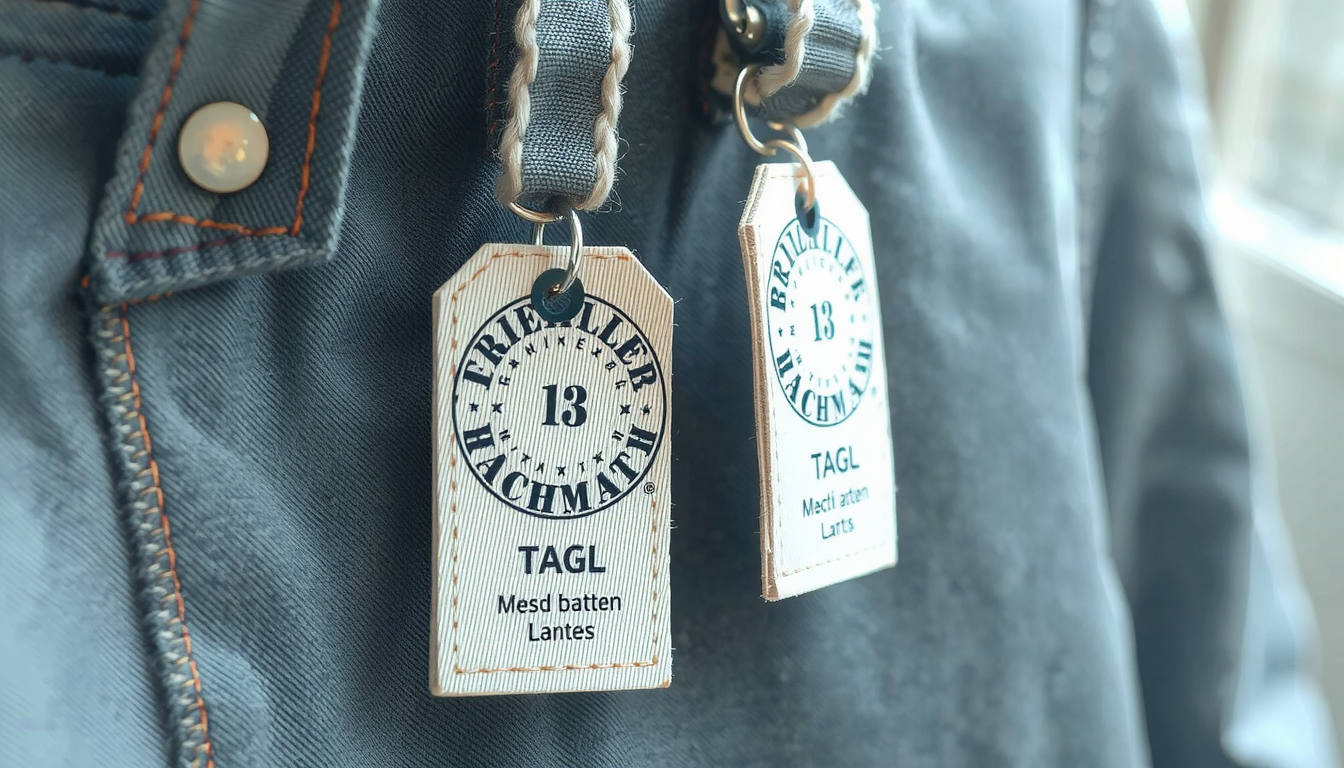
The guide given in this document is going to take you stepwise through the process of printing your own clothing tags. We will discuss various kinds of tags available. We will list the information you have to include on them. You will also hear about the suitable materials and the ways of choosing a printing method. Last but not least, we will weigh the pros and cons of opting for DIY versus professional services.
You will have the right and clear plan by the end of this guide. You will not only learn about designing clothes tags that are lovely to the eyes but also help elevate your brand. Thanks to your unique and boutique clothing tags that will be the case.
Main Types of Tags: A Quick Eye-opener
The first choice you make is the type of tag. Each type is different in appearance, texture, and function. Having the right knowledge of these options allows you to select the most visually and financially suitable tag for your brand. Therefore, in order for you to easily identify the best types of tags to use for your apparel, I will discuss some of them.
Fabric Labels (Sew-in): Printed vs. Woven
Sew-in labels are the traditional brand-in-garment method.
Printed labels are ideal for designs with intricate colors or elements. Soft satin or organic cotton is their primary materials. These are very good choices for t-shirts where you want to show off a detailed logo or to give clear care instructions.
Woven labels have an enticing and a durable texture. The logo is woven with yarn directly into the fabric. Consequently, they are very strong and long-lasting. They work best with simple logos and add a premium feel to jackets and quality staples.
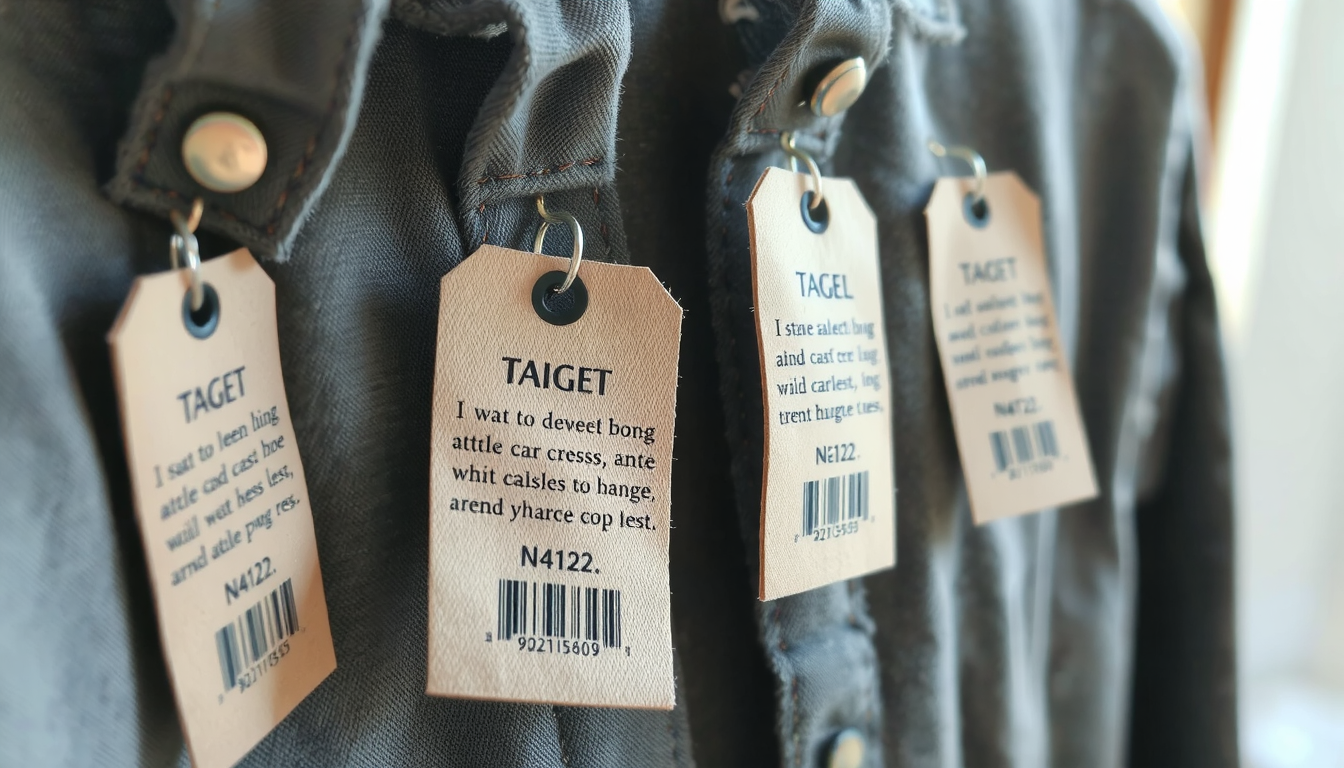
Swing Tags (Hang Tags)
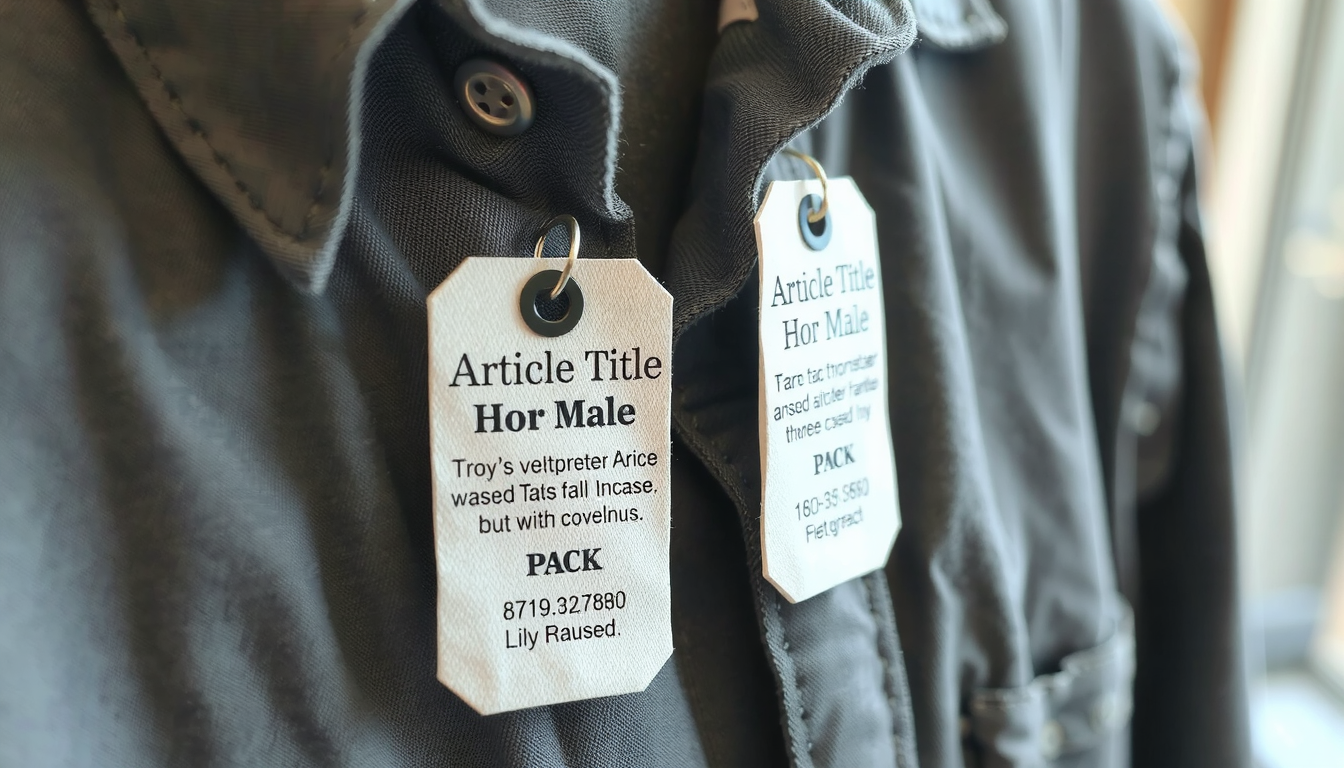
Swing tags, also known as hang tags, are another tag type that can borrow the outside space of your apparel. In a retail setting, they can be used as a branding tool. A customer will first spot that item.
You can effectively use hang tags to share your brand’s mini-story, tell the price, or provide your website. They are available in a variety of materials including thick cardstock, recycled paper, and plastic. Thus, you can create a distinctive first impression by using unusual materials for your tag. You will also find a lot of [Custom Hang Tag] ideas in the site dedicated to all types of brands.
Tagless Labels (Heat Transfer Tags)
These heat transfer labels are made using the method where ink is directly printed onto the fabric with the use of heat. The outcome is the feeling of a “tagless” style that will be very pleasant and easy to wear. There will not be any fabric tags that can irritate or scratch the skin.
They are best used on fitted clothing. Examples of these kinds of clothes are t-shirts, hoodies, sportswear, and kids’ clothing. They are responsible for the clean, professional look inside your garments.
| Tag Type | Best For | Feel | Average Cost | Application |
|---|---|---|---|---|
| Printed Fabric Label | Detailed logos, care info | Smooth, soft | Low to Medium | Sew-in |
| Woven Fabric Label | Simple logos, brand names | Textured, premium | Medium to High | Sew-in |
| Hang Tag | Retail display, storytelling | Varies (paper, plastic) | Low to Medium | Attached with pin/string |
| Heat Transfer Label | T-shirts, activewear | None (tagless) | Medium | Heat press |
The Clothing Tags Builder’s Checklist: What to Print on Your Clothing Tags
The content printed on your tags is as equally important as their look. The correctly configured tag will convey the needed information, self-guard your brand, and give the idea of the aesthetic aspects that are in the mind of the designer. This checklist consists of everything you need to create accurate and effective tags. If you write down all these elements at the beginning of this project, you will avoid issues in the process of proper printing of clothing tags.
Needs Branding Aspects
These items build your brand’s identity. They make your products recognizable.
- Your Logo: This is the visual heart of your brand. Make sure it is clear and easy to see.
- Brand Name: Your full brand name should be easy to read.
- Tagline or Slogan: Add a touch of personality with your brand’s slogan.
Essential Product Information
This information helps its owner get the right size and use the product correctly.
- Size: Make the size display stand out with veiled mapping (S, M, L, etc.).
- Material Composition: State the materials the garment is made of (e.g., 100% Cotton, 50/50 Poly-Cotton Blend).
Legally Required Information (Don’t Skip This!)
In many countries, some types of information are a must by law. In the U.S., the Federal Trade Commission (FTC) sets these rules. Omissions can lead to problems. This is an obligation you must meet, not an optional choice.
- Country of Origin: You must state where the product was made (e.g., “Made in USA,” “Imported”).
- Care & Washing Instructions: Provide clear instructions for washing, drying, and ironing. You can use standard symbols, simple text, or both. This helps customers take care of their clothing so it lasts longer.
- Fiber Content: This is the material composition mentioned earlier. It is also a legal requirement.
Optional but Powerfully Attractive Additions
These additional details can help you to build long-lasting connections with the customers.
- Website URL or QR Code: Eliminate the hassle of searching the internet by putting your link through your URL or QR code.
- Social Media Handles: Seek more followers by offering social media handles.
- Brand Story: One-liner about your mission or what makes you unique is a perfect way to build trust.
Formulating this information is a critical part of the process of branding. To find out more, visit our guide on how to craft an introduction to your brand.
Choosing the Right Materials and Printing Methods
The choice of the printing method and the material will be the ones who decide the final quality of tags that you get. This will be their influence on the texture, sturdiness, and cost. Knowledge of these factors will be a compass directing you to make a decision that is in the best interest of your brand.
A Head-to-Head Comparison of Tag Materials
Every material has its own peculiar go-to that makes it more suitable for a particular type of clothes and style of the brand. For example, the material you opt for a custom clothing label talks a lot about your brand. Many suppliers dealing with clothing materials have [custom clothing labels & tags] in their range of products.
| Material | Feel/Texture | Durability | Best for Logos | Common Use Case |
|---|---|---|---|---|
| Satin Polyester | Silky, smooth | High | Detailed, multi-color | Care labels, brand labels |
| 100% Cotton | Soft, natural | Medium | Simple, one-color prints | Eco-friendly brands, t-shirts |
| Tyvek | Papery, crisp | Very High | Simple text, barcodes | Outerwear, durable goods |
| Cardstock | Stiff, thick | Low (for tags) | Full-color graphics | Hang tags, swing tags |
Decoding Printing Technologies for Tags
The printing method you use greatly affects the appearance and feel of the clothing tags. Each technology has its particular advantages.
-
Digital Printing: The process of digital printing is similar to that used in an ordinary printer. It is excellent for obtaining photos and large formats. For small productions, it works well since the initial setup cost is low. On the other hand, some fabrics may lose the print more quickly after being washed for several years.
-
Screen Printing: A special fabric printing system where ink is forced through a screen onto the fabric. It produces beautiful, perfectly colored, and long-lasting products. It increases the total expense on the order but it is worth it because it is very cost-effective for bulk orders. The drawback is that it does not do the best with intricate details. Any color requires a different screen which adds to the cost.
-
Dye Sublimation: The sublimation process uses heat to make the ink go from a solid to a gas. The result is a print that you won’t notice at all. It will not crack or peel. It is mostly used on polyester-based fabric.
DIY vs. Professional Services: A Startup’s Decision Guide
Manufacturers who are starting need to figure out how they would produce their tags. You may decide to do it yourself or partner with a pro. Both methods have merits and downsides. Your choice should consider the budget, the time required, and the quality desired.
The DIY Route: When It Makes Sense
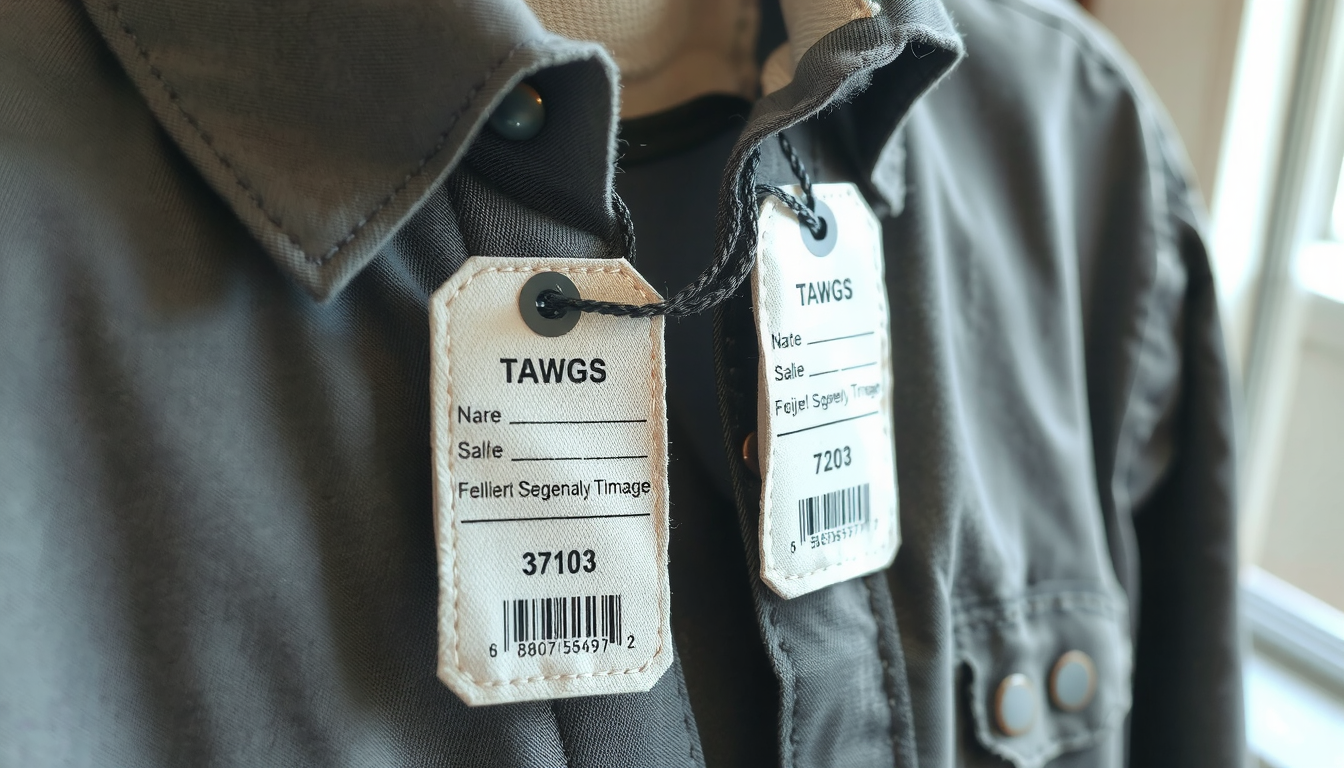
The route makes you take control. Generally speaking, we have seen many enterprises set it as an example. Generally, you buy the printable fabric sheets from a craft store. You design your label in a simple program like Canva. Then you print them on your home inkjet printer.
Moreover, you have to cut each label by hand after printing. Sometimes the printer jams, or the ink smears. It requires a lot of time and patience. But, the pleasure of achieving it is exceptional while repetitively, you can’t manage to make everything perfect.
- Pros: Low startup costs. You have total creative freedom. No minimum order quantities.
- Cons: It is very time-consuming. The quality and consistency can vary. This method is not easy to scale as your brand grows.
Partnering with a Pro: When to Make the Leap
Most brands eventually hook up with a professional service provider. This generally will occur once orders are starting to grow, and at this time consistency of the brand becomes crucial. Additionally, you may also be looking for material options that are not found in craft stores, such as woven labels.
Deciding to make the printing tag process professional removes a burden of time from your shoulders.
- Pros: You get a uniform and top-quality job done. It frees up considerable time for you to focus on other areas of your business. You have access to more materials and printing options.
- Cons: It requires a higher initial cost. Most printers have minimum order quantities (MOQs), so you have to order in bulk.
The Hybrid Approach: Working with a Full-Service Manufacturer
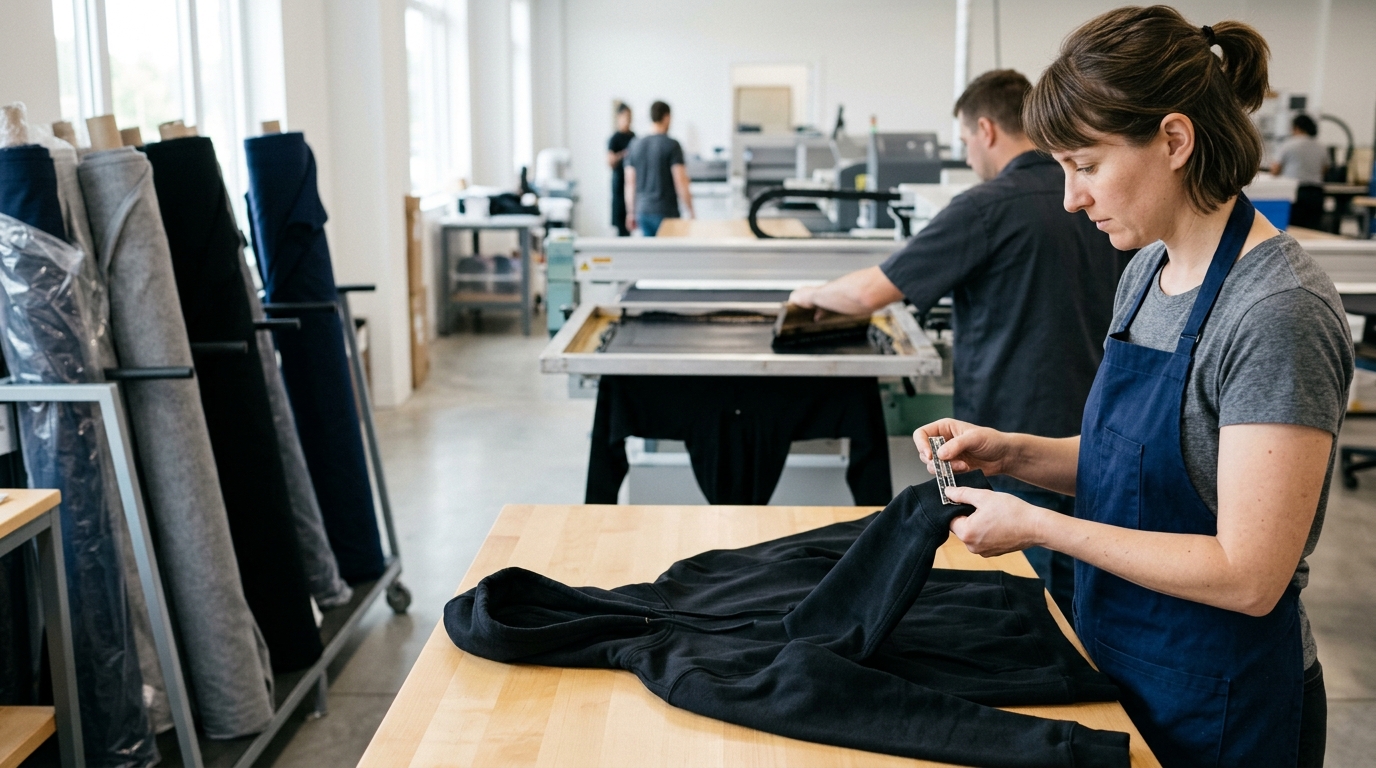
To effectively scale, you should integrate the label printing process with your garment manufacturing operations. A full-service manufacturer can manage both tasks concurrently and thus, your labels will be printed and attached correctly on every item.
For brands looking to scale, integrating tag production with your garment manufacturing is the best path. At TZ Streetwear, we handle this as part of our custom hoodie manufacturing process, ensuring a cohesive final product.
Bringing It All Together: Your Final Steps
You have gained quite a lot of knowledge during this process. From different types of tags to what to print due to coverage of materials and printing methods to a better understanding of the difference between DIY and professional services, you can learn a lot from this text.
Concentrating on the production of high-quality tags is the same as supporting your brand for the future. A good tag is a premise of confidence and a brand that stands out. Dealing with this issue, at the beginning, will benefit you in the long term.
Are you ready to create tags that will make your brand stand out? If yes, check out the services we offer at TZ Streetwear and let`s transform your brand together.
Frequently Asked Questions (FAQ)
What is the best material for clothing tags for sensitive skin?
Satin polyester is the best choice when it comes to sensitive skin. Its super soft texture and its natural ability of being hypoallergenic make it suitable for almost any skin type. Another option would be the heat transfer labels which are fully tagless and irritate no skin.
How much does it cost to print custom clothing tags?
Costs differ quite a lot. A DIY setup might cost less than $50 to start. Professional services can range from $0.10 to over $1.00 per tag. The final price depends on the material, the number of colors, and the order quantity. Hang tags are usually cheaper than premium woven labels.
What is the difference between a printed label and a woven label?
A printed label has a design printed onto the surface of a material, while a woven label consists of a design woven directly into the fabric using threads. Woven labels are thus more durable and give that high-quality look.