You’re a budding T-shirt brand owner with an innovative concept. You are passionate, and driven, and your designs are ready. But in order to convert that idea into a real product, you must find your production partner.
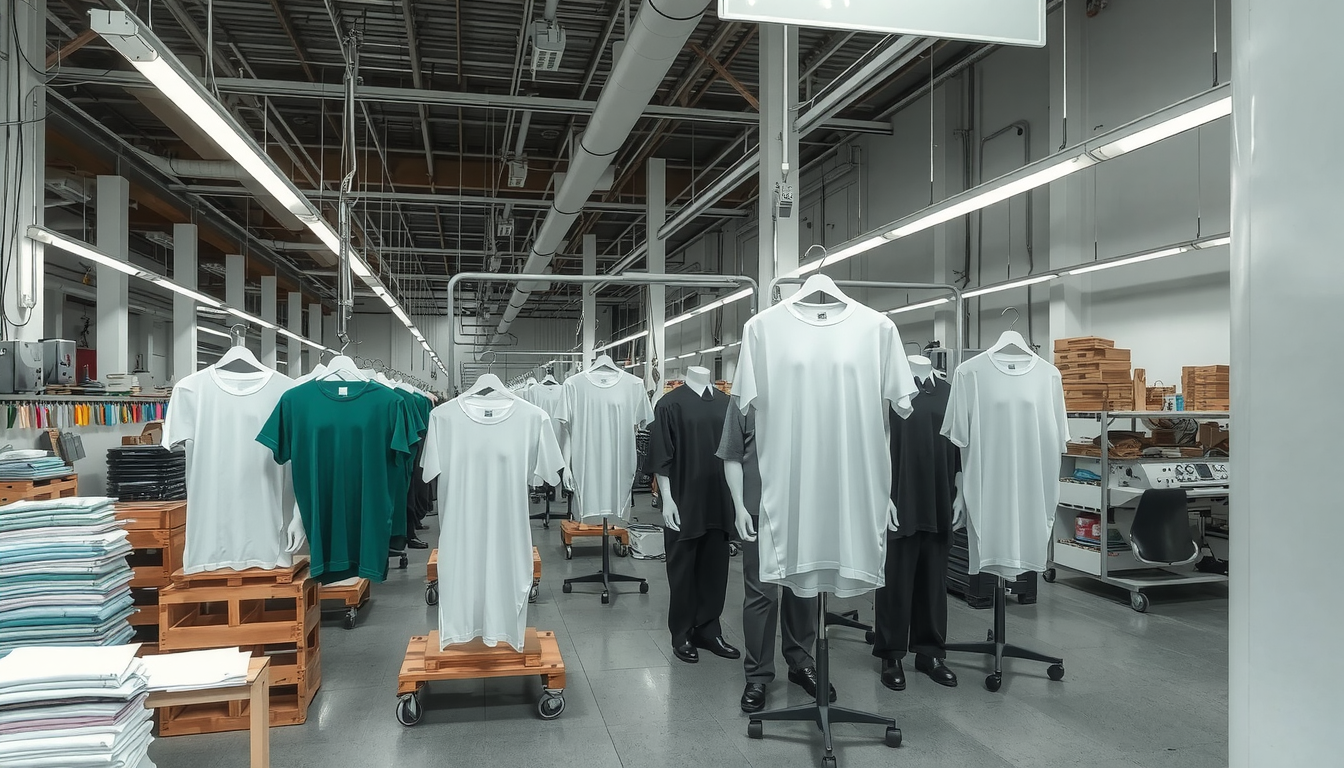
Choosing the manufacturing partner that suits you best plays a crucial role in the success of your brand. This decision directly relates to your product’s quality, cost, and potential growth. The global custom T-shirt printing market was valued at over $4.3 billion in 2022, and continues to grow. This proves great potential for new brands.
In this guide, we shall offer you a simplified roadmap. You will learn about various types of factories. We will detail production steps. We will also help you pick the most suitable partner.
Your right decision of finding a reliable partner first effectively builds a successful brand. We at TZ Streetwear have acknowledged how a healthy production relationship can be an asset or a liability for a new clothing line.
T-Shirt Factory Map: Your Alternatives
Before making a search, get acquainted with the various types of manufacturing partners. Only when you understand these options can you locate a tshirt factory that is both a good fit for your needs and budget. Being up to speed saves you time and ensures your start is right.
Full-Service (FPP – Full Package Production) Factories
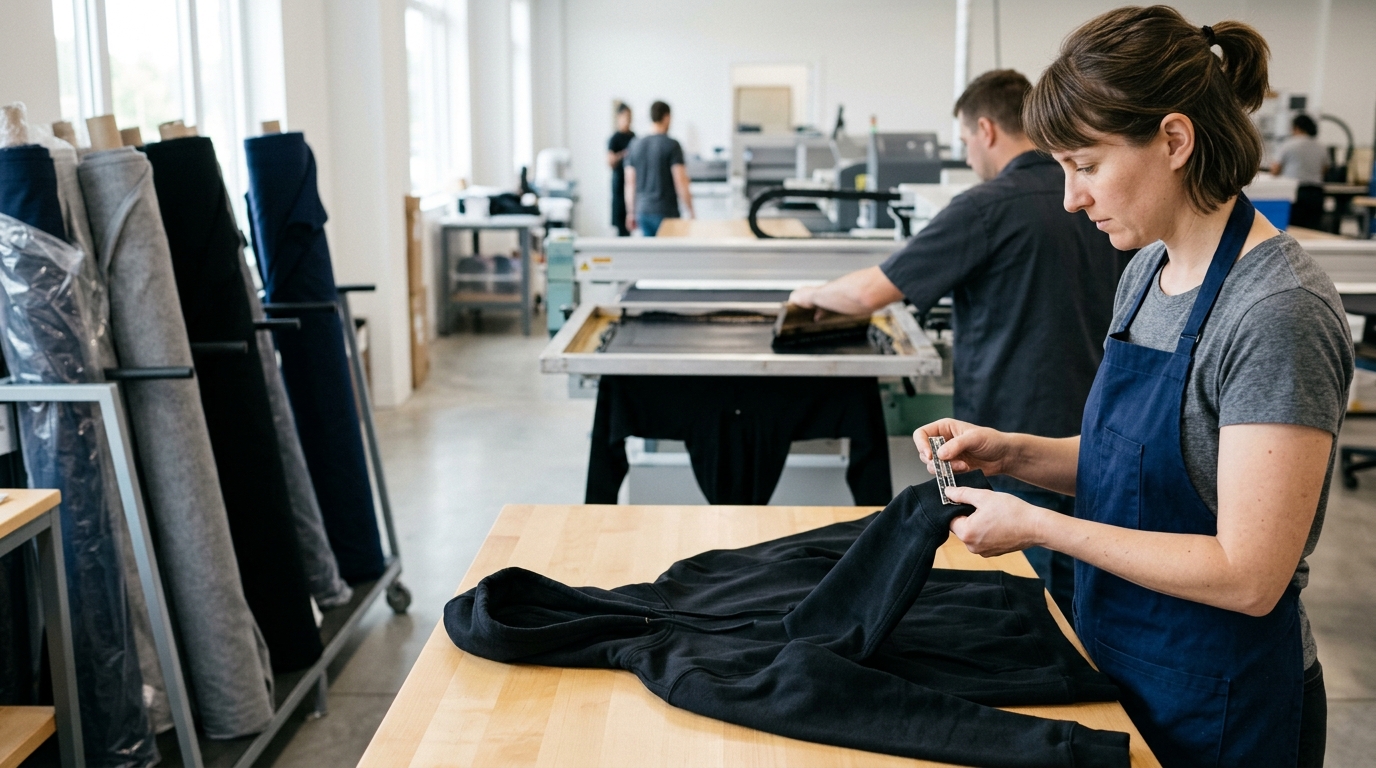
A full-service factory is a facility that handles everything. They are responsible for fabric sourcing, garment pattern creation, cutting and sewing processes, printing, and even delivering the final product. This choice is perfect for beginners who require expert guidance through the entire process.
Cut, Make, and Trim (CMT) Factories
With a CMT factory, you are more involved. You have to provide the fabric, labels, and patterns. The factory then cuts the fabric. They sew the garments. They add the trim such as labels and buttons. This is for brands with more experience and control over their materials.
Private Label vs. Custom Manufacturing
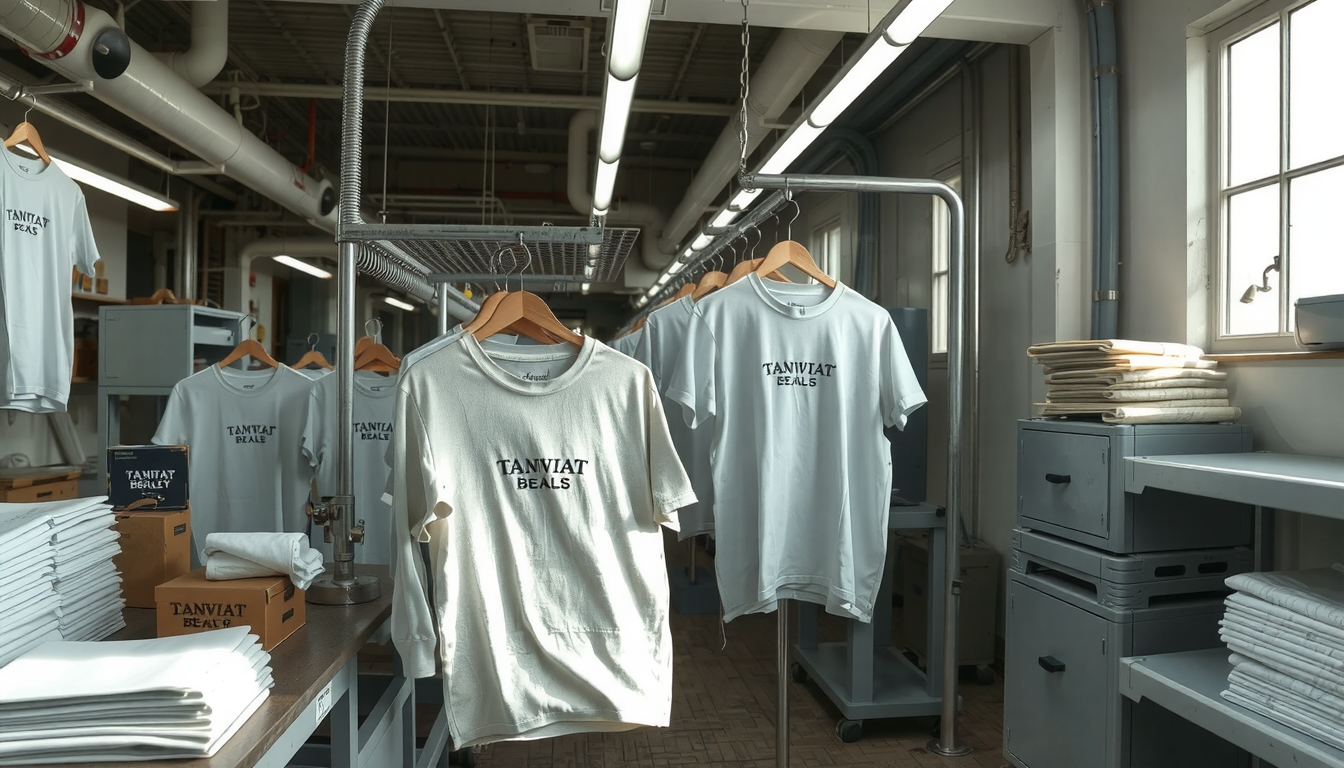
Private label is the way of using existing, unbranded T-shirts and add your own branding. This process is simple and doesn’t require much time. Custom manufacturing means making a T-shirt from a unique design with your choice of fabric, fit, and all other features. This allows you to control everything creative.
| Factor | Full Package Production (FPP) | Cut, Make, and Trim (CMT) | Private Label |
|---|---|---|---|
| Best For | Beginners, brands wanting a hands-off process. | Brands with fabric sources and production experience. | Startups needing speed and low startup costs. |
| Cost | Higher per unit, but includes all services. | Lower per unit, but you pay for materials separately. | Lowest per unit cost. |
| Control | Less direct control over sourcing. | High control over materials and design. | Limited to branding on a pre-made shirt. |
| Time Investment | Low. You approve samples and designs. | High. You manage the supply chain. | Very low. Just add your design. |
The Manufacturing Process: 7 Steps from Initial Idea to a Finished Tee
Creating a T-shirt from an idea to a finished product might seem complicated. Nevertheless, it is basically a straightforward seven-stage journey. Knowing this process is advantageous in that it helps you to appropriately plan your time and to have a clear picture of what to expect from your tshirt factory partner.
-
Concept & Tech Pack Creation
Your tech pack is the T-shirt’s blueprint. It has all the specifications such as measurements, materials, colors, stitching styles, and logos and label placements. If your tech pack is not well articulated, it leaves room for errors and possible misunderstandings at the factory. -
Fabric & Material Sourcing
The touch of your T-shirt is everything. You will consult with the factory to identify the right fabric. This can be a basic cotton, soft blends, or organic materials. Using specific fabrics such as Pima cotton, bamboo, or Tencel can create a competitive advantage for your product. -
Pattern Making & Grading
The factory uses your tech pack to create a master pattern. This is the template for one size of your T-shirt. Grading is the process of scaling that pattern up or down. This creates different sizes like S, M, L, and XL. -
Prototyping & Sampling
This is a critical step. The factory will produce a first sample, or prototype, for you to see. You check the fit, fabric, colors, and overall quality. Avoid skipping this step. It is your shield to make alterations before the whole order is done. -
Bulk Production
When the final sample is approved, large-scale production starts. The team at the factory will cut all the pieces of fabric they need. They will sew the shirts following the design that you approved. -
Printing, Embroidery, and Finishing
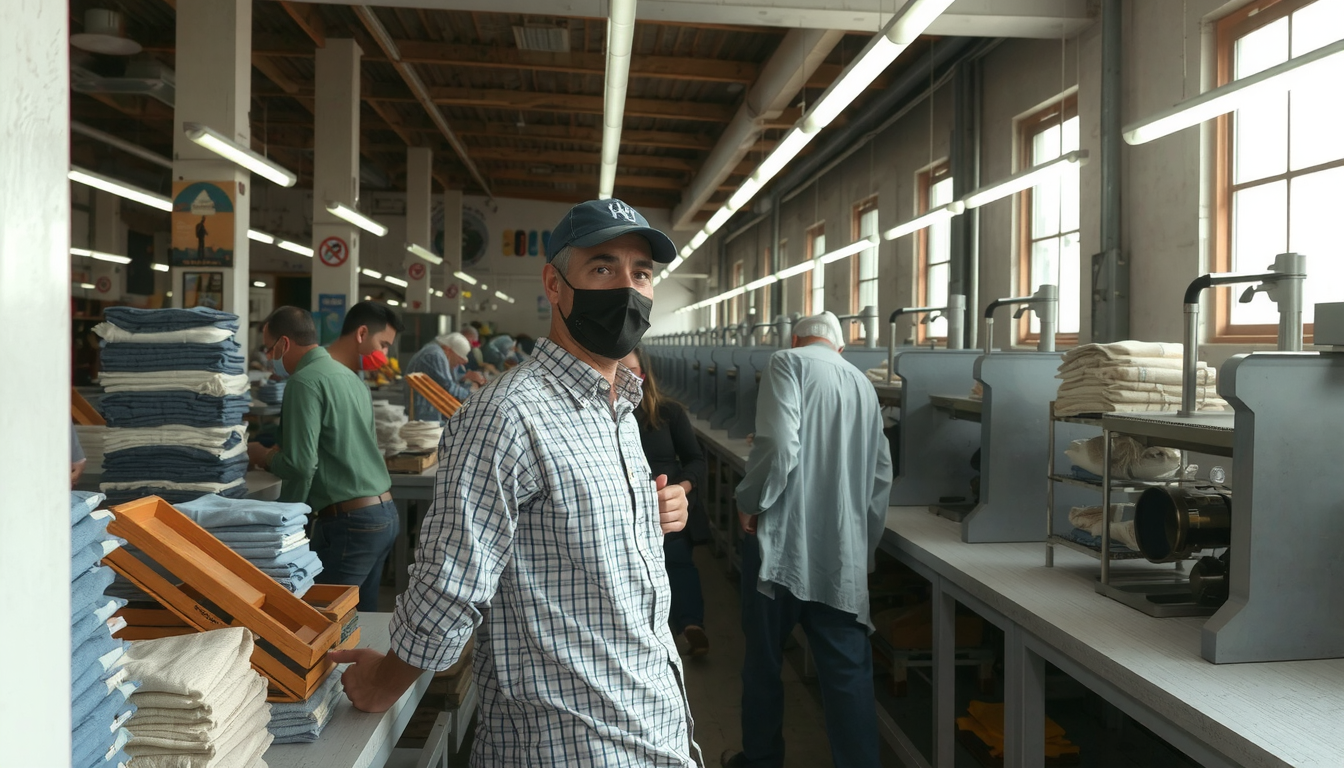
After the sewing is finished, the T-shirts are put through the finishing stage. In this stage, your graphics are printed. Logos are stitched as well. Custom neck labels or hang tags are attached.
- Quality Control (QC) & Packaging
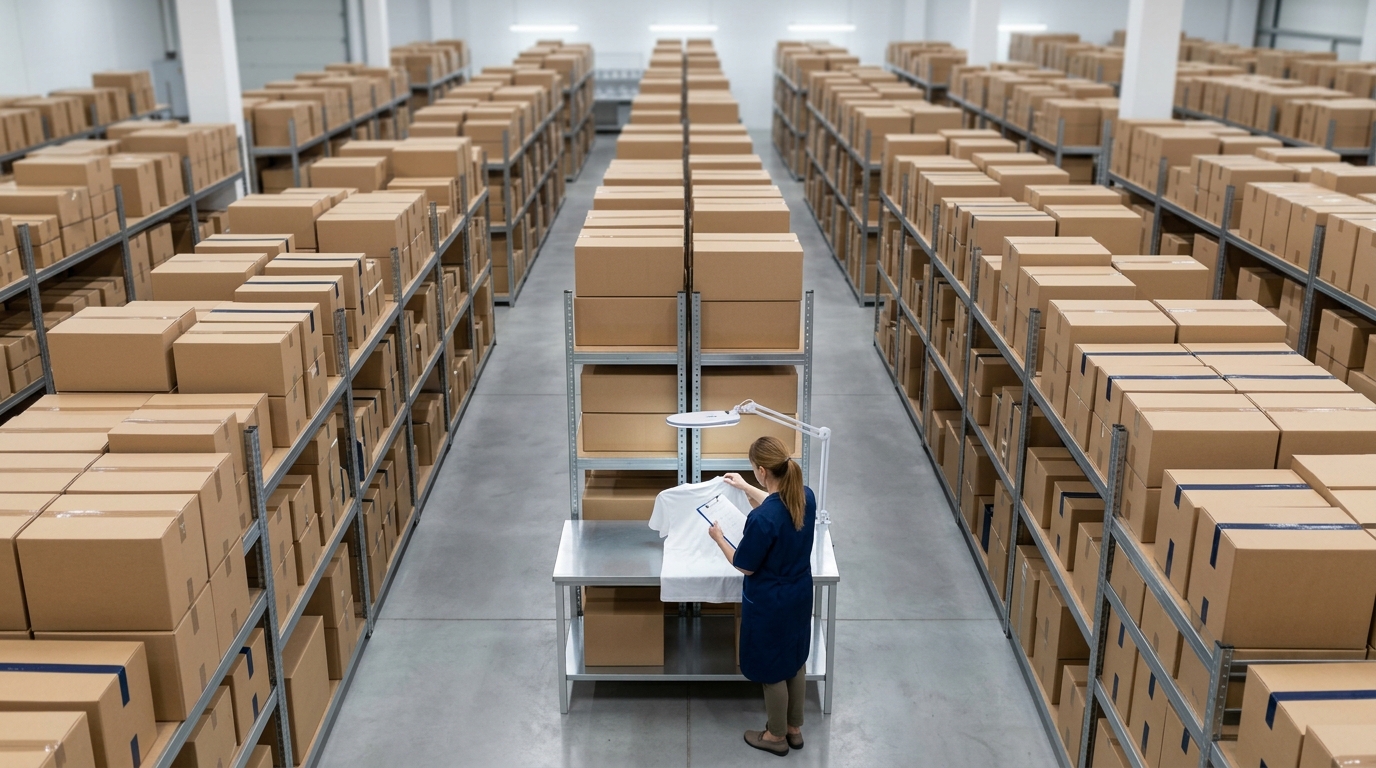
Before an order is shipped, a quality control team inspects the clothes. They check if there are any issues with stitching, printing, or size. The shirts are then folded, bagged, and boxed for delivery after they pass QC.
Domestic vs. Overseas: A Decision-Making Framework for Selecting Your T-shirt Factory
One of the most important decisions you have to make is choosing the place for your T-shirt production. Should you choose a domestic tshirt factory or one in another country? Both have their advantages and disadvantages. This will ultimately affect your costs, your timeline, as well as your brand’s narrative. There is no universally correct answer. The best option will always depend on your specific priorities at the time.
| Factor | Domestic T-shirt Factory | Overseas T-shirt Factory |
|---|---|---|
| Cost Per Unit | Higher due to labor costs. | Lower due to labor costs. |
| Minimum Order (MOQ) | Often lower (50-200 units). | Typically higher (500-1000+ units). |
| Shipping Time & Cost | Faster (days) and cheaper. | Slower (weeks to months) and more expensive. |
| Communication | Easier, no time zone or language barriers. | Can be challenging due to time zones and language. |
| Quality Control | Easier to visit and oversee production. | Harder and more expensive to visit for oversight. |
| Ethical Perception | Strong “Made in USA/UK” marketing angle. | Requires careful vetting for fair labor practices. |
The Arguments for a Domestic T-shirt Factory
Joining a local or domestic manufacturer has a long list of advantages. The turnaround times are smaller and shipping is faster and cheaper. Communication is plain since the same language and time zone are shared.
It is common for brands to find the factory visit which they can run to oversee the quality control. A “Made Locally” tag is also a good marketing edge. It is a strategy that appeals to customers who want to support local economies and higher labor standards.
The Arguments for an Overseas T-shirt Factory
The easiest way to save money is with an overseas tshirt factory. Labor and material costs are considerably cheaper; still, the profit margins are far better from the deal. Also, overseas manufacturers will provide access to many types of fabrics and cutting-edge production technology.
Many of the world’s top apparel brands produce overseas for these reasons. By finding some of the best T-shirt manufacturers worldwide, you can identify partners with diverse capabilities. All you have to do is wait for the longer time for shipping and work through communication issues.
How to Look for the Right T-shirt Factory Partner: Green Flags and Red Flags
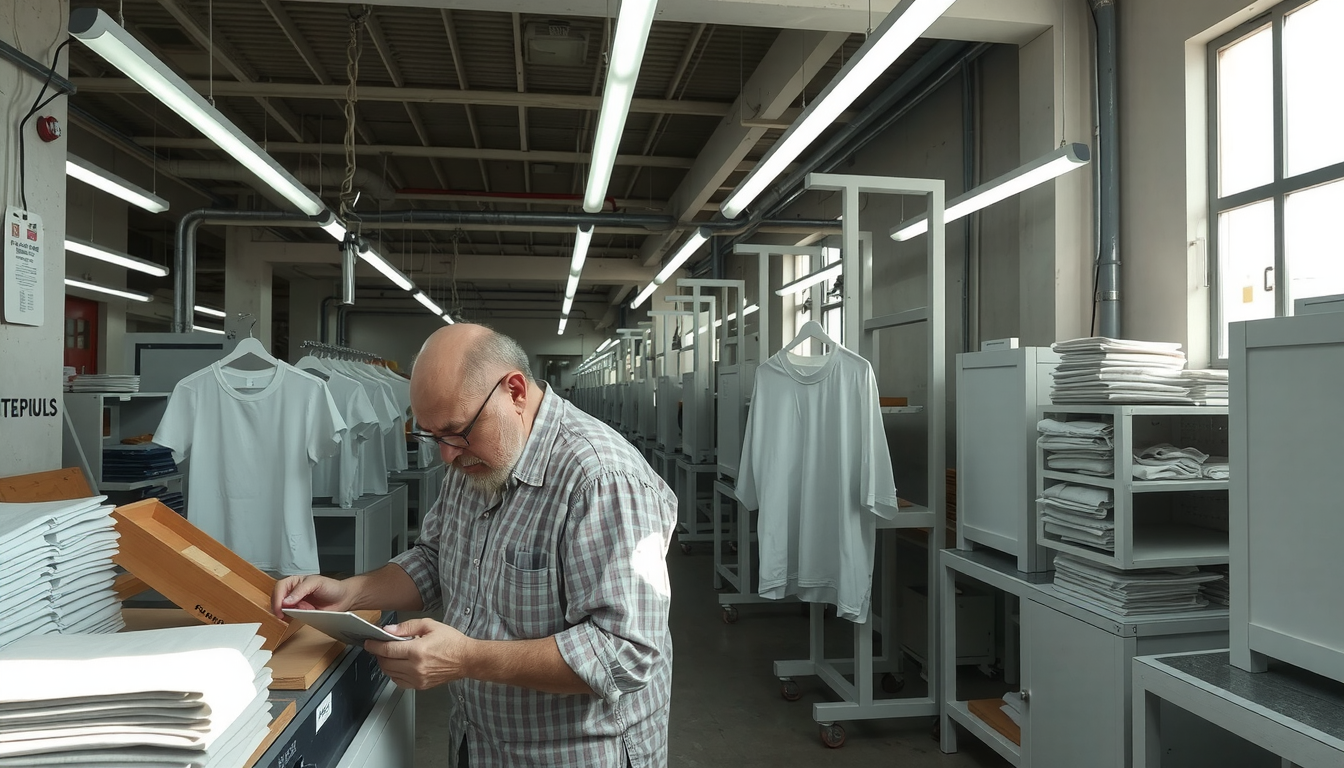
Establishing a production partnership is akin to onboarding an employee. Adequate research beforehand is necessary to avoid any mistakes that may occur. Through our experience with hundreds of brands, we discovered the main characteristics that you need to watch for. Look out for the following when you check a potential tshirt factory.
Green Flags: Indications of a Great Partner
- Clear & Proactive Communication: They respond fairly quickly. They pose smart questions related to your tech pack to avoid miscommunication.
- Transparent Pricing: Their quotes are straightforward and detailed. They break down each cost without any hidden fees.
- Samples are Not a Problem: An excellent factory proposes making a sample. They want the quality to be approved by you before they produce hundreds or thousands of units.
- Displays Previous Work: They are proud of their work. They can show their capabilities in the form of T-shirts they have previously made for different brands.
- Strong Client Reviews: Their reputation is solid. They can connect you with previous brand owners who have worked with them.
Red Flags: Warning Signals
- Waffling Communication: They either answer in one word or take days to respond. This is the type of communication they will maintain during production.
- Sample Provision Reticence: If the factory begs you to go straight to bulk production, head for the door. The risk to your investment is great.
- Unbelievably Low Prices: If something seems to be extremely beneficial, most of the time it is not. It is probably due to low-quality fabrics or using unethical labor.
- Online Absence or Unverifiable Physical Address: A legitimate company should be easily found and verified. The lack of transparency is a major red flag.
- High-Pressure Sales Practice: Be careful of any tshirt factory that is in a hurry to get you to put down a deposit before you are ready. A good partner will give you enough time for consideration.
The vetting process is something that you should ensure is adhered to. It matters whether you’re making tees or looking for a custom hoodie manufacturer. The principles of what makes a good partnership are the same.
Conclusion: Your Manufacture Partner is the Foundation of Your Brand
Finding the correct tshirt factory is not just a simple task. It is a strategic business decision. That requires a well thought-out plan, a careful selection of the best partners, and, above everything, clear communication. The partner will be the one who is going to determine the quality of your product and your brand.
Do not forget that a partnership is a mutual engagement, not just a transaction. You will develop, adapt, and create excellent products together for many years only if you have good relations with your manufacturer. The focus will be on ensuring exquisite workmanship. That is what makes the best brands stand out.
With this knowledge, you are fully ready to make your next step. Once you are ready to kick off your project, a select choice of t-shirt manufacturers can be a great resource for finding a prescreened partner.
Frequently Asked Questions (FAQ)
What is an ordinary Minimum Order Quantity (MOQ) at a custom t-shirt factory?
This can be different from one factory to another. Overseas factories might have MOQs of 500-1000+ per style and color. Domestic and small-batch factories may offer MOQs as low as 50-150 units. Always inquire about the MOQ at the outset.
What is the range of costs for custom T-shirt production?
Prices vary and are determined by different factors such as fabric quality, order volume, design complexity, and the location of the factory. Overseas mass production can go for between $4-$8, while premium, small-batch domestic production can range from $10-$25+.
What is the tech pack, and why do I need it?
A tech pack is a detailed document for the design that contains all the technical details. It shows the measurements, the materials, the colors, and the placements of the labels. It is the crucial “blueprint” that the tshirt factory needs to make the garment you want correctly.
How long does a T-shirt take to manufacture?
The full time can range from six to sixteen weeks, from tech pack approval to the final delivery. The sampling process takes around 2-4 weeks, while mass production takes another 4-8 weeks. Shipping can add 1-4 weeks, especially for overseas freight.
Can a t-shirt factory help me with my design?
A few full-service factories provide design assistance. They can say if the idea is technically viable. Still, you should always be well prepared with a clear vision. A tshirt factory primarily concentrates on making products as opposed to playing the role of a brand’s art director.