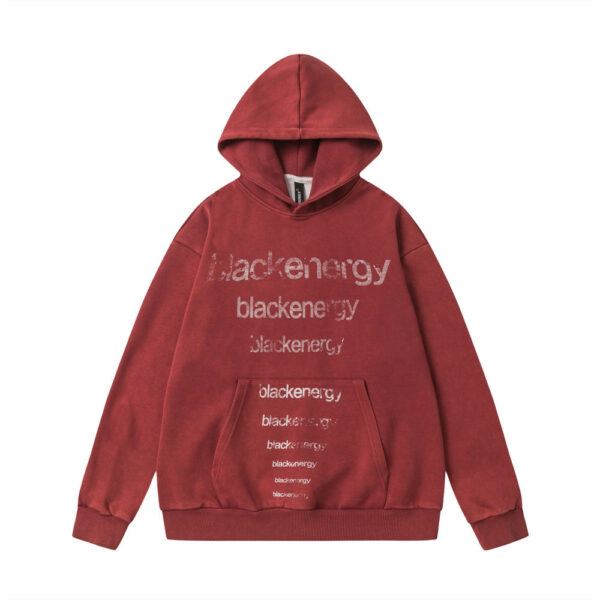
Careful consideration and planning pave the way to high-standard hoodies. This guide is your roadmap, outlining all the steps to follow. You will learn everything you need from your initial design to the receipt of the final product.
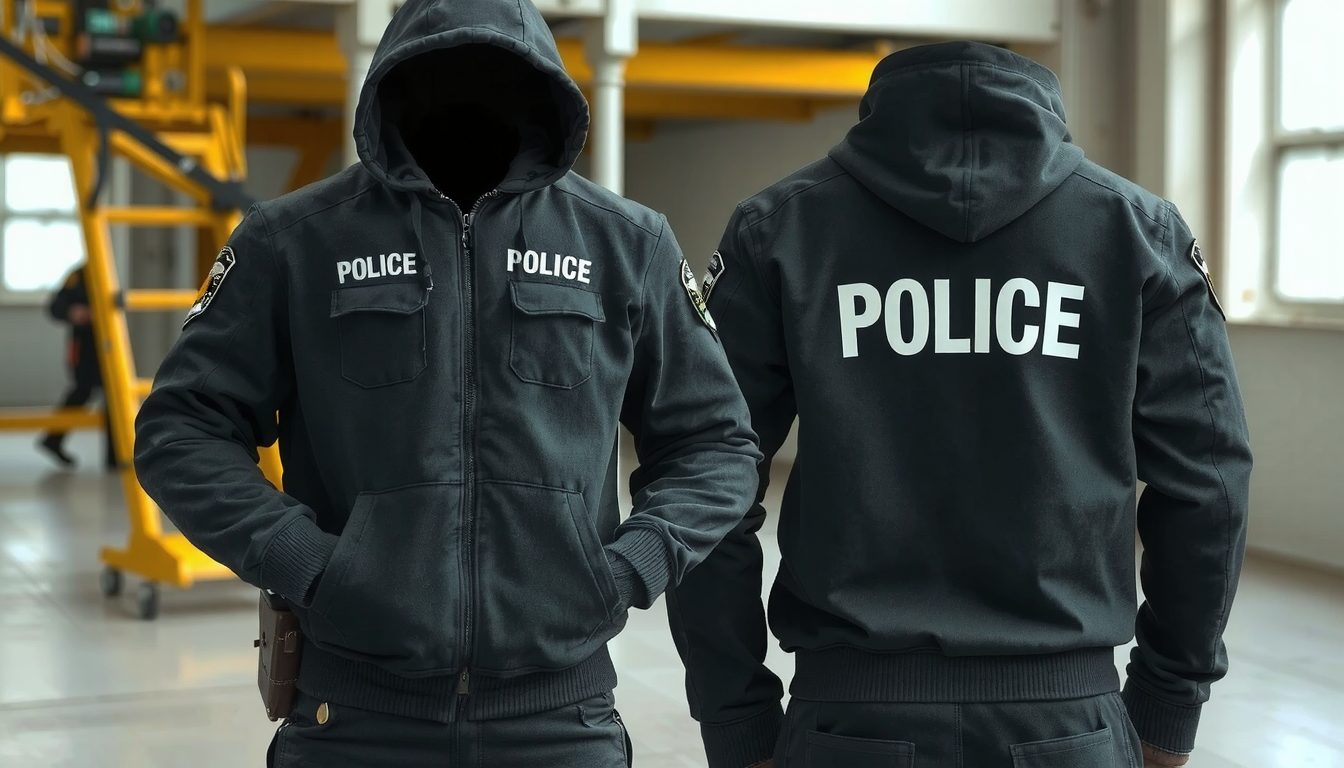
The resource is a lot of help in making a quality decision on your clothing. The design rules, hoodie fabrics, and printing methods are some of the things we look at. Also, we lend a hand through the assistance of a fantastic partner to turn your idea into reality. Together we can initiate the journey of your custom police hoodie project.
Why Go for a Personal Police Hoodie?
There are mainly reasons for which people opt for law enforcement clothing; all are valid. Clarity about your purpose will also help you to make the right design and choice of materials.
Warrior Together & Unit Identification
Hoodies worn by all members of the squad express unity and pride. Hunt SWAT, K-9, and patrol teams often use custom wear to get people together. Custom clothing unites them in a professional way at team building or training events.
For the Academy
What better offer could there be for newly graduated police officers than a hoodie? Thus, the custom hoodie symbolizes the end of the strenuous training and the commencement of the officers’ new profession. This piece of clothing is, indeed, a cherished gift for their future.
To Remember & Fundraisers
For some, clothing becomes a means of expressing sympathy after the loss of an officer. Memorial hoodies provide people with the opportunity to pay tribute to a hero. They are also often distributed in fundraising campaigns thus directing part of the proceeds to the officer’s family.
To Show Support
There are two things, for family and friends to get a custom hoodie with a message. One of them is to express their support and appreciation for the courage and hard work of the officers. Another is showing respect and pride in the work done by the officers.
Step 1. Designing Your Hoodie with Integrity
A well-conceived design is the one which is respectful, concise and professional. The impression of your custom police hoodie is extremely strong. Therefore, it is necessary to consider the design carefully.
Core Design Aspects to Think About
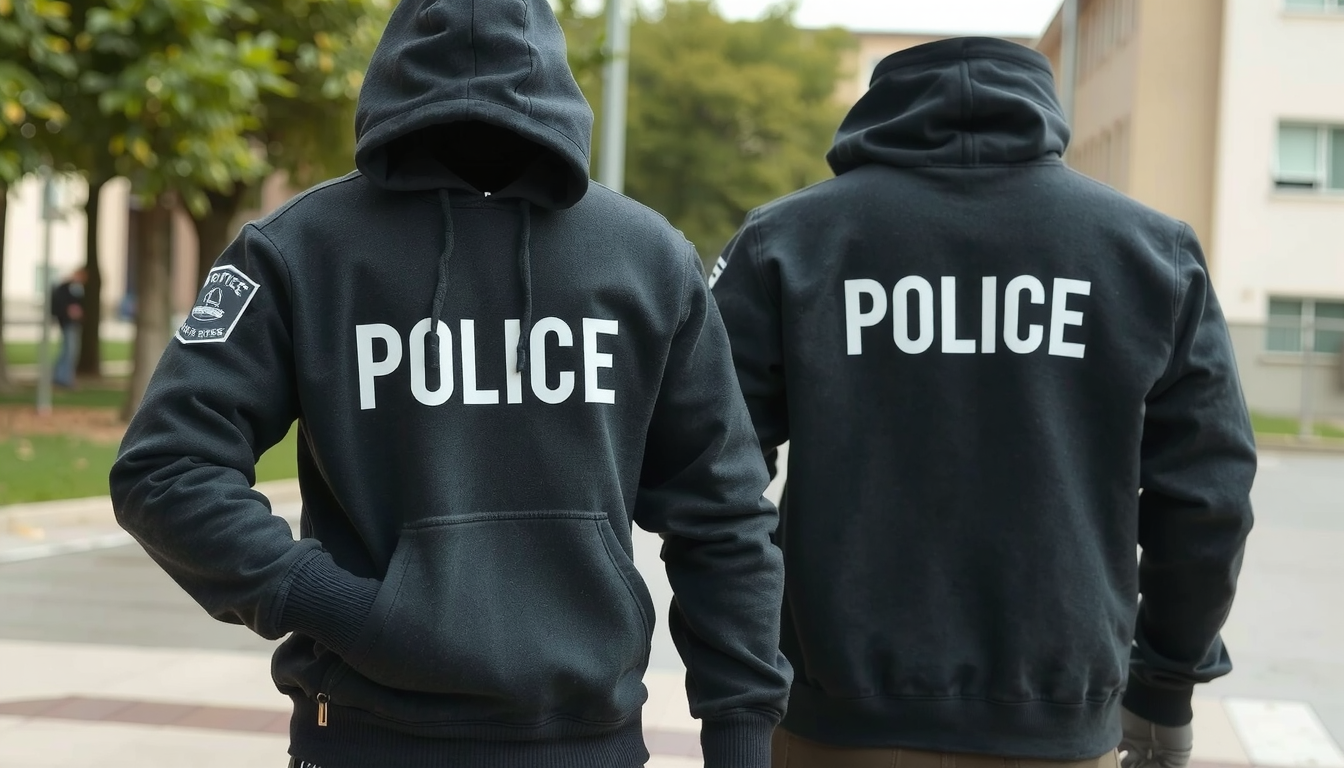
- Insignia vs. Graphics of Techniques: If you have the authorization, you may only use the official department badges or seals. In the case of supporter wear, one may use general manifestations like the Thin Blue Line flag or imaginative graphics that show support without using the official ones.
- Typography and Text: The typeface you select matters. The fonts should be bold and clear such as Arial or Helvetica for police or sheriff. Names, badge numbers, and unit mottoes must be readable at first glance.
- As a mark of loyality: The “Thin Blue Line” is often associated with supporters’ sacrifices. The American flags or state flags are also commonly used. They could be employed to symbolize the profession in a respectful way.
- Layout Decision: The position of the design will affect how visible and appealing it looks. For example, the left chest area will be suitable for a small, official logo while the full back area is perfect for larger, powerful statements. Sleeves are ideal for flags or unit numbers.
Acquiring Your Artwork: The Base of a Pro Appearance
The prerequisite for a successful print is always a good quality art file. The best type is vector files (.AI or .EPS). Since they can be resized without quality loss, they are the most suitable. Raster files, like .JPG or .PNG, are acceptable if their resolution is high enough. In reshaping them, however, they may appear blurry.
You may either involve a professional designer or utilize a web tool. One option is to hire a designer for a unique and professional look. Online design tools are easy to use and will help you interact with the manufacturer.
Design Do’s and Don’ts
- Do: Keep the design simple and easy to comprehend.
- Do: Double-check the spelling of names and mottos and make sure they are correct.
- Do: Obtain the necessary permissions before using any official department logos.
- Don’t: Overdo the hoodie with too many graphics or characters.
- Don’t: Employ the designs that if unapproved could be confused with an official uniform.
- Don’t: Use the pictures of lower quality that will result in a poor print.
If you’re thinking of scaling your idea into a larger project, understanding how to craft a brand introduction can provide a solid foundation.
Step 2: Picking the Right Hoodie
The material and design you choose will be essential determinants of the comfort and performance of your personalized police hoodie. This will impact how you feel when wearing it, how it appears to others, and how long it will last.
Comparison of Hoodie Fabrics
| Material | Pros | Cons | Best For |
|---|---|---|---|
| 100% Cotton | Soft, breathable, comfortable. | May shrink, possibility of fading in time. | Off-duty casual wear, maximum comfort. |
| 100% Polyester | Strong, holds color fast, wicks moisture. | Breathability is less than that of cotton. | Gym wear, training, on-duty layering. |
| Blends (50/50) | Combination of comfort and strength is excellent, and no shrinking. | Not as soft as 100% cotton. | All-purpose use, department issue. |
Pullover vs. Zip-Up: A Functional Choice
Whether you make a pullover or a zip-up hoodie is not just a matter of aesthetics. The fact is that they each have a different function.
Our experience has shown that zip-up hoodies are often preferable for layering on duty. They can be worn and taken off with no other items or gear being touched. The central zipper dividing the print area is the only drawback to this model.
Pullover hoodies allow for a front and back printing of the entire, unbroken canvas. Thus, they are suitable for huge, extravagant prints. Additionally, they are warm and provide a classic, casual look, be it for wearing off duty or during academy classes.
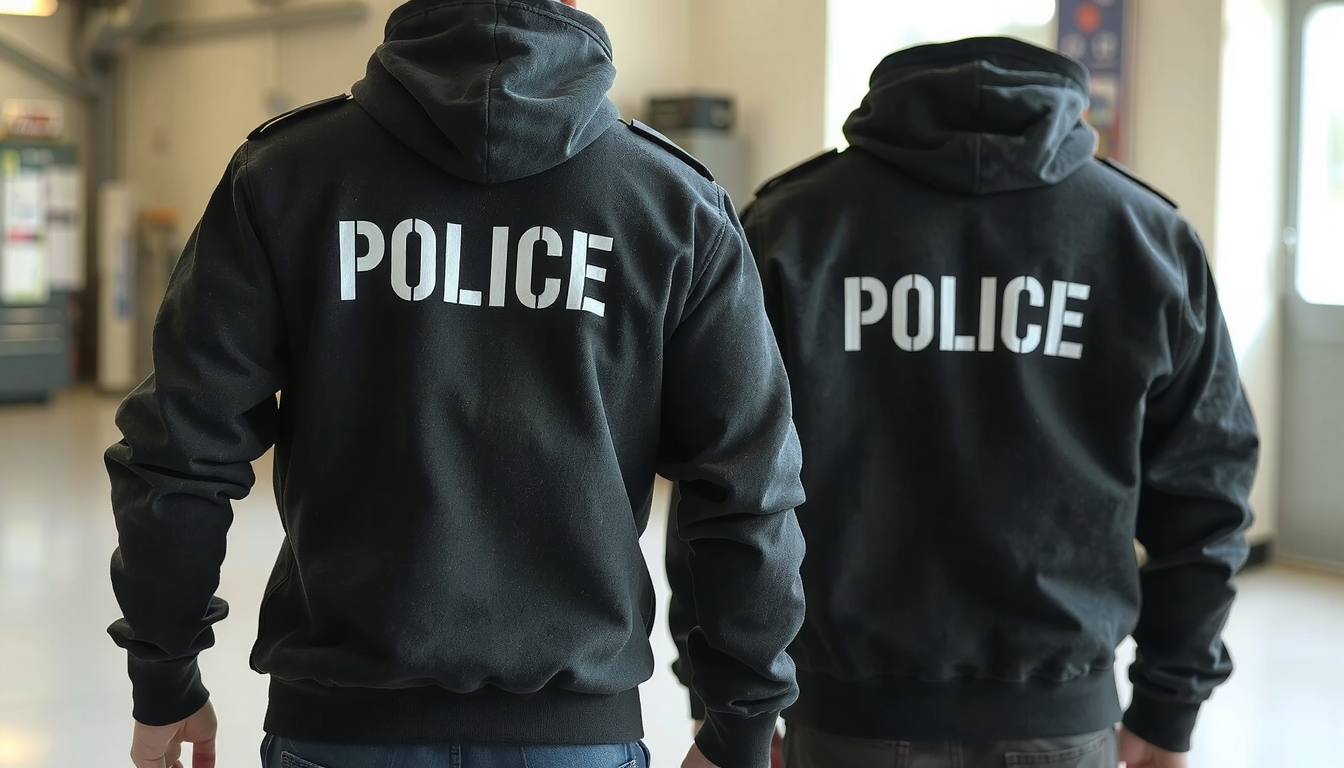
Step 3: Choosing the Right Customization Method
The way your design will be applied to the garment is a crucial consideration. It has threefold implications: the final look, durability, and cost of your custom police hoodies.
Screen Printing
Screen printing is when ink is forced through a silk mesh to make the design on the hoodie. It’s a time-tested and widely-used process.
- Best for: Orders of 24 or more and projects that include 1 to 3 colors. Ideal for prominently displayed text and simplified logos.
- Pros: It is very cost-effective for mass productions. The bright colors and the durable print are huge benefits too.
- Cons: It can be costly for smaller orders or multicolor prints with high demand for set-up costs.
Embroidery
Embroidery is a method where a cloth is stitched through the design with a needle and thread. The fruition is a stylish, tactile finish that feels good to touch.
- Best for: An aesthetic twist for small logos on left chest areas, name tags, or ranks. Suitable for acquiring a luxurious touch.
- Pros: Top-quality and easily visible. The clothing will most likely stand the test of time.
- Cons: Not suitable for large or overly detailed designs. Higher costs due to intricate artwork.
Direct-to-Garment (DTG)
With DTG, the printer operates as a normal document printer, applying the ink directly onto the hoodie. It is a great method for detailed images.
- Best for: Small orders (even one) or designs having numerous colors, like photos.
- Pros: There is zero minimum order quantity. It enables the artist to use free colors.
- Cons: Dark hoodies may not have a bright contrast as the ink color appears dull sometimes. After several washes, the print may not be as durable as screen printing.
Step 4: Finding a Partner & Avoiding Pitfalls
Identifying the right firm to turn your hoodie design into reality is the backbone of the whole project. Besides, working with a competent partner, who will help you through the process, guarantees a quality product.
What to Look For in a Manufacturer
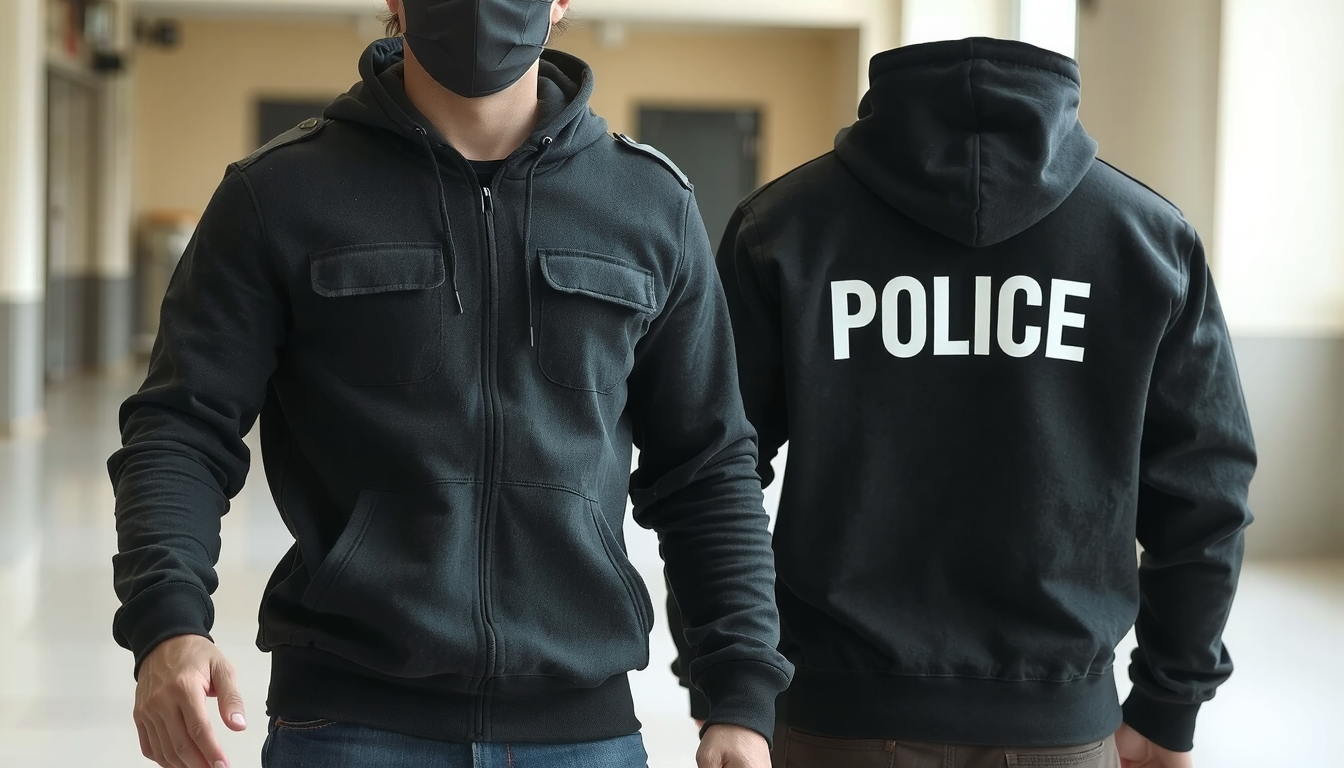
Rely on the firm that has accomplished tasks in the past.
- Experience in custom clothing for law enforcement or first responders.
- Clear and responsive communication.
- Transparent pricing with no covert operation or art costs.
- Digital proof or mock-up of your idea is available for your consent before production.
The Ordering Process: A Checklist
Stay true to the following guidelines to realize an seamless ordering process.
- Get a Quote: Provide details of your project including hoodie style, colors, sizes, quantities, and your design file.
- ALWAYS Review the Digital Proof: This is your final chance to spot any errors. Correct all mistakes thoroughly including spelling, colors, placement, and size of the design.
- Confirm a Timeline: Make sure your production time and shipping date are clear so you have an idea of when your order will arrive.
Working with a partner who has an excellent background in the field is crucial. As a dedicated custom hoodie manufacturer we walk our clients through every step, ensuring the delivery of a flawless product.
Legal & Ethical Considerations
When you’re about to design police-related clothes, it’s a serious responsibility. Knowing the regulations can both protect you and demonstrate your respect for the badge.
Understanding the Law
Committing the crime of wrongful impersonation of law enforcement members is a serious concern. Your custom clothing should not be designed in a way that would deceive someone into thinking you are a police officer on duty. It’s a serious matter that shouldn’t be taken lightly.
Further, many logos, patches, and seals are protected by copyright. You have to get written permission from the department before using their logos on the clothing.
Best Practices for Supporters
It is essential for you to respect the law while creating the hoodies for supporters.
- Use phrases that show support like “Proud Police Wife,” “Blue Family,” or maybe “I Back the Blue.”
- Avoid using official titles like “OFFICER” or “SHERIFF” with large, authoritative fonts.
- Use fans’ symbols of support instead of power’s symbols.
Apparel brands designed for law enforcement supporters usually have the best examples of such respectful and proper designs. Making a custom police hoodie is a good way to express pride, but it should be done with conscience.
Frequently Asked Questions (FAQ)
Here are some responses to common questions concerning the creation of custom police hoodies.
Q1. What’s the top material for a long-lasting custom police hoodie?
A: The best durable material is an ultra-weight cotton-polyester blend. Usually, a 50/50 or 80/20 blend is used. Polyester enhances the strength and prevents color loss while cotton makes it comfy and warm.
Q2. Is it allowed for me to put “Police” on a custom hoodie?
A: Generally yes, having the word “Police” on a hoodie for personal or supportive use is legal. It turns illegal when the hoodie is worn to impersonate an officer. The overall design should not lead people to believe you are serving as law enforcers.
Q3. What’s the average cost of custom police hoodies?
A: The cost is determined by the type of hoodie, the number ordered, and the printing technique used. In case of an order above 24 hoodies where screen printing is applied, you can expect around $25 to $45 per the product. The price is higher for orders of individual items or those with embroidery.
Q4. What is the distinction between screen print and embroidery on hoodies?
A: Screen printing is a technique of applying ink onto fabric to create a design, thus result in a flat surface. This works well for text and large designs. On the other hand, embroidery involves thread stitching a pattern into the fabric. This outstanding texture in feel that is good for logos on the chest or sleeve is the finishing touch of embroidery.
Q5. Can I just get one custom police hoodie?
A: Absolutely! For your single hoodie order, opt for a firm that provides Direct-to-Garment (DTG) printing. Henceforth, the manager doesn’t ask for any minimum order quantity. A word of caution though- the price you will pay for a single hoodie will be far more than the per-item price of bulk orders.


-600x600.jpg)