Clothing making your idea, and branding your design are all exciting avenues for creativity. You can envision an amazing garment. Yet, it may come to you as difficult as translating the imagination into an actual garment. You travel through the maze of possibilities: traditional local shops, online giants, and various ways to print.
This guide is here for you. We shall handle the entire process together, section by section. We are committed to making it simple for you to find your project’s right partner.
Custom clothing is your manual. We promise you will meet the best print shop for clothing that meets your needs. This includes your budget, quality criteria, and how many items you want to print. A crucial first step is to learn the different techniques of printing. It is crucial to know such techniques when you start a brand.
The Four Main: Clothing Printing Options
Choosing the right print shop for clothing first requires you to know the machines they use. Each printing method has its pros and cons. The better you understand them, the more likely you will find the best choice for your particular design, budget, and order size. Here are the four main types.
Direct-to-Garment (DTG) Printing
If you think of DTG printing as a typical office printer, you are on the right track, but with fabrics. A special printer applies ink directly onto the t-shirt or garment. This technique works only with the close-up effects that you can think of using multi-colored dots.
DTG is an ideal option for complex, multicolored designs like some photographs. In addition, it is suitable for small quantities or even the unique piece. As it has a much smaller setup compared to other methods, it was a favorite pick among new brands. Some are the best sources of information. Direct to Garment (DTG) printing explained is offered by some printers.
Screen Printing
Screen printing is an old, tried-and-true technique that has not lost its popularity. It operates by forcing ink through a mesh screen containing a stencil of your design. Every color in your design needs a separate stencil.
This method most often suits medium quantities of clothes, in general at least 24 pieces. Its best use is in designs that have fewer colors, especially for solid colors. It is most appreciated in screen printing that produces brightly colored clothes, especially on dark anyone. The price per shirt sharply drops as you place larger orders.
Heat Transfer (Vinyl & Plastisol)
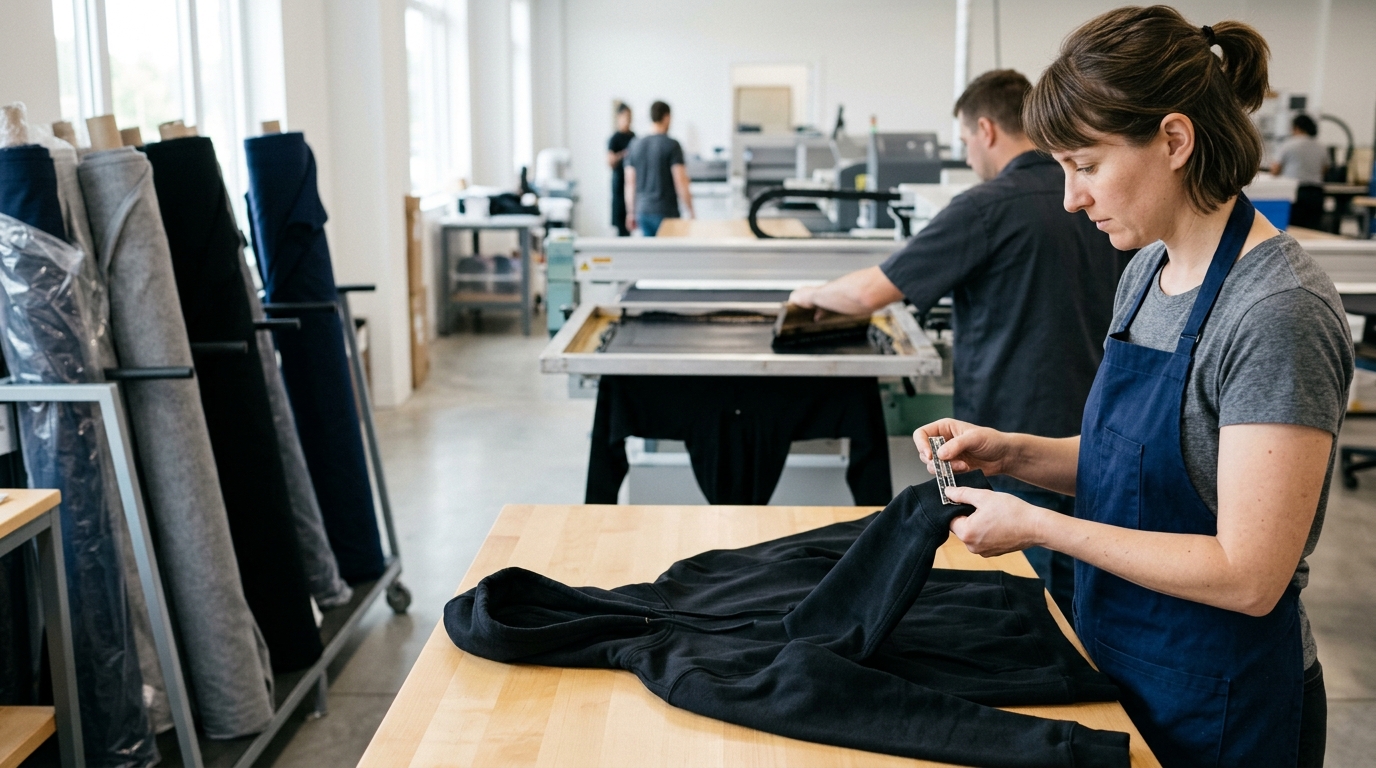
In heat transfer, the design is transferred to the garment through the application of heat and pressure. The design is first printed onto a special transfer paper or cut from a sheet of vinyl. Then, a heat press machine bonds the design to the fabric.
This is the go-to method for team jerseys that need custom names and numbers. It is also great for simple logos on materials that are hard to print on directly. The results are sharp and can be very durable.
Embroidery
Embroidery is not printing, but it is another key service provided by good print shops for clothing. Instead of ink, it uses thread to stitch a design directly into the fabric. This results in a textured, luxurious appearance and feel.
Hats, polo shirts, and jackets are among the many products where embroidery is a perfect choice. It is the way to go for a formal look, as it is very durable. Your clothing will stand out with a long-lasting effect of a premium quality mark.
| Feature | DTG Printing | Screen Printing | Heat Transfer | Embroidery |
|---|---|---|---|---|
| Best for Volume | Low (1-24) | High (24+) | Low to Medium | Any |
| Color Complexity | Unlimited | Limited | Good | Limited |
| Cost per Item (Low Qty) | Lower | High | Medium | High |
| Cost per Item (High Qty) | High | Lower | Medium | Medium-High |
| Durability | Good | Excellent | Good-Excellent | Excellent |
| Feel on Fabric | Soft | Heavier “hand” | Varies (smooth) | Textured |
The Route You Want: Local or Online?
After learning about printing methods, you need to decide where to get your items produced. You have two primary options to consider: going the route of a local store or a large e-commerce platform. Both posses their advantages and disadvantages. The decision is based on specific demands for your project.
The Local Printshop for Clothing
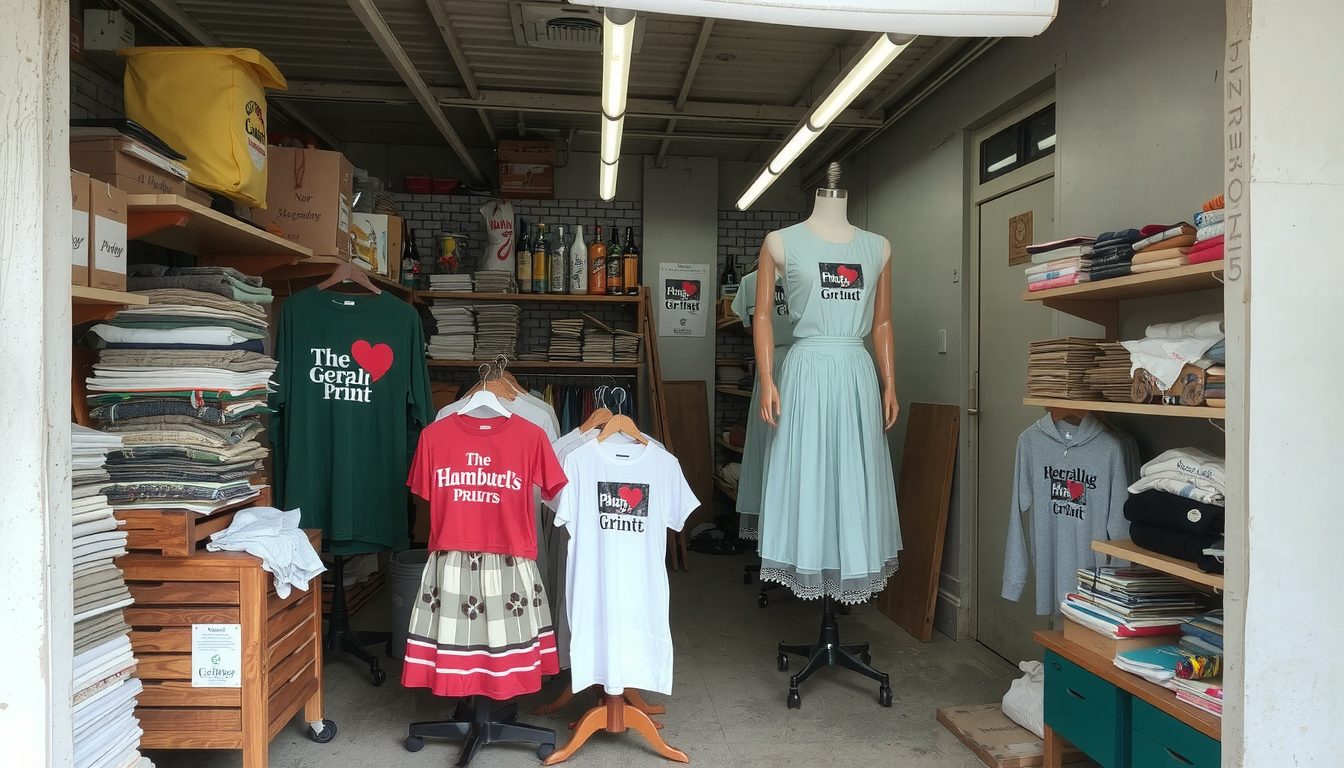
A local shop presents a close-to-home style. You can enter, question a person, and view their work. This kind of personal contact is sometimes of utmost value.
The best parts of a local shop are the in-person meetings and the ability to feel samples. You can check the garment quality and see the print colors before you approve the job. You also get to support a local business. Sometimes, they can offer faster turnarounds for simple jobs.
However, a local print shop for clothing may be more expensive for a small order. Their selection of blank shirts and hoodies might be smaller. They may also lack the newest technology for very complex work. This path is best for event planners or businesses that want a personal relationship and need to see the quality first.
The Online Print Shop
On the other hand, whenever someone thinks about a site for printing, they imagine the incredible facilities they will enjoy. Obviously, these platforms are great at what they set out to do; the people who are confident in working through a website will find them as a valuable resource.
Their main advantages are a huge variety of garments and competitive prices. In many cases, they offer simple online design tools. They also provide a service such as print-on-demand that is essential for online stores. This means you can receive T-Shirt Printing with No Minimums | Print-on-Demand Shirts.
The downsides include the fact that you will not be able to see a physical sample before you buy something. Customer service might feel less personal also. You will have to find out about shipping times and costs. This option is perfect for online brands, creators, and anyone who needs a flexible, digital-first process.
The Entrepreneur’s Checklist
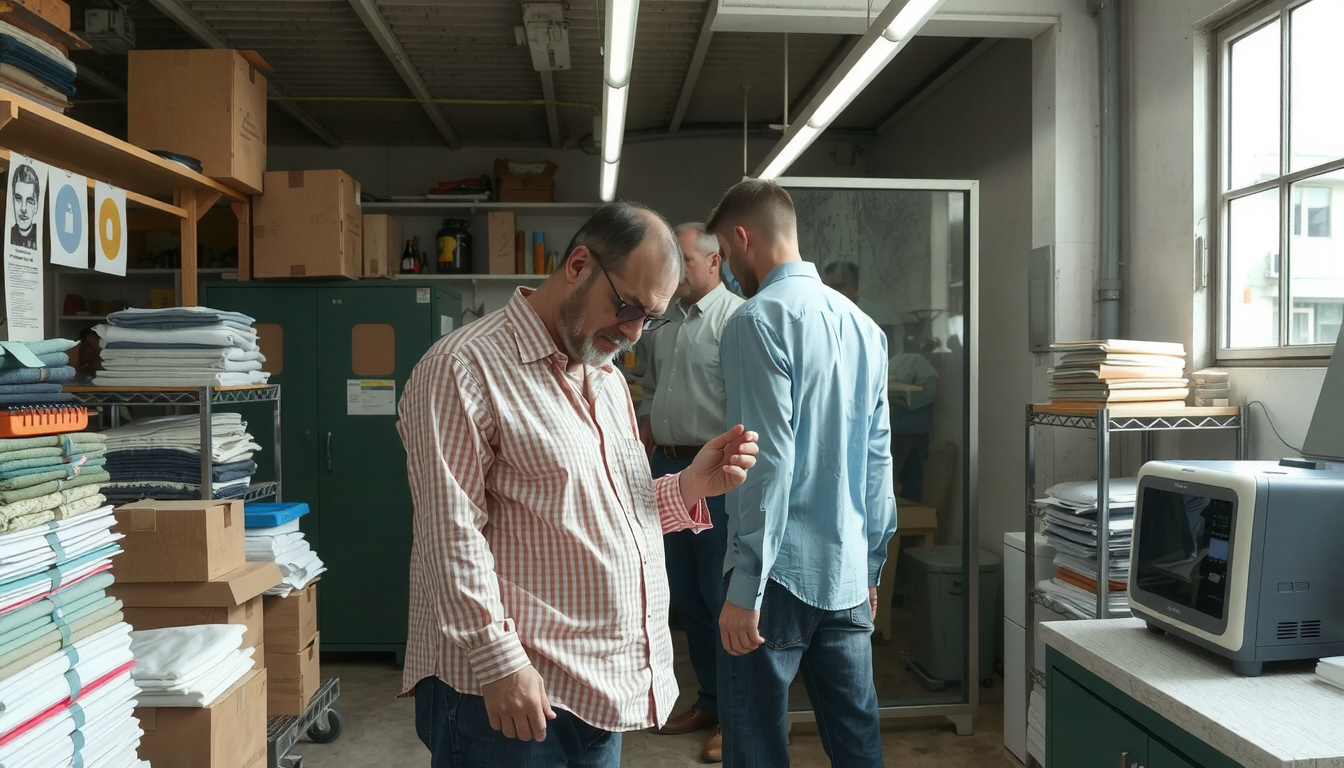
Drawing from our experience of launching numerous clothing lines, the best way to ensure that your ideas are materialized is to ask the suppliers the right questions from the get-go. A reliable print shop for clothing will have transparent answers. Here is the checklist we use to vet any new printing partner.
-
What are your artwork requirements?
Be specific. Do they need an AI, PSD, or PNG file? What resolution is required? Most professionals need 300 DPI (dots per inch). Knowing this saves you from having your design rejected. -
Can I get a proof or sample before the full run?
Always ask for a sample. A digital proof is a computer image, while a physical proof is a real printed shirt. There might be a small cost for a physical sample, but it is worth it to avoid mistakes on a large order. -
What is your policy for misprints or quality issues?
Mistakes can happen. A professional shop should have a clear policy. Do they reprint at their expense the bad items? Know their guarantee before you place an order. -
What is your maximum print size?
This is an important question for designers. Some shops offer standard 12×14 inch prints. Others, like Graphic Disorder, promote much larger print sizes that can make a design stand out. -
Do you offer Pantone (PMS) color matching?
This is very important for brands. Computer screens show colors differently than how they print. Pantone matching is a system that ensures your brand’s specific colors are printed accurately every time. -
What are your turnaround times?
Get a clear timeline. Ask if their estimate includes shipping. A “5-day turnaround” might not include the 3 days it takes to ship to you. Get a guaranteed delivery date. -
Are there any hidden fees?
Be direct about costs. Ask about setup fees, screen fees for screen printing, or charges for changing ink colors. A transparent print shop for clothing will give you an all-inclusive quote.
Preparing Your Design for a Flawless Print
A great percentage of the quality of your final product comes from the quality of your design file. A file that is not ready for printing can cause a lot of delays and can result in poor quality. Here are some expert tips to prepare your art.
Vector vs. Raster
Knowing about the two main types of image files will be quite helpful. Vector files (like AI, EPS, SVG) are made of lines and curves. They can be scaled to any size without losing quality. They are best for logos and text. Raster files (like PSD, PNG, JPG) are made of pixels. They are best for photos but can look blurry if enlarged too much.
The 300 DPI Rule
DPI means “dots per inch.” Images on the web are usually 72 DPI, which looks good on a screen. But for printing, you need 300 DPI. Always create your design at 300 DPI and at the size you want it printed.
Outline Your Fonts
This is a pro-tip that prevents major errors. If you use a special font in your design, the print shop might not have it. This can cause their computer to swap it for a default font. To prevent this, “outline” your fonts. This action turns the text into a shape, so it will look the same on any computer.
Consider the Garment Color
Ink colors can look very different on a white shirt versus a black shirt. For dark garments, most printers will need to lay down a layer of white ink first. This is called an “underbase.” It helps the other colors show up bright and true.
Beyond T-Shirts: Printing on Other Clothing
Your brand is more than just t-shirts. A versatile print shop for clothing can help you create a full line of clothing. The same printing principles apply to other popular items, with a few small changes.
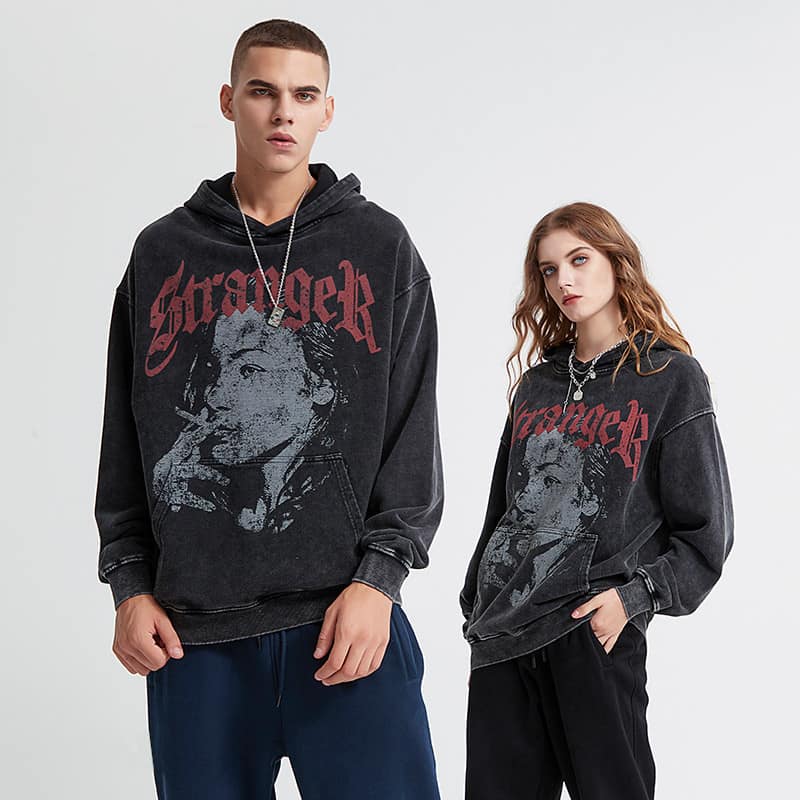
Hoodies are a staple for any modern brand. When printing on them, you have to consider zippers and front pockets. This can affect where you can place your design.
Hats and polos almost always use embroidery. The stitched look gives these items a classic, high-quality feel that customers love. Expanding your product line shows that you are a serious brand. For those creating high-quality garments, working with a custom hoodie manufacturer can ensure a perfect final product.
Conclusion
Finding the right print shop for clothing is a crucial step for your brand or project. It is about more than just finding the lowest price. It’s about finding a true partner.
By understanding the technology, deciding between a local or online shop, and asking the right questions, you are in full control. You now have the expert knowledge to choose a printer with confidence. You are ready to turn your creative vision into amazing, wearable art.
Ready to build your brand from the ground up? Explore more resources and services at TZ Streetwear.
Frequently Asked Questions (FAQ)
What is the best type of printing for t-shirts?
The best method depends on your design and order size. For detailed designs with many colors in small quantities (1-24), DTG printing is usually best. For simpler designs with fewer colors in large quantities (24+), screen printing is more affordable and very durable.
How much does it cost to print a custom shirt?
The cost can range from $5 to over $30 per shirt. The final price is based on several factors. These include the printing method used, the number of colors in your design, the total number of shirts you order, and the quality of the blank shirt itself.
Can I provide my own clothing to a print shop?
Some local shops might allow this, but many prefer not to. A print shop for clothing typically uses garments they supply because they know how their inks and machines will react to those specific fabrics. This ensures quality control. It is always best to ask the shop about their policy first.
What’s the difference between a print shop for clothing and a print-on-demand service?
A traditional print shop produces your order in bulk. You receive all the items at once, and you are responsible for storing and shipping them. A print-on-demand (POD) service prints and ships items one by one, directly to your customer, only after an order is placed on your online store.
How do I ensure the colors on my shirt match my screen?
This can be tricky because screens and printers use different color systems (RGB vs. CMYK). For perfect color accuracy, especially for a brand logo, ask your print shop if they offer Pantone (PMS) color matching. This is the industry standard for getting precise colors.