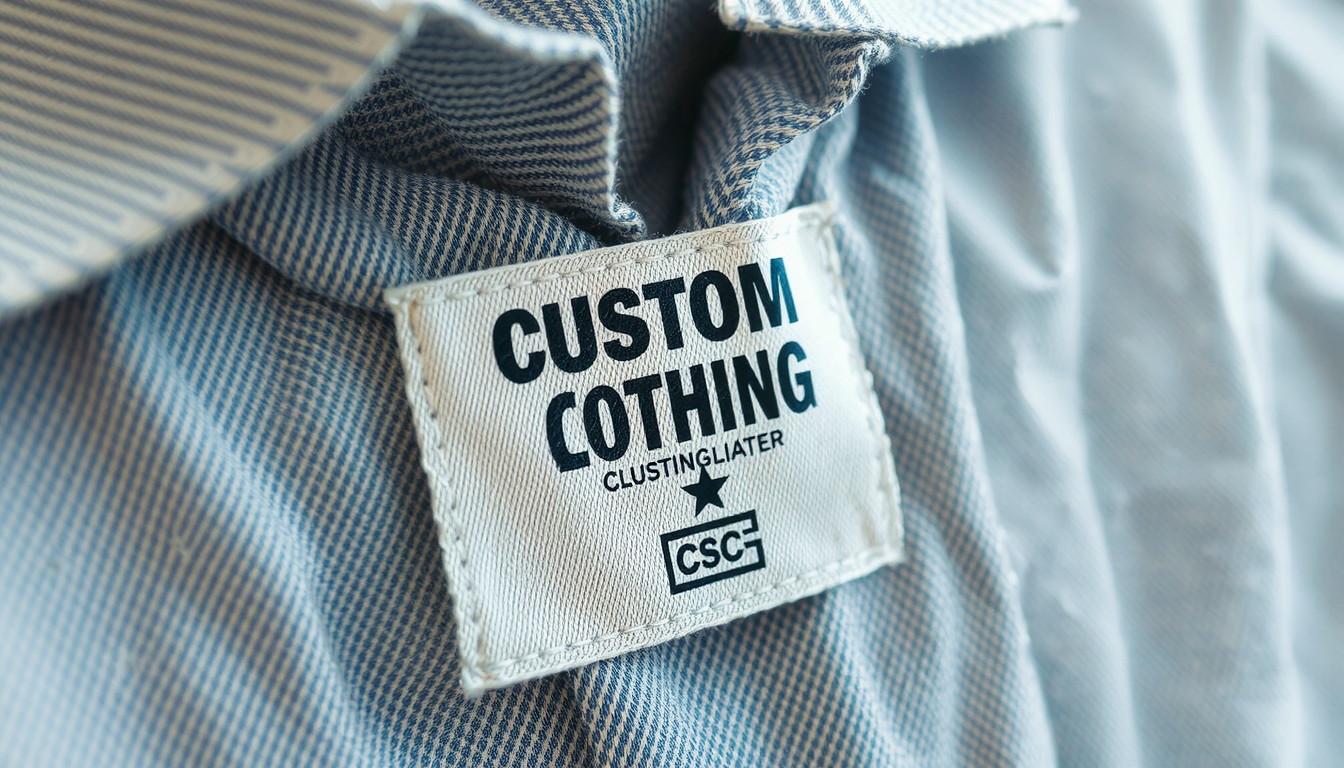
A primed product demands the perfect finishing. A small detail, such as the label, is often the last thing to turn a homemade item into a professional brand. Custom printed clothing labels are much more than just fabric tagged with your brand name. They are the brand’s signature. They present quality. They establish a connection with the customer.
A hand-made label serves as a statement of your attention to detail. It earns the trust of customers and makes your clothing line entire. Without a doubt, for any established clothing brand, sourcing the right custom labels has to be among the first major steps for the brand to be successful.
This is the definitive guideline that will teach you all the necessary. We will handle every major aspect of label types. Finding the best materials is what we will discuss. You will see how to design a good label and which factors to comply with the law. We will also show you how to order your labels so that you go forward with assurance.
The First Major Choice: Printed vs. Woven Labels
You have one main decision to make before even considering the materials and designs. Would you prefer your custom clothing labels to be printed or woven? Both methods have their advantages. Your choice will depend on the design you want, your budget, and your brand experience.
Printed labels are made by printing your design directly onto surfaces such as satin. On the other hand, woven labels are created by interlacing threads on a loom.
Here is a simple breakdown to help you decide.
| Feature | Printed Labels | Woven Labels |
|---|---|---|
| Detail/Resolution | Indulges in full-color detail, fine gradients, and very fine text. | Perfect for larger logos and two-color text. |
| Feel/Comfort | A smooth, soft outcome is assured especially with satin. They are most apt for skin contact apparel. | Soft, yet may come with a more straightforward feel as compared to printed labels. |
| Durability | Being printed with top quality inks makes them long-lasting though some production variations may cause slight fading. | Extremely long-lasting: the design is integrated into the fabric and will not wear off. |
| Cost | Frequently cheaper for smaller orders and complicated, multi-color designs. | May be pricier especially for designs with multiple colors or small quantities. |
| Best For | Printed T-shirts, baby clothes, care labels loaded with text, and photos. | Jackets, denim, designer brands, and giving a classic-elegant look. |
A Guide to Label Materials: Choosing Your Fabric
The label material is just as vital as the design. It has an impact on how the final product looks, feels, and the length of time it will last. The choice of the right material for your custom printed clothing labels is the secret to ensuring they are of the quality that meets your brand’s standards.
Satin Polyester: The Industry Standard
Satin polyester is synonymous with printed labels. United label manufacturers like to use this material. That is because of its properties: it has a smooth, shiny surface that is perfect for printing detailed images and text.
- Pros: Very soft against the skin, affordable, and great for full-color, photo-like printing.
- Cons: The edges can sometimes fray if not cut and sealed properly by the maker.
- Best For: Brand labels inside t-shirts, dresses, baby clothes, and any clothing where comfort is key.
Natural Cotton: For an Organic Feel
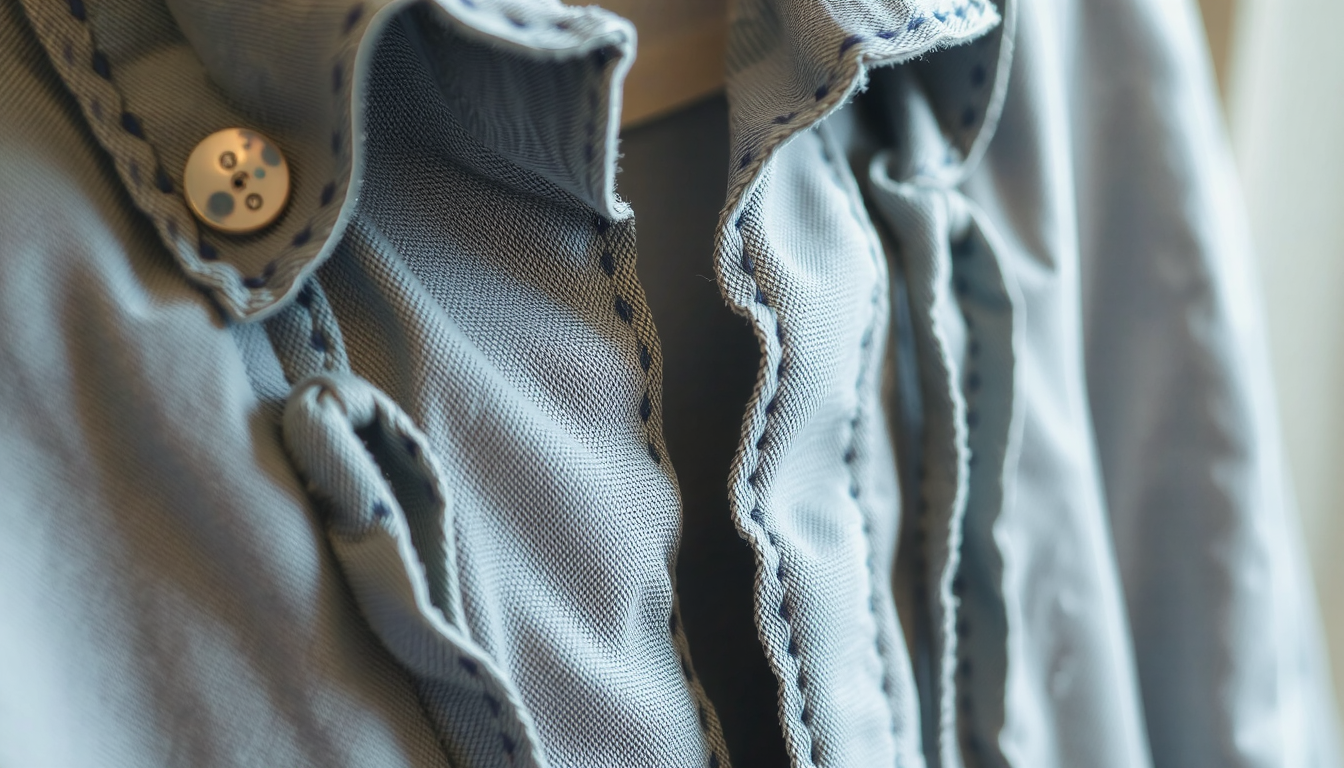
If your brand has an eco-friendly or rustic feel, cotton is a great choice. It gives a soft, natural texture that many customers love.
- Pros: Gives a high-end, natural look. It is soft, breathable, and sustainable.
- Cons: Printing may not be as sharp as on satin. It can also cost more.
- Best For: Organic clothing, handmade goods, children’s clothing, and brands focused on sustainability.
Tyvek®: The Durable, Paper-Like Choice
You may know Tyvek® from mailing envelopes or wristbands. It is a durable, paper-like material that is hard to tear but easy to sew through.
- Pros: Waterproof, tear-resistant, and lightweight. It is also quite affordable.
- Cons: It has a crinkly paper-like feel that is not ideal for all clothes.
- Best For: Label care, law labels, or for outerwear and gear where durability is the main focus rather than softness.
TPU: The Modern, Clear Option
TPU is the abbreviation for Thermoplastic Polyurethane. It is a soft, flexible, and rubbery material that usually is clear. It has a very modern and unique design.
- Pros: It is waterproof, durable, and has a unique, modern feel. Can be printed or embossed.
- Cons: It can cost more and is not right for a traditional brand look.
- Best For: Swimwear, activewear, raincoats, and any product where you want a modern, subtle branding effect.
Making a Label that Stands Out and is Compliant
A good label serves two functions: it promotes your brand and it adheres to the rules. This part will help you craft creative yet compliant custom printed clothing labels.
The Creative Checklist: What to Include
Your main brand label is a little piece of marketing material. It should be attractive, easy to remember, and represent your brand ethos.
- Your Logo: This is the most important visual part of your label. Make sure it is clear and easy to read.
- Brand Name: Even with a logo, your full brand name should be there.
- Slogan or Tagline: This is optional, but it can help strengthen your brand’s message.
- Website or Social Handle: Also optional, but a great way to connect with customers after the sale.
- Pro Tip: You might want to think about where the label is to be placed in the clothing. For example, a neck label should be soft while a hem tag can be sturdier. This is a key part of your brand identity, a process we explore further in our guide on how to start a brand and craft your introduction.
The Compliance Checklist: What You Must Include
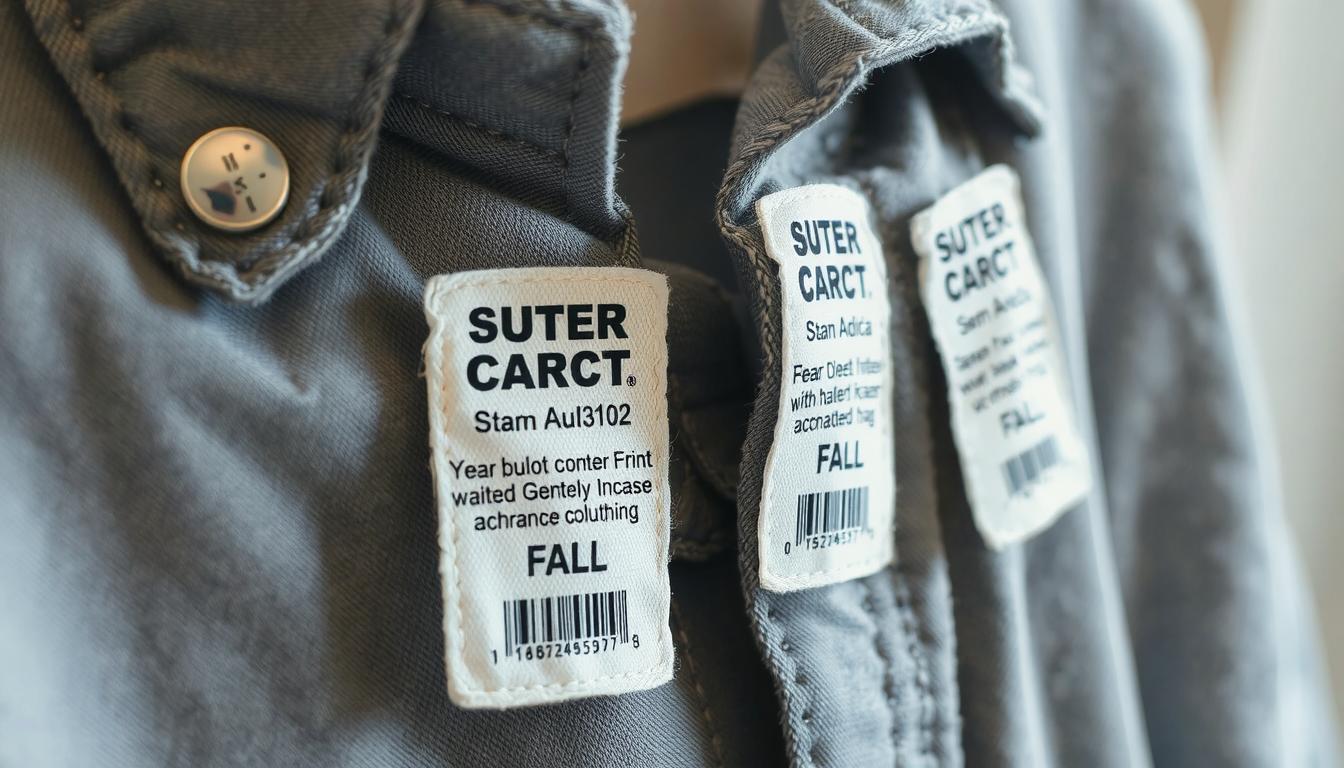
Laws in many jurisdictions require clothing labels to have specific information. In the U.S., these laws are the domain of the Federal Trade Commission (FTC) under the Textile Fiber Products Identification Act and the Care Labeling Rule.
The care label (that can either be a common label or separate label) needs to include:
- Fiber Content: The percentage of each fiber found in the clothing (for instance, 100% Cotton, or 60% Cotton / 40% Polyester).
- Country of Origin: Where the clothing was made (like, Made in USA).
- Manufacturer Identity: The name or RN (Registered Identification Number) of the manufacturer or seller.
- Washing/Care Instructions: Clear instructions on how to care for the clothing. You can use standard care symbols or simple text (e.g., “Machine wash cold, tumble dry low”).
The Ordering Process Made Simple
Ordering custom printed clothing labels for the first time can seem complicated, but it’s a straightforward process. Here’s how we approach it to ensure quality every time.
A Step-by-Step Guide to Ordering Your Custom Labels
- Finalize Your Design File. Most suppliers prefer vector files (like AI, EPS, or PDF). These files can be resized without losing quality, ensuring a crisp print.
- Research Suppliers. Look for companies with strong reviews, clear pricing, and low Minimum Order Quantities (MOQs) if you are just starting. For example, some suppliers like Custom Clothing Labels & More | Custom Woven Labels Inc. specialize in a wide variety of options including cotton and express labels.
- Request a Quote & Digital Proof. Submit your design file to your chosen supplier. They will send back a quote and a digital proof, which is a computer image of what your label will look like. Review it very carefully for spelling, colors, and size.
- Ask for a Physical Sample (If Possible). From our experience, this is a crucial step we never skip for large orders. A physical sample lets you feel the material and see the true print quality. Many established providers, such as Cruz Label: Woven Labels and Custom Clothing La…, offer sample packs to help you assess their quality firsthand.
- Place Your Full Order. Once you approve the proof or sample, you can place your full order. Be sure to confirm the production and shipping time with the supplier.
- Perform a Quality Check. When your labels arrive, take time to inspect them. Check for any printing errors or problems before you start attaching them to your products.
The Final Touch: Affixing Your Label
Once you’ve acquired your lovely labels, it’s time for the last step: fixing labels onto garments. The way you do it depends on the kind of label and the desired look.
The Sew-In Method
This is the method that is mostly used and that too is the most durable one. It gives a professional, high-end finish. Labels can be folded in different ways, like a center-fold (folded in half) or end-fold (with the ends folded under).
The Iron-On Method
Popular iron-on labels are stickers with a heat-activated adhesive on the back. They are the fastest and easiest solution, especially if you don’t have a sewing machine.
- Preheat your iron to the setting recommended by the supplier.
- Place the label on the clothing.
- Press and hold the iron firmly on the label for 10-15 seconds.
- Let it cool completely before checking the bond.
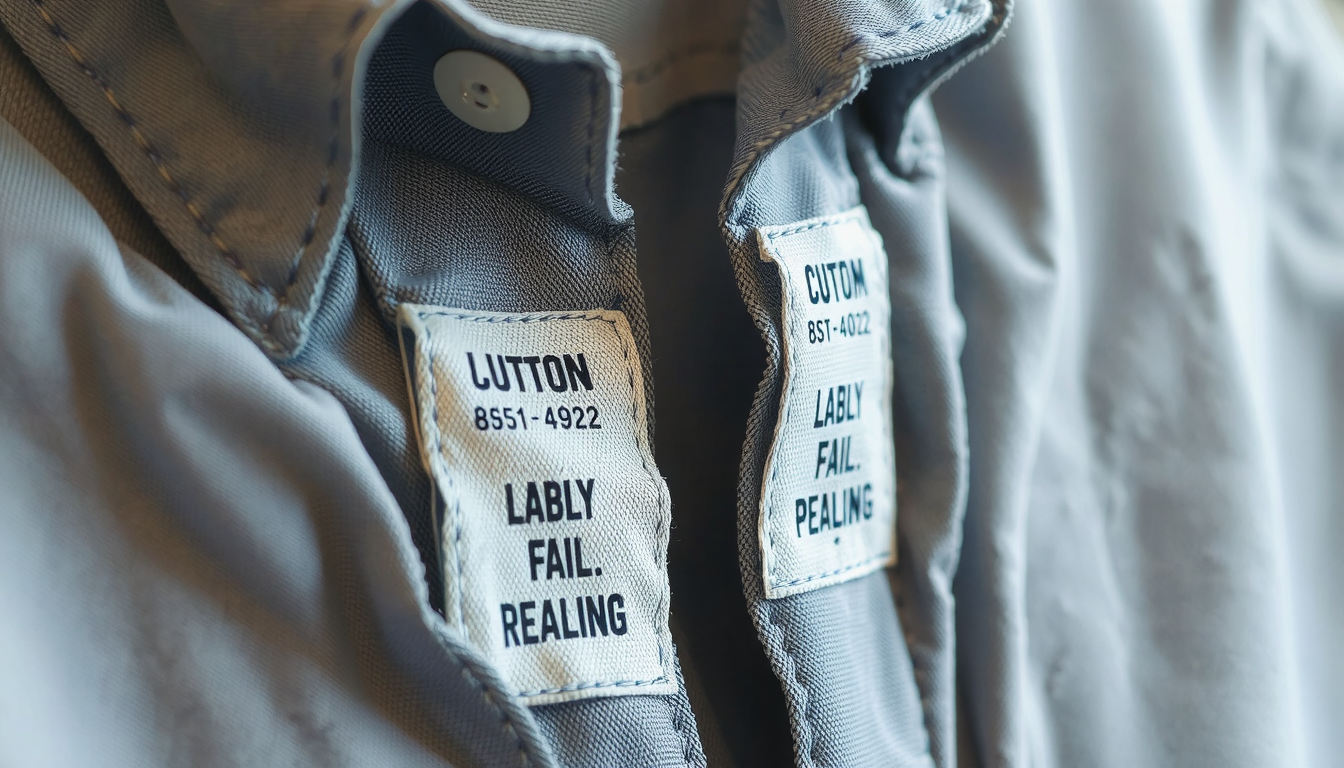
Attaching labels is just one part of the production process. If you’re scaling up, working with a custom hoodie manufacturer or other clothing specialist can ensure every detail is perfect.
Brand Style: The Last Touch
You have now walked through the entire process. You know how to choose between printed and woven. You know how to select the right material. You know how to create a great design and order with confidence. Adding custom printed clothing labels is a small step that makes a huge impact.
It demonstrates your commitment to quality and sets the ground for a brand that will last your whole journey with the fashion industry. It secures your product’s future and your company success. Here at TZ Streetwear, we believe that such details play all the role in the making of a brand that lasts.
Questions That Are Frequently Asked (FAQ)
What is the average price of custom-printed clothing labels?
The price is subject to a variety of factors such as the type of material used, quantity, colors, and the company. For smaller orders ranging from 100 to 200 labels, you could shell out anywhere between $0.30 to $1.00 each. The price drops significantly with bulk orders like 5,000 or more.
What is the lowest quantity that can be ordered (MOQ) for custom labels?
MOQs tend to differ from one supplier to another. A few of these companies work with startups and have MOQs that reach the floor at including as low as 10 to 50 pieces. Bigger manufacturers tend to possibly have a minimum order for 500-1,000 pieces. You should check with the supplier before you start designing.
What is the standard lead time to get custom labels made?
Usually, the normal time frame is ten to fourteen working days, starting from the day you accept the proof and up to the delivery of the labels. Some suppliers offer faster express services for a 3 to 5 day turnaround, but this will cost more.
Is it possible to print photographs or multiple colors on a label?
Sure, this is the main advantage of getting printed labels vs. woven. Printing methods like digital printing can produce images with full colors and gradients. For best results, smooth upholstery should be used like satin polyester.
Are the printed clothing labels durable enough for washing?
Yes, they are. The ultimate quality of custom printed clothing labels comes from the use of exceptional inks and fabrics that withstand many washing and drying cycles without substantial fading or damage. A well-made label will remain intact even throughout the entire wear of the garment.

-600x600.jpg)