Introduction: The Entry Point to your Fashion Apparel
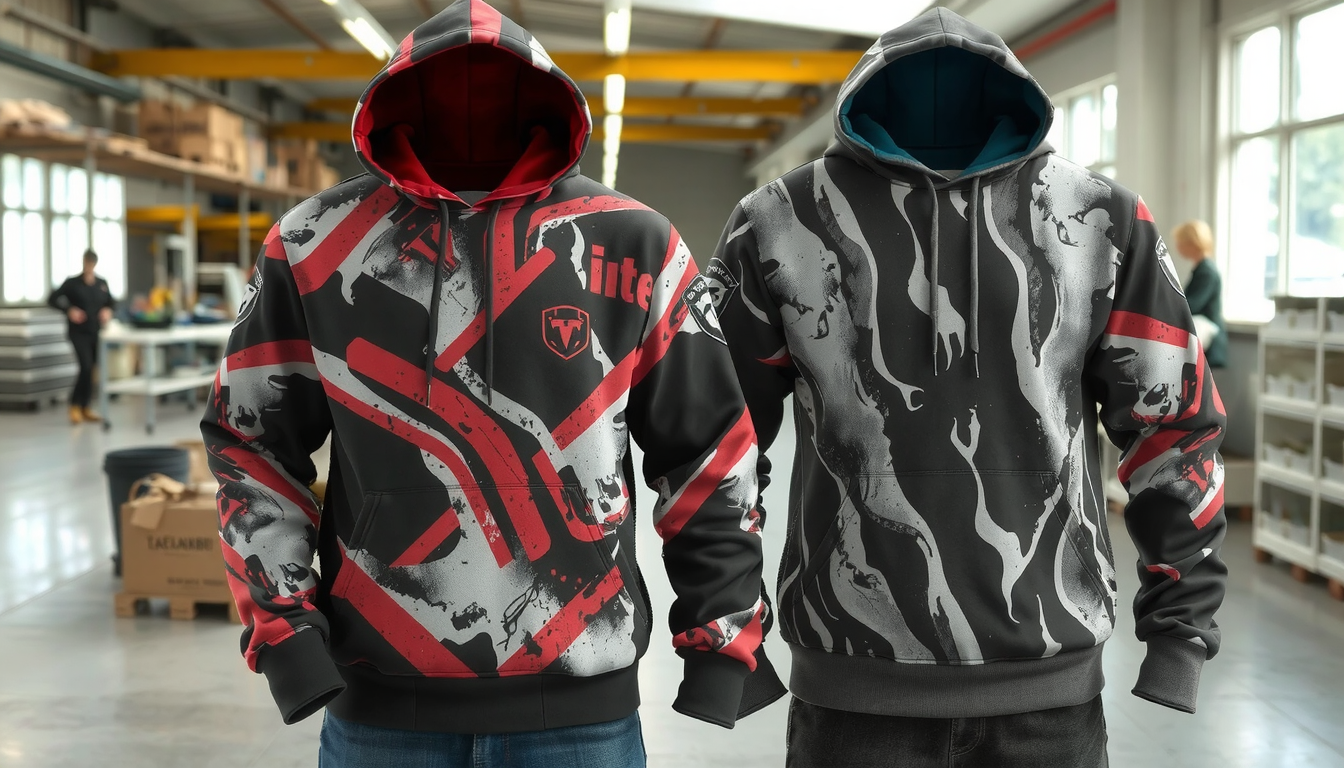
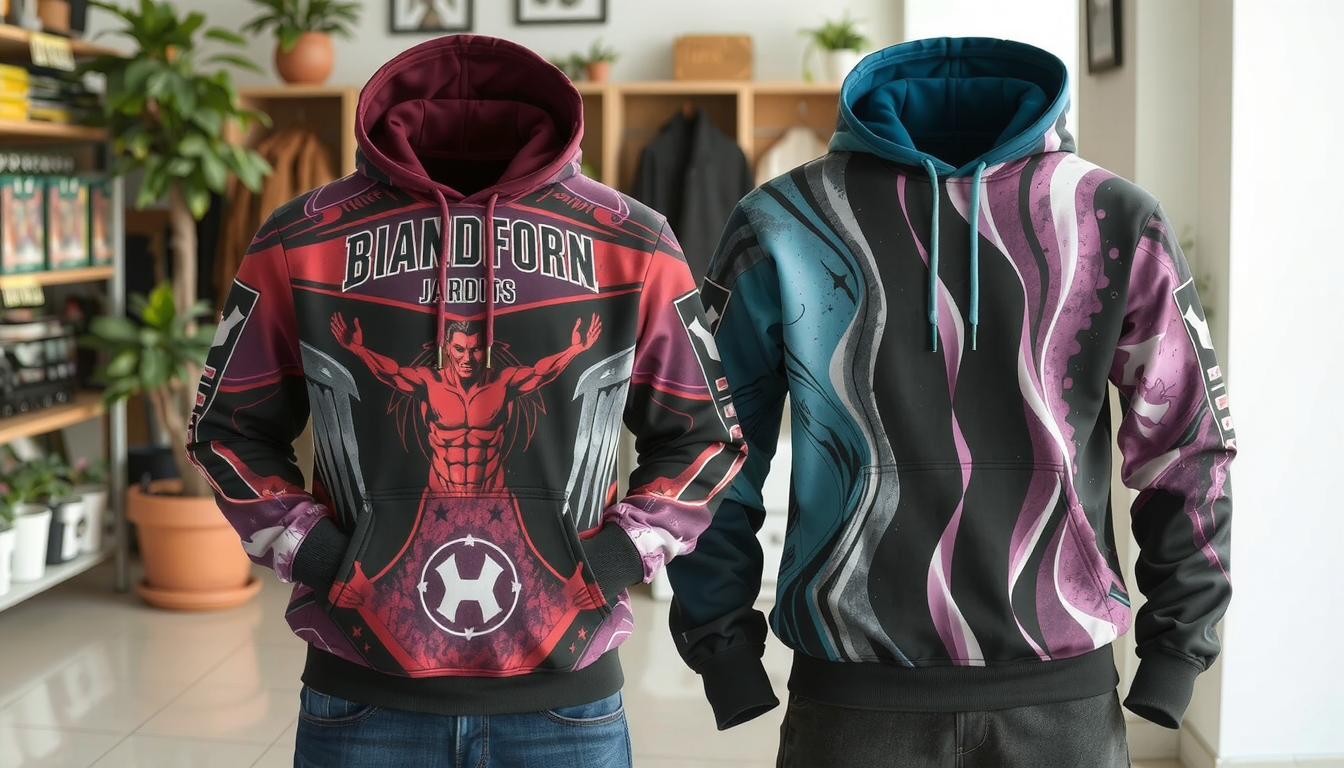
There is an increasing demand for individuals to want to wear an uncommon or custom clothing. Today, customers seek more than just a simple logo on their clothing. They are after unsophisticated designs that can take up the entire width of the shirt. It is at this point that sublimation hoodies become hugely beneficial.
Sublimation is a printing method that creates vividly colored, full images that are very durable. Unlike traditional ways of printing, the ink is absorbed into the fabric, hence no flaky prints. The fabrics will remain with a bright look like they were just printed. This guide will provide you with details on how you can source the best wholesale sublimation hoodies for your business.
Over the years, we have contributed to the streetwear scene at TZ Streetwear. We understand what it takes to make it. With our help, you will be able to pick the correct options for your business.
First Things First: Why Opt for Sublimation?
Before shelling out cash, you must be sure sublimation fits your brand. Though it boasts of many advantages, it still has certain downsides. Assessing its strengths and weaknesses will help you arrive at an informed decision.
Here are the advantages and disadvantages.
-
Pros of Sublimation:
- Vivid Colors & Detail: The sublimation gas process colors the fibers of the fabric. This move enables you to have stunning prints with even the smallest of details.
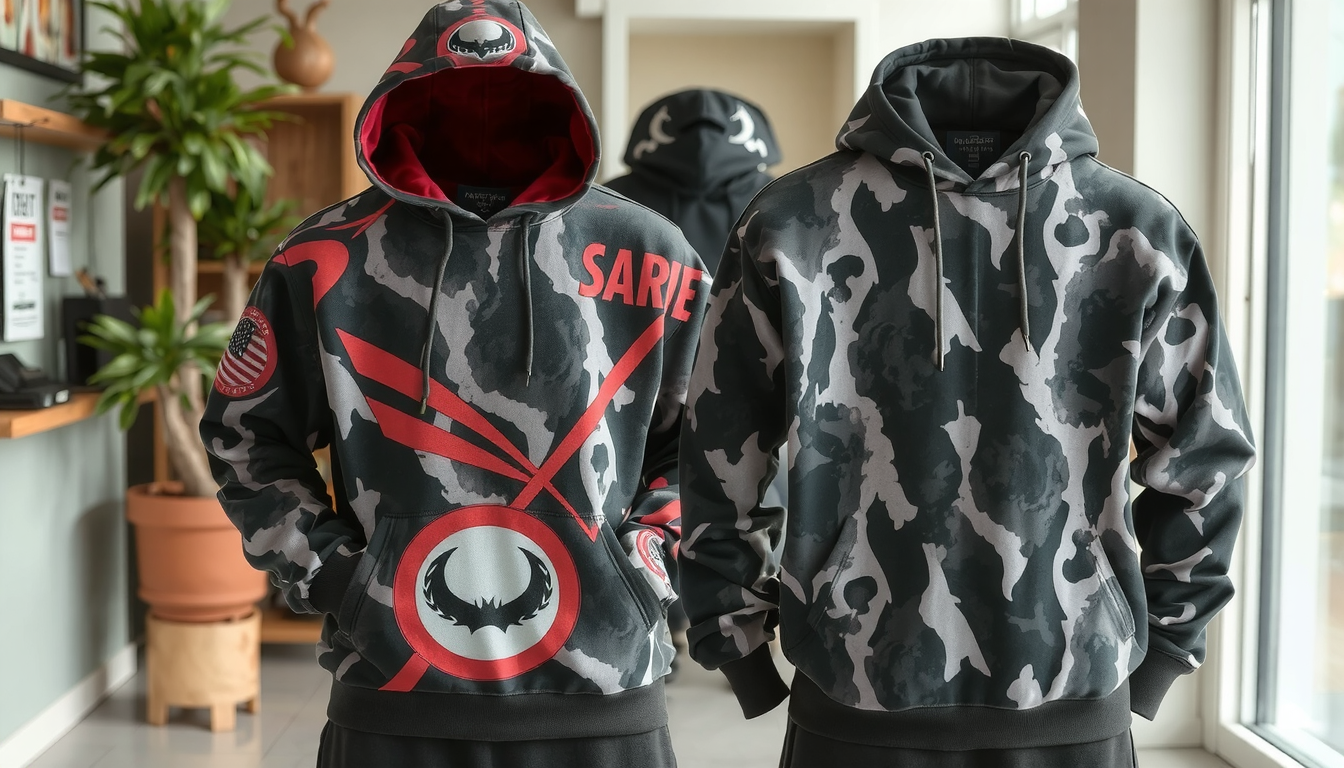
- All-Over-Printing (AOP): You can print abstract designs from edge to edge. You can fill up the entire hoodie, including sleeves and hood.
- Superb Shelf Life: The design is fabric-related. It shows extra durability. Unlike screen prints, it is not subject to cracking or peeling. This is why it can maintain good quality after multiple washes.
- Natural Texture: The sublimation process is not like traditional printing where there is an addition of ink on top of the fabric. The printed area accedes to the feeling of the rest of the hoodie.
-
Cons of Sublimation:
- Fabric Limitations: Sublimation is mainly effective on 100 percent polyester clothing. It works on poly blends (high polyester) but the colors appear more washed out. Cotton is not acceptable because it does not absorb the dye.
- Base Color Limitations: The best results are on white or light-colored fabrics. The dye mixes with the base color. Consequently, the printing on colored hoodies will give a different view of your design. You cannot print it on black.
- White Streaks: At times, small white lines may form along the seams or creased parts. This is as a result of the dye gas not reaching the area. Usually, this is a case that mostly affects the hoodie that was printed after sewing.
Breakdown of a Quality Sublimation Hoodie
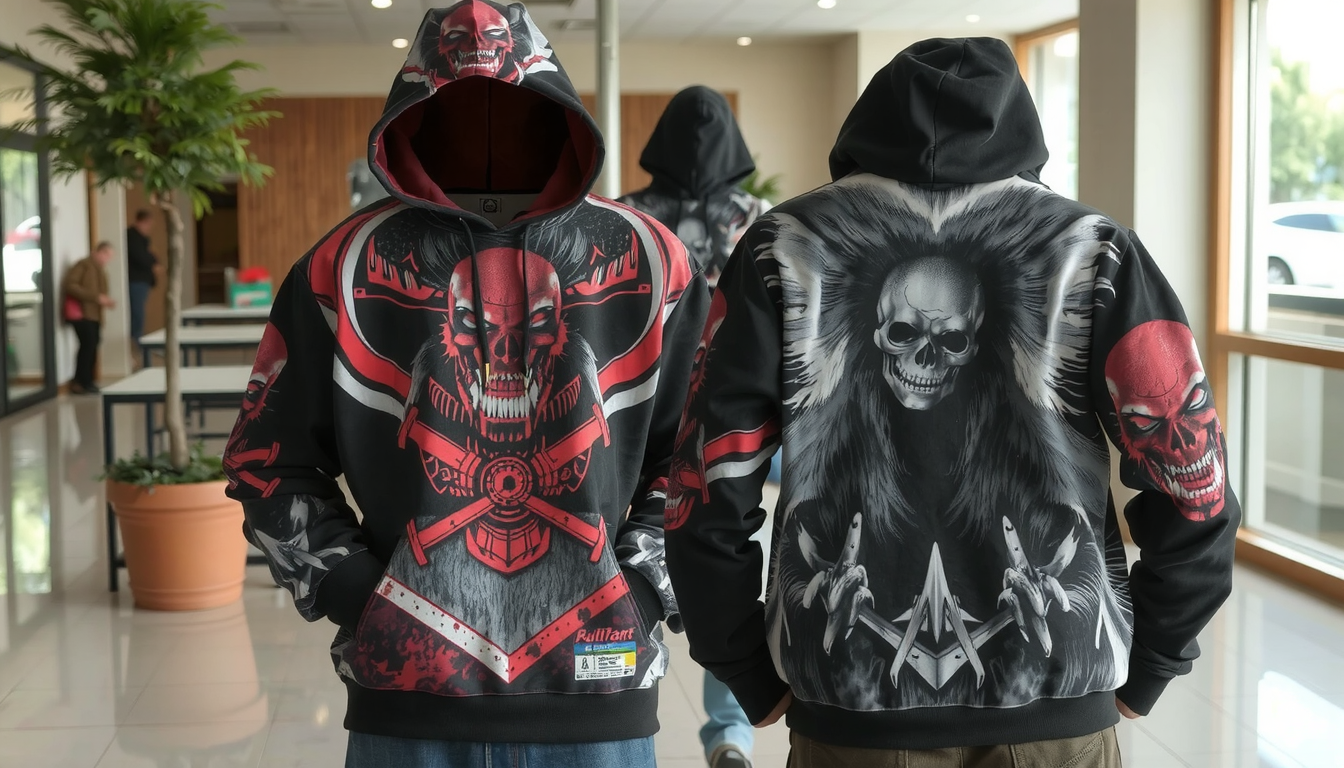
Not all hoodies are created similar. Product quality is something that you cannot compromise on and understanding what to look for helps. Here are the primary factors to consider when buying wholesale sublimation hoodies.
Fabric Composition
Fabric type is the most crucial point of sublimation.
* 100% Polyester: This allows you to make the most vivid, distinct, and diverse prints. The dye links perfectly with the polyester fabric.
* Poly-Blends (like 88% Polyester / 12% Cotton): These types have a more natural feel but are limited in print. They cannot reach their full potential because dye does not adhere to cotton. However, if that fits your brand, it could be a pretty cool look.
Fabric Weight (GSM)
GSM (Grams per Square Meter) tells you the weight of the fabric. The higher the number, the heavier the fabric is.
* Light (200-250 GSM): Good for layering or warm weather.
* Medium (280-320 GSM): This is the most common choice. It balances warmth and comfort well. Great for year-round wear.
* Heavy (350+ GSM): It has a thick and premium feel. Very warm and strong. Ideal for winter or for high-end streetwear brands.
Build Quality
The first thing to do is inspect the structure of the hoodie.
* Stitching: Look for double-needle stitching at seams, cuffs, and waistbands. This strengthens the hoodie and protects it from ripping. Seam finishes should be straight and not frayed.
* Hood: A hooded sweatshirt is properly made with a double-lined hood. This improves its shape and premium feel.
* Drawstrings: Look at the drawstrings. Are they thin and affordable, or are they thick and chunky with proper tips? Such little things reveal a lot about the quality of the product.
Zippers & Hardware
If you will have zip-up hoodies in your range, the hardware is of great importance. A smooth and robust zipper from brands like YKK will be the first to comply. One poor quality zipper that gets stuck will irritate the customer.
From our past experiences, inconsistency in quality has always been a significant concern. Once, we got samples from some new suppliers. One hoodie was like a dream. On the contrary, one was crookedly sewn with the wrong colors. Hence, it is worth buying a sample from several suppliers before making a big order.
Sourcing Models Explained
The main distribution of defective sublimation hoodies is via three main ways. The right option is determined by the cost, business goals, and the level of control you desire.
It is important to be familiar with these models in order to design your supply chain.
| Model | Best For | Upfront Cost | MOQ (Minimum Order) | How Much You Can Change | Profit |
|---|---|---|---|---|---|
| Buying Wholesale Blanks | New businesses, DIY printers, brands testing designs. | Low to Medium | Low to Medium | Low (only the print is custom) | Medium |
| Full Custom Making | Established brands wanting a unique product. | High | High | Very High (fabric, fit, labels, etc.) | High |
| Print-on-Demand (POD) | New brands with no money for inventory. | None | None | Medium (print and sometimes labels) | Low |
Buying Wholesale Blanks
This involves the purchase of blank and ready-made hoodies on a wholesale basis. You can spot them on sites like Alibaba in bulk. You then have to print the designs yourself or get a local print shop to do it for you, which is a fine start when the capital is tight.
Full Custom Making
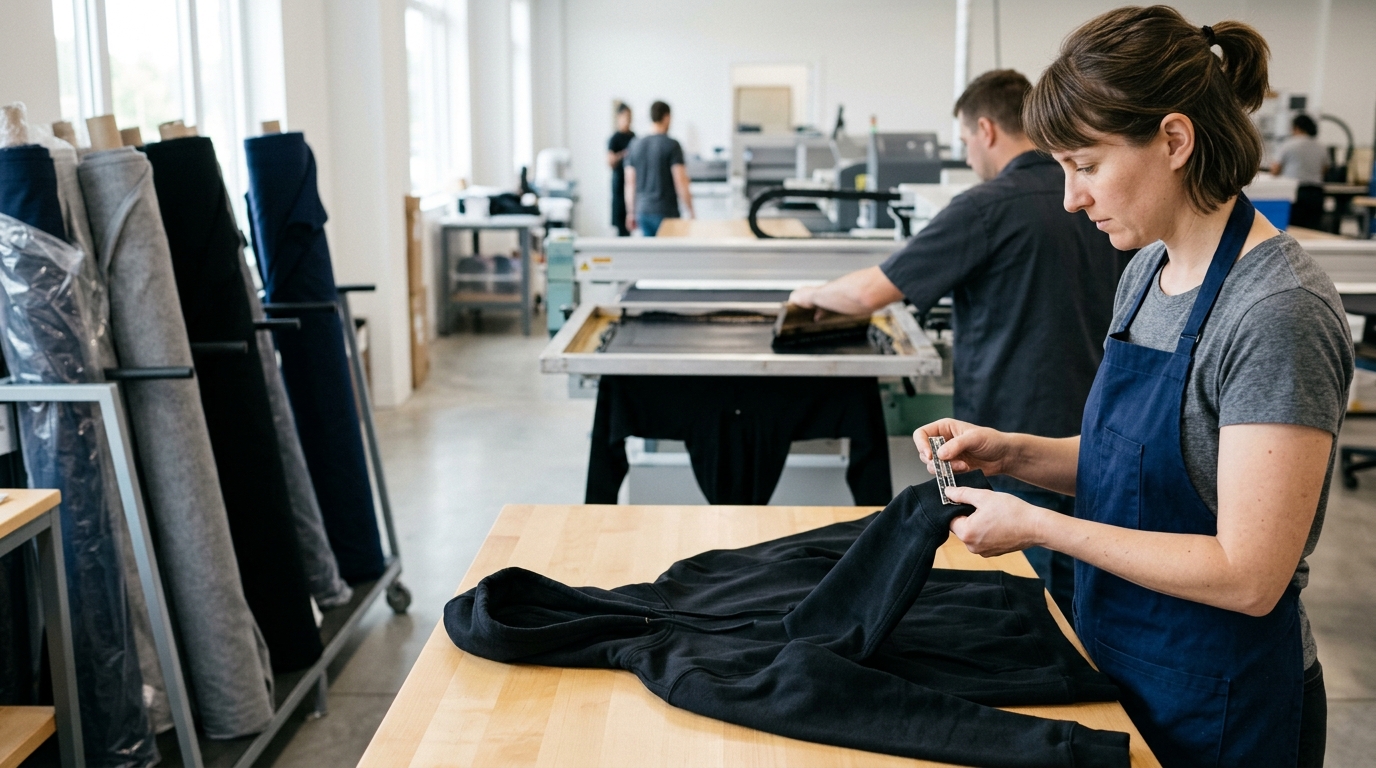
This is your best bet for a truly unique product. You work with a factory to design your hoodie from scratch. You get to choose the fabric weight, create a custom fit, and even add labels and tags that are yours. For brands that are looking for an absolutely unique item, working directly with a custom hoodie manufacturer is the way to go. This method not only offers the reliability of good results but gives you the control that you need. However, it is more costly and requires larger orders.
Print-on-Demand (POD)
With the POD model, you don’t hold any stock. Instead, you connect your online store to a service that does everything for you. As a hoodie is ordered by a customer, the POD company prints your branding on it and ships it directly to the client. This incurs no risk but your profits will be significantly lower. It is a good way to test the waters without any upfront costs. Lots of Print-on-Demand services like Printify offer this as an option.
The Ultimate Supplier Checklist
The choice of the right partner is the key to the success of your brand. Before you place a big order of wholesale sublimation hoodies, we always suggest that you ask these essential questions. Going through this process can save you significantly and protect your brand’s reputation.
You can use the following list to assess each supplier.
-
What is your sample policy and cost? Read all the terms before you order your first sample. This is the only way you can measure the fabric, printing, and workmanship qualities. A good supplier will have a clear and fair sample policy.
-
Can you confirm the exact fabric details? Request the percentage of polyester and the GSM of the fabric. Do not accept vague information. It is essential that you get the specifics for what you are looking for.
-
What are your quality control measures? What is your method to ensure that every 100th hoodie is identical to the first? Ask them about how they verify the color accuracy, sizes, and stitching throughout a big order.
-
What is your MOQ and pricing? Know the minimum order quantity before you decide on the supplier. Also, you may want to ask how the unit prices vary with different order quantities. This will help you in budgeting and planning for expansion.
-
What are your lead times? Get a timeline from them. How long does it take to make a sample? How long does a bulk order take? Don’t forget to ask about the shipping time too.
-
What other custom options do you offer? Are there any possibilities for custom neck labels, hang tags, or branded packaging? Those small touches will contribute to a more professional and better image of your brand.
-
Can you provide references or reviews? Ask for testimonials from their former clients. Trustworthy suppliers boast about their quality promises and they are usually willing to show their track record. Not being able to share information on references is a red flag for the supplier. Sources like Expertowears claim that reliable partners are open about their quality.
Conclusion: Start Your Brand with Full Trust
You are straightened for all steps to climb the ladder of success. You have got the low down on the basics of quality hoodies, the diverse ways of sourcing them, and the steps to check a supplier accurately. Carrying out the research to find the right wholesale sublimation hoodies is what it takes.
The secret to the success lies in your commitment to high quality and building a strong relationship with your supplier. Be patient, try samples, and ask the right questions. The result will be a clothing line that stands the test of time and is trusted and loved by the customers.
A clothing line journey is fulfilling as you overcome many challenges. Helping brands such as yours by making quality products is our passion at TZ Streetwear.
Frequently Asked Questions (FAQ) about Wholesale Sublimation Hoodies
1. What is the best material for sublimation hoodies?
Polyester is the best because it is fully absorbent to the sublimation dye. This can give you the most vivid colors and detailed prints. However, polyester blends (like 85% poly / 15% cotton) are also popular. They feel softer but will make a more “vintage” or faded look. This can be a good style for some brands.
2. Can you sublimate on dark-colored or black hoodies?
On dark or black fabrics, the sublimation printing method does not work. This is because the process relies on dyeing the fibers of the hoodie, and thus, the dye does not appear on a dark base color. For dark hoodies, you must use other methods like DTG (Direct-to-Garment) or screen printing. The sublimation process works best on white or light hues.
3. What does MOQ mean and why is it important for wholesale?
MOQ or Minimum Order Quantity is the smallest number of units you can buy from a supplier in one order. It is a crucial factor for budgeting and stock checking. A low MOQ is excellent for new brands stepping into production. A high MOQ often gives a better price to each hoodie.
4. How much do wholesale sublimation hoodies typically cost?
Cost can vary significantly since it comes down to the quality, the amount of order, and the chosen supplier. A marketplace for blank, medium-weight polyester hoodies can have a cost of $8 to $15 per piece. Opting for a fully customized hoodie with additional features will result in higher prices. Don’t forget to check shipping costs and possible import taxes while calculating the final price.
5. How do I prepare my artwork for sublimation printing?
For the best results, your design file should be high resolution. You must have at least 300 DPI (dots per inch). You need to save your file in a CMYK color profile. Some printers might want it in RGB, so it is always best to ask. Use file types like PNG, PSD, or AI. It is very important to create your design at the full size it will be printed to avoid a blurry or pixelated look. Always check the specific artwork rules of your chosen supplier to avoid any mistakes.