Are you looking for “printing clothes near me”? You have come to the right spot. Finding a good printer in your locality seems impossible. However, this guide will simplify the task for you.
We will give you the information on how to seek the local print shops. You will know the features of a good quality service. Along the way, we will tell you about the various methods of printing.
This guide can be like the blueprint for the preparation of your order, ensuring you achieve top-notch outcomes. By the end of it, you will have the confidence to team up with the best partner for your custom apparel project.
Initialize Steps: Identify Local Shops
To kick off, you must have a local list of printers at hand. Here are the quickest ways to find clothing printing services within your vicinity.
-
Google Maps: This is your starting point. Search terms like “custom t-shirt printing” or “screen printing near me.” You can also try “apparel embroidery.” Google can direct you to shops on a map. Data available include their hours, phone numbers, and customer reviews.
-
Review Platforms: Websites can be the window to true clients’ opinions. The use of review platforms like Yelp provides an opportunity for users to see the original feedback. Check the quality and service before making the call.
-
Social Media: A considerable number of printers advertising over Instagram and Facebook. For example, you can search for hashtags like #[yourcity]screenprinting. The images are a good reference point for the quality witnessed in their clothing printing projects.
Your Printing Options
Printing facilities are not identical. The appropriate method is mainly based on the design. Furthermore, the number of items sought and the budget allocated play a role. Picking the right one and working with a local clothing company does not necessarily mean that you should choose a screen printer.
Screen Printing
Ink is pulled through a mesh screen and onto a garment when screen printing. Individual screens are required for each color in your design.
This is the most suitable technique for big orders (like 24+ items) having less complicated logos or designs. Company logos, or event t-shirts are good examples. The prints are very tough and have a good feel.
Direct-to-Garment (DTG)
Directly printing on fabric using an inkjet printer is what the DTG method is all about. The machine’s printing head operates in the same way as that of an inkjet printer, but it ejects liquid fabric inks onto the shirt directly.
Costly prints with some photographs and a lot of colors go for Direct-to-Garment printing. DTG printers are very cost-effective and even available for order shirts. You do not have to set up for each color of the shirt as pertains to traditional printer units.
Heat Transfer Vinyl (HTV)
Heat Transfer Vinyl starts with cutting your design from a sheet of colored vinyl. The garment is then placed on. It is applied by the heat press method.
This method is excellent for very basic texts or designs. It’s even more popular for lettering and numbering on clothes like sports jerseys. HTV is applicable in instances when you want to produce very few items.
Embroidery
Although wire and thread are used in an embroidery machine, it differs from printing. Instead of applying ink to fabric, embroidery threads a design into a piece of fabric using a needle and thread. This is the reason behind the luxurious effect of the add-on.
It is the best way to put logos on hats, polo shirts, and jackets. Embroidery is a very professional and durable method of printing. Additionally, it often stays longer than the garment itself.
Cost for Printing Method
| Printing Method | Best For (Use Case) | Cost at Low Volume | Cost at High Volume | Durability | Detail/Color Complexity |
|---|---|---|---|---|---|
| Screen Printing | Long runs (24+), uncomplicated logotypes, giveaways | High | Low | Very High | Low (1-4 Colors Best) |
| DTG | Photos, elaborate designs with multiple colors, low quantity | Medium | High | Good | Very High |
| Heat Transfer | Simple lettering and shapes, one-off designs | Medium | High | Good | Low |
| Embroidery | Logos on hats, polos, jackets, and professional wear | High | Medium | Excellent | Medium |
Printer Vetting Checklist
Locating a shop is easy. However, the hard part is selecting the right one for printing clothing near you. Enlist the help of this expert checklist to make the wisest potential choice and keep problems at bay.
Step 1: Check Their Work
In the first place, view their previous projects. An accomplished printer will be enthusiastic to exhibit his/her capabilities.
Scan through the website to look for the gallery or portfolio. Numerous first-rate printers upload clear pictures of their work. For example, check out sites such as Custom Apparel Company in Chicago | Design Custom Printed …. For instance, crisp lines, eye-catching colors, and flawless quality are telltale signs of an outstanding printer. A quick phone call can let you in on their customer service.
Step 2: Understand Their Process
Secondly, ensure you know how they operate. This way, you can tell if they are a suitable partner for your unique project.
Inquire whether they have a showroom where you can view and touch garment samples. This will make it possible for you to see the quality firsthand. Further, here are the essential questions to clarify:
- “What is your minimum order quantity?”
- “What is your usual turnaround time for an order like mine?”
- “Do you print in-house any specific methods, or send to a lab?”
- “Are you able to get the specific shirt brand I want? Or do I have to provide it?”
- “Do you do custom apparel printing for various types of clothing?”
Step 3: Request for a Detailed Quote
A good quote should be transparent and concise. It must disintegrate all the costs.
A quote that speaks for itself will inform you of the price of the blank garment. Furthermore, it will display any setup fees along with the cost per print. If a printer offers you a quote containing only a single sum without the added details, be very careful. This kind of behavior is a red flag since hidden charges might be involved.
Step 4: Request for a Sample
The adage goes: seeing is believing. Before making any big or important orders, you need to ask for a sample.
A “press proof” is a sample of your own design which is printed on your chosen shirt. It is the best way to check for colors, size, and quality. You will do this before you agree on the full order. This step will prevent making mistakes that cost money. In this way, you will get precisely what you ordered.
Online Manufacturer vs. Local Shop
Should you go for the local walk-in shop or opt for a large online company? Both of them have their advantages. The final choice is determined by what you need.
Justification for Choosing a Local Print Shop
Purchasing from a local business comes with its genuine benefits. You get a chance to meet someone and develop a bond.
- Pros: You can take a look and even touch the samples. It is a great way to support the local community. Minor jobs can be done quicker at times.
- Cons: They may not have as much clothing as the other supplier. Costs for small orders can sometimes be higher. They may not possess the necessary skills for complicated printing jobs.
The Case for Online Manufacturer
Online manufacturing entails serving a wider market. This consequently provides them with the capability of offering more specialized services.
- Pros: They generally have an extensive selection of clothes. They are in a position to provide at better rates for big orders. Many of them have labels for clothing companies which is a special tag service.
- Cons: You cannot meet them in person. Shipping adds time and cost. Sometimes, it is hard to check quality without a sample.
Making the Appropriate Choice
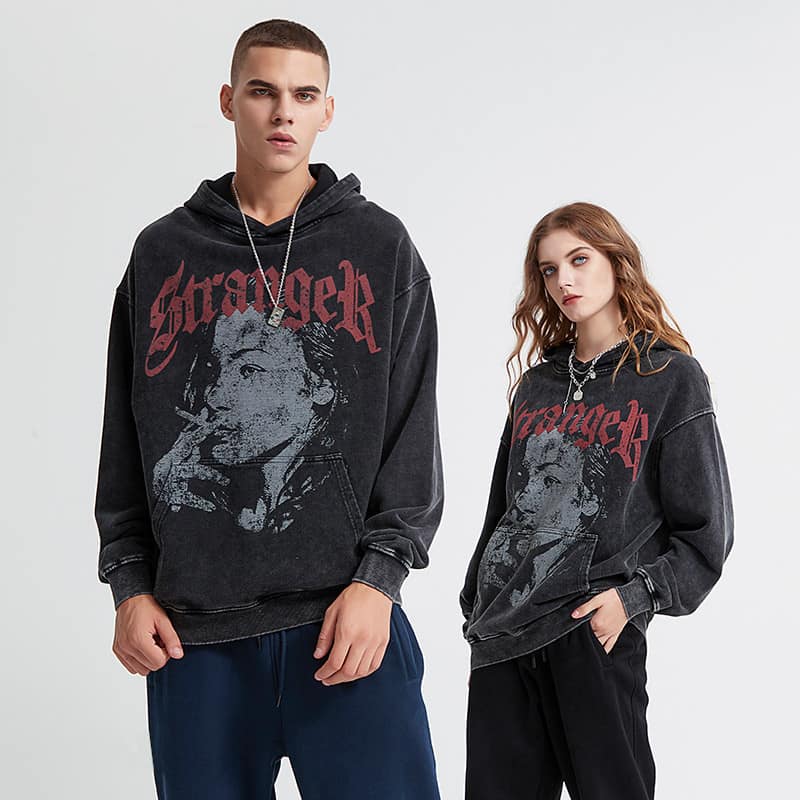
If you only need a handful of shirts for a local event, then a nearby shop will be your best alternative. However, if you are focusing on building a brand, you probably require more resources. For instance, a dedicated custom hoodie manufacturer usually excels in high details and quality where many local shops cannot match.
Getting Ready for Your First Order
Preparation is the key to getting things done quickly. Before contacting a printer, you need to have the following things in place.
Your Artwork: File Format is Key
The quality of the art file affects the print quality directly. Printers usually have specific file types.
Vector files will work best for screen printing and vinyl. Among these are AI, EPS, or SVG files. They are scalable and do not lose quality. For DTG, raster files like PNG or JPG are suitable. The quality of the raster file must be high. Most printers require a resolution of 300 DPI and above for the final print size. This way, a clear result is guaranteed instead of a blurry piece.
Deciding on Your Garment
Consider the apparel itself. The fabric, weight, and fitting are all imperative things to look into.
A pure cotton T-shirt has a different print than a cotton-blend T-shirt. Coloring the garment might also affect the way a design’s colors are seen. It would be appropriate for you to consult with your printer on this matter, as he/she can recommend the right apparel for your design.
Know Your Quantities and Sizes
The primary necessity is that you have a final list of the number of shirts you require for each size. This is necessary in a bid to get a correct price quote.
Deciding on the quantities in advance will save time when it comes to making a quote. In this way, both you and the printer will benefit. They, in turn, will be able to give you the best price for your custom apparel printing job.
More than Just a Simple Print
The key to those who are seeking to build a brand rather is in the details. What is more is the mere act of printing clothing. It is about the total process that people will become attached to otherwise.
This is about considering the fabric, the cut, and the branding. To learn how to start a brand is a journey which reaches beyond a mere logo. Finding a team that truly lives and breathes apparel is easier. Our teams at TZ Streetwear are there to guarantee your vision is implemented by the best skilled workers.
Frequently Asked Questions (FAQ)
How much does it cost to get clothing printed?
Price fluctuations are common. Printing technique, order quantity, and the number of colors all determine the cost. It is also dependent on the shirt style. For instance, a single DTG shirt could cost you around $20-$30. However, a bulk screen-printing order would fall to less than $10 per piece. Always remember to ask for a personalized quote for your project.
Is there a minimum order for custom clothing?
That depends. Often there are no restrictions on the number of orders for Direct-to-Garment (DTG) print and heat transfer vinyl. The screen printing method has setup costs for every color of the design. Consequently, most shops provide minimum orders of the value 12 to 24 at an affordable rate.
How long does custom clothing printing take?
The turnaround time may be laid-back, or it can even run fast for a few weeks. That is usually determined by the shop, the print method, and the shirts’ availability. Various services are quick and focus on fast turnarounds. These ones can get you custom t-shirts on the same day; for instance, check them out Same Day Custom T-shirt & Screen Printing in Chicago IL. The regular order time scales are 7-10 business days.
Can I bring my own clothes to be printed on?
Some printers will let you do that; others not so much. Printers favor their own garments as they have control over the fabric and how it interacts with their inks and machines which, in turn, guarantee a high-quality print. Always check in with the printer on their policy about customer-supplied garments.
What’s the most durable type of clothing print?
Screen printing and embroidery make their mark in longevity, thus our suggestion. A well-cured screen print from a professional can survive fading or cracking for years. Embroidery is the definitive article, for it is literally stitched into the material. This affords it strength and longevity that few other printing methods can provide.

-600x600.jpg)