Your goal is to design an incredible piece of clothing. A custom camo hoodie is more than just a top; it is a way of expressing yourself. It has been a staple of graffiti culture, on the streets, and in hip-hop for a while now. It is bold and gives a lot of options to wear.
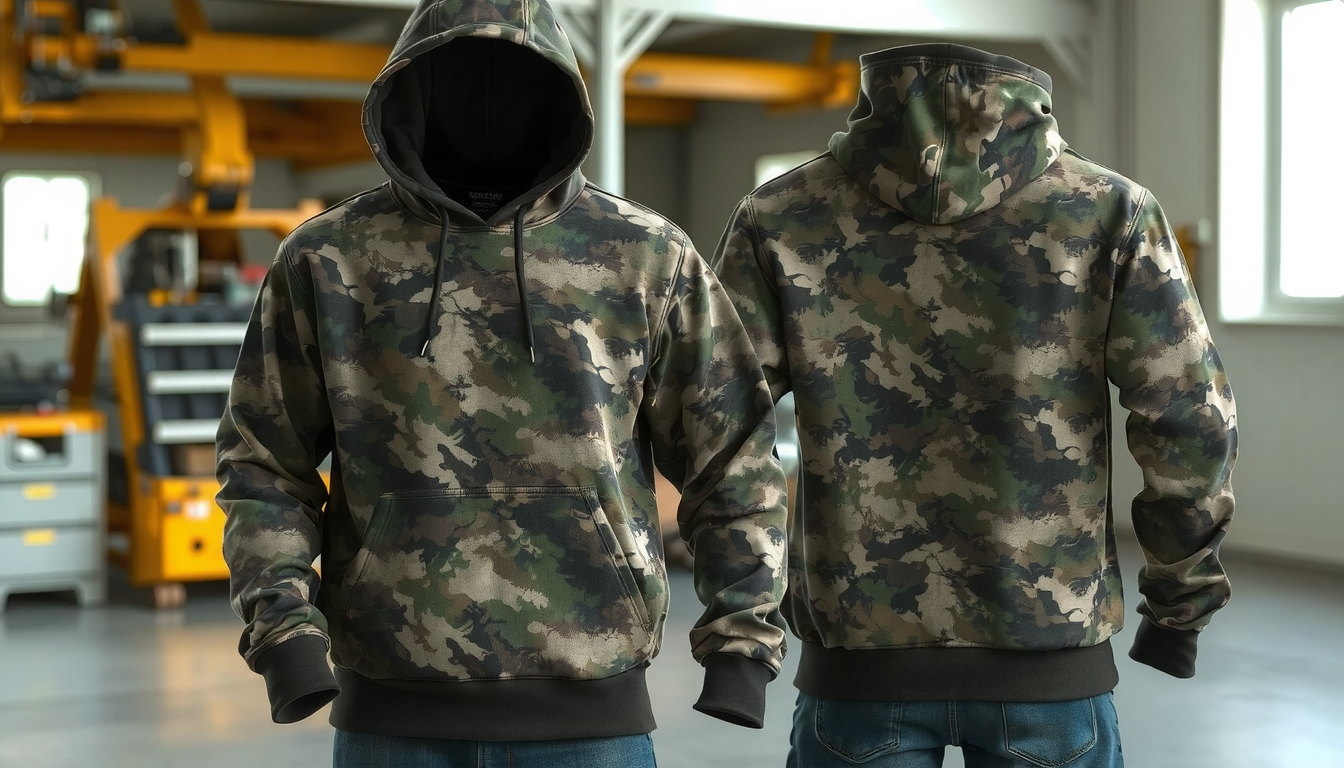
Follow our guide. We will teach you how to pick out the most suitable camo pattern, understand the hoodie quality, and the essentials of design. Also, we will show you how to customize your hoodie.
When you get done reading this, you will be a pro at creating. You will showcase your brand through a custom camo hoodie, you can bring your group together, or just express your style. This guidance comes from the clothing pros at TZ Streetwear. We are here to assist you all the way.
Why Wear a Custom Camo Hoodie?
Before digging deep into the details, let’s take a moment to explore why this item isn’t only a good choice but also a valuable one. A custom camo hoodie not only stands out. This is a great factor for your project.
- Street Fashion Essential: Camo is a trend that never goes out of style. Adding your personal touch through customization is what makes it distinct.
- Brand Representation: The camo hoodie with your logo is the ultimate item for any startup. It is a good way to stand out and build a strong identity.
- Group Cohesion: Companies, sports teams, and social clubs can promote a common look with these hoodies. It helps to create a sense of community.
- Artistic Statement: Create a hoodie that is completely your style. It turns into a piece of art that reflects your character.
Learning about Camo: Making the Right Choice
The camo pattern is the basis of the design. It is important to choose the right one. The print you choose sets the mood of your entire custom camo hoodie.
Classic & Military Patterns
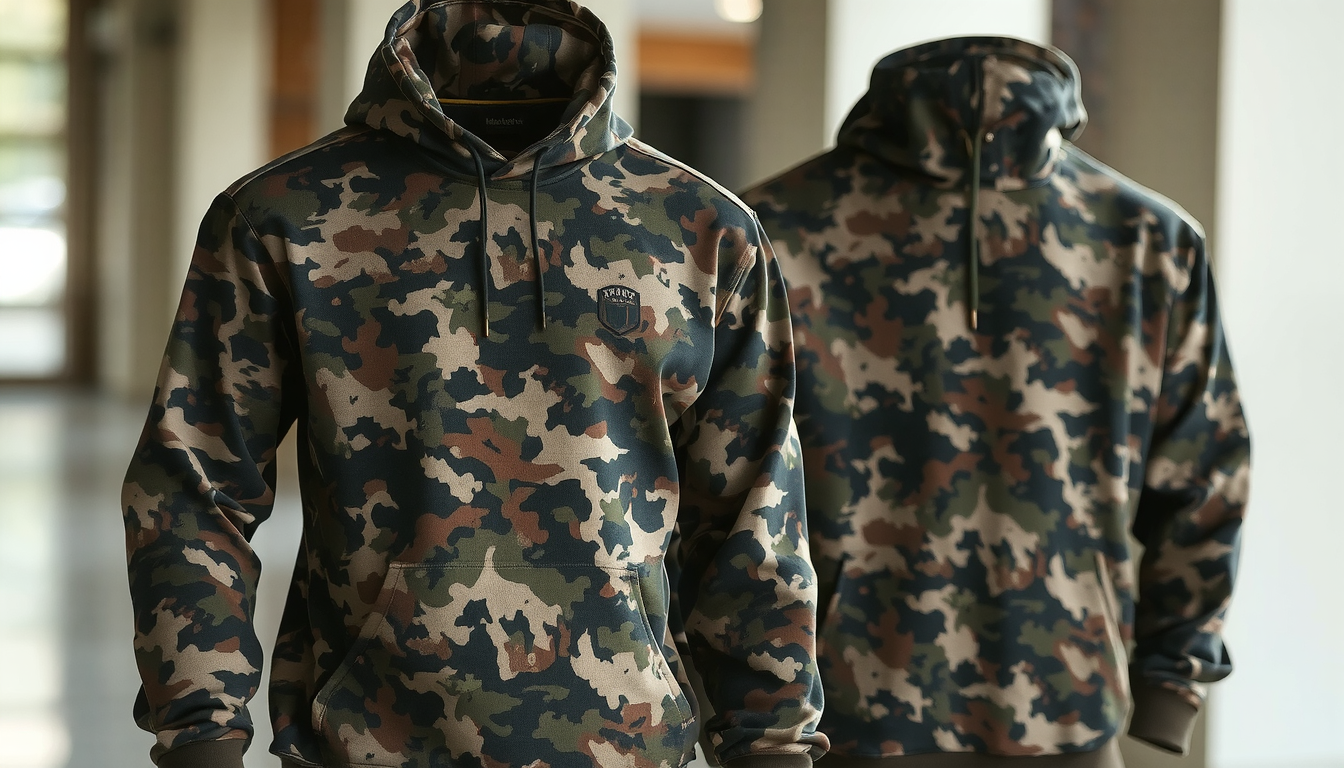
Such patterns are Woodland, Tiger Stripe, and Desert camo. These patterns have a rugged and classical feel. They are perfect for heritage brands, outdoor brands, or classic street styles. These patterns imply real value and power.
Modern & Fashion Patterns
Digital, Urban, and Colored camo patterns are trendy and lively. They use pixels or unusual colors like blue, red, or purple. These are the best for modern street brands, music artists, or anyone wanting to make a high-fashion statement.
Performance & Hunting Patterns
Patterns resembling those from Realtree or Mossy Oak are made for a purpose. They use real images of leaves, branches, and terrain. These are the first choice for hunters or brands related to outdoor gear. You can witness these designs on hoodies with Custom Printing for their stated intention.
| Pattern Type | Commonly Used For | Design Tip |
|---|---|---|
| Woodland | Classic Streetwear, Outdoor Brands | Pairs well with bold, solid colors like safety orange or white. |
| Urban/Digital | Modern Fashion, Tech Brands | Works great with simple, blocky logos and neon accents. |
| Colored Camo | Hypebeast Style, Music Merch | Match your logo to a minor color in the pattern for a cohesive look. |
| Hunting | Outdoor & Hunting Groups | Use simple, high-contrast logos to ensure visibility in nature. |
Main Characteristics of a Quality Hoodie
Your fantastic design must be placed upon a quality hoodie. Thus, before customizing, you should know what the quality of a hoodie entails. With this understanding, the final product will feel good, look good, and last.
Fabric Overview: Cotton versus Blends
The fabric of your hoodie dictates how soft, warm, and durable it is. 100% cotton is very comfy and light. However, it can easily shrink if it is not properly treated.
Cotton and polyester blends are the most popular fabrics, especially for custom camo hoodies. A 75/25 or 50/50 blend offers the benefits of both fibers. It lasts long, resists shrinking and wrinkles, and holds its shape well. The inside feel, known as fleece, can be brushed for extra softness or unbrushed for a lighter feel.
The Importance of Hoodie Weight (GSM/oz)
A hoodie’s weight is measured in GSM (Grams per Square Meter) for the metric system and ounces per square yard (oz/yd²) for the imperial system. This gives information about the thickness of the fabric.
- Lightweight (<300 GSM): This is the best option for layering or wearing it in cool weather during spring and fall.
- Midweight (300-350 GSM): This is the standard in the industry. Nice balance of warmth and comfort.
- Heavyweight (>350 GSM): This is a top-quality pick. A massive heavyweight hoodie can be around 10 oz/yd², which is about 340 GSM. This hoodie is solid and provides maximum warmth.
Don’t Ignore Small Details
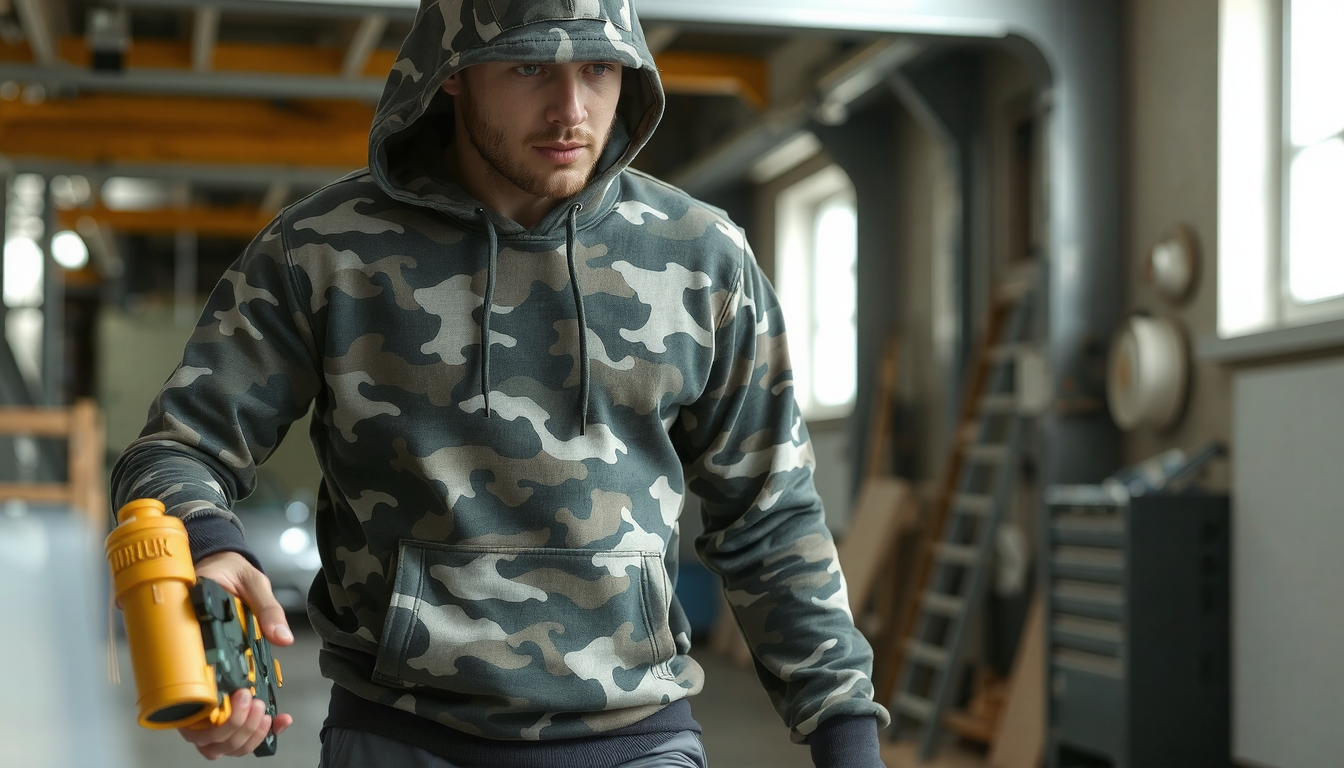
Little details can make a good product great. Always look for double-needle stitching on the seams as a sign of quality. Check to see whether the hood is lined with soft jersey fabric. Pay attention to the details in hardware, like metal eyelets for the drawstrings. These are more durable than the plastic type. Examples to note are the specifications of a Heavyweight Camo Pullover Hoodie that follow premium constructions.
Design Tips: Making Your Logo Stand Out
Designing with a camo pattern as the background is challenging. Your logo is at the risk of being lost under the fabric. In the past, we have seen this happen. For instance, in the past, one of our clients sent us a detail-oriented multi-colored logo to print on a woodland camo hoodie. It looked so good on a white background but on the hoodie, you could hardly see it.
We hit a resolution together. We added a solid white outline, which is called “keyline”, around the full logo. It gave a sharp border. So, this couple of the adjustments transformed the logo from being quite dull to standing out. The point is clear: “On camo, contrast is the king.”
The Role of Contrast
Your design has to be in contrast with the pattern behind it. Low-contrast colors will mix in very well and the logo becomes unclear. Simplicity in graphic design and using thick, bold fonts is a way to go. Thin lines and complex features often disappear in camo.
Color Theory in Camo
Certain colors are better for camo.
* Safer Options: Black, white, safety orange, and neon yellow are the best. They always ensure contrast and are highly visible.
* Advanced Techniques: For a tranquil yet fashionable outlook, you can draw a minor color from the camo pattern itself. For instance, a dark brown logo can look clean on a desert camo pattern with shades of tan and brown.
Strategic Position for Extra Effects
Design placement is also crucial.
* Classic: The central chest or left chest areas are traditional places that always work.
* Street Fashion Focus: For a more modern look, a big print on the back of the hoodie, and maybe a design on the sleeves or even the hood, would be an interesting title.
Live Your Dream: The Steps
You know what you want. Now it’s time to do it! Follow this stepwise guideline that will take you through the creation of your camo hoodie. From a computer file to the finished product, your exclusive hoodie goes through various stages.
Step 1: Clear Your Artwork
Your artwork file is your blueprint that you make a hoodie. Getting this file right is a very important aspect. The two common file types that are used are vector and raster. Vector files, for example, (.AI, .EPS) are based on lines and curves. A vector file is ideal for screen printing since it can be resized without losing quality.
Raster files are a type of file format and they consist of pixels. If you are using this option, ensure that the raster file is high resolution. It should be at least 300 DPI (dots per inch) to avoid a blurry or pixelated print.
Step 2: Choose Your Application
Various methods are available for applying your design.
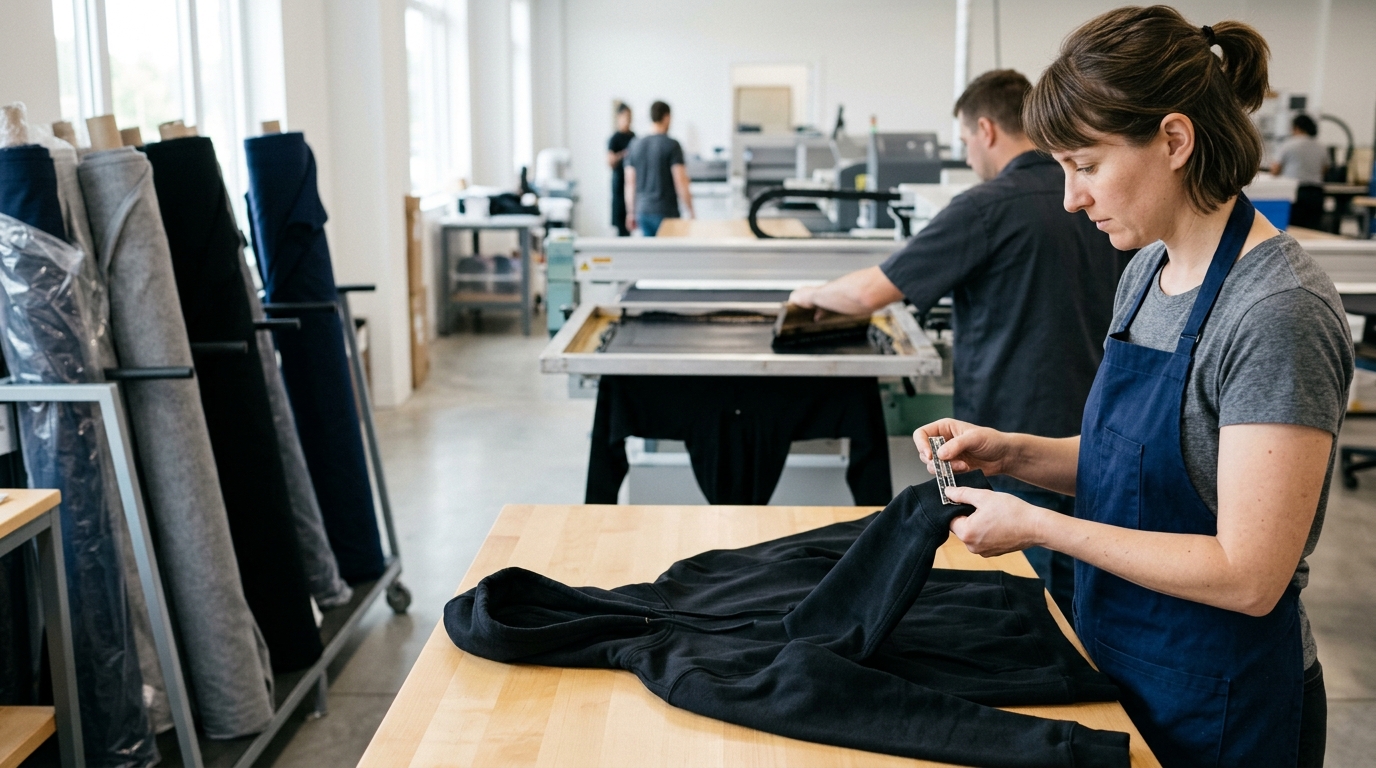
* Screen Printing: This is a method that pushes ink through a screen. It is better for designs with 1-4 solid colors and is very economical for larger orders.
* Embroidery: This method uses thread to create your design on the fabric. This adds a more quality, sophisticated, and textured look. It is suitable for smaller logos on the chest and sleeve.
* DTF (Direct-to-Film): This is a newly adopted method that prints your design on a special film. The film is then heat-pressed on the hoodie. This is perfect for complicated layouts with a lot of colors.
Step 3: Find the Right Partner
Your hoodies can be ordered from different types of providers.
* DIY Platforms: Websites that offer Custom Camo Sweatshirts & Hoodies are the perfect solution for individual items or small orders. They are user-friendly but might have limited choices.
* Full-Service Manufacturers: Brands that are looking for the full supply chain organized have better options through collaboration with a specialized custom hoodie manufacturer. Our offerings include more fabrics, better guidance, and increased quality control.
If you are in the process of brand building this journey is essential for you. Get to know more about the way to craft your brand’s introduction through special apparel.
Step 4: The Ordering Process
When you make an order, don’t forget to get a digital mockup. It is an image that shows how your final design will appear on the hoodie. Get information on Minimum Order Quantities (MOQs) that refer to the least number of items allowed per order. Also, in the end, ask for the expected turnaround time for delivery.
Frequently Asked Questions (FAQ)
In this section, you can find answers to some frequently asked questions about the creation of a custom camo hoodie.
Which is the best printing method for a custom camo hoodie?
Most of the time, screen printing is the most durable and vibrant option for designs with 1-4 solid colors. However, if you want to add multiple, complex colors, DTF (Direct-to-Film) is an exceptional modern choice. Also, embroidery gives a premium, textured look that is perfect for extra small logos on the chest or sleeve.
Is there a minimum order for custom camo hoodies?
The answer depends on the provider. Some online DIY platforms do not have a minimum order. This is wonderful for an individual. Conversely, professional manufacturers who opt for screen printing might have a minimum order (e.g. 12-24 pieces) due to the setup process. As a result, it will be cheaper per piece on larger orders.
How should I design my logo so that it is visible on a buszy camo pattern?
The solution is, of course, contrast. Utilize deep tone colors for your design that differ from the background. The most functional method is to support a solid outline, named a “keyline,” in a color like white or black around your logo. This establishes a clear separation from the pattern.
Can I customize my own unique, full-custom camo pattern?
Definitely, it is a possibility through the process which is known as “all-over printing” or sublimation. This is predominantly done with a cut-and-sew manufacturer. It is a more advanced and costly option. But it gives you complete creative freedom to design a signature piece for your brand.
How can I take care of my custom camo hoodie?
To keep your design safe you need to wash your hoodie gently in cold water and turn it inside out before wash. You can also tumble dry it on low heat. But the best result will be if you hang it to dry. Never bleach or iron the printed or embroidered areas directly.
Your Statement Piece is Ready to Be Made
Now you have the knowledge for making an awesome custom camo hoodie. We have gone through the entire journey already. Picking the right pattern and the right quality of the garment, creating your design, and navigating the ordering process are key steps.
Do not forget that a high-quality custom camo hoodie is not just clothing. It is your company’s canvas, your team’s symbol, or your individual style. It is the statement piece that is ready to be created.
Are you prepared to take the first step and make your vision a reality? Check out our custom hoodie services and let’s get creative together.