Would a Print on Demand Baby Clothing Business Suit You?
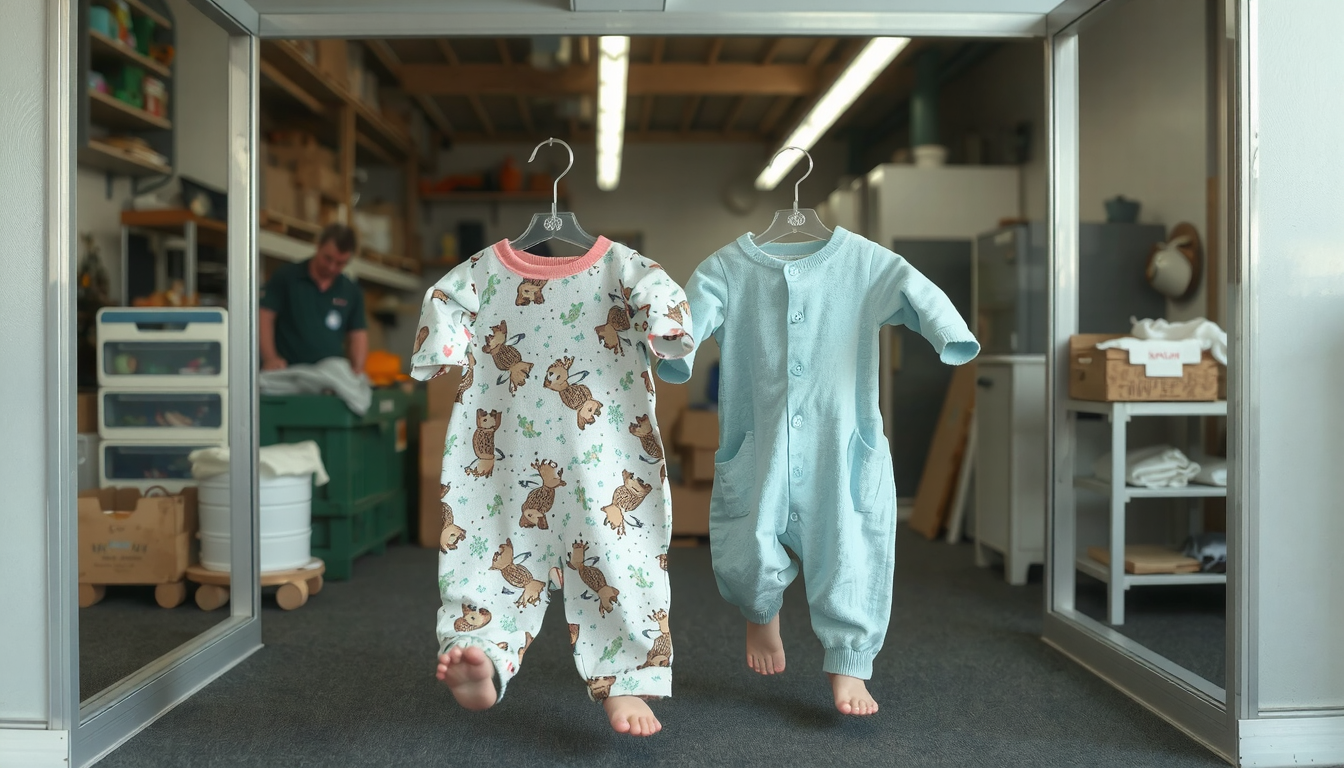
Simply put, the baby clothes industry is both wholesome and lucrative. Dads, moms, and everyone looking for gifts for little ones are constantly in search of beautiful, individualized, and unique clothes. As a result, there are plenty of spaces for daring entrepreneurs to get in and make their mark.
Print on demand (POD) is a service that allows you to sell customized products without the necessity of stocking them. You create the design, while your partner company prints it and ships it directly to your end customer. Selling baby clothes with this model is a good way to start a business without any significant risks.
The pros are pretty straightforward: you start with low costs and do not have to deal with stock. However, they come with some cons. Your profit margin could be lower than if you ordered bulk. Also, product safety is a huge concern for you. In this guide, we will help you step into the world of print on demand baby clothes and learn everything you need to know.
Safety First: The Non-Negotiable Guide to Baby Product Compliance
Selling baby products is not the same as selling adult shirts. Safety carries the most weight. It is essential to grasp the rules and be compliant with them to protect your customers and company alike. Not abiding by the rules can result in fatal legal issues.
Safety as a priority will definitely raise the profile of your brand. Rule compliance is one of the best practices along with delivering quality consistently for long-term growth in the print-on-demand baby-clothing sector.
CPSIA and CPSC USA Requirements: A Quick Overview
In the United States, the rules are dictated by the Consumer Product Safety Commission (CPSC). The Consumer Product Safety Improvement Act (CPSIA) is a critical legislation you must be aware of. It covers all products intended for children of 12 years and younger.
According to CPSIA, products marketed for children must be attached with a Children’s Product Certificate (CPC). This certificate indicates that the product conforms to all established safety norms. Tracking information which tells the products’ origin must be permanent. This ensures that the product can be traced if it needs to be pulled from the market.
Safety of Ink and Fabric: The Essential Guide
The right materials for infants with sensitive skin normally are the ones that are soft and safe to use. By all means, this should be the case not only with the clothing fabric, but also the ink which is utilized for customizations.
While looking for POD suppliers, seek those that use water-based inks that are non-toxic. These inks don’t contain any harmful substances, making them a perfectly safe option for users with skin sensitivities. For fabric purchases, look for labels that indicate certification like OEKO-TEX Standard 100. This is the universal certificate that the material has undergone testing for any harmful substances and is safe for humans.
A Seller’s Safety Checklist
As a seller, you assume responsibility for your trade. Use this straightforward checklist to do due diligence on any prospective POD partner.
- Request the safety compliance documentation from your POD provider, for example, a CPC.
- Ask about the makeup of the fabric. Aim for 100% cotton or organic cotton.
- Confirm the kind of ink printing (e.g., water-based, CPSIA-compliant).
- Do not allow designs that involve small parts that could come off and become choking hazards.
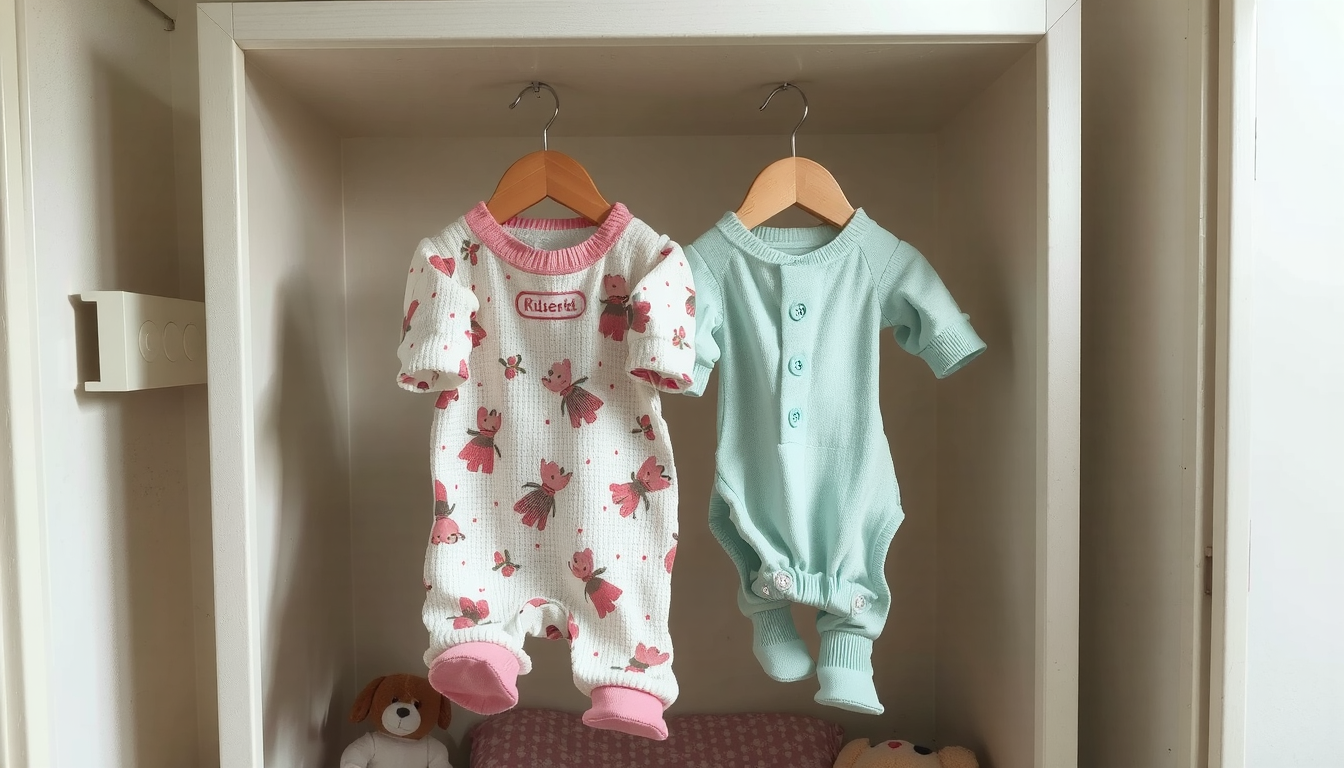
Selecting the Best Print on Demand Partner for Baby Clothes
Your print on demand partner is your business core. Their quality of products, their reliability, and their product selection have a direct impact on your brand. So, the first and most important step is to choose the right one.
If you consider two POD companies, you know that their internal structures are not the same but their products can be the same. So not all POD firms are equal when it comes to baby clothes. Thus it is necessary to have a partner who possesses the unique knowledge required for this specific niche. This person must have knowledge about both safety and softness.
Essential Factors for Assessing POD Suppliers
While you explore possible collaborators, pay the most attention to these points. They will lead you to the best partner for your print on demand baby clothing store.
- Quality & Safety of Products: What type of clothes do they provide; are they high-quality and goof-soft? Will they submit safety certifications of their products and inks?
- Product Catalog Range: Prioritize partners who provide a wide range of baby bodysuits, bibs, hats, and toddler tees.
- Printing Technology: Direct-to-Garment printing is common for cotton items and produces vibrant and detailed prints.
- Base Costs & Shipping: Compare the cost of the blank item and the shipping fees. This affects your profit margin directly.
- Integration Options: Ensure that the provider can be easily integrated with your chosen sales platform, be it Etsy or Shopify.
Leading POD Partners for Baby Apparel: A Comparison
A plethora of companies are offering Print on Demand services. However, only specific ones are suitable for baby products. For example, Printful and Printify, being general service providers, only carry limited baby articles. On the flip side, you may find children’s apparel specialists that can deliver an even larger assortment and possess heightened expertise. This is supported by a review of the best print-on-demand companies.
Here is a brief table that can clarify:
| Provider | Key Baby Products | Printing Tech | Strengths | Weaknesses |
|---|---|---|---|---|
| Printful | Bodysuits, Bibs, Hats | DTG | High-quality prints, good integration | Higher base costs |
| Printify | Bodysuits, Toddler Tees | DTG | A big network of printers, competitive pricing | Quality may vary by printer |
| KidsBlanks | Wide range of baby & toddler apparel | DTG, Sublimation | Niche specialist, large selection | Focus is primarily on children’s items |
Your Step-by-Step Guide: From Design to First Sale
Opening a business can be a tough experience. With our help, you can divide this process into straightforward actionable steps. We can show you how to go from an idea to a product that is available on the market.
Step 1: Find Your Niche & Create Your Designs
Brilliant designs that resonate with customers are only the first step to success. You could consider popular niche designs for baby clothes. These would consist of baby announcement and monthly milestones, holiday themes, funny sayings for parents to wear etc.
A designer could make a simple design on a tool such as Canva or Adobe Illustrator. The design files have to meet the quality requirements; a PNG file with a transparent background and 300 DPI resolution are the default ones. To create a consistent brand identity with visual assets, you may want to learn about how to start a brand and implement those ideas in your shop.
Step 2: Select Your Products & POD Partner
After having your designs, decide which products you want to sell and the manufacturer who will be in charge of them. Go through the comparison in the prior section.
We always suggest. A test order lets you feel and see the actual printed fabric and its quality. It is crucial that you are confident in what you sell first before you display or list it for sale to your customers. This is the core part of creating a trustworthy print on demand baby clothes brand.
Step 3: Set Up Your Online Store
You need a place to sell your products. Prominent platforms like Etsy and Shopify are beginner-friendly options.
Etsy has a ready-made display of clients that are looking for products that are different from the ones you can find in other stores. Shopify on the other hand gives you more control by letting you create your own brand’-website. Both the platforms are integrated with almost all the major POD providers.
Step 4: Create Compelling Mockups and Product Descriptions
The first impression of your product counts the most. Providing mockup images in high-quality of the items when printed is an effective way of communication to your customers. A lot of POD companies offer these for free.
Brief and informative product descriptions significantly matter as well. For instance, you can state that the product is soft to the touch, the inks are baby-safe water-based ones, and that the design is inspired by a nice story. This can win their trust and thus lead to a sale.
The Pricing Dilemma: Properly Pricing Your Print on Demand Baby Clothes for Profit
Price setting is one of the essential problems for new sellers. First of all, you must make sure that the price covers all the costs and yields a good profit. Secondly, you need to maintain your competitive edge in the market.
Let’s talk about what goes into the pricing of personalized baby clothes.
Understanding Total Cost
Before pricing, it is necessary to be aware of the cost that you want per item. But it isn’t simply the price of the bodysuit that factors in.
The formula is simple: Total Cost = Product Base Cost + Shipping Cost + Platform Fees
- Product Base Cost: This is the fee charged by the POD firm for the print and the blank item.
- Shipping Cost: The sum of money charged by the supplier to ship the item to your customer.
- Platform Fees: The percentage or the flat fee that the sales platform (like Etsy or Shopify) charges for selling their product.
How to Fix Your Retail Price
Once now you have the total figure that goes into the cost, you can set the retail price. A common way to do this is to aim for a specific profit margin.
Here is a formula to help: Retail Price = Total Cost / (1 – Desired Profit Margin %)
Let’s say, for example, the total cost of the baby bodysuit is $15. Suppose you would like a 40% profit margin. Then, your calculation goes like this: $15 / (1 – 0.40) = $15 / 0.60 = $25. Your retail price will be $25 after all.
Pursuing Profit and Market Expectations in a Balanced Way
It is wise to check your competitors’ prices on platforms like Etsy. However, it is not good to get into a price-cutting war.
Using a unique design, excellent quality, and a credible brand story will give you the upper hand in asking for a higher price. Many customers would rather pay a bit extra for a unique, safe, and well-constructed item. Concentrate on value rather than pricing.
Broadening Horizons: Exiting beyond the Basics with Your Brand
When your shop is operating and sales are being made, you can think about scaling up. A successful print on demand business can be the base of a much larger brand.
Explore the areas in which you can expand your reach and product lineup.
Diversifying Your Product Range
Adding more products is the easiest way to scale. If your customers enjoy your baby bodysuits, they may also be interested in other products.
- Feature the designs that are popular with you on toddler t-shirts.
- Try making outfits that match both parent and child.
- Push additional products such as bibs, blankets or hats this way.
When It Is Wise to Consider Custom Manufacturing
Printing on demand is great for getting started and trying out new ideas. But when your brand expands and you have constant bestsellers, it might be better to think about custom manufacturing.
Dealing directly with a manufacturer can give you good profits and a new level of tailoring. For example, some growing brands are teaming up with a custom hoodie manufacturer to create original apparel lines. POD is the first logical move to make a name for yourself in the industry after you prove successful with it. Moreover, you can find valuable information on how to be successful in the clothing sector at TZ Streetwear.
Frequently Asked Questions (FAQ)
Is print on demand for baby clothes profitable?
Yes, it can be quite profitable. Nevertheless, the secrecy behind making it work lies in the unique design factor, smart pricing, and the ideal POD partner choice. Instead of attempting to have the cheapest price, the better approach is entirely to build a strong brand.
What are the best-selling designs for baby clothes?
Designs that are always in demand include the ones for baby announcements and their age in months. A very popular Christmas theme is “My First Christmas.” Humorous quotes for parents are a hit. Personalized items which contain the baby’s name are very much in demand.
Do I have to worry about safety certifications by myself?
The onus lies with your POD supplier but you are the seller. In essence, you must perform due diligence. You must select the partners who are trustworthy and who are transparent with their product safety by using CPSIA-compliant materials. If you need anything, feel free to ask for documents.
Can I sell print on demand baby clothes on Etsy?
Undoubtedly. In fact, Etsy is one of the ideal platforms to sell the custom baby clothes. Most big POD corporations such as Printify and Printful have a direct connection to Etsy. This makes the order implementation process automatic.
What is the main quality that one should look for in a baby bodysuit?
The paramount concerns are safety and comfort of fabric. Seek bodysuits that are made of 100% soft and breathable cotton. Organic cotton is even better.