Have you ever had an enticing design concept for a hoodie? Are you thinking of an idea that is so particular that it needs to cover the entire hoodie? Traditional printing methods often have their own issues. They result in designs that are stiff and dull. They cannot survive a time period without fading. Emphasizing on colors makes them ineffective. But custom sublimated hoodies are not like that.
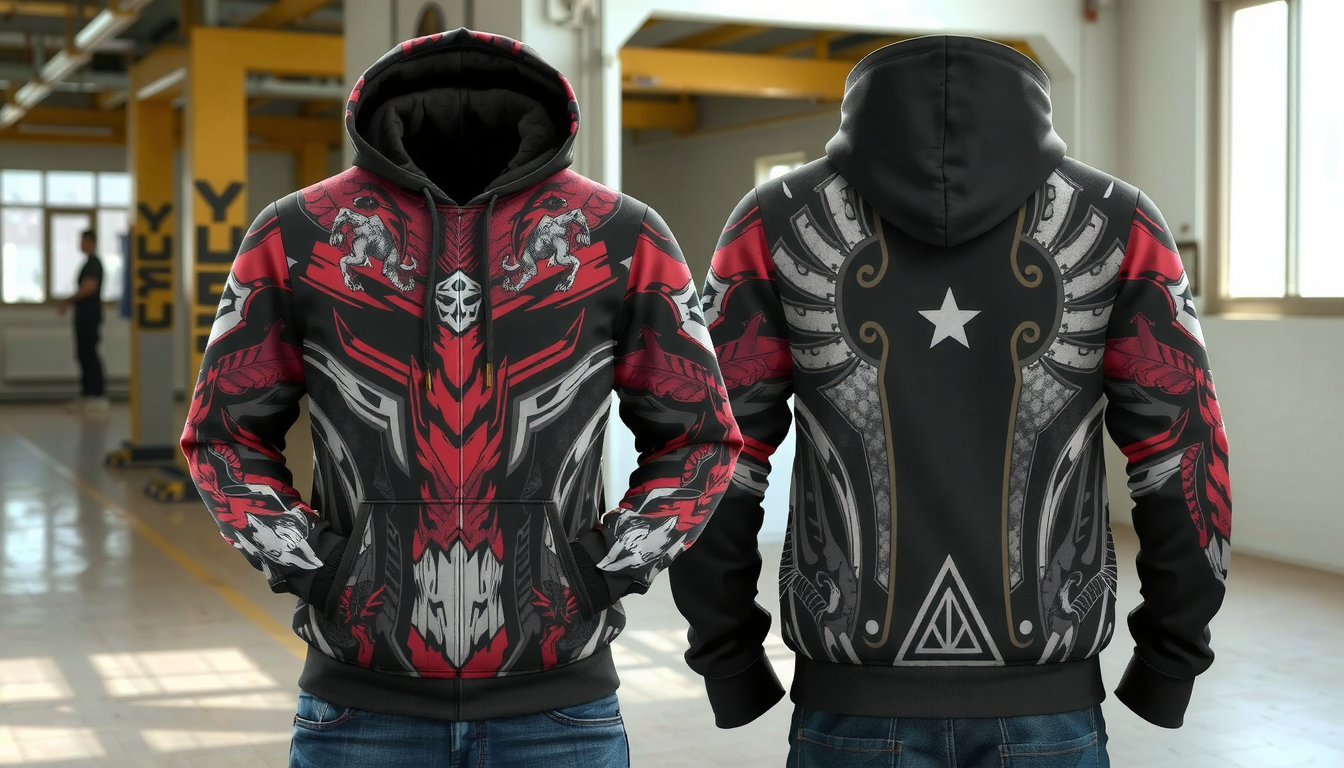
Dye-sublimation is a printing process that is really cool and gives permanent designs. This is how the sublimation process works in a nutshell. The specific ink is heated to the correct state. The gaseous state returns to the liquid in the fabric itself.
This technology allows for the freedom of designing for the entirety of the clothing. In addition to this, the results are long-lasting. They will never crack or peel off. Breathability is also a plus because the sublimation print does not feel anything; it does not add weight to the hoodie. This article will get you started on the A to Z of sublimated hoodies. We’re going to explore the tech as well as help you design your perfect hoodie.
The Enchantment of the Sublimation of Hoodies: How it is Done?
To truly appreciate the quality of custom sublimated hoodies, it is important to understand the sublimation process. Having a grasp on it will reveal to you why sublimated clothes can be this vivid and long-lasting. Knowing this also will elucidate the reason that certain materials are not better suited.
Explaining the Science of Sublimation
The process may be complicated, but it is very easy. Just a few basic steps are there in the making of your apparel.
- To begin with, your design will be printed onto transfer paper that has a special layer of sublimation inks on it.
- This paper is then, placed on the fabric which primarily will be polyester.
- A heat press will come in with high temperature and even pressure.
- The heat energy removes the ink to the gaseous state. The gaseous state is absorbed into the polyester fibers and becomes solid.
- The design is now a permanent part of the fabric, not just a layer on top of it.
Polyester: The One Material for Sublimation
Sublimation needs a very exclusive type of bond that is not possible with other materials. This bond is the result of polymer-based materials, such as polyester. The dye must attach to these synthetic fibers. That is the reason for the outstanding quality of the designs that have 100% polyester fabric on them.
Using this technique on cotton or fabrics with low polyester content won’t work well. The ink just disperses; that is why the design is partially invisible from the beginning. To achieve the “all-over-print” custom hoodie look, it is vital to use the highest possible percentage of polyester.
Creating for Sublimation: A Productive Guide for Perfect Art
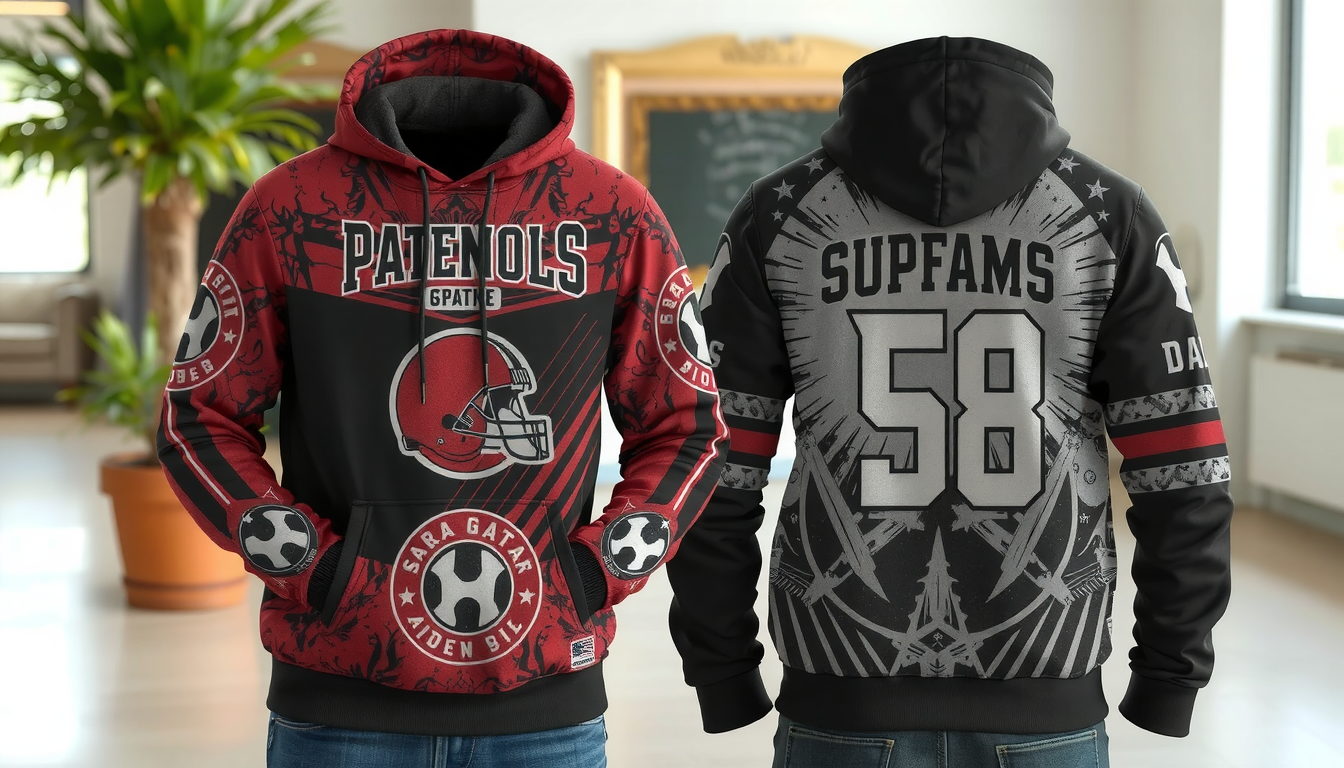
Based on our long-standing experience with thousands of designs, we are sure that the most important step of artwork preparation is this one. Taking this step will ensure that the final design will look as you want it to at the same time save you time and money. Besides, many plannings can help you to avoid typical problems like obscure images or misalignment of patterns. Some common mistakes in image resolution and file sizes can be avoided by following this checklist.
Start the File Setup with This Checklist
For a professional finish, your design file should initially be set properly. Use this checklist to incorporate your artwork for printing.
- Resolution: An at least 300 DPI (dots per inch) quality should at least be achieved. This is the standard reference to measure the high printing quality. The use of a lower DPI would lead to a blurry or pixelated image when the design is printed on the hoodie.
- File Format: We recommend using vector files (AI, EPS, or PDF). These files can be resized without losing quality. If you must use a raster format (like JPG or PNG) use a high-resolution PSD or TIFF file instead.
- Color Mode: Your design file must be in the CMYK color profile. Cyan, Magenta, Yellow, Black (CMYK) is a color model used by printers. Designs for screens use RGB (Red, Green, Blue) which is more range. The conversion from RGB color to CMYK may influence the appearance of colors. It is better to use CMYK from the beginning.
- Dimensions & Bleed: Always use the design template provided by your manufacturer. There is also a need for including a “bleed” area. This is a space of design that goes beyond the line of the final cut. A bleed ensures that no accidental white gaps will occur in the seams where the hoodie is sewn together.
If you are a beginner, this step in our guide on how to start a brand is crucial for you.
3D Thinking: Putting in Seams, Zippers, and Pockets
A flat design on a screen is totally different from a three-dimensional hoodie. The important issue is how the design covers the body.
For all-over prints, check how patterns will line up across the side seams. Also check from the body to the sleeves. A good manufacturer will help make sure this alignment is as clean as possible.
Be extra careful with very important design details like text or small logos as well. Don’t put them too near to the seams or zippers or pockets or drawstring holes. These areas might distort the design or hide it from the eye. Leaving some space between them will guarantee that they remain visible and clear.
Sublimation vs. Screen Printing vs. DTG: Which is Better?
The method of printing is the most significant thing to consider but it depends also on the design, the budget, and the expected results. Sublimation is a strong alternative while screen printing and Direct-to-Garment (DTG) also have their own pros. The table below will illustrate the difference for you.
| Feature | Dye Sublimation | Screen Printing | Direct-to-Garment (DTG) |
|---|---|---|---|
| Best For | All-over, complex, photo-realistic designs. | Simple logos, text, bold graphics (1-4 colors). | Detailed, multi-color designs on cotton. |
| Durability | Excellent (Permanent, part of fabric). | Good (Can crack/peel over time). | Fair (Can fade with washing). |
| Feel | Zero feel, perfectly soft. | Slightly raised ink layer. | Soft, but can feel slightly stiff on dark shirts. |
| Fabric | 100% Polyester or high-poly blends. | Cotton, blends, polyester. | Primarily 100% Cotton. |
| Color | Unlimited colors, full-color spectrum. | Limited by number of screens (colors). | Unlimited colors, full-color spectrum. |
| Cost | Cost-effective for complex designs, even at low quantities. | Very cost-effective for high-volume, simple designs. | Best for low-volume, complex designs. |
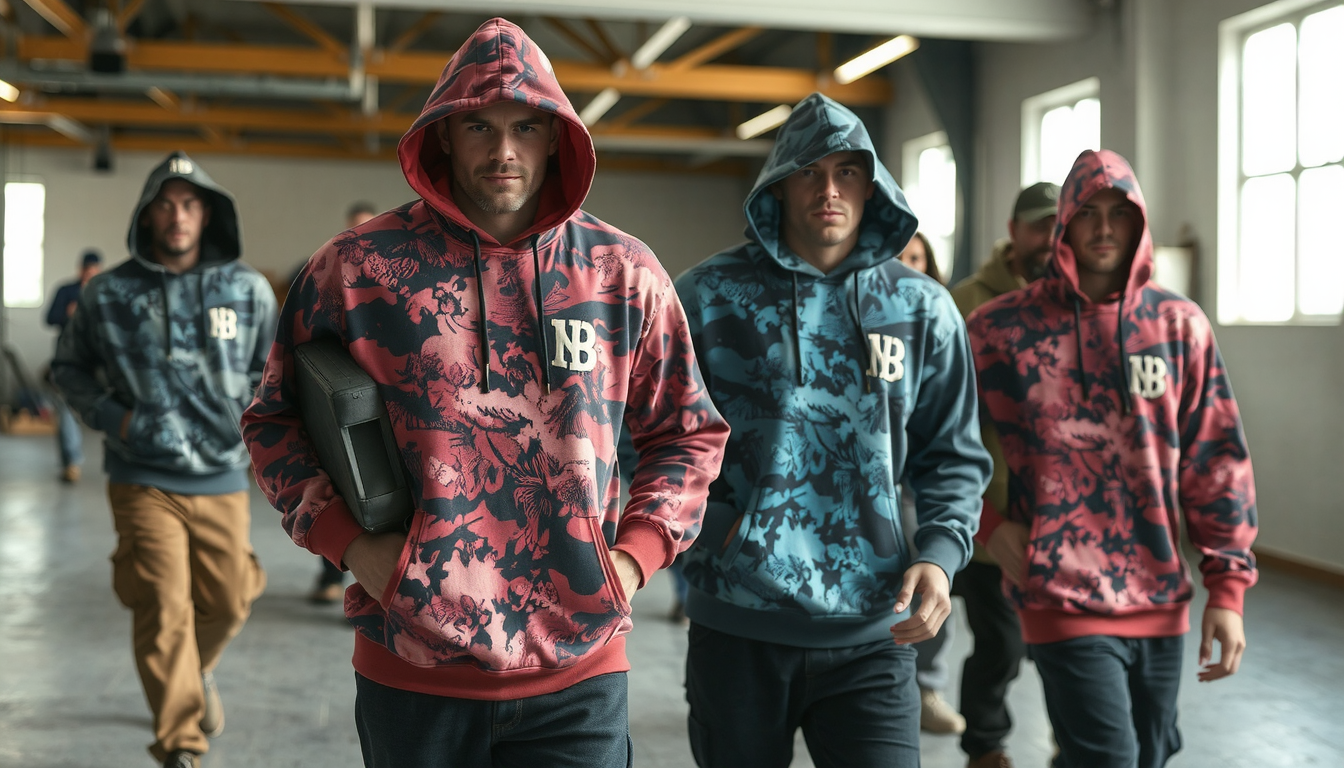
Sublimation has always been the best for solid full-covered garments. It explains the popularity among streetwear brands. Very good is also for the manufacture of high-performance team hoodies that must be wear-resistant and breathable.
Finding the Right Manufacturer for Your Hoodies
The quality of the hoodies you brand will depend a lot on the choice of the manufacturer. An excellent partner does not only print. They will guide you through the process to the end of achieving a perfect final product. Checking the possible suppliers is a key step.
Manufacturer Vetting Criteria
Use these parameters to assess and choose the best fitting partner for your project.
- Portfolio Review: Look for their past projects. Do they have clear, high-quality examples of custom sublimated hoodies? This shows the experience and capability.
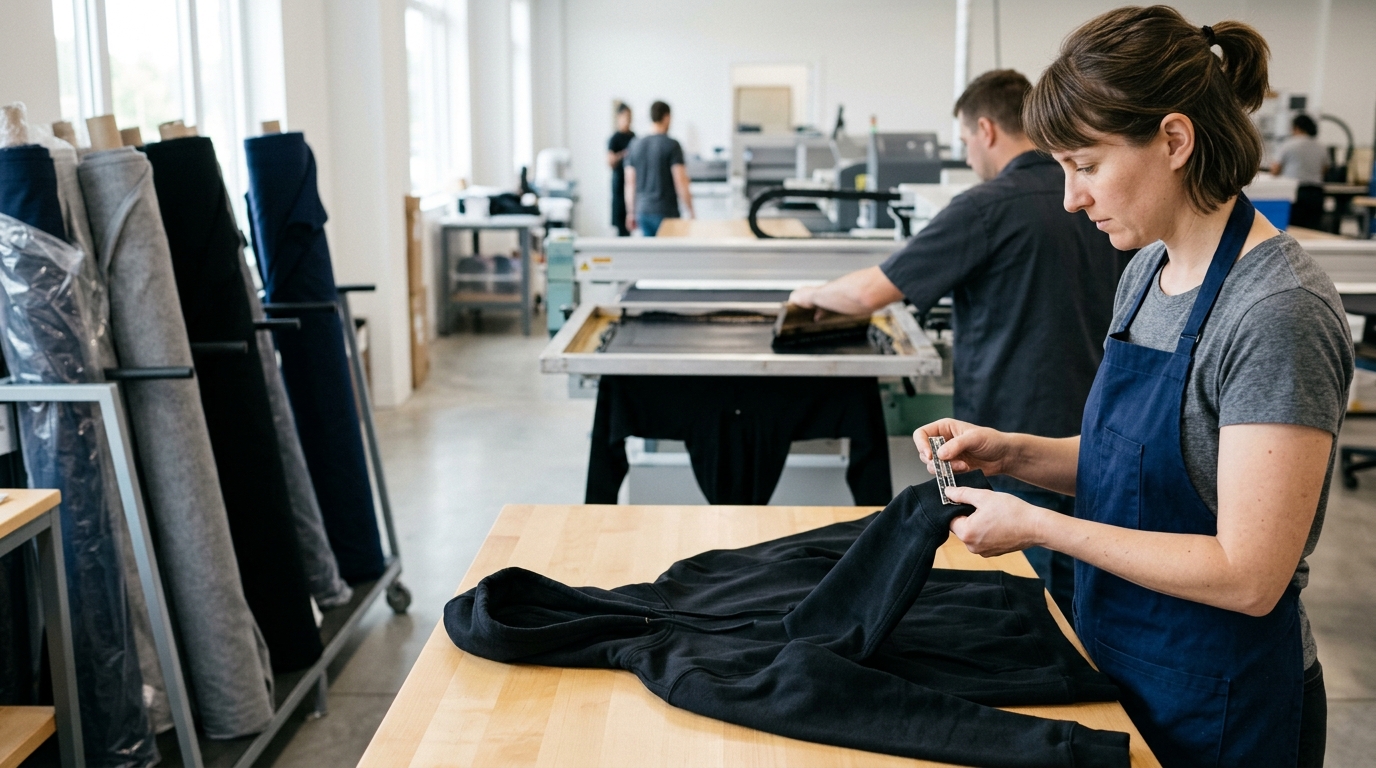
- Cut & Sew vs. Pre-Made Blanks: Is “cut and sew” the method they are offering? This is the best way where the fabric is printed flat and then cut and sewn into the hoodie. This process must be executed to give you a true all-over effect, seamless print. White creases under the arms and seams are typical examples of the inconsistencies found on pre-made hoodies.
- Sample Policy: A manufacturer who can be relied on will provide physical samples. This way, you check not only the fabric but the print quality and the construction too before you order a full production run.
- Turnaround Times: Discuss the timeline. A usual period for cut and sew sublimation is 3-5 weeks after the artwork has been approved. This gives you a clue about when to expect the launch.
- Communication & Support: Are they really helpful and knowledgeable? A good partner will give you prompt and direct answers plus expert advice on your design.
A Real Manufacturing Partner?
Working with experts is about much more than just production. A real partner is the one who helps you refine your vision. They are there to advise you on the choice of material. They will suggest modifications in your design that will bring better results. They will find out possible issues before they grow.
This collaborative approach is the core of what we do as a custom hoodie manufacturer. From the initiation of the design process to product delivery, we work with brands to ensure every detail is perfected.
All Together: Your Vision Fulfilled
Custom sublimated hoodies represent a wide array of creative possibilities. They manifest the design freedom par excellence and are also unrivaled in life span. In addition to these features, they have a professional touch that will undoubtedly distinguish your brand.
This process is tailored for fashion streetwear designers who are interested in innovation. That is also good for sports teams that want to need durable uniforms, and for local groups that do not want to compromise on quality. The result? A long lasting and distinct look that is achieved through full sublimation. You can make really distinctive custom sublimated hooded sweatshirts by making them with a permanent print that goes all the way around.
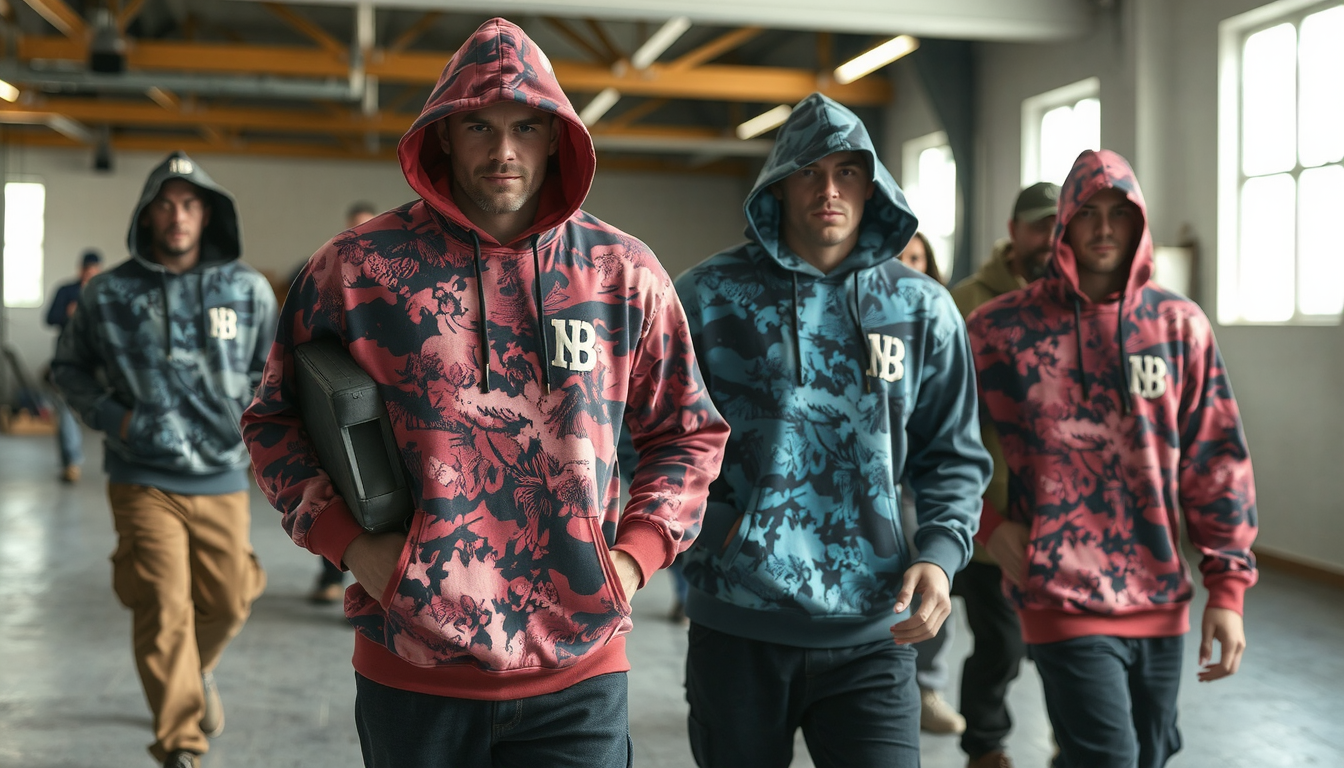
The vision is yours! You only need the proper procedures and the right partner to help you realize it.
Are you ready to create something unforgettable? Check out our custom apparel services and let’s build your project together today!
Commonly Asked Questions About Custom Sublimated Hoodies
What is the most common minimum order quantity (MOQ) for sublimated hoodies?
The answer is very dependent on the manufacturer. However, owing to the fact that sublimation set up is digital, the MOQs are often lower than the ones for screen printing. Most of the partners, like us, provide favorably order quantities as a support to the start-up brands and the small projects.
Can you print a sublimated design on a black or dark-colored hoodie?
No, classical sublimation is a process of dyeing fibers. A light dye cannot be applied to a dark fabric; therefore it will not come into the view. It works best on the fabrics which are colored white or very light. This will not only make it possible for the design colors to be bright and accurate but also for the fabric to look good. Creating a “black hoodie” is a matter of dyeing a complete piece of white fabric with black ink (except in your design areas).
What needs to be done to keep my sublimated hoodie?
Caring is easy. Machine-wash the hoodie in cold water inside out with the like colors. The most effective way is to tumble dry it on low or hang it dry. The design itself is going to be fine as it is part of the fabric but observing proper care will help the garment stay in more luxurious condition for long years.
How much do the custom sublimated hoodies cost?
Costs depend on many factors. The factors can be the type of the hoodie, the quality of the fabric, and the nature of the sewing, like custom zippers, woven labels, or the special pocket styles you choose. Whereas, the production of one piece of a custom hoodie may cost more than other promotional methods, the all-in costs of screen-printing multiple-color designs with a complex design are often more competitive. This is particularly true for orders of lower to moderate quantities.
What is “cut and sew” sublimation and why is it better?
“Cut and sew” is the premium standard for custom sublimated hoodies. It means we print your design on large rolls of flat fabric first. Then, we cut the printed fabric into the individual panels of the hoodie. These are the front, back, sleeves, hood, and pockets. Finally, these panels are sewn together. This method is better because it allows for a perfect, continuous design across the entire garment. This includes over seams, without any of the white streaks or gaps common when printing on pre-made clothes.