Selecting a custom hi-vis hoodie is about bringing together safety, durability, and thinking of your brand. The right hoodie makes your team not only safe but also more visible. Along with that, it is quite an extraordinary tool to market your business.
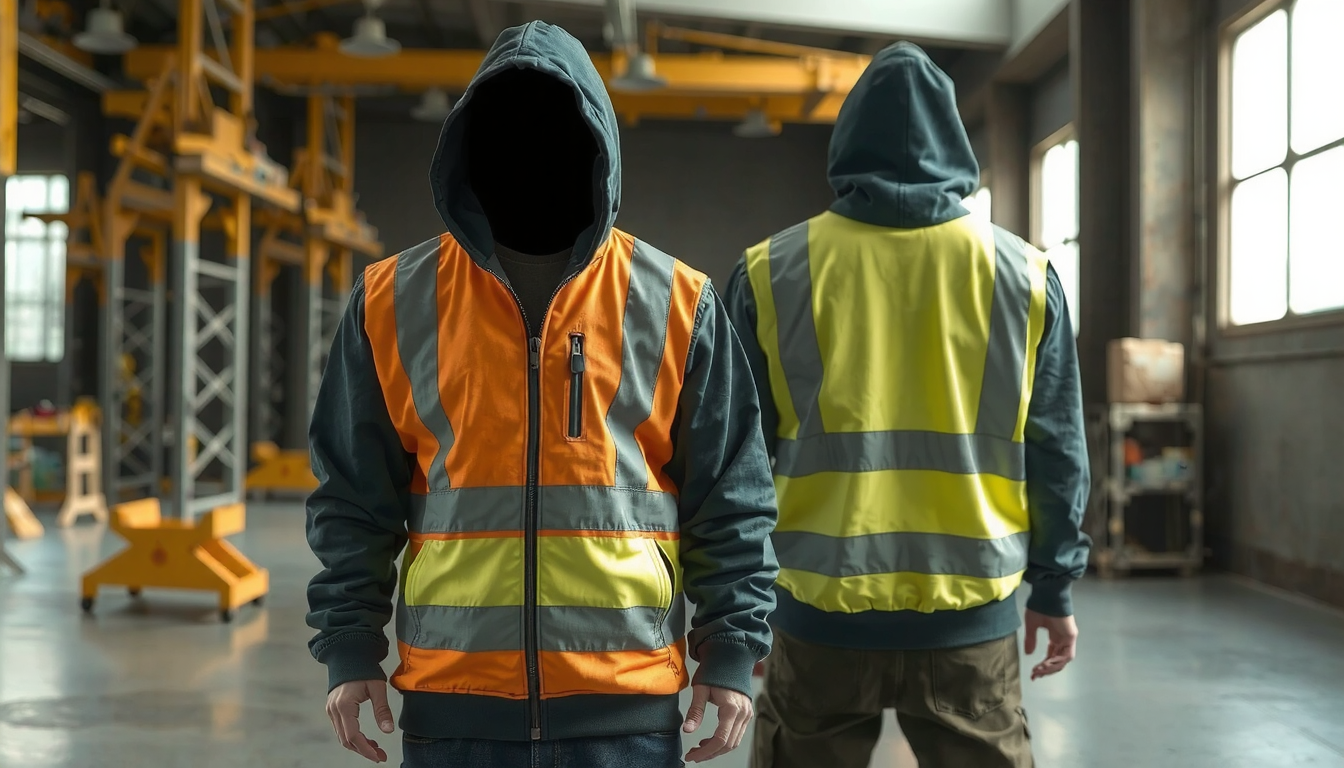
This guide will be your helping hand. We will start with the basic rules of safety, go through the best materials that you can choose, then outline the logo adding process, and we will wrap up the ordering procedure. With our expertise in custom apparel at TZ Streetwear, we have provided this guide to get you the best help.
Why Opt for a Custom Hi-Vis Hoodie in the First Place?
The custom hi-vis hoodie is not merely an expense. It is a clever investment for not only the safety of your employees but also the image of your brand.
Safety First: Worker Protection & Compliance
The foremost reason why a hi-vis hoodie is important is to keep workers visible. This is an absolute necessity near traffic or wherever there is hectic work. The whole team getting the same custom safety hoodie to wear will make things easy for them and also easy for others to identify them. It also promotes security and teamwork.
Positive Brand Image
A hoodie that displays your business logo is a sign of professionalism. When customers or members of the public see your crew, they perceive a cohesive and well-organized team. This creates a better picture of your company in their minds.
Team Spirit and Unity
A comfortable and stylish hoodie will definitely be a tool which your team will appreciate. It is a sign that you take care of their comfort and security. This may improve the working environment and enable everyone to feel part of the team.
Mobile Advertising
Every employee who puts on your custom hi-vis hoodie walks your brand around. Thus, on job sites, rides to work, and during lunch breaks are the occasions your brand gets advertised. It really is a cheap and efficient advertising strategy.
Knowing the Safety Standards: ANSI/ISEA 107
The single most important step is understanding safety standards. It is the way you ensure the work power is secure and you are abiding by the law.
What does ANSI/ISEA 107 stand for?
It is the American National Standard for high-visibility safety garments. It is a rulebook that lays out the amount of bright and reflective materials a garment needs to have in order to be compliant. Following this standard is a must for many jobs.
Classes of Hi-Vis Performance Material
The standard sets out three classes based on the working environment. The higher the class, the more visible the garment is. Selecting the correct class for your custom hi-vis hoodie is essential.
| Class | Minimum Background Material | Minimum Reflective Material | Typical Work Environment/Examples |
|---|---|---|---|
| Class 1 | 217 sq. in. | 155 sq. in. | Off-road workers, parking lot attendants, warehouse staff. In areas with slow-moving traffic (under 25 mph). |
| Class 2 | 775 sq. in. | 201 sq. in. | Street workers, surveyors, airport ground crew. In areas with traffic flowing at 25-50 mph. |
| Class 3 | 1240 sq. in. | 310 sq. in. | Highway workers, emergency responders, flaggers. In the presence of high-speed traffic (over 50 mph) or very dark conditions. |
Identifying Garment Types (O, R, P)
The standard also includes types of clothing classification for specific jobs.
- Type O: Stands for “Off-Road.” This is for workers not exposed to roadway traffic, such as warehouse staff. Class 1 is the only suitable alternative.
- Type R: Stands for “Roadway.” This is for workers exposed to public traffic and construction equipment. They can be either Class 2 or Class 3.
- Type P: Stands for “Public Safety.” This is for emergency and public safety personnel. This clothing can use features that help them do their jobs. They can be Class 2 or Class 3.
The Essential Features of a Quality Hoodie
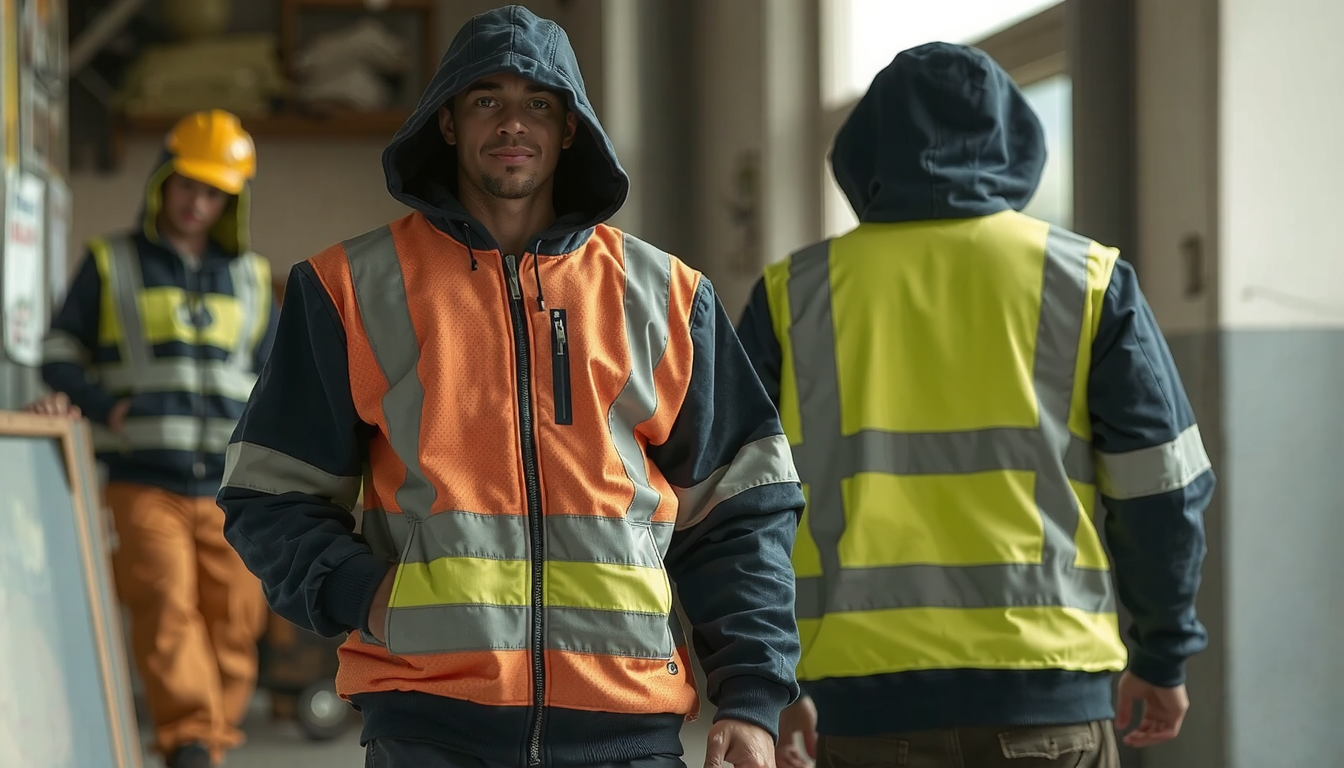
A superb custom hi-vis hoodie consists of the best possible components. Be aware of the right items to choose to get a long-lasting product.
Key Factor: The Right Fabric
The fabric has a lot to do with warmth, comfort, and how long the hoodie will serve you.
100% Polyester is the most widely used fabric for a custom hi-vis hoodie. The fabric is resistant to fading and holds bright colors excellently. Strong and quick-drying, it is the best for outdoor work.
Polyester/Cotton Blends are a popular choice mainly due to their softness and breathability. Still, cotton can be a drawback as it absorbs moisture. This leads to it being slow to dry and in some cases, it may not be as durable as pure polyester.
Fleece Weight (GSM) is a standard measure for the thickness and warmth of the fabric. GSM equals “grams per square meter.” A higher GSM (like 300-400) will give you a warmer and heavier hoodie for cold weather. A lower GSM (around 250) may be more suitable for milder conditions.
The Real Deal With Reflective Tape
The reflective tape is what turns the hoodie into a night-time garment.
Standard glass bead tape is the most commonly found and effective. It uses tiny glass beads to reflect light back to the source. For ultimate performance, look for prismatic tape, like 3M Scotchlite. It uses little prisms for light reflection. As a result, the object will be brighter and stand out even at a larger distance.
Placement is also an important consideration. For ANSI rules, the tape must have certain patterns around the arms and torso. Some regions may additionally require an “X” pattern to be stitched on the back. This would indicate the direction the worker is facing.
Construction Features for Extended Life
Small details can have a major impact on how a hoodie holds up.
Look for reinforced seams, especially around the shoulders and pockets. Bar-tacking is a stitching technique that adds extra layers at the points of most strain, like pocket corners. This will help prevent tearing.
You can choose between pullover and full front-zip styles. Pullovers provide more warmth with fewer failure points. Full-zips are easier to take on and off and allow for better temperature regulation. Check for good quality zippers, like those from YKK, that will not snag or break.
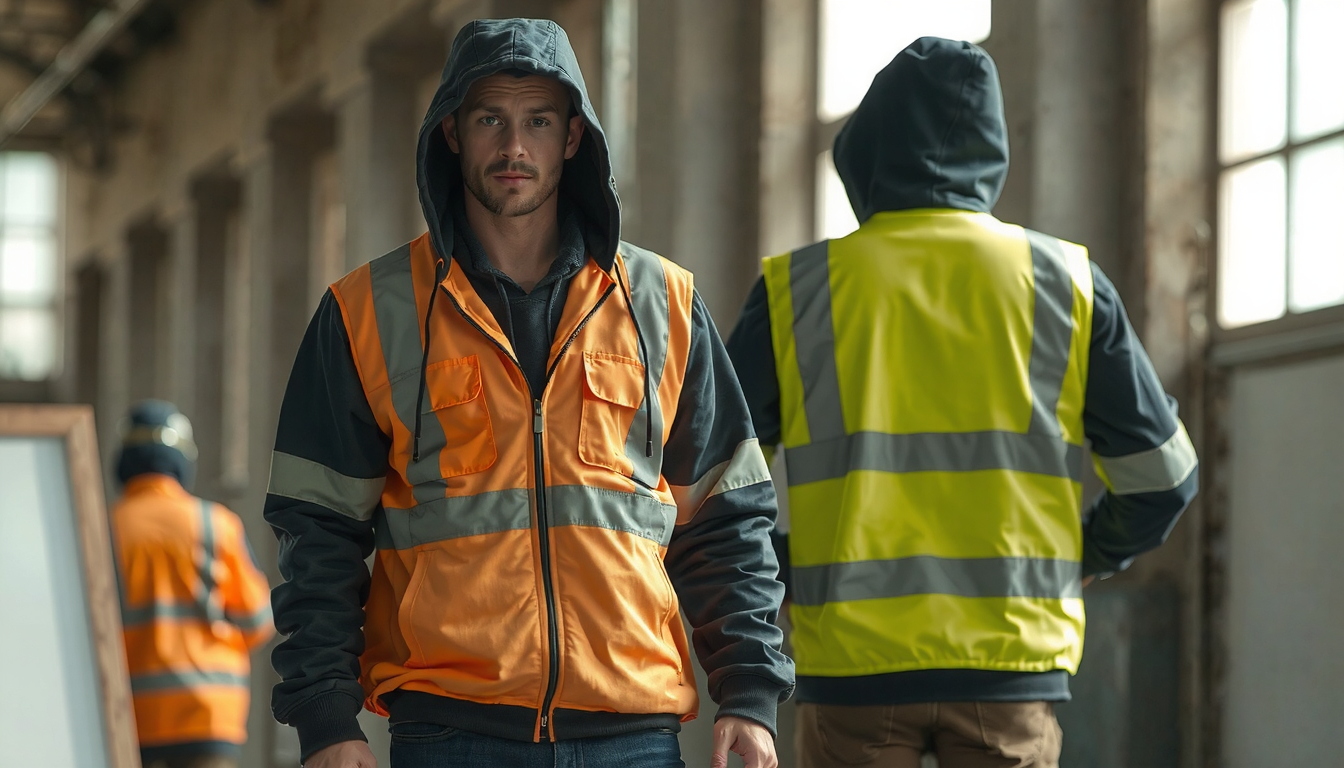
Features like large kangaroo pockets are a great place to warm hands. A pocket with a zipper is a safe place for your belongings. For safety around machinery, some hoodies have snap-off hoods which can break away if caught. You can see how features like hand warmer pockets and different hood configurations are offered across a range of custom safety sweatshirts. Quality suppliers use durable and comfortable fabrics that are designed to meet safety compliance while standing up to daily wear.
Logo Placement: A Guide
Choosing the right way to apply your logo goes a long way towards its appearance and durability.
Screen Printing
This method pushes ink through a mesh screen onto the material.
- Best for: Bulk quantities (24+ pieces) and simple logos with one or two solid colors.
- Pros: Very cost-effective on large orders. The print is durable and lasts many washes.
- Cons: Not the best format for photos or logos with many colors. There are setup fees for each color, which can make small orders expensive.
Heat Transfer (DTF or Vinyl)
This method applies a design to the fabric using heat and pressure.
- Best for: Full-color logos, complex graphics, or small orders.
- Pros: Shows amazing detail and vibrant colors. It’s perfect for detailed logos. Often there are no minimum order requirements.
- Cons: The print can feel like a plastic layer on the hoodie. Durability can vary, so it is important to choose a quality supplier.
Embroidery
This method stitches your logo directly into the garment using thread.
- Best for: A high-end, classic look, especially for left-chest logos.
- Pros: This is the most durable option. It looks very professional and has a premium texture.
- Cons: It is the most expensive method. It is not suitable for very large logos, as this can make the fabric stiff.
Ordering from a Manufacturer: A 4-Step Process
Ordering a custom hi-vis hoodie is easy as long as you keep the steps in mind.
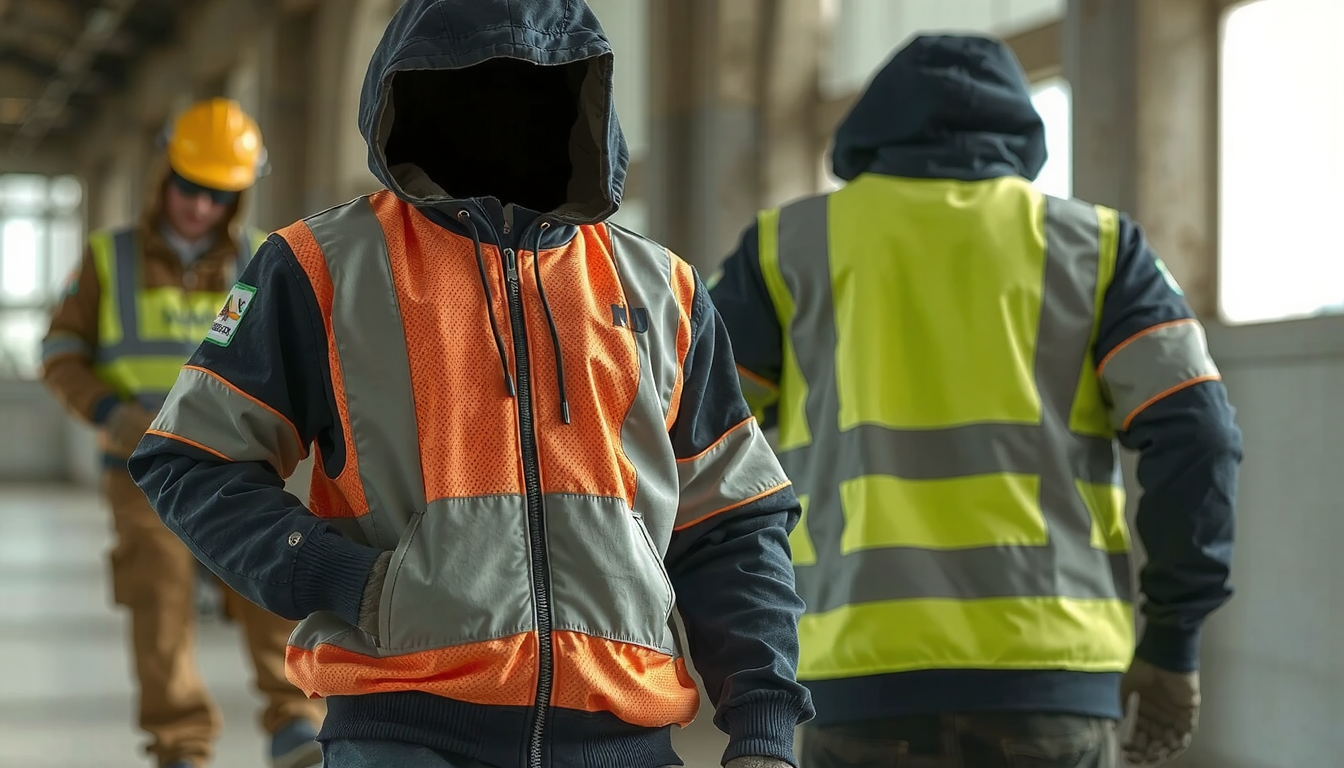
Step 1: State Your Requirements
First, you need to know your requirements. Specify the required ANSI Class (1, 2, or 3) for your work site. Choose features such as pullover or zip-up style, and decide if you need a black bottom to hide dirt.
Step 2: Artwork Preparation
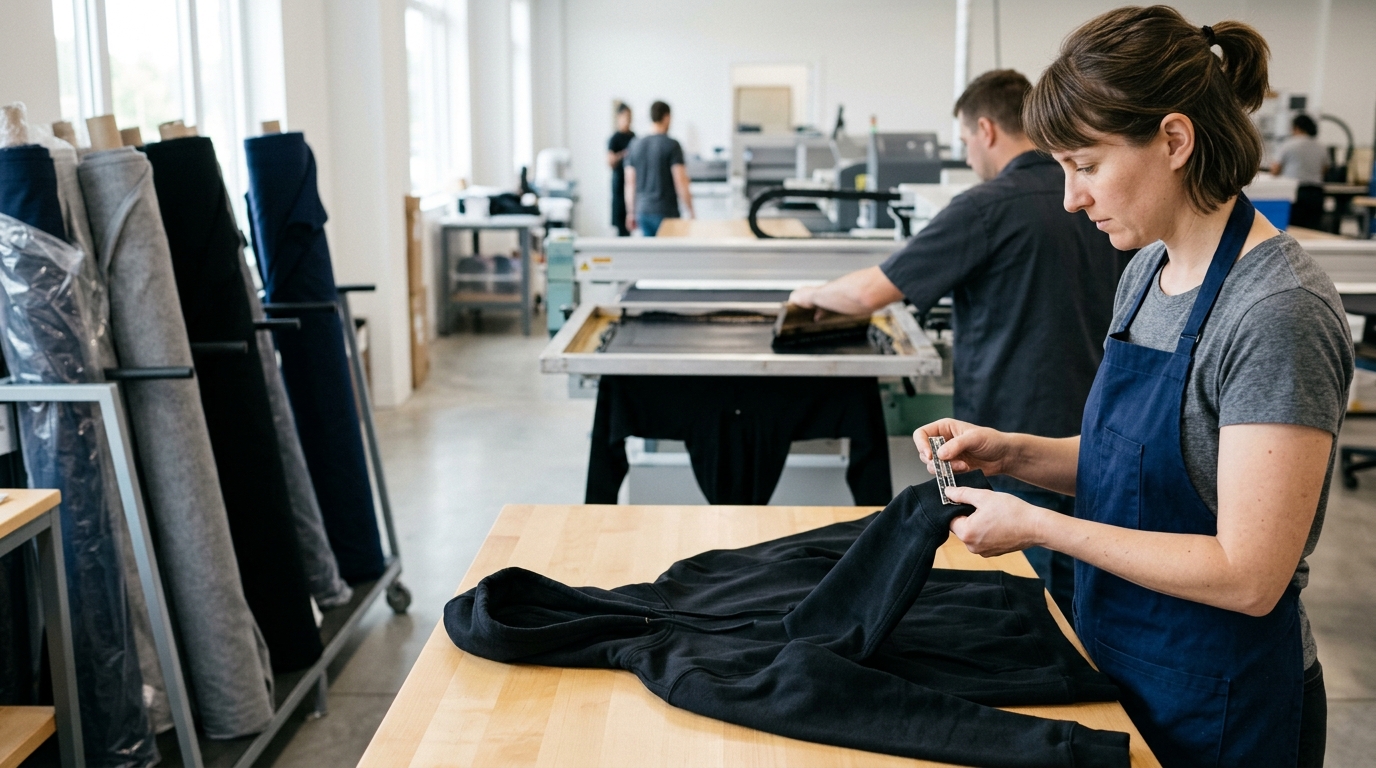
This is a critical step. A common mistake we see is customers providing a low-quality image file. To get the best result, always use a high-resolution vector format for your logo. Formats like .AI, .EPS, or .PDF are scalable, which means they can be any size without losing quality. This will result in a crisp and clean print.
Step 3: Ask for a Quote & Digital Mockup
Request a detailed quote that encompasses the hoodie, printing, and shipping costs. Be sure to request a digital mockup, which is a picture that shows what your final custom hi-vis hoodie will look like. Carefully check the logo size, colors, and position before you approve it.
Step 4: Production & Delivery
After you approve the mockup, production of the hoodies begins. The turnaround times may differ, so it is good to ask your supplier for an expected shipment date.
Ready to design? As a specialized custom hoodie manufacturer, we can assist you in each phase of the process. Get in touch with our professional staff today!
Ensuring Longevity with Your Custom Hi-Vis Hoodie
Your custom hoodie will last for a long time if proper care is taken, and its safety features will not be compromised.
You can follow these simple washing care directives to safeguard your investment.
- Wash the hoodie inside out. This way the custom logo will be protected from rubbing against other clothes.
- Use cold water and a gentle laundry soap.
- Do NOT use bleach or fabric softeners. These chemicals can damage the reflective tape and fade the bright fabric.
- Tumble dry on low heat, or hang it to dry. Hanging is the best option to protect both the print and the reflective stripes.
- Never iron directly on the logo or the reflective material.
Proper care is key for all high visibility clothing to ensure it continues to meet safety standards for the period it is in use.
Questions That Are Asked Often (FAQ)
What is the minimum order for a custom hi-vis hoodie?
This varies by manufacturer and the printing method used. Some companies require large orders. However, specialists like us at TZ Streetwear often use methods like heat transfer. These are perfect for smaller batches. It is always best to ask us about your specific project.
Can I put a logo over the reflective stripes?
No, we strongly advise against this. Covering any part of the reflective material can make the hoodie non-compliant with ANSI safety standards. A professional customizer will always place your logo on the background fabric. This includes the left chest or the upper back, where it does not block the tape.
How long will the custom logo last?
This depends on the printing method and how you care for the hoodie. Embroidery is the most durable and will likely outlast the garment itself. A high-quality screen print or heat transfer can last for dozens of washes if you follow the care instructions, like washing it inside-out in cold water.
Are there flame-resistant (FR) custom hi-vis hoodies?
Yes. FR hi-vis hoodies are special safety gear for workers near fire or electrical hazards. They are made with FR-rated fabrics and must be customized with FR-rated thread. Always confirm that both the hoodie and the customization meet the specific FR safety standards your job requires.
What’s the difference between safety yellow and safety orange?
Both are approved ANSI colors. The best choice depends on your work environment. Fluorescent yellow-green is the most visible color to the human eye in daylight. It stands out well in many conditions, including fog. Fluorescent orange provides high contrast against natural backgrounds like trees, foliage, and snow.