There’s nothing quite like bringing a custom apparel design to life. That moment when you pull the squeegee and reveal a perfect print? That’s what gets so many founders excited about the clothing business. But here’s the thing: getting from a great idea to a product you can actually sell depends entirely on your equipment. Picking the right screen print machine for clothes can feel overwhelming. Your options range from simple tabletop presses all the way up to massive industrial machines.
This guide will make the whole process clear. We’re cutting through the confusion to give you straight, actionable advice from someone who knows the industry inside and out. Whether you’re a startup founder working in your garage or you’re ready to scale a serious brand, this is the only resource you’ll need. We’ll help you find the perfect machine for your goals, budget, and space. If you’re just getting started, this is a crucial step in the bigger picture of building your brand.
Here’s what you’ll learn:
- The critical differences between manual, semi-automatic, and automatic presses.
- How to match a machine to your specific business ambition and budget.
- The non-negotiable technical features you must look for.
- A complete budget breakdown of the entire screen printing ecosystem, beyond just the press.
- When it makes more sense to outsource production instead of buying.
The Three Tiers of Presses
You need to understand the basic categories of screen printing presses first. Your production needs, budget, and space will immediately tell you which of these three tiers makes sense. Each one represents a big jump in speed, investment, and what you can accomplish.
Manual Presses: The Hands-On Starting Point
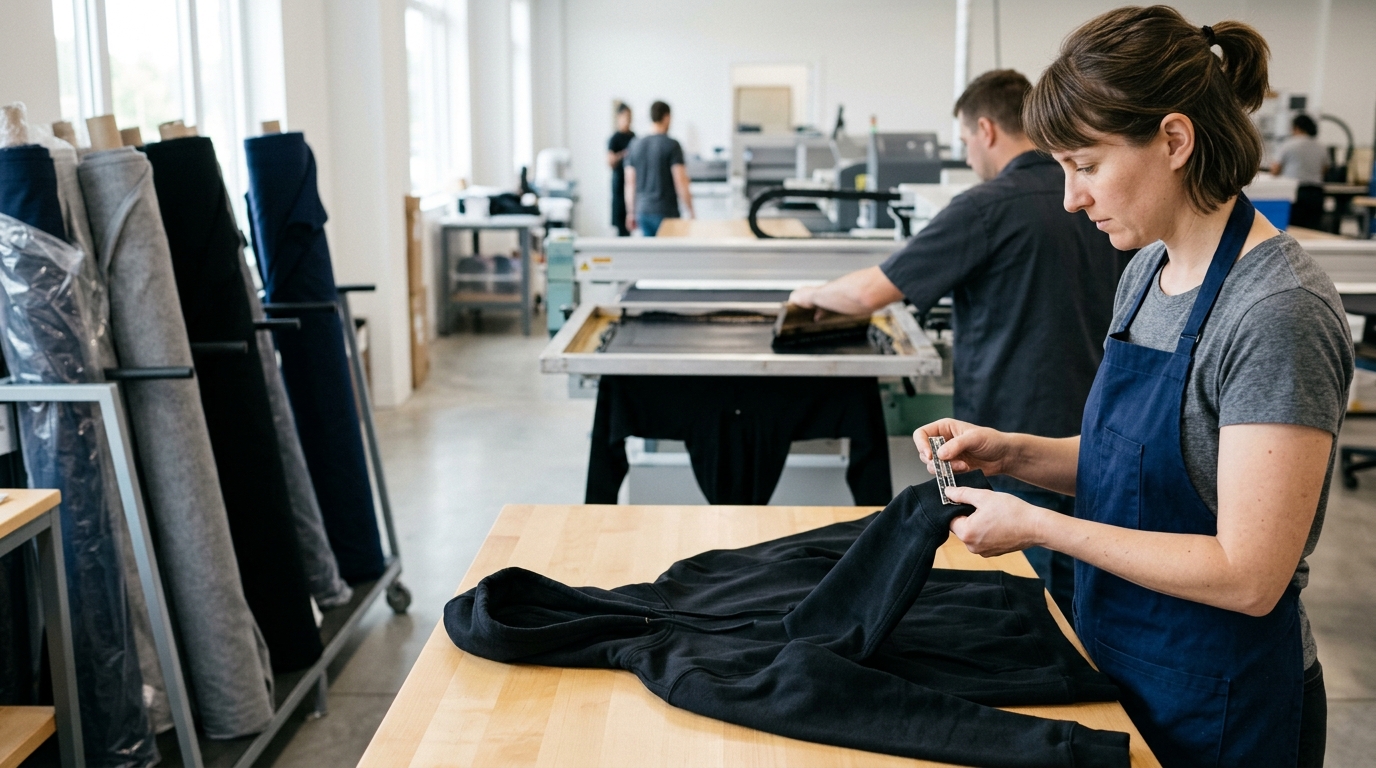
A manual screen print machine for clothes runs entirely on your power. You load the shirt, lower the screen, pull the squeegee, and rotate the platens by hand. Most printers start here.
These machines are perfect for learning the basics, handling small custom orders, and launching a brand without much capital. The main benefits? Low cost, small footprint, and complete control over every single print. The downside is they’re slow and physically demanding. Keeping consistency across large orders of 100+ pieces can be really challenging.
Semi-Automatic Presses: The Best of Both Worlds?
Semi-automatic presses add powered help to the most repetitive parts of the job. You still load and unload the garments, but a pneumatic or electric system handles the squeegee pull and flood stroke.
This gives you a perfectly consistent print every time. It removes a major variable from manual printing. It also speeds things up significantly and reduces how tired you get. The trade-off? Higher upfront cost, bigger footprint, and you’ll need an air compressor plus more robust electrical service.
Automatic Presses: The Production Powerhouse
An automatic screen print machine for clothes is built for high-volume manufacturing. These machines automate everything. The pallets move automatically, the print heads lower and print on their own, and you can integrate flash cure units between colors.
They exist for one reason: speed and consistency for large-scale production. They can print 400+ shirts per hour. The investment is substantial—often tens of thousands of dollars. They need significant industrial space with three-phase power and a large air supply. This is where established commercial print shops operate. A true powerhouse rotary machine is built for relentless output.
| Machine Type | Best For | Speed (Shirts/Hr) | Avg. Cost Range (Press Only) | Space Required |
|---|---|---|---|---|
| Manual | Hobbyists, Startups, Small Runs | 20 – 100 | $500 – $7,000 | Garage / Spare Room |
| Semi-Auto | Growing Shops, Niche Production | 100 – 300 | $8,000 – $20,000 | Dedicated Room / Small Warehouse |
| Automatic | High-Volume Commercial Shops | 400 – 1200+ | $25,000 – $200,000+ | Commercial / Industrial Space |
The “Right-Fit” Framework: Matching a Machine to Your Ambition
We’ve watched countless brands launch. The successful ones always match their equipment to their business stage. Buy too little machine and you create a production bottleneck. Buy too much and you burn capital that should go toward marketing or inventory. Here’s how to find your fit.
Profile 1: The Passionate Hobbyist / Startup Founder
- Goal: Learning the craft, printing for friends, fulfilling small online drops (1-50 pieces), and testing brand concepts.
- Budget (Press Only): <$1,000
- Recommendation: A 1-4 color, 1-2 station manual tabletop press. Build quality matters more than features at this stage. Look for steel construction, not aluminum, with a stable base. Avoid the cheapest “all-in-one” kits—the press is usually the weakest part. Your goal is to get a reliable screen printing press for clothes that lets you learn good habits.
Profile 2: The Serious Side Hustle / Growing Brand
- Goal: Consistently fulfilling regular orders of 50-200 pieces, improving print quality for multi-color designs, and increasing efficiency to make the business profitable.
- Budget (Press Only): $1,500 – $7,000
- Recommendation: A high-quality 4-6 color, 2-4 station manual floor press. This is the workhorse of small shops. You absolutely must invest in micro-registration—it’s non-negotiable for professional results. A solid floor model gives you the stability and features you need to produce retail-quality goods efficiently. You might consider upgrading to a small semi-automatic press later.
Profile 3: The Full-Scale Production Shop
- Goal: High-volume contract printing for other brands, running a full-time apparel decoration business, and maximizing output per square foot.
- Budget (Press Only): $20,000+
- Recommendation: An automatic press. The specific choice—like an 8-color, 10-station model—depends entirely on your client base and production targets. At this level, you’re investing in a manufacturing asset. A high-production carousel automatic screen printing press becomes the heart of your operation. It defines your capacity and profitability.
Decoding the Specs: Key Features
Spec sheets can be confusing when you’re comparing models. Focus on these five key features that directly impact your workflow and the quality of your final product.
- Number of Colors: This is how many print heads the press has. A 4-color press can print designs with up to four distinct colors. More colors let you create more complex, photorealistic artwork.
- Number of Stations (Pallets): This is how many boards you have for placing shirts. More stations dramatically increase workflow speed. On a 4-color, 4-station press, one person can print while another cures a shirt and a third loads a blank—all at the same time.
- Micro-Registration: This is the most critical feature for any multi-color printing. Micro-registration gives you knobs to make tiny, precise adjustments to a screen’s position—up/down, left/right, and rotationally. Without it, lining up multiple colors perfectly is nearly impossible.
- Platen Size & Type: The standard platen works for t-shirts. But your screen print machine for clothes can be much more versatile. Good brands offer interchangeable platens for printing on sleeves, pant legs, tote bags, and specialized garments like those from a dedicated hoodie manufacturer.
- Off-Contact Control: This lets you adjust the vertical distance between the screen and platen. A small gap (the “off-contact”) is essential for clean prints. It allows the screen mesh to snap cleanly away from the garment after the squeegee passes, leaving a sharp ink deposit instead of a smudge.
Beyond the Press: Budgeting Your Complete Setup
Here’s a common beginner mistake: spending your entire budget on just the press. A press is only one piece of the puzzle. To get your first shirt from design to finished product, you need a complete ecosystem of support equipment.
We always tell clients to budget for the entire shop, not just the centerpiece. Here’s a realistic checklist of what you’ll need.
The Essentials Checklist:
- Pre-Press:
- Computer & Design Software (e.g., Adobe Illustrator/Photoshop)
- Film Printer (for creating your stencils)
- Screens (a starter set of 6-12 is good)
- Emulsion & Scoop Coater (to make the screen light-sensitive)
- Exposure Unit (to burn your design onto the screen)
- On-Press:
- The Press Itself
- Squeegees (various sizes)
- Inks (Plastisol is beginner-friendly; Water-Based offers a softer feel)
- Post-Press:
- Washout Booth (for cleaning and reclaiming screens)
- Curing Unit: This is critical. A flash dryer can cure prints but it’s very slow. For any real production, a conveyor dryer is essential to properly cure the ink all the way through and achieve professional durability.
- Temperature Gun (to verify cure temperatures)
- Supplies:
- Emulsion Remover & Ink Degrader
- Screen Tape & Pallet Adhesive
- Cleaning Chemicals & Rags
Navigating the Market: Trends and Outsourcing
The apparel decoration industry constantly evolves. Staying aware of trends and strategic alternatives can save you time and money. It ensures you make the smartest decision for your brand’s future.
Current Trends in Screen Printing Technology
The lines between printing methods are blurring. Hybrid printing combines a screen-printed underbase with a digital (DTG) color layer on top. It’s gaining traction for its versatility. According to FESPA, one of the stand-out trends PSPs should be aware of is the rising demand for personalization. This can be addressed by both nimble manual setups and advanced digital/screen hybrid systems. This means the right screen printing press for t-shirts today might be one that can integrate with other technologies tomorrow.
The Smart Alternative: When to Outsource
Is buying a screen print machine for clothes always the right first step? Not necessarily. For many new brands, outsourcing production is a powerful strategy.
The benefits are clear. Zero upfront capital investment in equipment. No learning curve. Access to professional-grade quality from day one. It lets you focus 100% of your energy and capital on design, branding, and marketing. Working with an experienced partner like a clothing manufacturer with screen printing services can be a powerful way to launch. For brands seeking a full-service solution, exploring options at a comprehensive provider like TZ Streetwear can provide a benchmark for quality and service before you invest in your own setup.
Frequently Asked Questions (FAQ)
How much space do I need for a screen print machine for clothes?
A tabletop manual press can fit in a garage corner. But you’ll need about a 10’x10′ area for comfortable workflow (press, supplies, curing). A manual floor press requires a dedicated room or full garage bay. An automatic press demands commercial or industrial space due to its large footprint, power, and compressed air requirements.
Can I print on more than just t-shirts with these machines?
Absolutely. With the right platen (the board you put the garment on), you can print on hoodies, tote bags, sweatpants, and more. Versatility is a key benefit of a good screen print machine for clothes. Swapping platens allows you to expand your product offerings easily.
What’s the biggest difference between plastisol and water-based ink?
Plastisol ink is plastic-based (PVC) and very opaque and user-friendly. This makes it great for beginners. It sits on top of the fabric fibers. Water-based ink soaks into the fabric for a much softer, breathable feel. But it can be more challenging to print with because it can dry in the screen.
Do I really need a conveyor dryer?
For a hobby, a flash dryer can work for curing prints one by one. But it’s slow and prone to inconsistent results. If you plan to sell your clothes and produce more than 10-20 shirts at a time, a conveyor dryer is essential. You need it for efficiency and to ensure every single print is properly and consistently cured.
How long does it take to learn to use a manual screen printing machine?
You can learn the basic mechanics and pull your first successful one-color print in a single afternoon. However, mastering the craft takes practice. This is especially true for consistent multi-color registration and troubleshooting print issues. Expect several weeks of trial and error to become truly proficient and confident in your results.
Is it possible to be more environmentally friendly with squeegee curtains?
Certainly! There are a few ways to implement squeegee curtains in a screen printing facility that can lead to a more sustainable production process. One of them is to use squeegee curtains made of recycled materials. You can also install systems that reuse the booth’s exhaust air by filtering it and pumping it back in. Thus, the dust particles that affected the quality of air are got rid of and the amount of exhaust is reduced. In the end, you can achieve a more efficient operation and lower your consumption, which not only brings environmental benefits but also reduces operating costs.