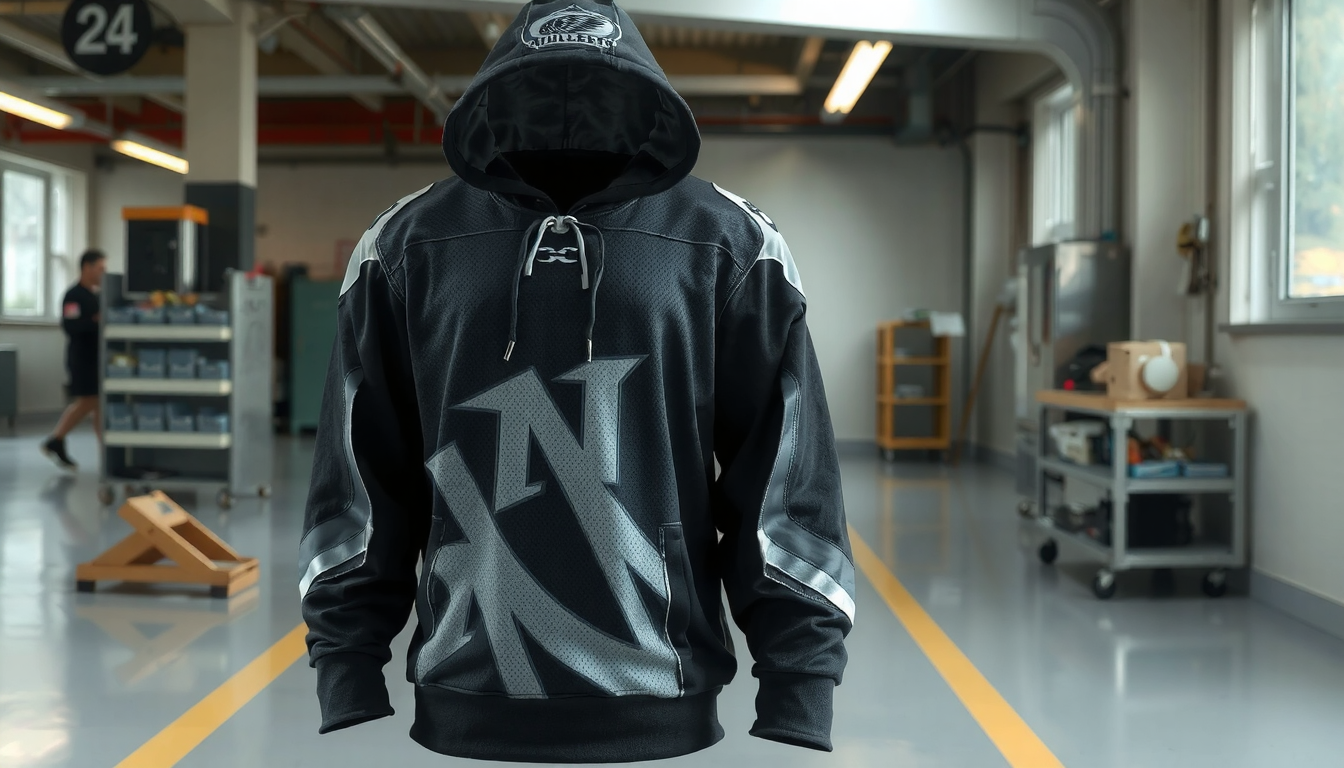
Nothing unites a team more than the identity shared by all. A custom hockey jersey hoodie is not just a way of keeping warm; it is also a team spirit booster and a way of you showing your personal style. This unique clothing item is like a hockey jersey but feels like your favorite sweatshirt, which is definitely more comfortable.
Players, fans, and teams can use it on each occasion. The fabric and your choice of color are the only things to decide on. Filling in the correct materials, logo, color, number, and wherever more is needed, you will create your own customized hoodie. You will also learn how to design like a pro and take care of your new gear. At TZ Streetwear, we believe that successful apparel begins with proper planning.
The Classic Checklist
How is a hockey jersey hoodie different from a regular hoodie? These are the essential elements that give it an original look and feel. Comprehending with these components, you are able to construct a better product.
The Lace-Up Placket – Hockey Hoodie Style
The most striking element of the hockey hoodie is the men’s or unisex V-neck lace-up hood. This style mirrors the collar the traditional hockey sweater. This lace-up design gives it the look that is typically associated with this style of clothing. You may hear it as the classic lace-up hockey style. Besides, the laces you can wear in different colors which go with your team.
Durability and Comfort
The hoodie is constructed for warmth and comfort. The fabric that is mostly used is a blend of cotton and polyester fleece. It feels soft on the inside, but tough and durable on the outside.
Another thing to consider is fabric weight. Heavier materials give more warmth. This is great for cold arenas or winter weather. A few designers use winterize fabrics that are specially treated to withstand the cold. This attribute makes them especially useful for the hard-core fans.
The Sports Fit and Look
A hockey jersey hoodie that is customized has often an athletic fit. It is usually more spacious than a regular streetwear hoodie. Hence, it allows wearing it over other clothes such as t-shirts or light padding easily. The shoulder and the sleeves are made to appeal as if you are wearing real hockey equipment. This really makes you feel comfortable while wearing the piece of clothing.
The Ultimate Customization Duel: Print vs. Embroidery
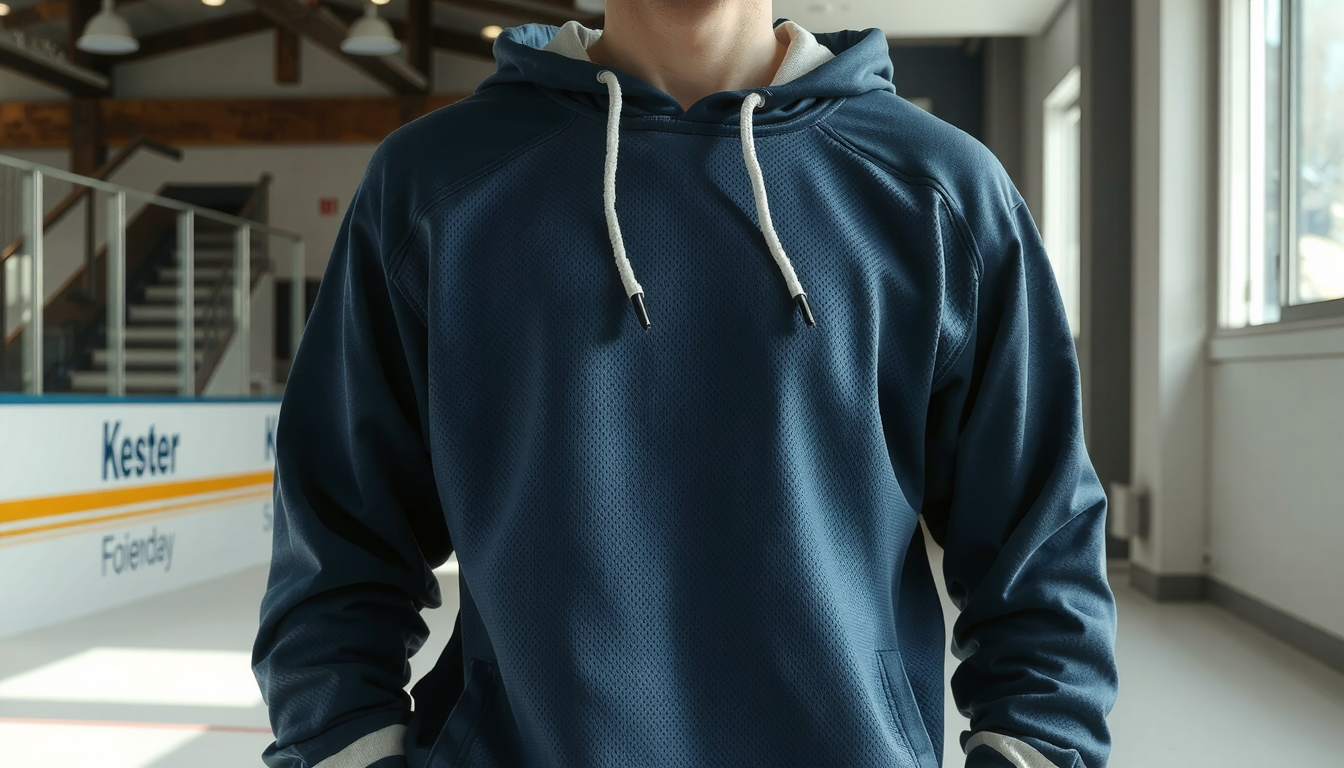
The decision of how to apply your design is one of the major ones. The method you choose will affect the look, feel, durability, and cost of your custom hockey jersey hoodie. The three main techniques are dye sublimation, screen printing, and embroidery with tackle twill.
Here is a detailed analysis of these methods for you to make a well-grounded decision.
| Method | Look & Feel | Best For… | Durability | Relative Cost |
|---|---|---|---|---|
| Dye Sublimation | Smooth, no texture. Design is part of the fabric. | Complex, all-over designs with many colors. | Excellent. Will not crack, peel, or fade. | Moderate to High |
| Screen Printing | Ink sits on top of fabric. Bold and vibrant feel. | Simple designs (1-4 colors) and large bulk orders. | Good. Can crack or fade over many washes. | Low to Moderate |
| Embroidery & Tackle Twill | Stitched, textured, and premium. Raised feel. | Logos, numbers, and names for professional look. | Excellent. Very long-lasting. | High |
Dye Sublimation: For Full-Color, Elaborate Patterns
Dye sublimation is a method whereby special inks are converted into gas by heat. This gas associates with the polyester fibers of the hood directly. This means that the design become a permanent part of the material.
This procedure will work out perfectly with intricate patterns, gradients, or designs that can cover the whole hoodie. Since the ink is in the fabric, not on it, the design will never crack or peel. And it is the easiest way to implement unlimited colors at no additional cost. That offers you total design freedom.
Screen Printing: The Old-Fashioned Yet Distinctive Option
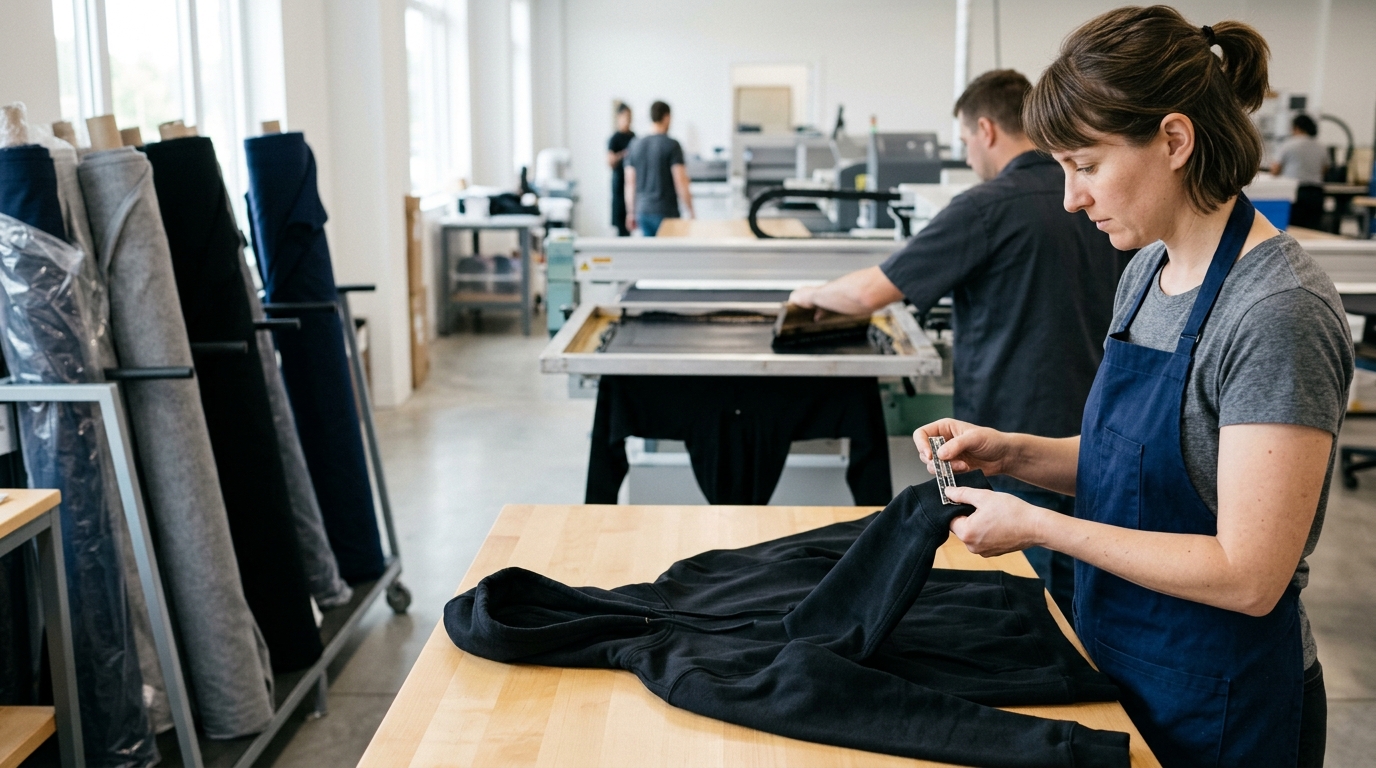
Screen printing is the traditional and well-known technique. It is about pressing ink through a mesh screen that lies over the fabric. For each color in your design, there is a separate screen.
This method is a great cost-saver for bigger orders with simple designs. For instance, a one-color team logo in the chest area. The result is a red, vibrant print that is sitting on the top of the material. Screen printing creates a retro look that a lot of teams wish for their merchandise.
Embroidery & Tackle Twill: Professional, and Premium Look Actually
Nothing beats the professional look that comes from embroidery and tackle twill. Embroidery uses a thread to sew your design directly into the hoodie. The stitch creates a textured finish, hence, a high-end product. This technique is effective for small logos or brief text.
Tackle Twill is another step in excellence. This is the method involving professional jerseys. It consists of cutting pieces of twill fabric with the shape of the letters or numbers needed. Afterward, these patches are sewn to the hoodie. Hence, a layered and durable design is created. Often, it is dressed with tackle twill sewn on it for the authentic touch.
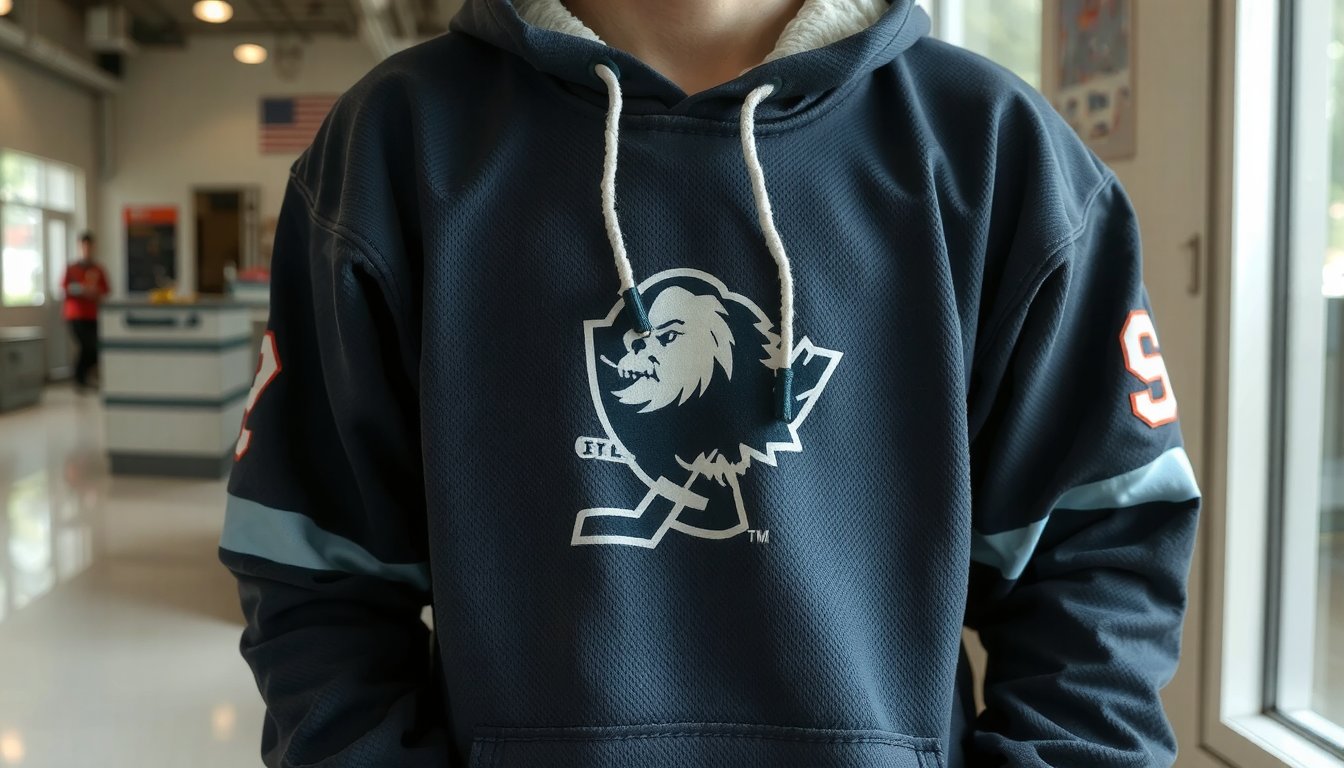
The Path from Idea to Closet: 5 Steps to Your Ideal Hockey Hoodie
Designing a custom hockey jersey hoodie is easier than ever. Using a simple process, you can go from an idea to a product that your entire team will wear with pride. We guide you through a proven path of five steps.
Step 1: Share Your Vision and Get Inspired
The first thing is to decide what does your hoodie stand for. Is it a competitive team, fan base, or a special event? Look at the professional hockey jerseys for stripe patterns and logos. Just, write down the features that make your team or club different. Do a few quick sketches for illustration.
Step 2: Get Your Artwork Ready (The Technical Bit)
Art-quality files are vital for getting the desired output. It is best to have vector files for your logos and graphics. Vector files such as .AI, .EPS, or .SVG can be resized to any size without quality loss.
Our experience suggests that 300 DPI (dots per inch) are the lowest ones necessary to avoid blurred prints or pixelation. A common error is using a low-resolution logo that is copied from the website. That will not bring a clear print.
Step 3: Regulate Your Color Palette Like a Pro
Colors can be the general felling in your design. A good rule is to use one primary color, one secondary color, and one accent color. The primary color should be the hoodie’s dominant one. The secondary and accent colors can be the stripes, logo, and laces.
What do your colors say? For example, in sports, red often implies aggressiveness. On the other hand, blue can display confidence and but also peace. Select colors that are similar to your team’s character.
Step 4: Logos, Names, and Numbers in the Right Place
The position of your design elements matters. The standard placement is creating a balanced professional look.
* Front Side: The most important logo or crest is put here.
* Back Side: This is the main area for the player’s name and number.
* Shoulders/Sleeves: These areas are perfect for secondary logos, patches, or player numbers.
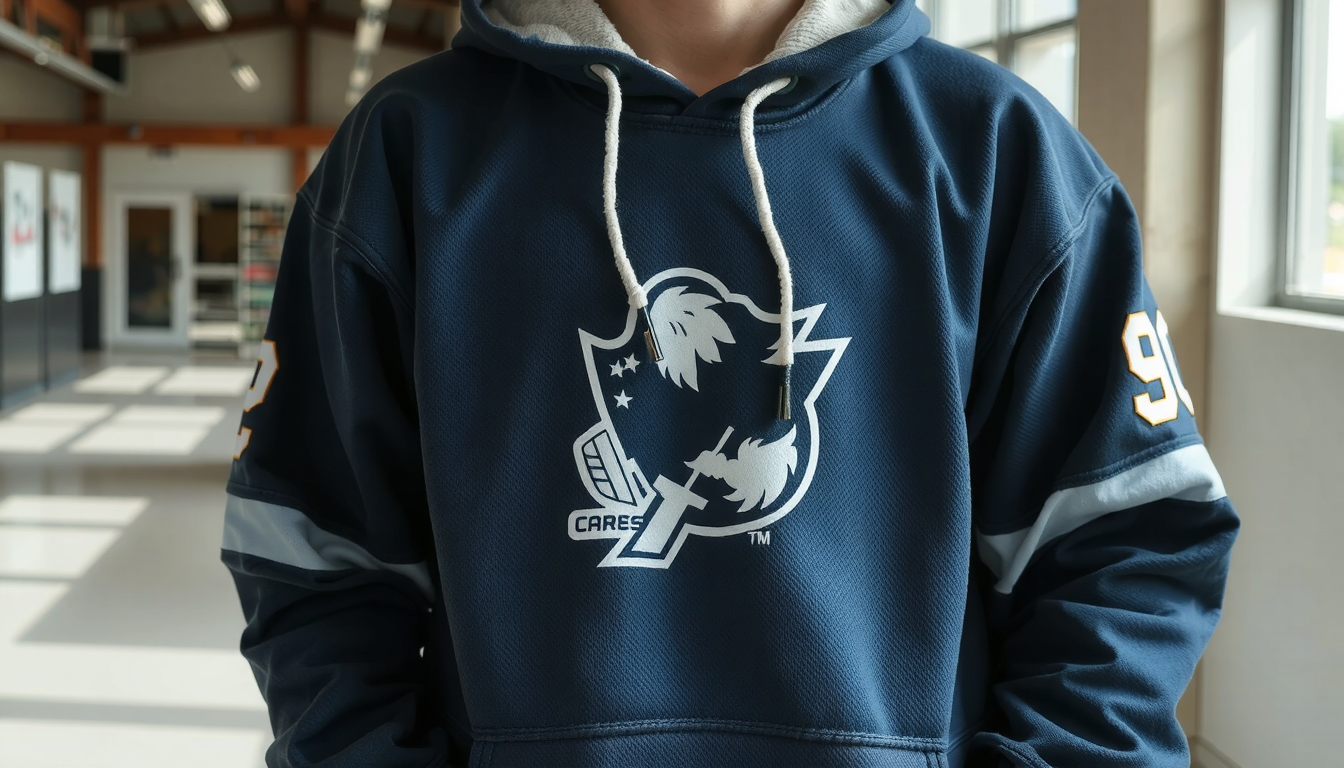
Usually, high-contrast colors make things more viable. For instance, if you have a white number on a dark hoodie, it is much easier to read from the stands than a gray number.
Step 5: Fine-Tune, Adapt, Approve the Mock-Up
Before your production batch of hoodies goes, you will be sent a digital mockup or proof. This will be your last check to catch a mistake. Go through all the details with a fine-tooth comb. Check the names for spelling errors, the numbers to be the right ones, the logo location, and color accuracy. Ask another person or two to look at it as well. Approving a proof that is incorrect will cost you a lot.
Selecting the Right Partner
Choosing a good manufacturer is as important as the design. The right partner will ensure the smooth workflow and deliver your custom hockey jersey hoodie with quality assurance. A company that meets the following criteria is what to look for.
Key Criteria for Selection
- Customization Range: Do they provide the application method you would like? A good supplier should include sublimation, screen printing, and tackle twill options.
- No Minimums vs. Bulk Orders: Is their order policy compatible with your requirements? Some companies are outstanding for single orders while others grant valuable discounts for bulk shopping.
- Material Quality: Do they provide a complete list of the fabric types, blends, and weights? It is essential that you know what you are getting.
- Design Assistance: Do they offer a user-friendly online designer or a support team to help you finish your artwork? This can save you a lot of time and frustration.
- Transparent Pricing & Turnaround Times: Are all costs clear from the start? It is worth your time looking for a company that is straight about pricing and lead time for your order.
It is crucial to find a partner that excels in these aspects. As a passionate custom hoodie manufacturer, we prioritize a seamless process from ideation to delivery.
Breathe New Life into It: Keeping Your Hoodie Fresh Look
You have just designed the best custom hockey jersey hoodie ever. And you want it to stay that way. Through proper care, your custom graphics will continue to look sharp while the fabric remains soft for years.
Laundry and Drying Guidelines
- Wash it inside out. This will eliminate any friction that could harm the custom logo and numbers.
- Use a gentle wash with cold water and similar colors.
- Use mild detergent and avoid bleach.
- Refrain from using softeners as they can dissolve the adhesives in screen prints and tackle twill.
- For better results, hang the hoodie dry. If you have to use a dryer, dry it on the lowest setting possible.
FAQ: Your Custom Hockey Jersey Hoodie Questions Answered
We have made a compilation of some of the common questions so that you can get fast and clear answers.
How much would it cost on average to own a custom hockey jersey hoodie?
The price range is so large that it is very hard to determine the cost without knowing the variables such as the hoodie quality, certain methods of customization, and quantity of the order. The average price of a single one could go as low as $40 and as high as $80 or more. An order of multiple units almost always brings the price down for each item.
How long does it take to have custom hoodies made?
Production and shipping timelines differ between 2 to 6 weeks from the day you approve your final design proof. This schedule entirely depends on the manufacturer, design complexity, and the time of the year. Always confirm the estimated delivery date before you place an order.
Is it possible to order one custom hockey jersey hoodie?
Yes, many companies have been doing away with the minimum order requirement for one. This is great for individuals looking for fans’ wear, presents, and small groups. However, consider that the per-item price for a single hoodie will be much higher than the bulk order price per item.
What is the difference between a hockey jersey hoodie and a regular jersey?
The difference lies in the usage and the material. The usual hockey jersey is made from lightweight, breathable polyester mesh, which is the main source of energy for competitive athletes. What about a hockey jersey hoodie? You wouldn’t wear it on the ice during a game as it is a warmer sweatshirt. The favorite fabric is however a cotton/polyester fleece blend. It is for fans and players to display their love of the game stylishly and comfortably off the ice.
Which file format is the best for my team logo?
The best choice is always a vector file. Formats like .AI (Adobe Illustrator), .EPS, or .SVG can be resized to any degree without loss. If the only one available is a raster file such as .JPG or .PNG, it has to be high-resolution (300 DPI or higher). That will ensure that your logo is printed well and hence, looks sharp without pixelation issues.