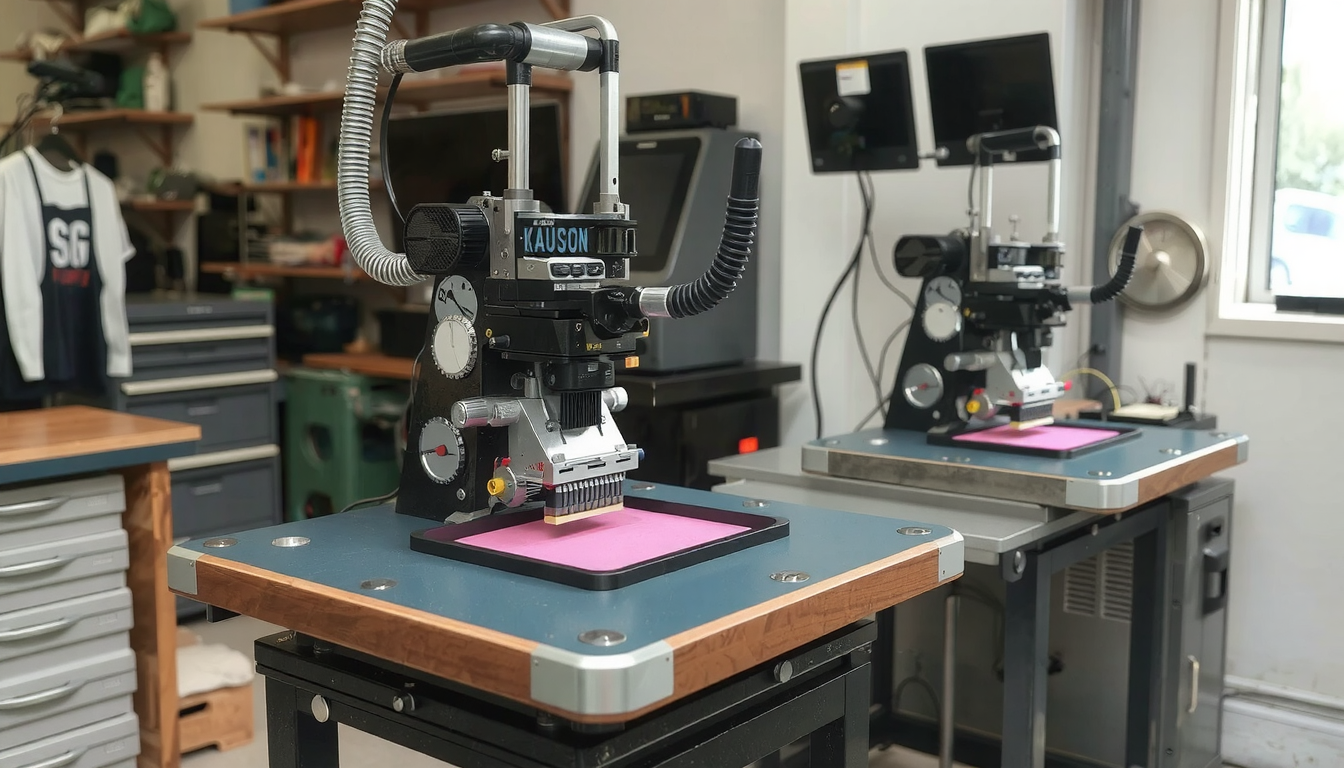
Starting a clothing brand or print shop is one of the most exciting things you can do. But all these first steps can feel overwhelming sometimes. The biggest challenge we observe that the builders must face is this: equipment selection confusion. That’s why, for a lot of people, the decision on which type of clothing screen printing machine to invest in is actually quite tough. It is, indeed, an important piece of equipment for your entire business.
However, this guide will settle that confusion completely. We will provide you with a roadmap that no one else can give. We’ll analyze the main choice between manual and automatic presses. We will enumerate the important features you should check. Then, we’ll explain the “must-haves” for equipment that will help you build a workflow that actually makes sense.
Bear in mind that choosing a press is not just about the machine itself, it is about the entire system that you are creating to achieve your business goals and your creative vision. Get a wider view of other apparel customizations by checking out our introduction to printing crafts.
Manual vs. Automatic Presses
The first huge decision you’ll have to make is between manual and automatic. This decision will influence all the other choices you’ll have: budget, space, production capacity, daily workflow. There is no one-size-fits-all option. Instead, you are looking for the best option for your particular case.
The Manual Screen Printing Press
A manual press requires only human power to work. For example, you have to manually lower the screen. You have to retract or push the squeegee to apply ink. You have to twist the platens to the next station or color. You are completely involved in the process.
What are the main advantages? Well, the first one is that you save a lot of money since it is way cheaper and also take up less space. If you have a garage or a spare room, you can operate from there. Moreover, you have the capability to control every single print.
Of course, there are also certain shortcomings. Chief among these is the manual labor involved in it. The production speed has a natural limit. If you want to achieve the same levels of consistency across a large number of prints, you will have to rely solely on your stamina and skills. For those of you who have been there, the first 20 shirts out of a 100-piece order may seem fine, but by the 80th shirt, fatigue will set in. Maintaining perfect pressure and angle becomes a real challenge.
The Automatic Screen Printing Press
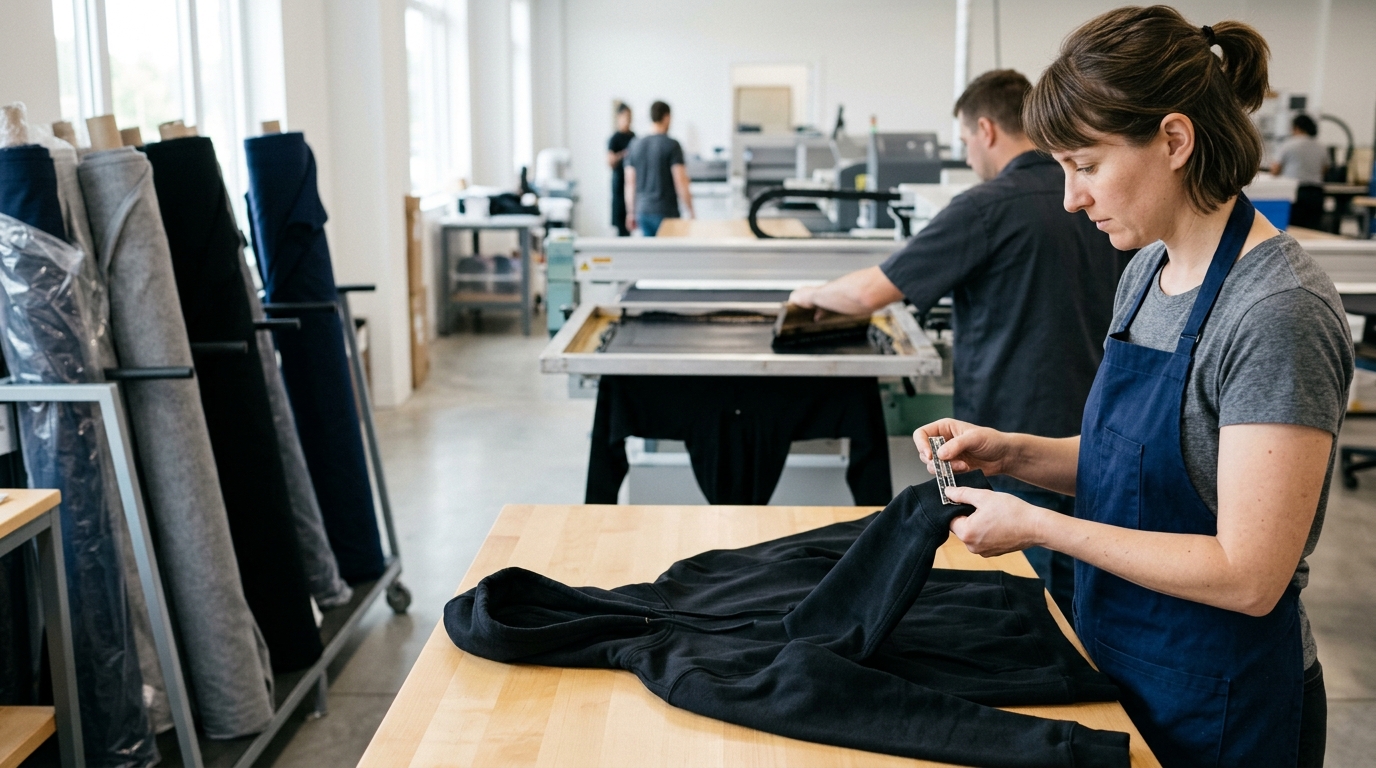
An automatic press is basically an electric or pneumatic machine that does all the necessary steps of the printing itself autonomously. Once you set it up, the presser works by pneumatic or electric systems. It performs the work sequentially and precisely such as lowering the screen, making squeegee strokes, and rotating platens.
The growth advantage in a business is colossal. Exceptional speed. Perfect uniformity in prints from the very first shirt to the one thousandth. Lower labor costs per piece, dramatically.
But, of course, there are trade-offs. First of all, the automatic clothing screen printing machine requires a lot of money to be placed. Additionally, it requires a big space, a powerful electrical supply, and often a noisy air compressor. Compared to a manual press, it is far more complicated in setup and learning.
| Feature | Manual Press | Automatic Press |
|---|---|---|
| Initial Cost | Low ($500 – $5,000) | High ($15,000+) |
| Production Speed | 30-80 shirts/hour | 300-1000+ shirts/hour |
| Space Required | Small (garage/spare room) | Large (warehouse/shop) |
| Best For | Startups, hobbyists | High-volume shops |
| Consistency | Operator-dependent | Machine-perfect |
Choosing Your Press: Scenarios
Let’s set aside generalities. Find the one scenario that best matches your goals. Then, you will get our specific recommendation for the t-shirt printing machine.
Scenario 1: The At-Home Crafter
Your target is printing for fun, friends, and family, or a very small online shop with random orders. Volume isn’t a concern. The point is to keep it simple, small in size, and easy to set up.
Our recommended equipment for you: a 1 or 4 Color, 1 Station tabletop manual press. This screen printer is not only the cheapest way but also the most space-efficient to learn the basic skill of printing.
Scenario 2: The Side Hustler
You are operating an Etsy shop or local side business. You make a steady but small quantity of 20 to 100 items per design. Within your progress, quality and manufacturing time become defining elements of your work.
Our advice is to buy a 4 Color, 2 or 4 Station floor model manual press. The additional stations are a real breakthrough. They let you work two stations simultaneously: on one station, you load a shirt while another one is being printed or flash-cured. This will allow you to manufacture more t-shirts in an hour. In this stage, the micro-registration feature will become crucial.
Scenario 3: The Growing Brand
Now you are ready for a scale-up. You are receiving bigger orders (100-500+ items). You want to take more production in-house to have control over the quality and cost. This is the most strategic transition for any growing print business.
You are torn between a top-shelf, 6+ Color manual press with 4+ stations from a good brand (like Riley Hopkins) or crossing the threshold with a basic automatic clothing screen printing machine. The essential choice here is whether to acquire more manual efficiency or to invest in the future speed.
Scenario 4: The Commercial Shop
Your business model is high-volume contract printing for other brands, schools, and companies. The only metrics you should care about are speed, reliability, and labor costs per unit.
Here, the sole option is a multi-color automatic press. A likelihood will be 6 to 10+ colors with multiple units of flash cure integrated. This will work as a complete industrial setting for the dedicated production facility.
Key Features to Scrutinize
When comparing different models, technical specs can be confusing. Let’s enumerate the key features of a clothing screen printing machine that you should keep in mind.
- Number of Colors: This refers to the number of print heads the press has. A “6 color” press can hold six different screens. This allows you to print a design with as many as six colors without breaking down and re-registering your job.
- Number of Stations (Platens): These refer to the boards where you put shirts. More stations create a more efficient workflow. For example, on a 6 color/4 station press, one person can load/unload shirts while another prints. This will maximize your output.
- Micro-Registration: This is a system of knobs or dials for extremely fine, tool-free adjustments to each screen’s position. For any multi-color printing, this is non-negotiable. It’s the difference between amateur-looking prints and professional, perfectly aligned ones.
- Platen Size & Type: The standard platen is for adult t-shirts. You better check whether the press supports easily interchangeable platen types for different items like youth shirts, sleeves, or heavy garments from a hoodie manufacturer.
- Off-Contact Control: This is the ability to adjust the small vertical gap between screen mesh and garment. Correct off-contact is crucial to making sure the screen snaps away from the ink after the squeegee pass. This ensures a sharp, clear print rather than a smudged one.
To see these features in action, you can explore different types of screen printing presses from reputable suppliers.
Beyond the Press: The Full Checklist
A frequent mistake is budgeting solely for the press, forgetting the rest of the ecosystem. Your clothing screen printing machine is only a part of the overall equipment ecosystem. You need to be sure to budget for everything that you will need to go from digital design to a delivered, completed, and cured shirt.
Pre-Press (Creating the Stencil)
- Computer & Design Software: Adobe Illustrator or Photoshop are industry standards.
- Film Printer & Film Positives: An inkjet printer with all-black ink cartridges to create opaque film positives of your design.
- Screens & Mesh Counts: You’ll need various screens with different mesh counts for different ink types and detail levels.
- Emulsion & Scoop Coater: Photo-sensitive emulsion creates the stencil. A scoop coater ensures even application.
- Exposure Unit: This specialized light unit “burns” your design from film positive into emulsion. This is a critical piece of equipment. A DIY setup is likely to give you inconsistent results.
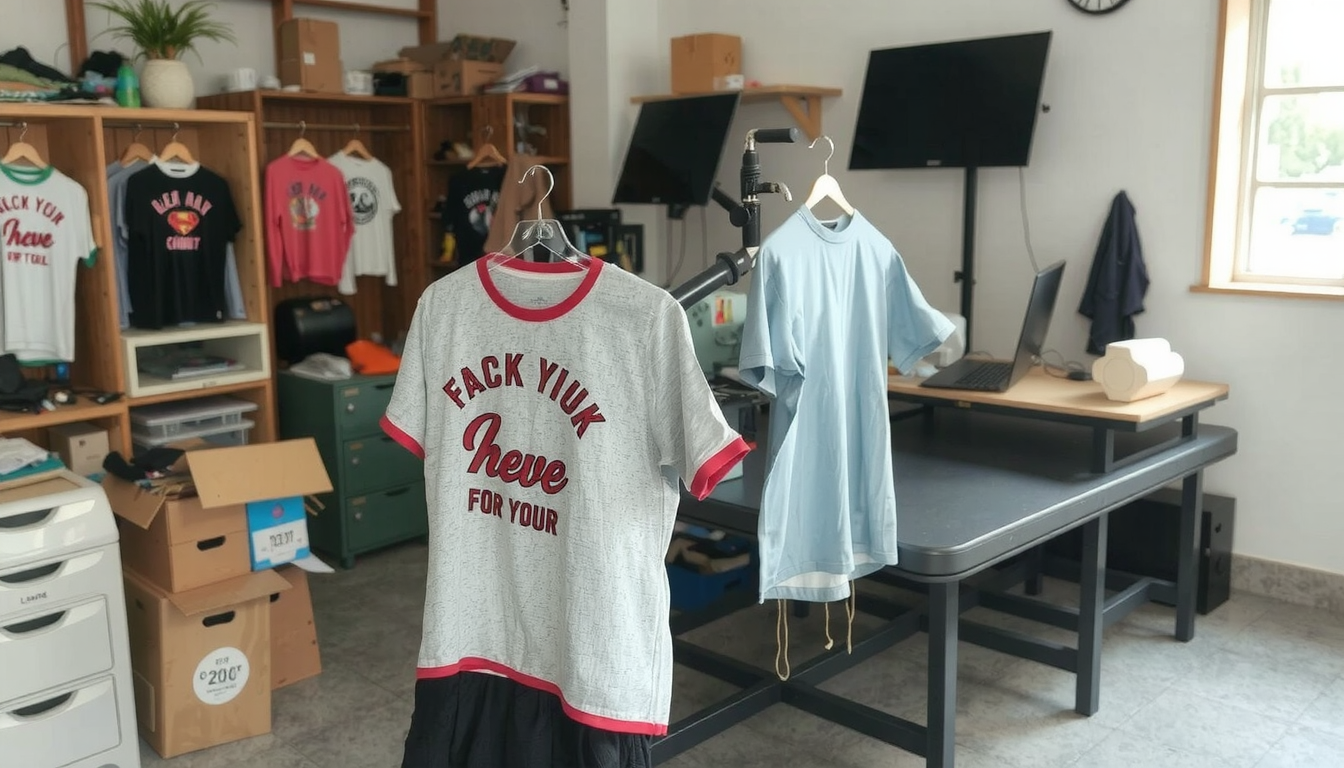
On-Press (Printing the Garment)
- Your Clothing Screen Printing Machine: This will be your selected press.
- Inks: You’ll need to buy a starting set of either plastisol or water-based inks.
- Squeegees: Various sizes and durometers (hardness levels) for different jobs.
- Flash Dryer: A radiant heat unit used to partially cure ink between colors on multi-color jobs.
Post-Press (Curing and Cleanup)
- Conveyor Dryer: This is the professional standard for final cure. It moves shirts through a heated tunnel on a belt. This ensures every print is fully and consistently cured.
- Washout Booth: A dedicated, backlit sink for washing out and reclaiming screens after a print run.
- Pressure Washer & Cleaning Chemicals: Needed for stripping emulsion and ink from screens so they can be reused.
For a step-by-step walkthrough of how all this equipment works together, check out this detailed guide to screen printing t-shirts.
Your Next Step: DIY or Outsource?
Choosing a clothing screen printing machine is a significant commitment. It requires careful analysis of your goals, budget, and available space. It’s the first step toward controlling your brand’s production completely.
If you are dedicated and want to build your own print shop, use the checklists and scenario guides above to begin your journey. We at TZ Streetwear are passionate about empowering creators to build their brands from the ground up with the right knowledge and tools.
However, if you feel you cannot afford the upfront investment and the steep learning curve, there is no shame in starting with a professional partner. You can take advantage of expert screen printing services to free your time and focus on design, marketing, and building a customer base while they deliver high-quality garments. The market has a wide variety of T-shirt printing machine options, but the right course of action is to get back to your unique business plan and see what sticks.
Frequently Asked Questions (FAQ)
1. How much does it cost for a decent beginner clothing screen printing machine?
The starting point for a quality, entry-level manual press (like a 4 color, 1-2 station model) is typically between $500 and $2,000 for the press alone. However, the budget should include an additional $1,000 to $3,000 for the complete starter kit. This should consist of a flash dryer, an exposure unit, screens, and initial supplies.
2. Is it possible to print on dark-colored shirts using a basic machine?
Yes, definitely. Printing on dark fabrics adds one more step to the process: first, you have to print a white “underbase” layer. After this layer has been gel-cured with a flash dryer, you are ready to print other colors over it. This process is much more manageable on presses that have multiple stations.
3. What is the most crucial piece of equipment besides a pressing machine?
Without a doubt, it is a proper curing device. If the print does not get the right amount of curing, it will wash out and crack. This results in unhappy customers and ruined inventory. Although a flash dryer can serve for final curing in a hobbyist setup, a conveyor dryer is the professional standard for consistency and reliability. A quality exposure unit is also very crucial in this context.
4. Do I need an automatic press to become a serious clothing brand?
Definitely not. Many highly successful and profitable clothing brands were and are being produced using high-quality manual presses. An automatic press is a tool for scaling to high volumes. For example, when you are consistently processing thousands of garments every month, then you need to optimize for speed and labor costs.
5. What’s the difference between a screen printing machine and a DTG printer?
A clothing screen printing machine requires a stencil (the screen) to push ink through onto a garment. This technique is highly durable and cost-effective for larger runs (24+ pieces) of the same design. A DTG (Direct-to-Garment) printer functions like a paper inkjet printer, spraying ink directly onto fabric. DTG is better for one-off prints or designs with photorealistic detail and unlimited colors, but it’s typically slower and has a higher cost-per-print.