Are printed cotton labels a wise choice for your clothing brand? This crucial query confronts designers and brand owners. After all, you want a label that reflects your quality and style. Printed cotton clothing labels are the top choice for brands wanting to achieve a natural and true feel. They are both soft and of high quality. Similarly, they signify exquisite workmanship. This instructional material is dedicated to the printed cotton clothing labels. You will read interesting things and need to learn about them. We will talk about the advantages and disadvantages. We will give you some tips on designing it. We will refer to how they stack up against alternative materials.
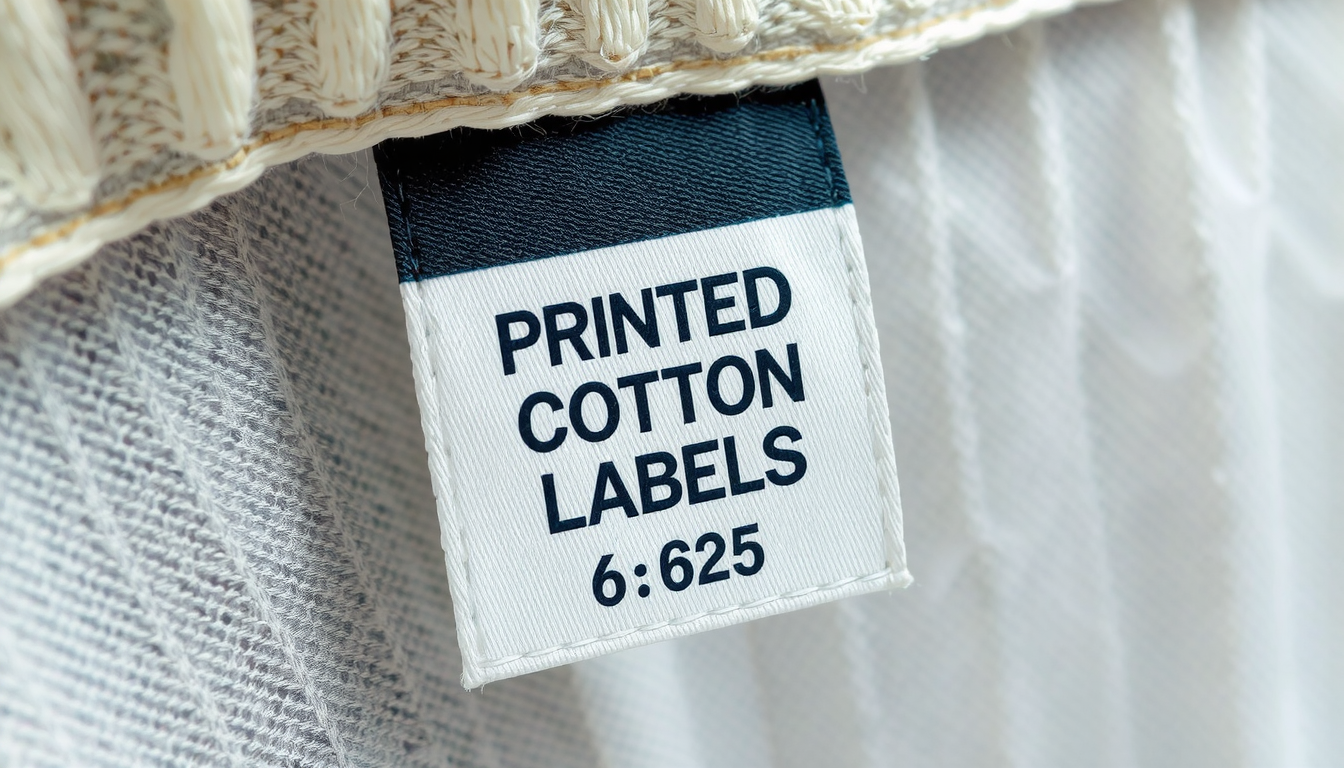
What Exactly Are Cotton Clothing Labels?
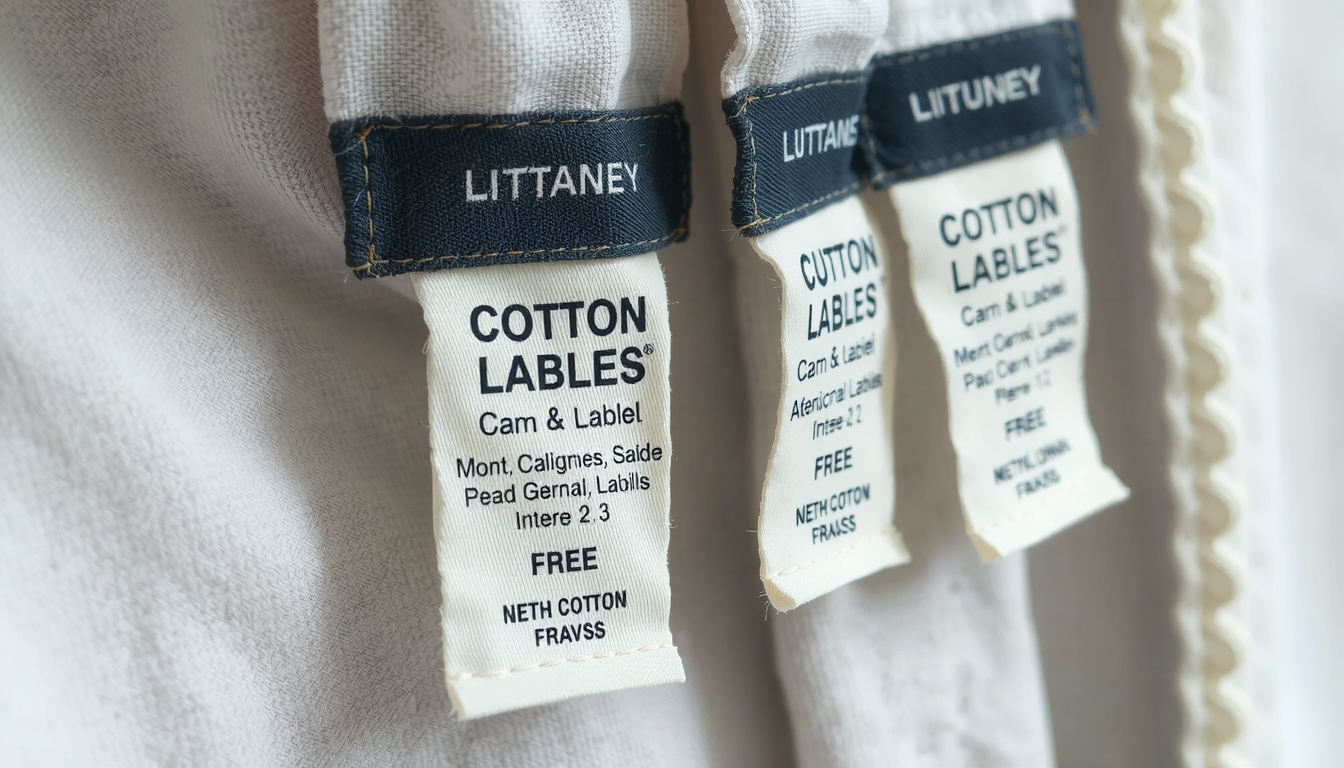
Clothing labels made with printed cotton are small tags that consist of the cotton fabric. Your brand’s logo, size, or care info is printed right onto the material. They are a simple but powerful branding tool.
These labels are usually made from natural cotton twill. This material gives them a soft feel with slight texture. The design is put on using special inks that stick to the cotton fibers. This process makes sure your logo details are clear and long-lasting.
Core Characteristics
- Material: Made from 100% natural cotton fiber.
- Feel: Soft, breathable, and comfortable against the skin.
- Appearance: A natural, off-white, or dyed base with a printed design.
- Common Uses: Great for brand labels, care tags, and hang tags on eco-friendly, vintage-style, or casual clothing.
The Appeal: Pros and Cons
The decision of the right label comes down to the advantages and disadvantages. Printed cotton clothing labels possess a unique touch that no other label can offer. Nevertheless, not every application will be suited to them. If you are in the loop, you can finally decide on the best for the products you sell.
Here is a clear breakdown to help you decide.
| Pros | Cons |
|---|---|
| Authentic & Natural Look | Prone to Fraying |
| The cotton labels with quality, craftsman touch, and eco-friendly spirit are a big hit with many customers. | The cut edges may fray. For this reason, experts often recommend end-fold styles to prevent fraying. |
| Soft & Comfortable | Washing Durability |
| The soft touch is perfect for garments that are in contact with the skin, such as t-shirts, baby clothes, among other things. | The print may slightly fade after several washes at high temperatures. This might be a desired effect for some brands with a vintage style. |
| Eco-Friendly Feel | Color Limitations |
| Cotton is a biodegradable item as it is a natural fiber. It is very appealing to customers who value the environment. | Printing on a natural, off-white cotton base can make ink colors appear slightly less bright than on a pure white synthetic material. |
| Excellent Print Detail | |
| Modern printing methods can capture fine details in your logo and text clearly. |
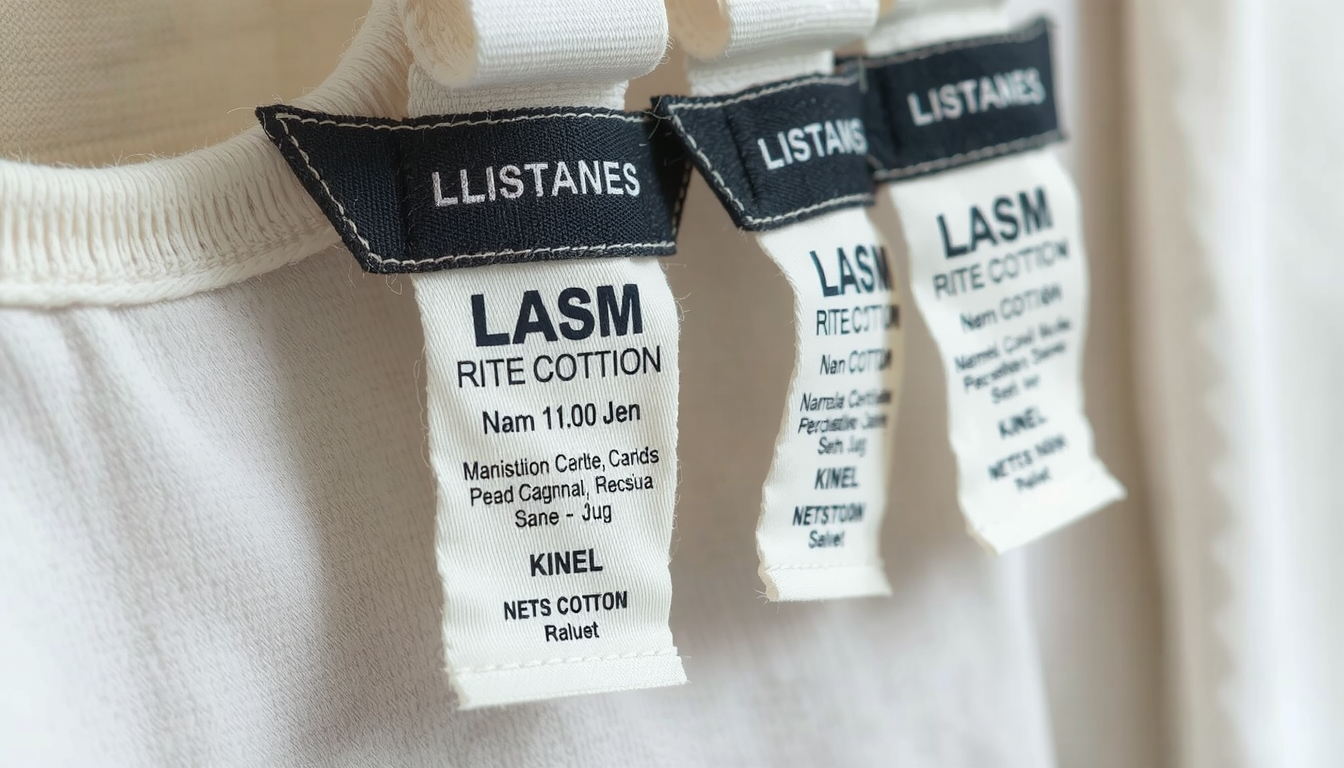
Cotton vs. Other Label Types
The label acts like the face of the brand – it’s your identity. The material you use talks to customers. Printed cotton provides a very organic look. However, you might feel that other materials be more suitable for your brand. Let us check the comparison.
| Label Type | Brand Vibe | Durability | Detail Level | Best For |
|---|---|---|---|---|
| Printed Cotton | Organic, Minimalist, Heritage | Good | Good | T-shirts, baby clothes, eco-conscious brands |
| Woven Polyester | Premium, Luxury, Intricate | Excellent | Excellent | Outerwear, professional apparel, detailed logos |
| Printed Satin | Silky, High-End, Formal | Good | Very Good | Lingerie, formal shirts, high-end t-shirts |
| Leather/PU | Rugged, Premium, Durable | Excellent | Good (Embossed) | Jeans, jackets, bags, and hats |
Comparative Analysis
Printed Cotton Labels: Turn to these for a brand that puts emphasis on quality over all else and aims for comfort. They are a perfect match for organic children’s clothing, handmade Etsy items, and most styles of streetwear. The raw, rustic look automatically implies “we care about quality and comfort.”
Woven Labels: For a truly high-end, lasting finish, woven labels are the best choice. The logo is woven into the fabric, not printed on top. So they are very durable and feel very rich. You think custom woven labels are the best for luxury products? Consider it also for the items that must handle heavy usages.
Printed Satin Labels: When you want a label that is the soft of the skin, satin is your best bet. It is just smooth as it can get and often used in lingerie, high-end tees, and baby clothes where no scratch is desired.
Leather/PU Labels: These tags are tough and top-end at the same time. You will typically find them on the outside of garments like denim jeans, jackets, and beanies. Additionally, they are hardy and form a classic, long-lasting appeal.
Designing Effective Cotton Labels
A good product begins with a good design. Cotton has a special texture. Therefore your design needs to be complementary to it. By observing a few easy principles, you will be able to remain free from the mostly occurring mistakes. You will have amazing results. Every day, we help our clients navigate through these steps as a clothing partner.
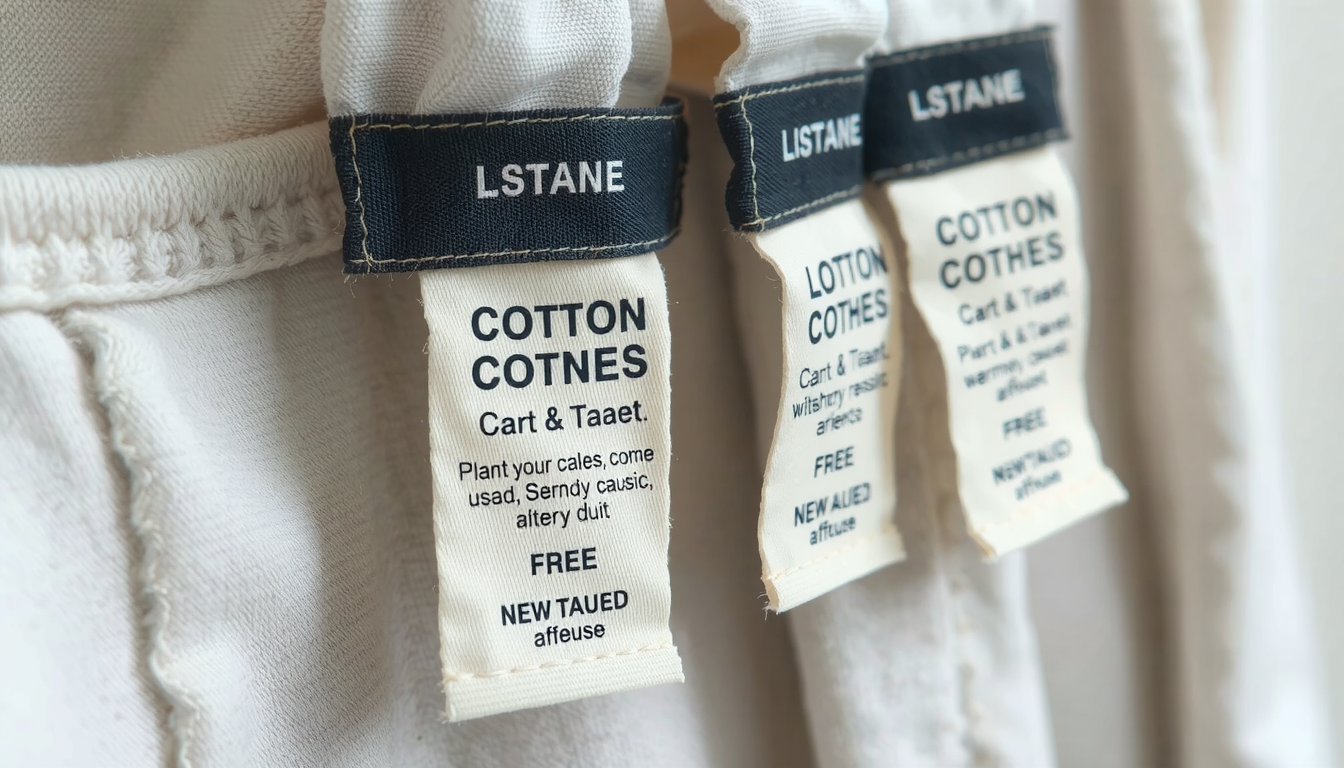
Key Design Considerations
-
Simplicity is Key: Cotton’s natural fibers absorb very fine lines. Therefore, it is better to use bold designs and simple but clear fonts. A clean design will always print better on this material.
-
Color & Contrast: Always think about the way fabric interacts with ink different from a screen. On a natural cotton base, colors will be slightly muted. Therefore, dark designs work better on light fabrics. Black ink on natural cotton for instance, is a good choice.
-
Font Choice & Legibility: For care instructions or small text, use cute fonts. Simple sans-serif fonts are a safe bet. This will ensure text is readable enough to be understood even after many rounds of washing.
-
Artwork Files: Always submit your design in a vector file format. These files (like AI, EPS, or PDF) can be scaled without losing quality. This will leave you with the best possible print.
-
Planning for Fraying: Raw cut edges of cotton will very likely fray. You can plan with a “seam allowance” or bleed area. We normally tell clients to choose a center-fold or an end-fold label because that way, the raw edges are safely hidden.
-
Information Hierarchy: Prioritize your details. Your logo bears the brand that should be most recognizable. The remaining information, like size or “Made In,” can be presented in smaller size.
The Manufacturing Process
Knowing how to produce your labels will help you make the right choices. You don’t need to be an expert. But knowing the basics lets you have a better talk with your supplier. Together you can achieve great results for your brand.
Common Printing Methods
-
Screening Printing: It is a method that inks the fabric through holes in the screen. It is durable and leaves bright, solid colors. It’s best for designs that are simple and use only one to four colors.
-
Flexographic Printing: Often, this method is used for large orders and it uses flexible plates to move ink. It is fast and equal in quality, making for great professional results. It captures the natural, high-quality finish of cotton labels very well.
-
Digital Printing: Similar to an office printer this one applies all colors in one go. This technology is great for designs with photos or a lot of colorful gradients. The print result may be less enduring than screen printing.
These facts are crucial elements of the apparel production process. If you want to know more about the various production techniques, check out our guide on craft introduction.
Partnering with a Manufacturer
Partnering with the right manufacturer is just as crucial as the label itself. A supplier that is genuinely interested in your product will not only help you out but will also get the branding done well. It is important to get a partner, not just a printer.
What to Look For in a Supplier
- Clear communication and design support.
- Low minimum order quantities (MOQs) for startups.
- Samples of their previous projects on cotton materials.
- An all-around branding vision. A good partner knows the role of labels, hang tags, and packaging in branding.
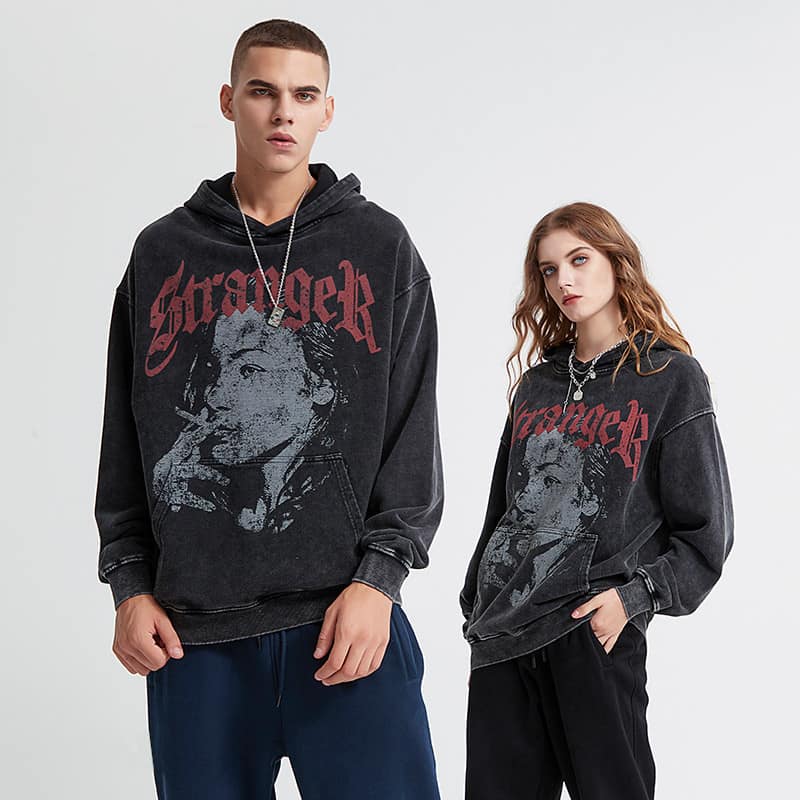
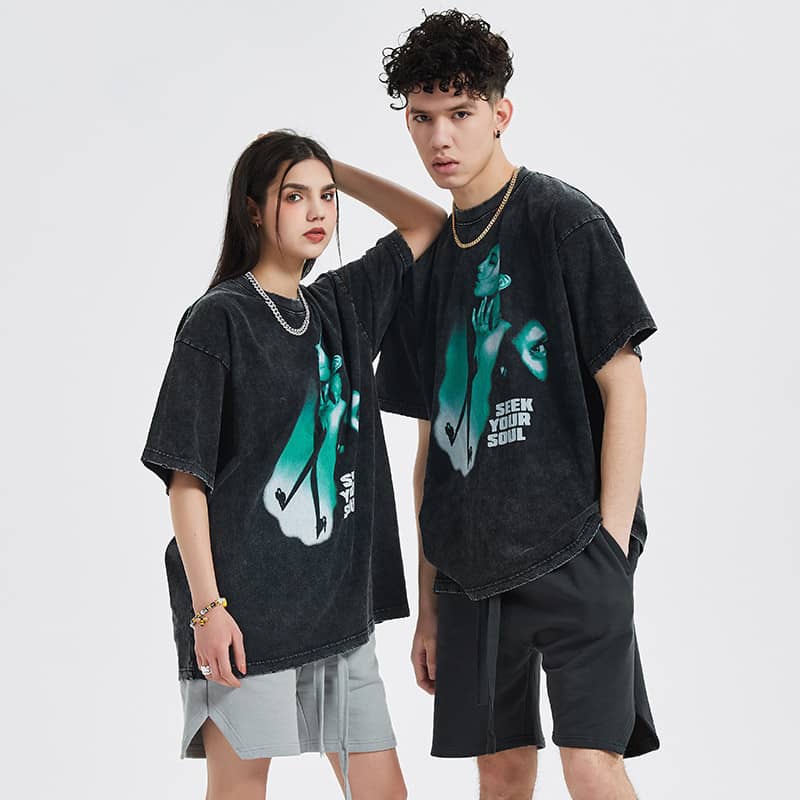
Your labels are an important part of your product. When you are sourcing them, it is usually best to work with a partner who understands the entire garment. A custom hoodie manufacturer will ensure that your branding elements work together.
Frequently Asked Questions
Can printed cotton labels be ironed on?
Mostly, a printed cotton clothing label is sewn in. An iron-on backing can be applied but, in fact, sewing is more secure and traditional. The use of natural fabric and inks is recommended. Thus, the result will be strong and of high quality.
Will the print on my cotton labels fade?
It looks like high-quality screen printing lasts very long. With time and multiple washes, some fading might take place, but that won’t be much. Many brands view this effect as adding to the item a natural, vintage look. To keep them looking fresh wash them in cold water and dry them on low heat.
What is the best color for a printed cotton label?
Natural (off-white), white, and black are the most popular base colors. A natural base brings a feeling of being organic and earthy. While a white base makes printed colors appear their brightest and most vibrant. A black cotton label on the other hand provides a bold high-contrast background for light inks.
Are printed cotton labels expensive?
The price is contingent on size, colors, and quantity. They are generally very cheap and give great value. For small purchases they are mostly less expensive than custom woven labels. They get you that upscale look without an upscale price.
How do I stop cotton labels from fraying?
The best way is to order labels with a finished edge. An “end fold” or “center fold” style hides the raw, cut edges. If you opt for a simple “straight cut” label, make sure all four sides are sewn into a seam. This way the edges are protected and cannot unravel.
Elevating Your Brand with Authentic Labels
It is the small bits that bring about significant changes. Printed cotton clothing labels are fantastic for brands that want a visible display of authenticity, comfort, and quality. The customer perceives the brand as one using a natural material and one that has a handmade feel. Knowing the choices and designing in the light of the material will enable you to develop a label that genuinely characterizes your brand.
The right details are the secret of the great brands. For more on building your brand from the ground up, come visit us at TZ Streetwear.


-600x600.jpg)