Ever wondered about the history of the cozy hoodie in our closets? The evolution of hoodies spans more than a century. It’s a story of fashion entwined with major cultural shifts. This journey, from ancient roots to fashion runways, shows a fascinating
It may surprise you, but ‘hoodie’ became a common term in the 1990s. However, its creation dates back to the 1930s in New York’s cold warehouses12. Who knew it would become iconic in the ’70s with “Rocky,” and take on many meanings by the ’90s1? It went from a basic item to a major fashion statement in the US, making history for over 90 years1.
In the UK, the 21st century brought a different view of hoodies, linking them to anti-social behavior1. Yet, it remained a key piece in subcultures, blending into hip-hop, skateboarding, and punk scenes, as well as high-fashion23. Like denim and grunge, the hoodie’s roots in subculture helped it become a mainstream fashion icon3.
Key Takeaways
- Uncover the historical roots of the hoodie and its journey from practicality to pop culture fame.
- Discover how the hoodie became an emblem of various youth subcultures and movements.
- Understand the transformative 90-year timeline of the hoodie within the fashion industry in the US1.
- Explore the hoodie’s multifaceted identity, shifting from workout wear to the emblem of urban style.
- Learn about the hoodie’s impact on fashion and its reflections of changing cultural landscapes.
From Monastic Cowls to Champion Innovations
Hoodies have come a long way, from old monastic cowls to today’s Champion sweatshirts. Let’s look at how the hoodie has transformed over time.
The Ancient Roots and Medieval Connections of Hoodies
Hoodies date back thousands of years, first seen in Europe’s monastic cowls and the capes of outdoor workers. In ancient Greece and Rome, hooded clothes were common for warmth and hiding identity4. They were popular in the medieval era too, with many workers wearing hooded robes for practical reasons. The word ‘hood’ comes from the Anglo-Saxon ‘höd.’4
Champion’s Sweatshirt Revolution in the 1930s
In the 1930s, Champion, known then as Knickerbocker Knitting Company, changed the hoodie game. They created a hooded sweatshirt for the University of Michigan’s athletes to keep them warm during cold seasons45. This hoodie didn’t just warm athletes. It also helped workers in freezing jobs, like tree surgeons. It turned the hoodie into both a useful item and a fashion piece5.
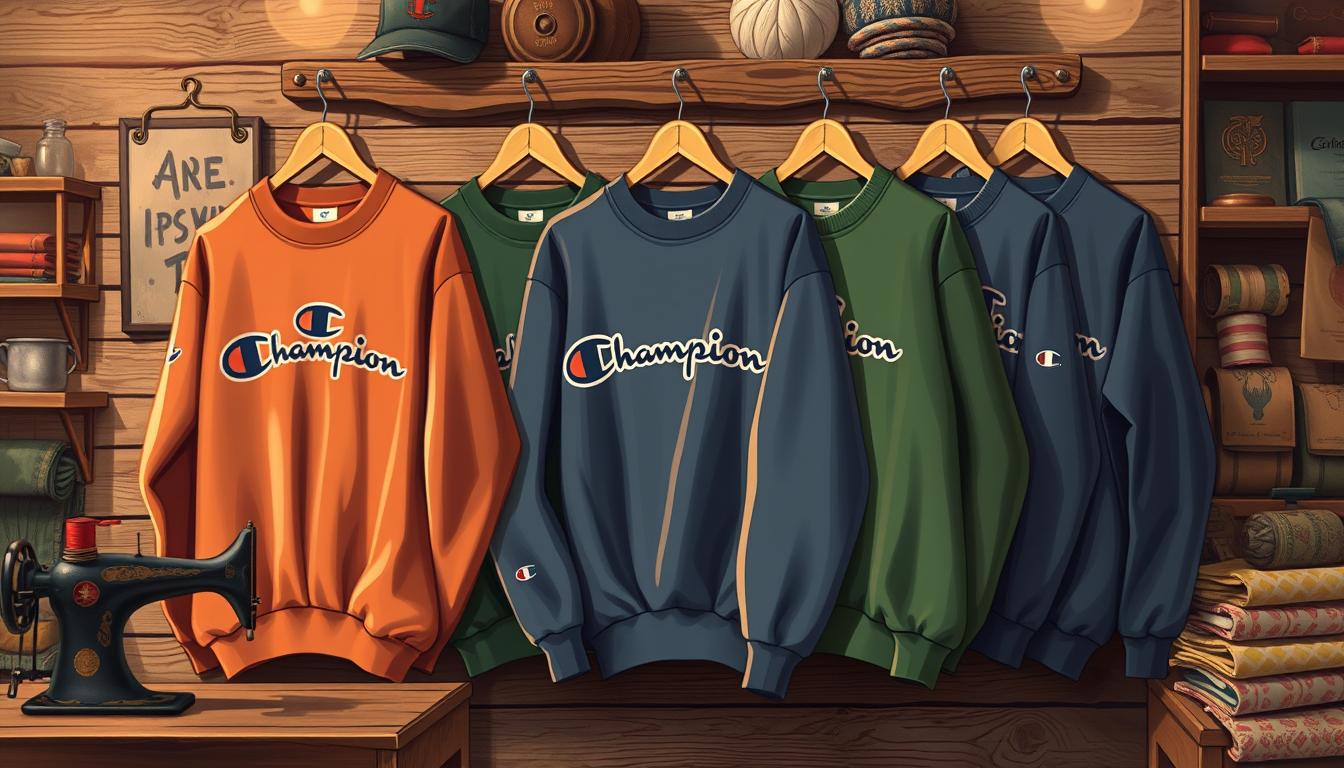
The journey of the hoodie from simple cowls to stylish Champion sweatshirts is fascinating. This garment has become a worldwide fashion essential, suited for different weather and cultural styles45.
Embodiment of Collegiate Spirit and Hip-Hop Rebellion in the ’60s and ’70s
The ’60s and ’70s were key for collegiate fashion and hip-hop culture. Hoodies changed a lot in these times. They became symbols of who we are and how we resist.
Colleges began to see hoodies as more than just comfy clothes. They turned them into signs of school spirit and community. By adding school logos, hoodies showed where you belonged.
At the same time, hip-hop culture was growing in New York. Hoodies became vital for artists and dancers. They were perfect for those creating new street art and dance moves.
The hoodie became a sign of both fitting in and standing out. It linked collegiate fashion and hip-hop culture‘s fight-for-change spirit. Below is a table with key moments showing the hoodie’s importance in both worlds.
| Decade | Collegiate Fashion | Hip-Hop Culture |
|---|---|---|
| 1960s | Adoption by universities as official merchandise | Emergence in street scenes |
| 1970s | Sportswear staple in college sports | Symbol of rebellion and identity among hip-hop artists |
Colleges and hip-hop scenes together made the hoodie iconic. It stood for fashion, culture, and personal and group identity.
A big study found that the Telecommunications Act of 1996 made rap more popular worldwide. This change in music paired well with how hoodies were seen in hip-hop6.
Hoodies were crucial for groups like NWA. They helped shape hip-hop’s visual style6.
Looking back, the hoodie’s role in college and hip-hop traditions shows its deep meanings. It’s both a proud symbol and a sign of challenge.
When Did Hoodies Become Popular?
The iconic hoodie has become a big part of pop culture. It’s now a sign of style, spirit, and making a statement. Let’s look at how this simple clothing item got so popular.
“Rocky” and the Hoodie’s Ascent to Pop Culture Fame
The 1976 movie “Rocky” made the hoodie famous. Sylvester Stallone played Rocky Balboa, who wore a grey hoodie. Balboa showed tough determination and the spirit of an underdog, winning over many fans. This scene made the hoodie more than just sportswear. It became a symbol of fighting hard against tough odds. People saw the hoodie as embodying Rocky’s fighting spirit.

After “Rocky”, hoodies started to show up in everyday fashion. They became a key part of streetwear. Hoodies weren’t just clothes anymore; they showed who people were and their style.
Hoodies on the Streets: Subcultures and Anonymity
Hoodies became popular among different groups because they were anonymous. In the 1970s, New York’s underground music scene adopted the hoodie. It was cool and rebellious. Street artists, musicians, and dancers wore them for their look and meaning7. By the 1990s, everyone saw hoodies everywhere. Their importance grew in rap music and skate culture. Fashion designers then mixed hoodies with high-end fashion, making them even more popular89.
Today, Rocky Balboa, pop culture, and streetwear are all connected through the hoodie. From simple beginnings to a style and statement symbol, the hoodie offers comfort, personality, and coolness. It’s a top choice for people all around the world.
Hoodies Through the Decades: The Evolution of a Fashion Staple
The journey of the hoodie is a unique story of fashion evolution. It went from a simple piece of clothing to a fashion icon, and even a sign of protest. Through time, societal changes and cultural shifts have molded it in various ways.
The ’90s: Hoodies Go Mainstream with High Fashion
In the ’90s, hoodies broke free from their sporty roots. They became key pieces in high fashion. Designers like Ralph Lauren and Tommy Hilfiger blended them into their refined collections. They added streetwear flair to their luxury look. Hoodies adorned with logos and made from fine materials started showing up on catwalks. This time was key in their evolution.
The 2000s: Controversy, Bans, and Political Statements
The 2000s brought a new role for hoodies – they symbolized more than just style. The “Hoodie Ban” in the UK in 2005 and the sad story of Trayvon Martin in 2012 put it at the heart of debates. People wore hoodies to protest and stand up for justice. This showed the significant meaning these simple garments can carry.
| Decade | Symbolism | Impact |
|---|---|---|
| 1990s | Fashion Mainstream | A shift to luxury fashion, embraced by top brands. |
| 2000s | Political Controversy | Associated with social movements and protests1011. |
As the fashion evolution keeps unfolding, the hoodie stays a strong sign of youth, comfort, and protest. It reflects both the look and needs of the society. At the same time, it shows how fashion and social concerns constantly interact.
Conclusion
We have seen how hoodies went from simple clothes to key fashion items. They mix style, practicality, and deep meaning. Hoodies aren’t just clothes. They’re a strong symbol in today’s fashion. They show how fashion reflects and shapes society’s stories. The hoodie stands out through time, adapting to fashion and cultural changes.
Brands see hoodies as a way to show who they are. They use hoodies to share their stories12. Gallant makes custom hoodies that let people show off their style12. They offer many styles and sizes, meeting everyone’s needs12. Hoodies let individuals and brands express their unique identities.
Hoodies have been part of big discussions on race, identity, and fairness. Claudia Rankine and Geraldo Rivera showed how hoodies carry complex meanings13. Through debates, the hoodie has revealed a lot about how we see clothes and people. Denis Wilson’s insights on its perceptions in society add to its depth13. Fashion items like hoodies tell much about our shared values and views.
Our goal is to help fashion leaders. We see the hoodie as more than a comfy piece or a symbol of defiance. It’s a sign of change. We’re here to support those who view the hoodie as a key cultural piece. We aim to help them tell their stories through top-quality production and new ideas.
FAQ
When did hoodies first become a part of fashion?
The hoodie started becoming popular in the fashion scene during the 1970s. It was largely influenced by the hip-hop culture and movies like “Rocky.” The movie showed the hoodie as a sign of hard work and determination.
What are the origins of the hoodie?
Ancient civilizations, like the Assyrian Empire, first introduced the concept of the hoodie. It was developed further in medieval Europe. Monks wore cowls and chaperons for warmth. Then, Champion played a big role in the 1930s by adding a hood to sweatshirts for workers.
How did Champion contribute to the evolution of the hoodie?
Champion changed the game in the 1930s. They added a hood to the classic sweatshirt to keep workers warm. This design quickly grew popular in both athletic and casual fashion circles.
How did collegiate fashion influence hoodie popularity?
By the 1960s, college logos began appearing on sweatshirts. The hoodie became a symbol of team spirit and sports. This move helped spread hoodies all over the United States.
What role did the hip-hop culture play in hoodie symbolism?
In the 1970s, the hip-hop world embraced the hoodie. It offered anonymity and a sense of rebellion for graffiti artists and breakdancers. The hoodie then became a key fashion statement.
Why is “Rocky” associated with the popularization of hoodies?
In “Rocky,” Sylvester Stallone wore a grey hoodie as part of his boxing training outfit. The movie’s success made the hoodie symbolize grit and endurance.
How did hoodies become a part of mainstream fashion?
By the 1990s, hoodies had made their way into mainstream fashion. Brands like Ralph Lauren and Tommy Hilfiger included them in their lines, marrying street style with luxury.
What controversies are associated with the hoodie?
Hoodies have sparked debate, especially around racial profiling and social injustice. Events like the UK’s “Hoodie Ban” in 2005 and Trayvon Martin’s death in 2012 have caused controversy.
How does the hoodie remain relevant in modern fashion?
The hoodie keeps up by evolving with the times. It serves as a blank canvas for both designers and wearers to express their styles and share their stories.
What makes a hoodie more than just a piece of clothing?
Hoodies are more than comfy wear. They stand for social causes, make political statements, and symbolize belonging. Their impact is far-reaching, beyond just being an item of clothing.