The Finishing Touch: Why Quality Labels Define Your Brand
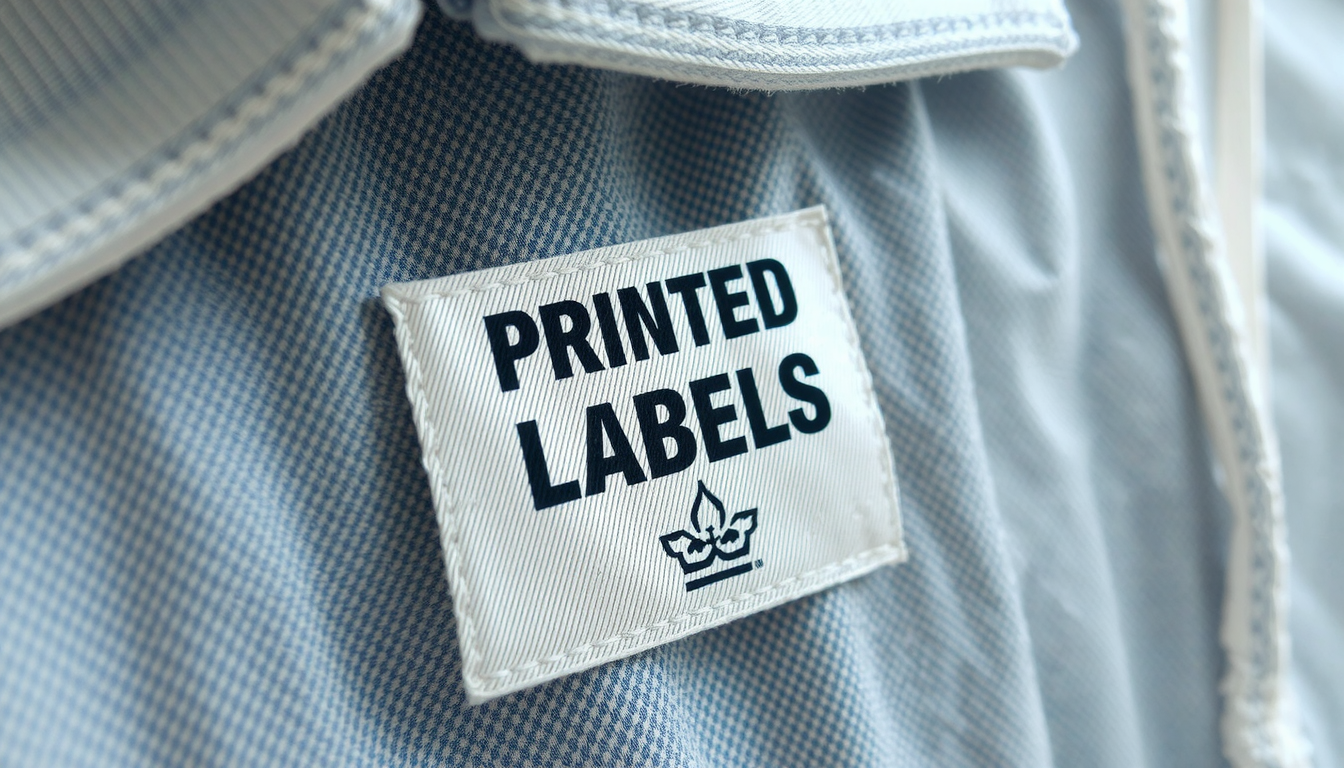
Your design, fit, and fabric are perfect. The last detail that talks for you is the label.
The custom printed clothing label is beyond a tag. It’s your emblem. It is the sign of the quality. It is the link to your customer. It is the professional touch that makes you different.
Getting printed clothing labels custom made for your brand comes with the following advantages.
- Clearly Sharp Detail: Perfect for detailed logos and bright colors.
- Soft & Comfortable: Great for items that are worn next to the skin, like t-shirts and underwear.
- Good Value: Small orders are often cheaper than woven labels this way. This supports startups.
- A Lot of Options: Can be printed on different materials to match your brand style.
Identifying Your Choices: Materials and Types
To create a perfect label, you need to know the material. The choice of material, and the fold and print method all determine the product’s look and touch. The right choice is crucial to ensure that the label suits the garment.
Choosing Your Label Material
The label fabric is as essential as your clothing fabric. It has an impact on comfort, longevity, and your brand’s image. Here is a list of the most typical materials for custom printed clothing tags.
| Material | Feel/Texture | Best For… | Durability |
|---|---|---|---|
| Satin Polyester | Silky, smooth, little shine | Branding on t-shirts, dresses, luxury items | High |
| Natural Cotton | Soft, flat, no frills | Green brands, kids’ clothes, organic products | Medium |
| Tyvek | Paper-like, very strong | Care labels, work clothes, unique branding | Very High, Waterproof |
| TPU (Clear) | Soft, bendable, rubber-like | Swimwear, workout clothes, modern branding | Very High, Flexible |
Understanding Label Folds and Cuts
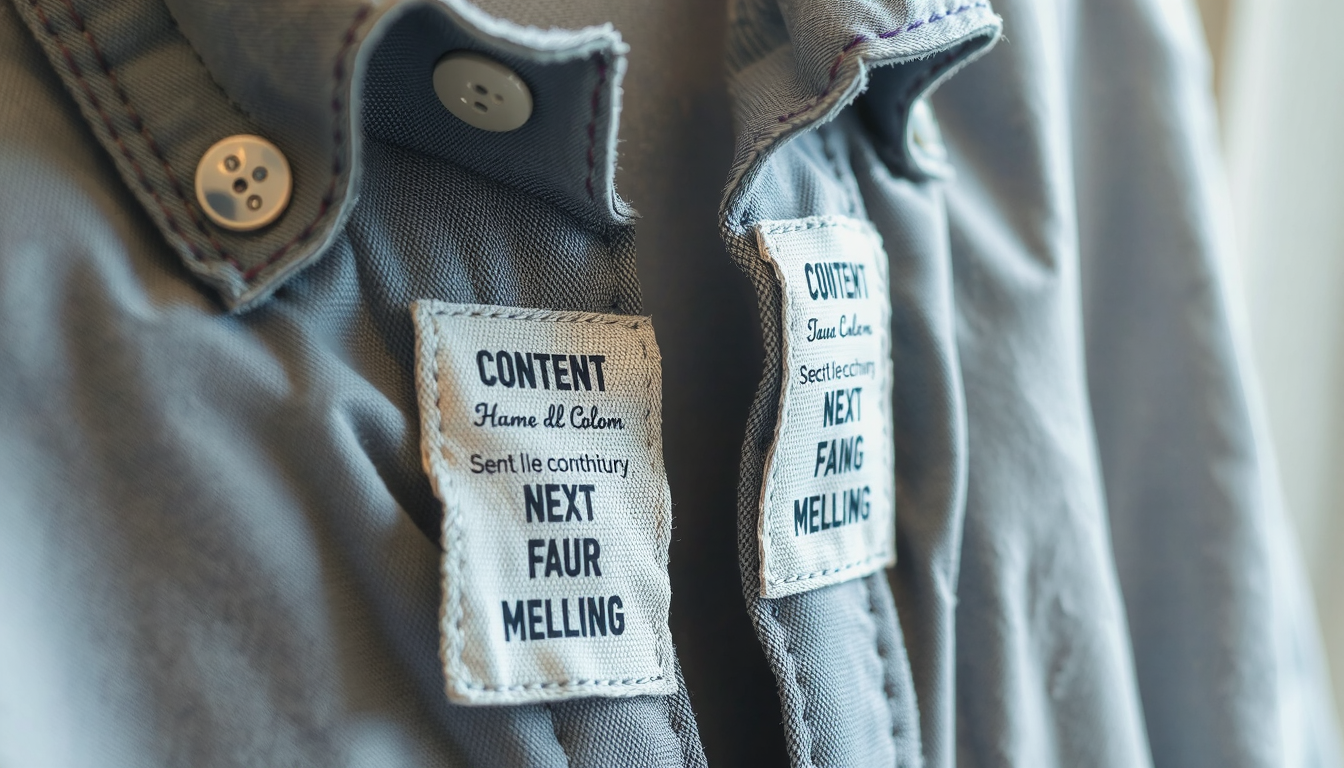
The way the label is folded and sewn determines its place and appearance. Each fold type has its purpose.
- No Fold / Flat Label: This is a flat label that is sewn on all four sides. It is suitable for logos on the outside of clothes.
- Center Fold: This label is a half-fold, usually sewn into a seam. It’s perfect for a brand logo on the front and care info on the back.
- End Fold: The ends are folded under to clean the edge. It is sewn on two shorter sides. Usually, it is sewn into a shirt neck.
- Miter Fold: The ends are folded up at a 45-degree angle. These are tabs that can be sewn into a seam. This fold is seen in fancy shirts and with hang loops.
Printing Methods: What You Need to Know
There are two main ways for you to print your design onto a label.
Digital printing is like a high-quality office printer. It uses ink jets to create full-color, detailed images. This method is great for small orders and designs with many colors.
Screen printing pushes ink through a stencil onto the label material. It makes very bright, long-lasting colors. It costs less for larger orders with fewer colors.
Matching the Label to Your Garment: A Smart Guide
Label selection is beyond aesthetics; it’s a strategic choice that influences how customers perceive your brand and products. An ideal label seems integrated into the garment.
It’s Only About the Customer Experience
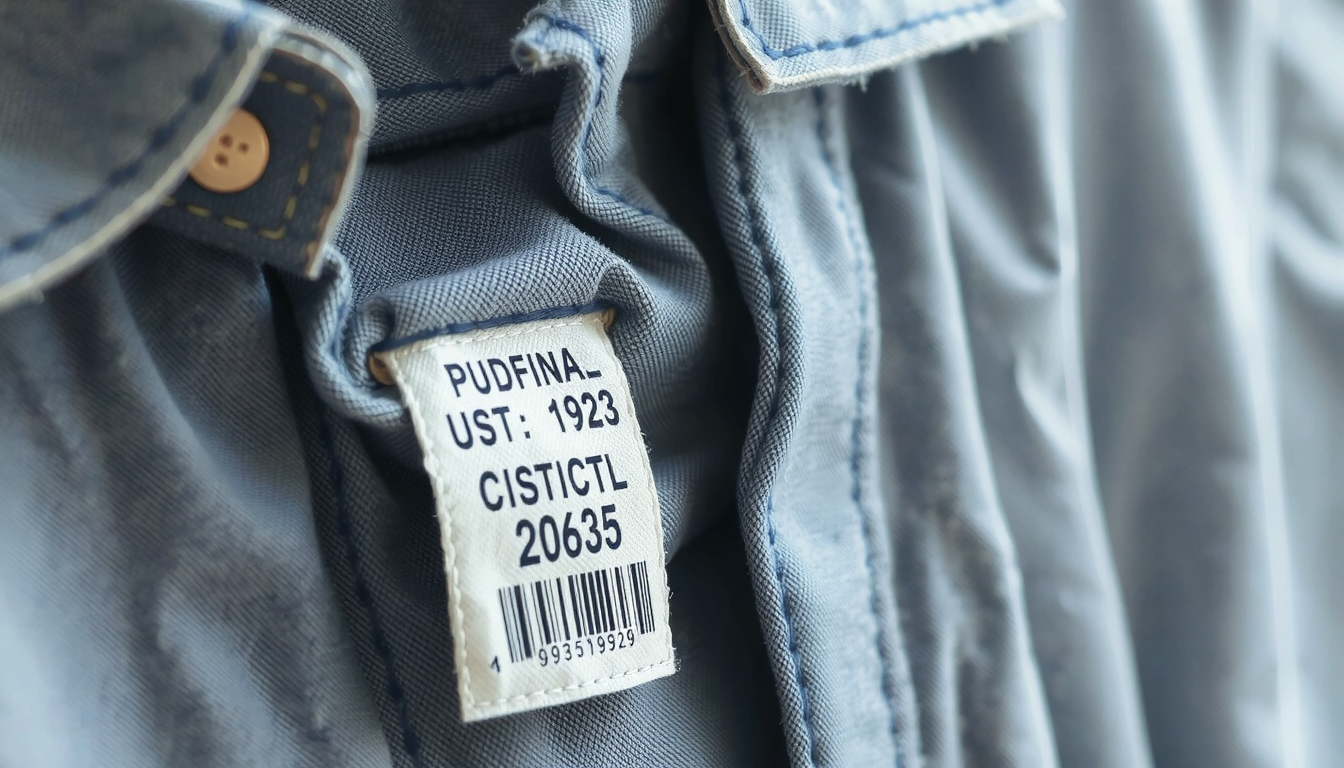
Imagine how the label reacts with the skin. A scratchy or rough label can ruin a quality garment in a stroke. This is especially critical for t-shirts, underwear, and baby clothes.
Some brands spend money on super soft materials but then use a cheap, stiff label that bothers the wearer. The first thing that a customer does is cut it off, along with your branding. The label must be in a partnership with the garment, instead of being in conflict.
A Practical Pairing Guide
To ensure a successful pairing, deliberately choose a label for your product type.
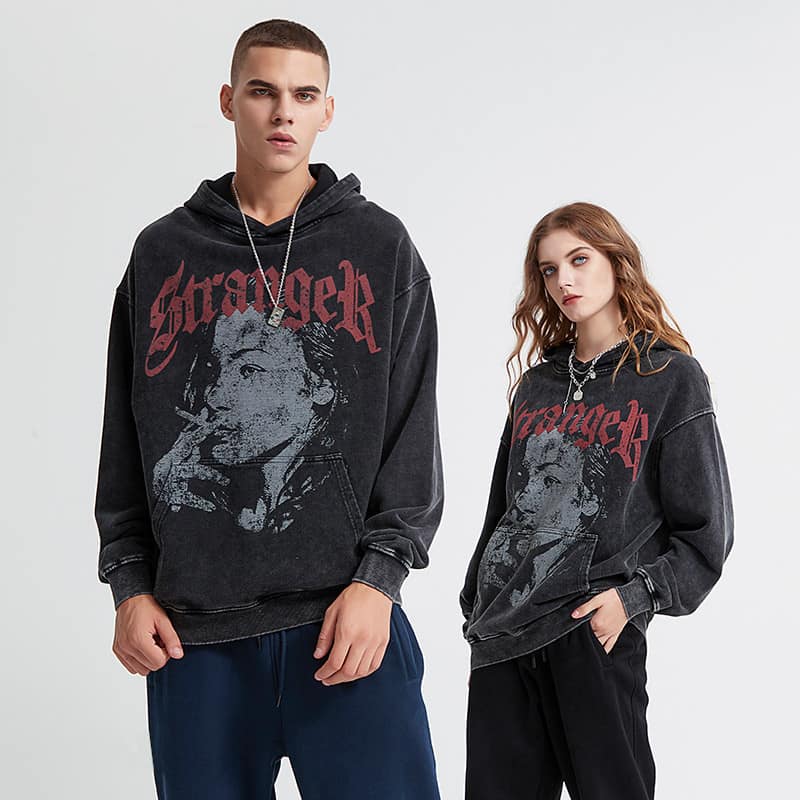
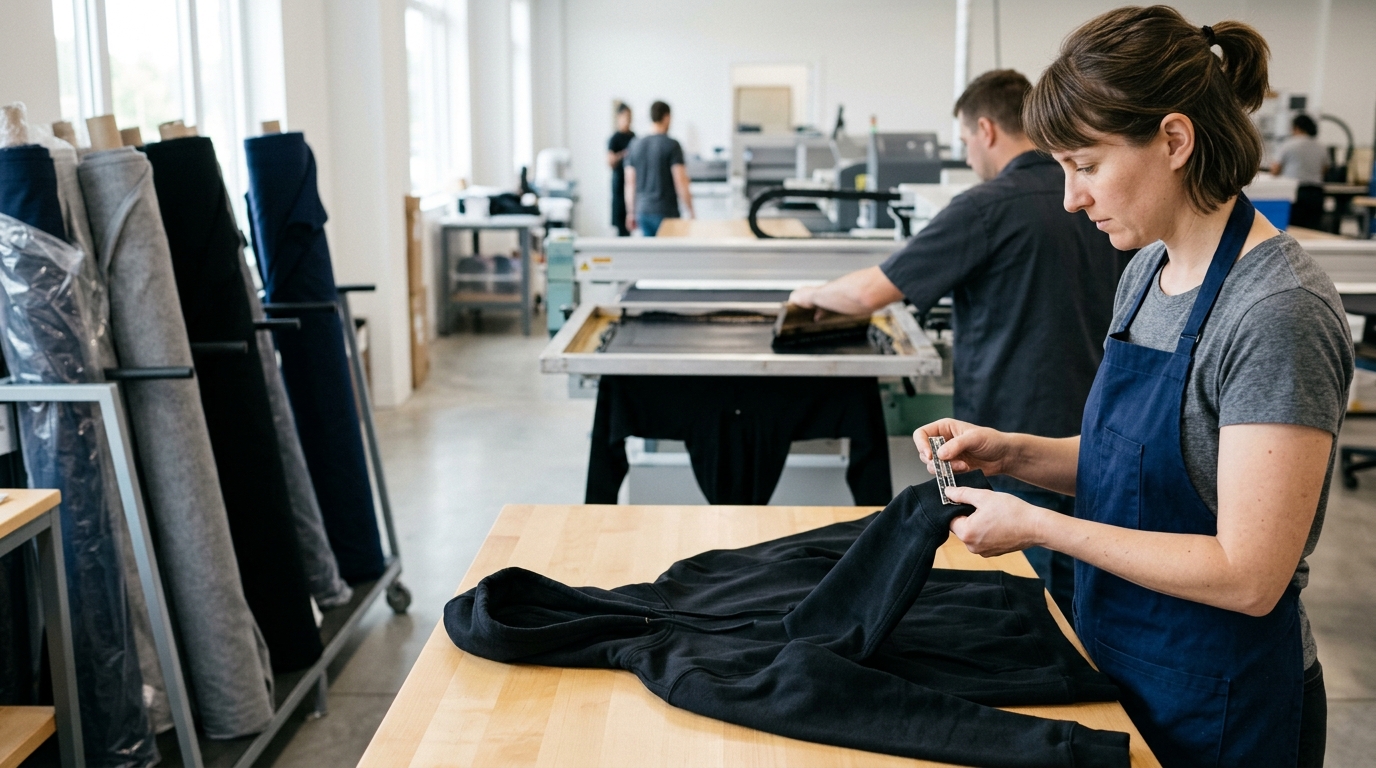
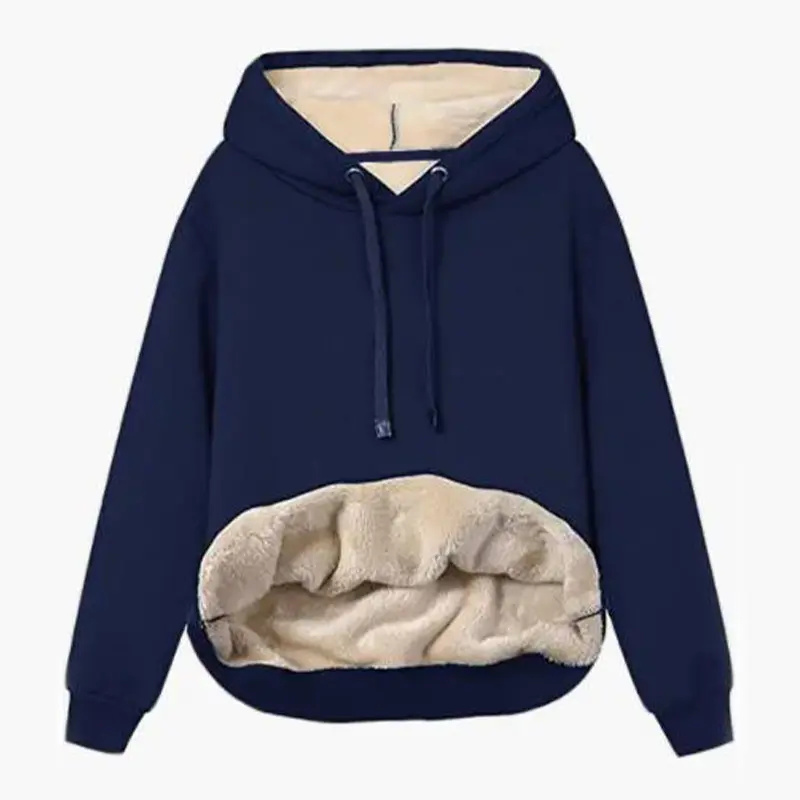
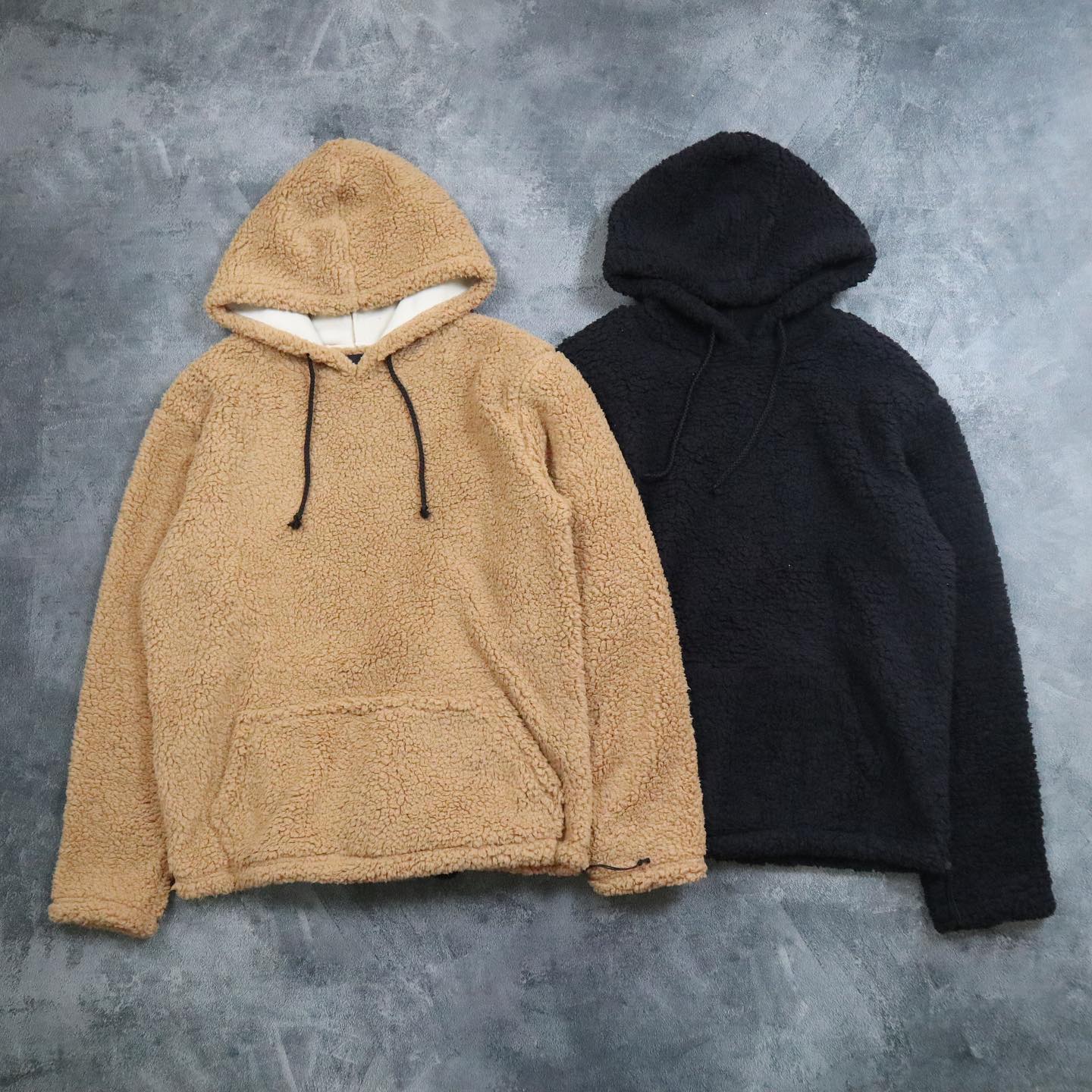
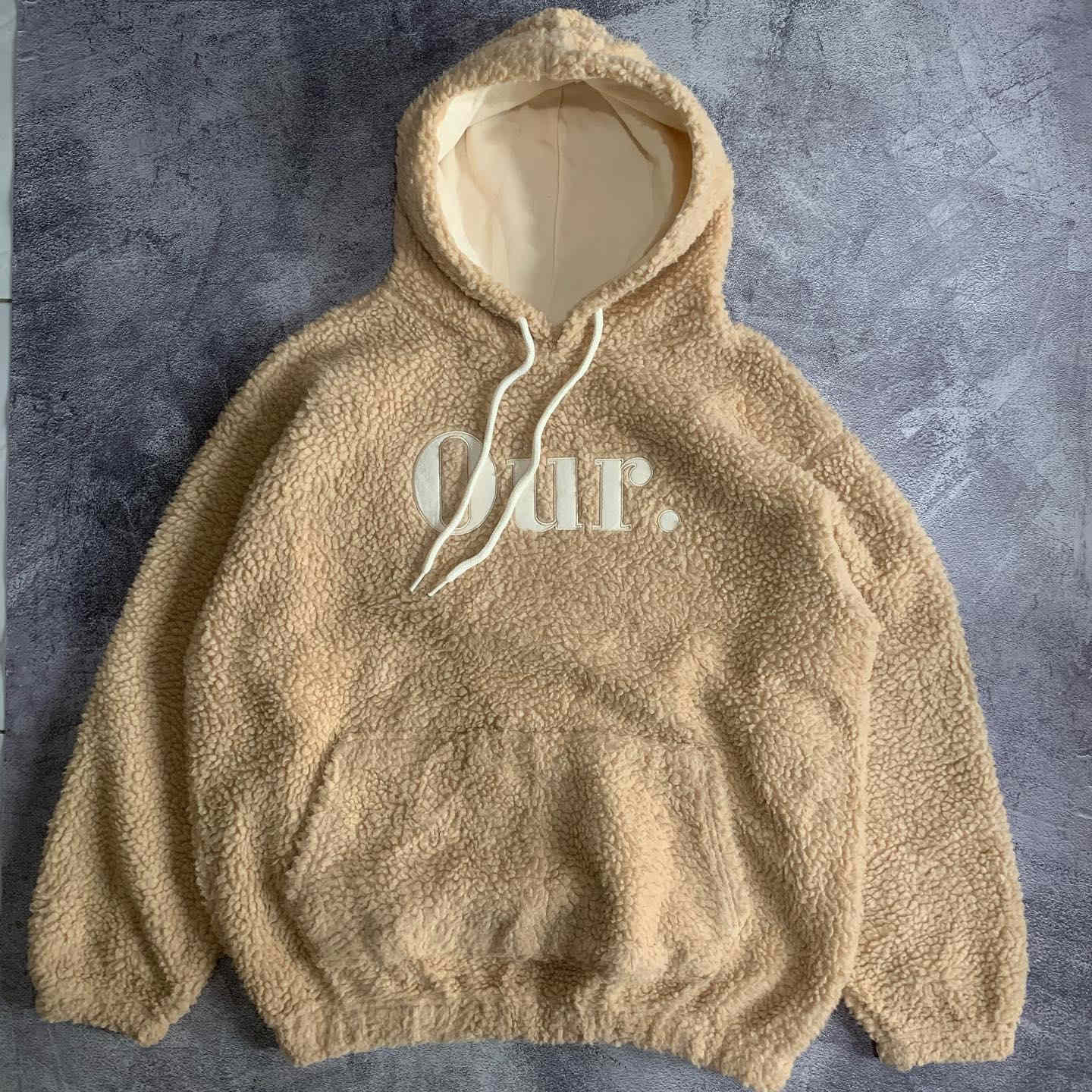
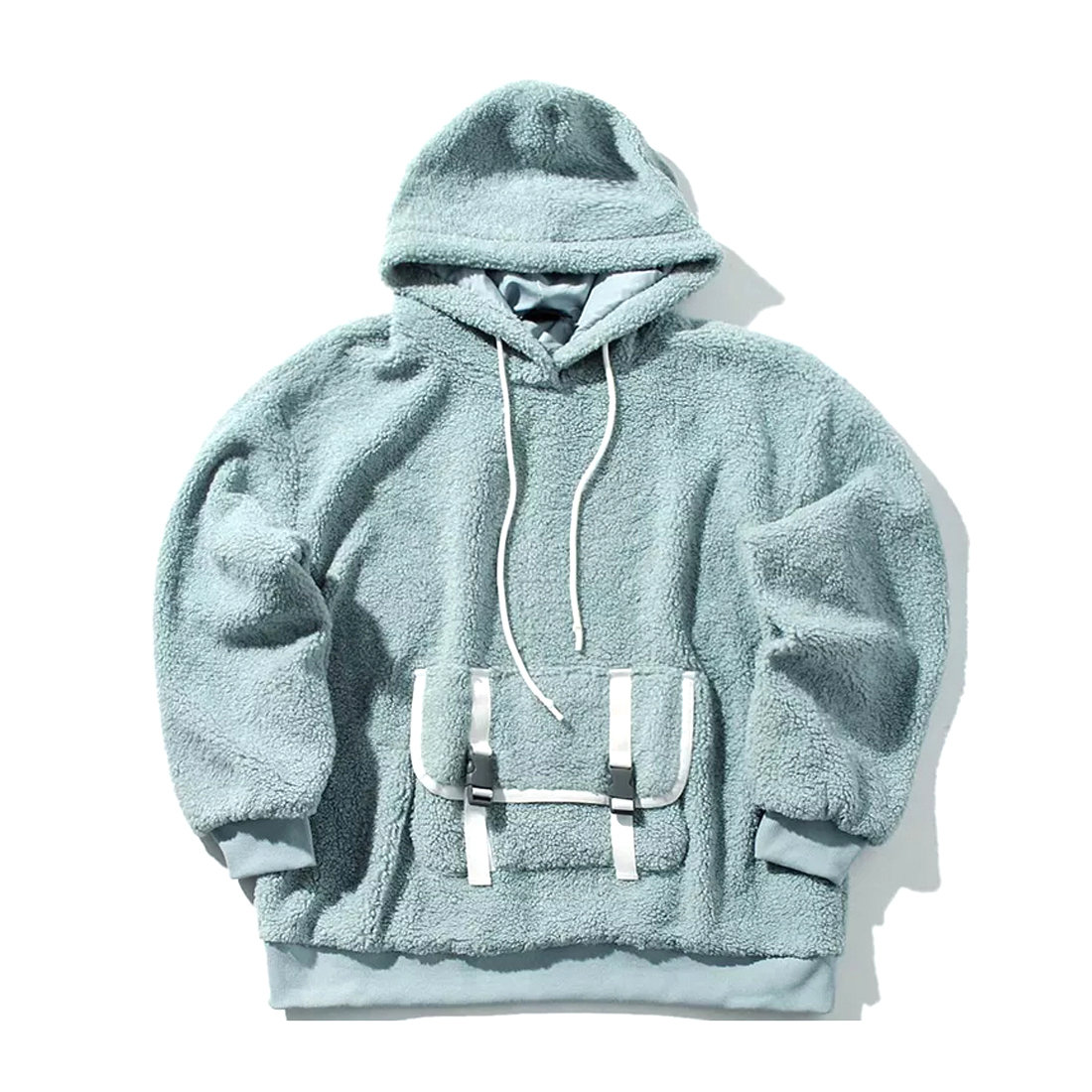
- For Streetwear & Hoodies: Strength is priority. A printed satin or soft cotton label is good. A center-fold label can be your branding and care information packed into one detail. This is a detail that matters when you partner with a custom hoodie manufacturer to create a full product.
- For T-Shirts & Basics: Comfort is the top priority. A heat transfer label that is tagless or a soft printed satin label is the best part to not have neck irritation.
- For Green/Organic Brands: The choice is clear. A printed natural cotton label will make your brand’s green message come true and feels real.
- For Workout/Swimwear: You need a label that is adaptable to moisture and stretching. A printed TPU label will lead the way. It’s strong, flexible, and waterproof.
The Ultimate Design & Rule Checklist
The best label is as beautiful as it is useful. It should follow design best practices and have legally required information. This checklist will help you prepare your printed clothing labels custom for production.
In some areas like the United States, the laws like the Textile Fiber Products Identification Act mandate certain information be on the garment tags. Not complying can lead to issues.
Design Best Practices Checklist
- ✓ Use Vector Files: Always submit your design in a vector format like , , or . This makes your design be rescaled without losing the sharpness.
- ✓ Check Color Profiles: Design in CMYK color mode for printing, not RGB mode for displays. This will prevent any unpredicted color variances during production.
- ✓ Mind Your Font Size: All text must be readable. A good rule is to keep text size above 6-7 points. Always check the digital proof from your supplier.
- ✓ High Contrast is Key: Ensure your text and logo colors are significantly distinguishable against the label background. Dark text on a light background is easiest to read.
- ✓ Account for Bleed & Safe Zone: Important text and logos should be kept clear from the edges that will be cut or sewn. Your supplier can provide a template that shows these areas.
Rules & Essential Information Checklist
- ✓ Brand Logo/Name: This is the main purpose of your custom label. Make it clear and easy to see.
- ✓ Fabric Mix: This is legally required in many countries (e.g., “100% Cotton” or “50% Polyester, 50% Cotton”).
- ✓ Country of Origin: “Made in [Country]” is another legal requirement for products sold in the U.S. and other regions.
- ✓ Care Instructions: Use standard symbols for washing, drying, and ironing. This helps customers care for the garment properly and is a key part of how to build a lasting brand, a concept we explore in our guide on how to start a brand.
- ✓ Size: Clearly show the garment size (e.g., S, M, L, XL).
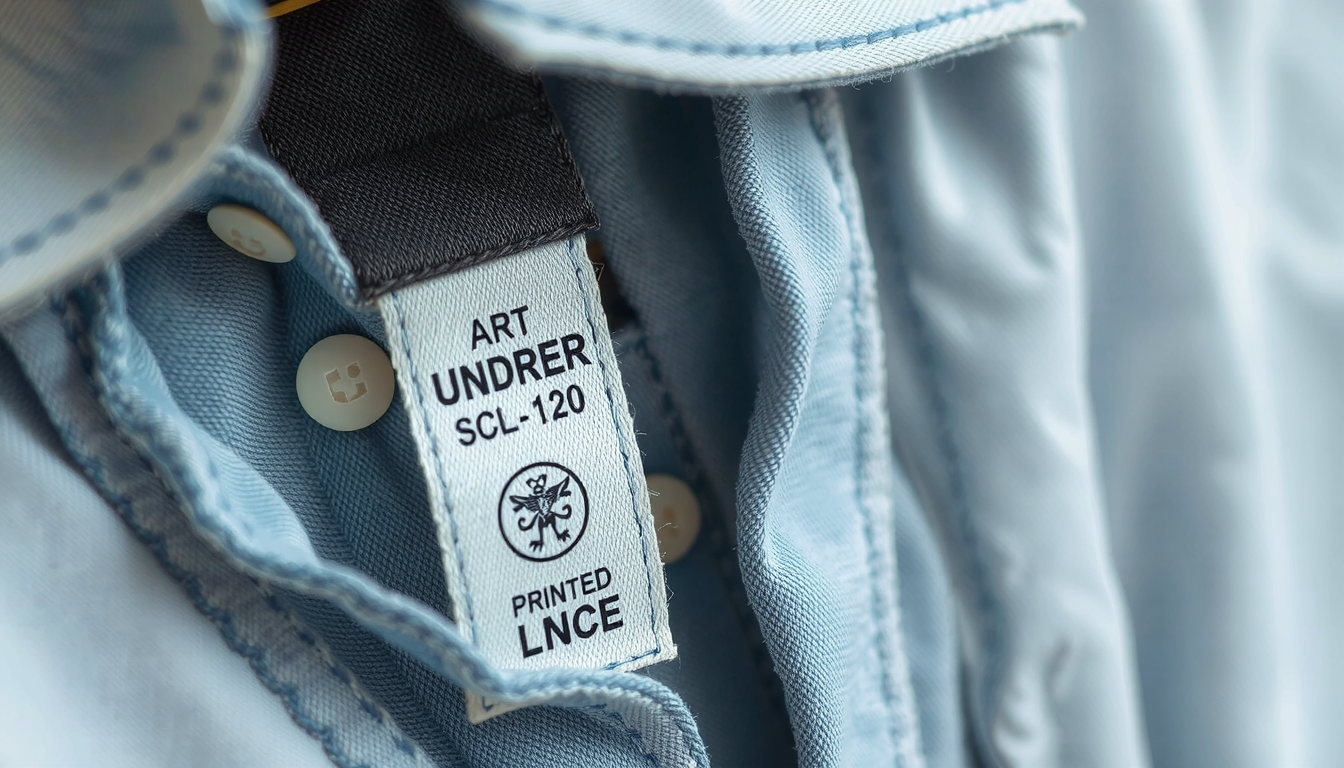
This information is relevant, and most suppliers provide a collection of extensive options for custom clothing labels that can include all these essential details.
From Idea to Closet: Navigating the Order Process
No need to worry if this is your first time ordering custom printed clothing labels. Just follow the main steps outlined below.
Step 1: Finalize Your Design & Details
Use the checklist from the previous section and finalize your artwork. Decide on your material, size, and fold type before you contact a supplier.
Step 2: Find the Right Supplier
Search for a supplier that matches your needs. Look for low minimum order quantities (MOQs), transparent pricing, and good customer reviews. A legitimate partner makes your work easier.
Step 3: Request a Quote & Digital Proof
Always ask for a price quote and a digital proof. Go through the proof very carefully. This is your last opportunity to catch errors in spelling, color, or size before the production of your labels.
Step 4: Approve & Place Your Order
When you approve the digital proof, you will place your entire order. Confirm the timelines for the production and shipping so that you know when your labels will be ready.
Your suppliers should give you clear customization options and a simple proofing process to make sure you get exactly what you want.
Beyond the Label: Your Partner in Building a Brand
Creating perfect printed clothing labels from your brand is just the first step. But it can not be completed without putting it in place. The partnership for building a brand demands a partner with full attention to detail from procurement to production.
At TZ Streetwear, we are all about brand creation. We assist the founders with the entire process. We confirm that all components, including your custom labels, are reflective of your vision.
FAQ
What’s the main difference between printed and woven labels?
Printed labels are made of materials like satin or cotton that are overlaid with ink. They are perfect for showing fine details and complex colors. Woven labels have the design embroidered straight into the fabric material. They are over 2X as strong but can’t handle as much detail as a photo-realistic image.
What is the best material for printed clothing labels?
There is no such thing as a best one. It all comes down to your garment and brand. Satin polyester is the favorite choice for its silky feel and good printing. Natural cotton is the best choice for eco-friendly brands. TPU is the best choice for workout clothes and swimwear.
What’s the minimum font size I can use on a custom printed label?
Even though printing can be incredibly accurate, legibility is way more important. Therefore maintaining a text size of 7 points or larger is recommended. Always check the digital proof first. If you are unsure, try printing it at the actual size to see if you can read it easily.
Am I able to order a sample before placing a large order?
Yes, many suppliers offer the possibility of you ordering a physical sample or a small test batch for a fee. We highly recommend this. It will let you check the color and quality firsthand, before placing an actual large order.
What file format do I need for my label design?
The ideal choice of file is a vector-based one. The most popular and commonly accepted formats are Adobe Illustrator (.AI), PDF, or EPS. This assures that your logo and text are nice, sharp, and not blurry at any size. Finding the next step is easy, just check out the examples of creating custom labels in the work of how to create bespoke clothing labels.