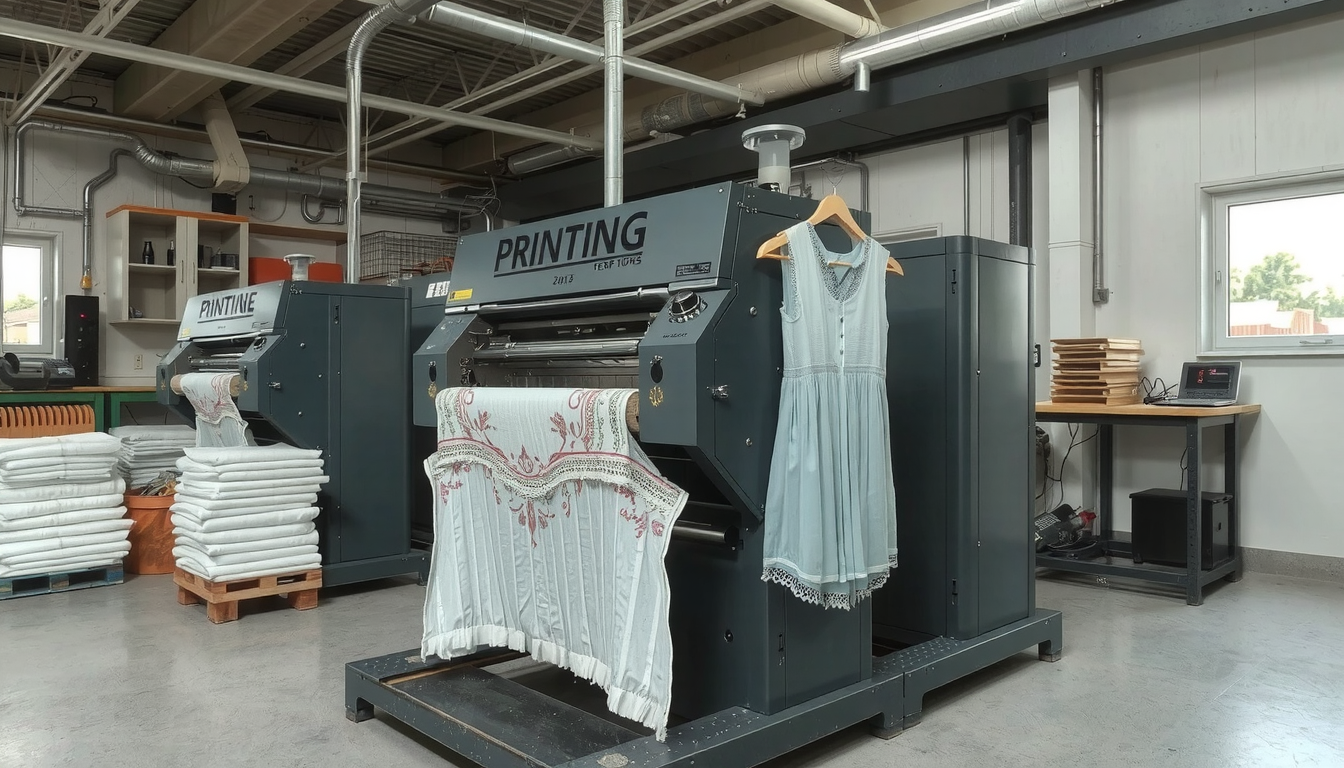
The process of selecting a perfect cloth printing machine for any startup in clothing business and printing is key. Amidst the surplus available, one might feel confused. The market is dynamic with technology rapidly upgrading. An incorrect decision may lead you to financial loss and production problems.
As the market is full of confusion, this article is like a beacon showing you the direction. In this guide, we will help you understand the important technologies related to cloth printing—Direct-to-Garment (DTG), Direct-to-Film (DTF), Screen Printing, and Sublimation—and their features. You will find comprehensible information on all of these. Our step-by-step plan will help you to decide upon the machine of your choice as per your target customers, budget, and business type. As industry authorities at TZ Streetwear, we have supported a big number of brands through this very process.
Gaining Knowledge about the Types of Machines
The best cloth printing machine for your business is the one that is tailor-made for your company. A machine that is best suited for a uniform factory with clothes in bulk won’t do for an on-demand Etsy shop. The very first step towards a smart purchase is to get the differences between the machines and the tech.
Direct-to-Garment (DTG) Technology
DTG printing is almost like a regular inkjet printer, but it puts ink directly on fabric. You load the garment on a platform, and then the printer soaks the cotton fibers with water-based inks.
- Pros: Best-in-terms of featuring complex, full-color, and photo designs. The print feels soft and very light on the garment. It is very suitable for limited runs and print-on-demand as there are no setup costs for each design.
- Cons: It works best on cotton-only or high-cotton blends. For dark shirts, a pre-treatment is needed, which adds to both cost and time. Compared to screen printing, it is less cost-effective for large runs.
Direct-to-Film (DTF) Technology
DTF is more flexible and versatile technology. The process starts by printing the design onto a special PET film. After that, you spray the wet ink with powdered adhesive, and then you cure it. This film can be used to heat press onto all kinds of fabrics.
- Pros: It can be printed on cotton, polyester, blends, leather, and on both light and dark materials. In this process, you can produce colorful, sharp, and very durable prints.
- Cons: The print is on top of the fabric, so it may have a slightly plastic feel when compared to DTG. The process of printing, powdering, curing, and pressing is multi-step.
Screen Printing
This is the classic and tried method for customizing clothes. In screen printing, ink is forced through a mesh screen with a design stencil onto fabric. In one design, every color needs its own mesh screen.
- Pros: Excellent cost savings for larger amounts (normally 50+ pieces). Printed products withstand the tests of time and show bright, solid colors.
- Cons: The initial investment is very high, and it takes a lot of time and effort to set up per design. Because of this, it is too costly for small-sized orders or one-offs. It is not suitable for picture and complex multi-color designs. To get more insights on this classic method, refer to our screen printing guide.
Dye-Sublimation Printing
Sublimation is a chemical process in which you print a design to a special transfer paper. When you apply heat and pressure, the solid dye becomes gas and soaks into the fabric’s polyester fibers. The design, therefore, becomes a permanent part of the material. In this segment, several types of fabric printing machines are available.
- Pros: The process creates a permanent photo-like print with unprecedented brightness. The print has no feel on the garment, as it merges with the fibers. It can’t ever peel off, crack, or fade.
- Cons: This method can only be used on white or light-colored 100% polyester or high-polyester fabrics. Not suitable for cotton or dark materials.
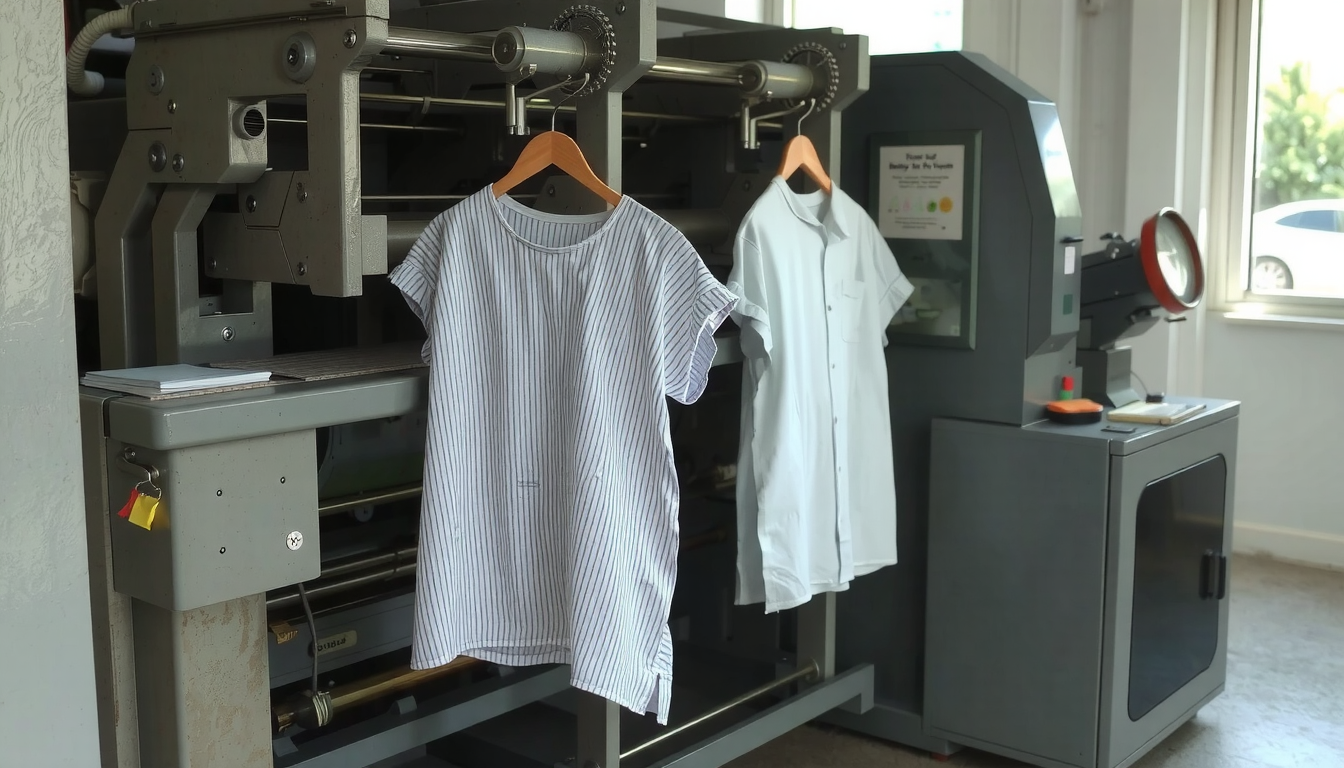
| Feature | Direct-to-Garment (DTG) | Direct-to-Film (DTF) | Screen Printing | Dye-Sublimation |
|---|---|---|---|---|
| Best For | On-demand, complex designs | Versatility, all fabric types | High-volume, simple designs | Polyester sportswear, all-over prints |
| Fabric Compatibility | Cotton & high-cotton blends | Cotton, poly, blends, leather | Most fabrics | 100% Polyester (light colors) |
| Color Vibrancy | Good to Excellent | Excellent | Excellent | Unmatched |
| Feel on Garment | Very Soft, breathable | Slightly thicker, flexible | Can be thick, durable | No feel, part of fabric |
| Cost-Per-Print | Medium (small runs) | Low to Medium | Very Low (large runs) | Medium |
| Initial Investment | Medium to High | Medium | Low to High | Low to Medium |
Selecting the Right Machinery for Your Business
When a new brand comes to us for help, we don’t start with the machine. We start by asking three questions about their business. The answers to these questions will be your guide to find the right cloth printing machine.
What is Your Production Scale?
The order size you are expecting is the most essential factor.
For low-volume or on-demand cases, like an Etsy shop with custom one-offs or a brand testing out new designs, a DTG printer fully satisfies the requirement. It cannot be outclassed in the case of full-color prints on garments with no setup.
For high-volume or bulk orders, such as brand inventory production, corporate uniforms, or event merchandise, screen printing is clearly the best cost-effective solution. For large runs of complex designs, a high-speed DTF system can also be powerful.
What Fabrics Will You Print On?
The materials you plan to use will narrow your options right away.
If your brand focuses mainly on cotton t-shirts, tote bags, and natural fibers, DTG technology is a strong, high-quality choice.
If you’re in performance wear or sportswear, printing on polyester jerseys and activewear can be done only by dye-sublimation. Its no-feel, breathable, and permanent print is a must-have for those purposes.
If you need maximum flexibility to print on various items—from cotton tees to polyester hoodies to blended fabrics—DTF offers the most versatility. This is especially useful for brands that need to decorate a variety of products, including those made by a specialized hoodie manufacturer.
How Complex Are Your Designs?
The design style of your brand is what determines the right fabric printing technology.
For simple and catchy designs with 1-4 solid colors, for example, logos or text graphics, screen printing is the most efficient way, and the result will be bright and durable colors.
For photographic prints, very detailed designs with shades, or full-color artworks, DTG and sublimation printing are the two processes that provide the best quality. Understanding the different craft introductions available will help you to match your artistic vision with the right production method.
Beyond the Machine: The Complete Setup
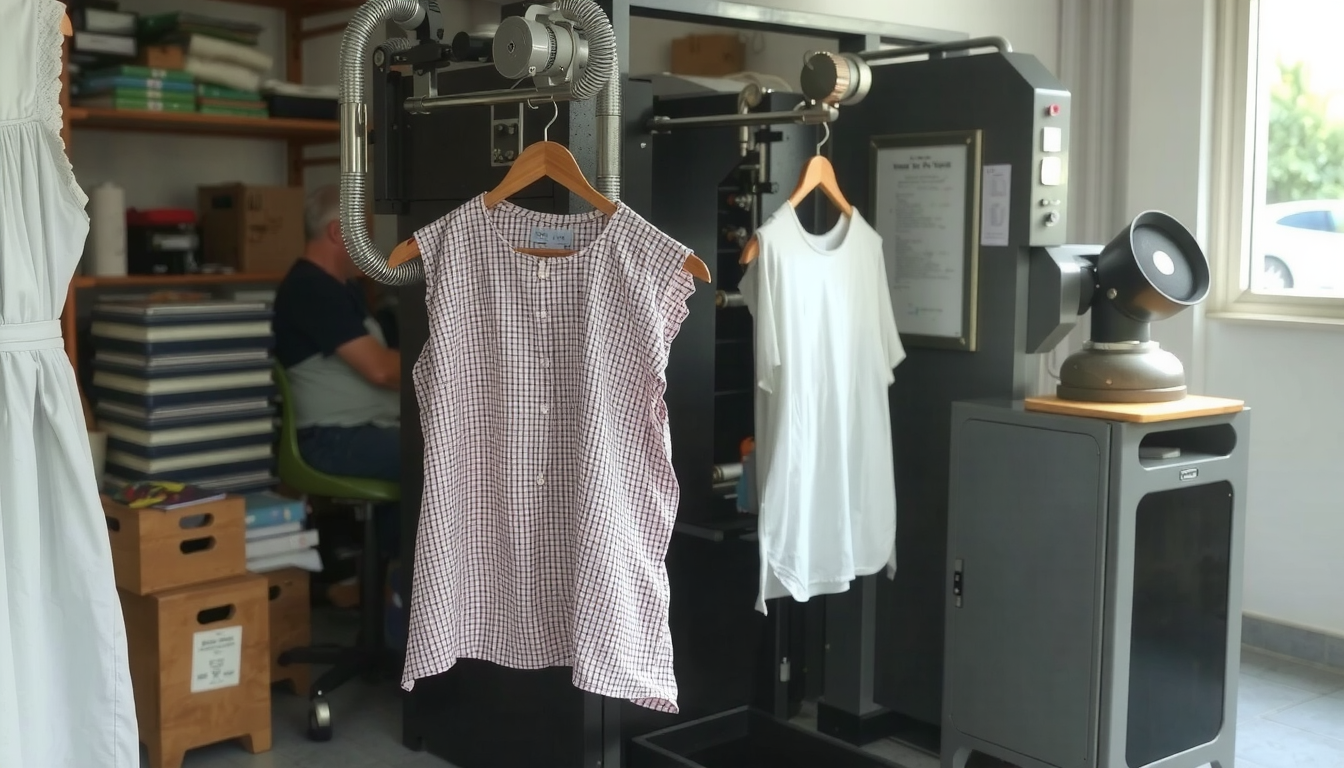
Purchasing a cloth printing machine is not the end of the process. The printer is the heart of your operation, but it needs backing equipment to perform well. Be sure to budget for this extra equipment from day one to avoid unexpected costs and delays in production.
Essential Ancillary Equipment
- Heat Press: This is a must-have. A quality heat press is needed to cure DTG and DTF prints, and to do sublimation transfers. It is the most important piece of equipment after the printer.
- Pre-Treatment Machine: For DTG printing on dark garments, a pre-treatment machine is essential. It applies an even coating that lets white underbase and colored inks bond properly and look vibrant.
- Curing/Drying Unit: For high-volume screen printing, a tunnel dryer is necessary to cure inks efficiently. Similarly, high-production DTF and DTG shops use conveyor dryers to streamline workflow.
- Software (RIP): Raster Image Processor (RIP) software is vital for professional results. It controls ink levels, provides accurate color management, and manages white underbase. This directly affects print quality and ink costs.
- Ventilation: Proper ventilation is a safety requirement. DTF powders and curing fumes, plus screen printing chemicals and solvents, need adequate air extraction to maintain a safe workspace.
Key Factors to Consider Before You Buy
Before you sign a purchase order, go through this final checklist. These practical points will ensure you’re making a smart investment.
Budget & Total Cost of Ownership: Look beyond the price tag. Calculate ongoing costs of inks, films, powders, pre-treatment fluids, and other supplies. Factor in potential maintenance and spare parts. Entry-level DTG printers can start around $15,000, while industrial models can exceed $200,000.
Space & Footprint: These machines can be large, especially with extra equipment. Measure your workspace carefully to ensure you have enough room for the machine, supplies, and workflow.
Maintenance & Support: Understand the maintenance required on a daily, weekly, and monthly basis. Is there reliable technical support available from the vendor? Downtime means loss of revenue, so strong support is key.
Print Speed & Resolution (DPI): How many garments can the machine print per hour? Does the resolution (measured in Dots Per Inch) meet the quality standard for your designs? Industrial-grade high-speed digital textile printers are built for 24/7 production, while smaller models handle lower volumes.
Market Availability: There is a vast range of fabric printing machines available, from small desktop units to massive industrial systems. Research different brands and models to find one that matches your production and budget needs.
Conclusion: Pairing the Right Machine with Your Mission
There’s no absolute “best” cloth printing machine. The best choice is the one that best fits your purpose. By analyzing your production volume, fabric options, and design complexity, you can choose the right technology with confidence.
This choice is the foundation for building your brand’s production capacity. Whether it’s the on-demand flexibility of DTG, the material versatility of DTF, the bulk efficiency of screen printing, or the vibrant permanence of sublimation, making a smart, well-informed investment in the right cloth printing equipment will help your business grow and succeed.
Frequently Asked Questions (FAQ)
What is the most versatile cloth printing machine for a beginner?
A Direct-to-Film (DTF) printer is often the most versatile choice for a beginner wanting to print on the widest variety of fabrics (cotton, polyester, blends, darks, and lights) with a relatively modest initial investment compared to industrial machines. Its ability to handle diverse materials makes it a powerful all-in-one solution for a startup.
Can I use a regular printer for fabric printing?
No, you cannot use a normal office inkjet or laser printer. A dedicated cloth printing machine uses specialized inks (like pigment, sublimation, or reactive dyes) and a transport system designed to handle fabric without stretching or jamming. The chemistry of the inks and the mechanics of the printer are fundamentally different.
How much does a good t-shirt printing machine cost?
The cost differs greatly by technology. A quality heat press for transfers may be available for under $1,000. Entry-level DTG or DTF systems usually start in the $10,000 – $20,000 range. Professional screen printing carousels and industrial digital printers can cost from $30,000 to over $500,000, depending on speed and capabilities.
Which printing method is the most durable?
Both screen printing and dye-sublimation are known for their exceptional durability. Screen prints lay a thick layer of ink that securely cures to the fabric surface and can withstand many washes. Sublimation ink becomes part of the polyester fabric itself, meaning it is permanent and will not crack, peel, or fade for the life of the garment.
What is the difference between a cloth printing machine and a garment printer?
The terms are often used interchangeably. However, “cloth printing machine” can be a broader term for any machine that prints on textiles, including large roll-to-roll printers. “Garment printer” usually refers to a machine specifically designed to print on finished products like t-shirts and hoodies.