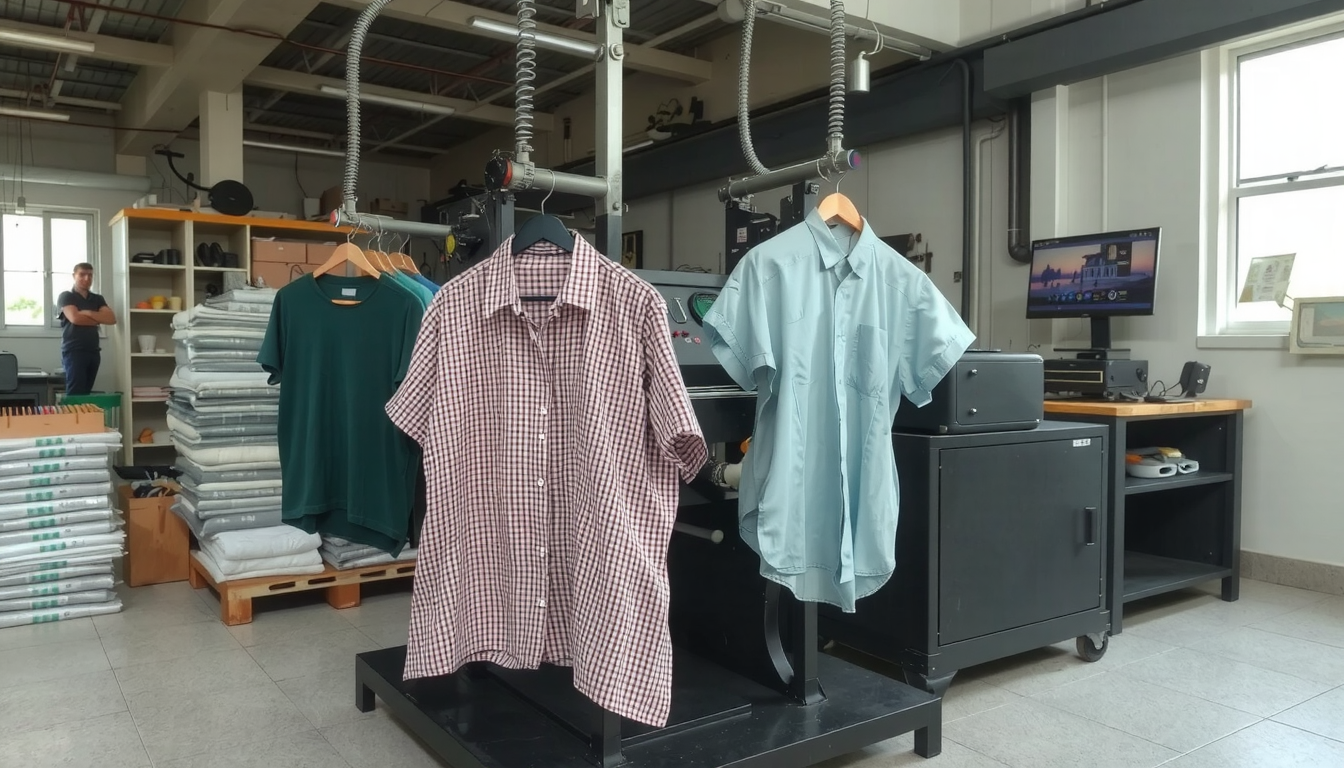
Acquisition of a screen printing machine for clothes is nothing short of a revolutionary move for an apparel business. Such machines act as the driver of productivity, quality, and the brand name. The pantheon of options offered can be daunting. Nevertheless, selecting the appropriate machine is not primarily about finding the “best” one but determining the best machine for you.
The purpose of this guide is to illuminate the muddle. We are going to discuss the principal kinds of presses and we will provide you a systematic decision-making plan. Moreover, we will mention those secret expenses which usually overlooked by many. Upon your completion of this reading, you will have the power of choosing a specific screen printing machine for clothes for your distinct business.
Recognizing Machinery Types
You should first understand the three fundamental press categories. These categories are different in size, budget, and purpose for each business. The right category selection is your first and most significant step before proceeding to look for a type of machine.
| Attribute | Manual Press | Automatic Press | Hybrid (DTG + Screen) Press |
|---|---|---|---|
| Best For | Startups, Hobbyists, Small Runs | High-Volume Shops, Scaling Businesses | Tech-Forward Printers, Complex Designs |
| Output Speed | Low (30-80 shirts/hr) | High (300-1000+ shirts/hr) | Very High (400+ shirts/hr) |
| Initial Cost | $ | $$$ | $$$$ |
| Consistency | Operator-Dependent | Very High | High |
| Footprint | Small to Medium | Large | Medium to Large |
Manual Presses
A great deal of people that are printers for the first time use a manual press. You do everything by hand—rotating platens, lowering screens, and pulling the squeegee. This theoretical and practical application involves learning the screen printing basics.
Manual presses are the cheapest and take up very little space. You can install them in garages, spare rooms, or small studios with good results. A manual screen printing machine for clothes is great for handling small custom orders. It is also perfect for making brand samples and developing skills.
Automatic Presses
When you are talking about production volume and speed, the best option is an automatic press. These machines use air power or electric systems to automate the printing cycles. They manage everything from moving stations to squeegee passes. The result is the highest speed and best consistency in the market.
This kind of offering is for the businesses that are established and are ready for an extraordinary scaling process. The output of Automatic textile presses increases within a very short period of time. Certain types can print hundreds of garments in an hour. This leaves the operator with the time to think about quality control and workflow management.
Hybrid (DTG + Screen Printing) Machines
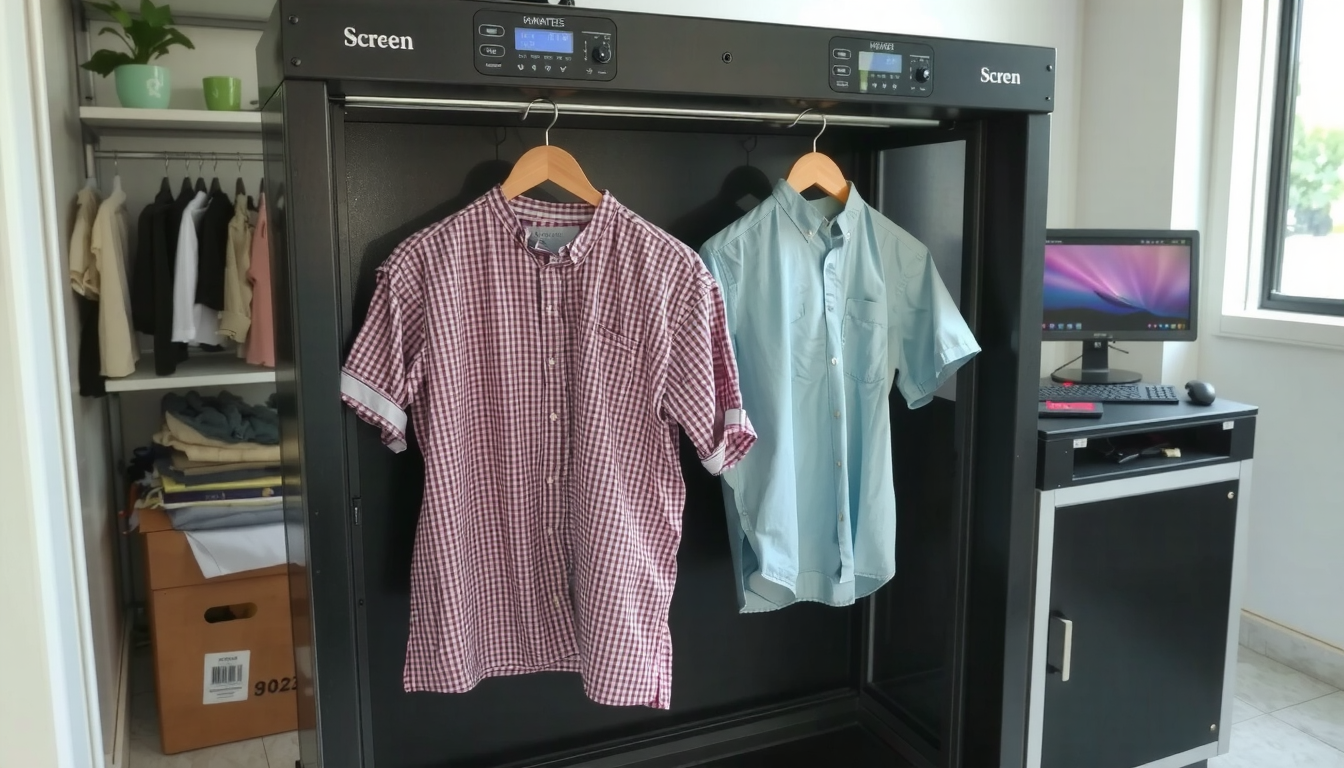
The latest trend in the decoration of clothing is represented by hybrid machines. They stem from the combination of traditional automatic screen printing and digital Direct-to-Garment (DTG) printing. The press lays down an even white screen-printed base that is smoothly applied. Afterward, the digital head is in charge of printing that is full color and quite detailed.
This technology provides the most beneficial of both choices. You can have the advantages of running the screen-printed bases with lower costs and being fast, while digital printing gives you the freedom of using as many colors as you like and detailed designs. It is indeed the only solution for photorealistic designs on a multitude of garment colors and types.
Picking the Right Press: A Clear Decision Framework
To avoid regrets later, you need a structured framework. Ask yourselves these four questions related to your business. These will guide you towards the best screen printing machine for clothes that will meet your needs.
Step 1: Assess Your Production Volume
Be sincere about your actual production. How many shirts do you currently print every week or month? More importantly, what realistic goals do you have for the next year?
If your quantity is less than 100 prints per week, then obviously, a manual press will be your answer. If you are normally getting 200-300 pieces and feel somewhat squeezed, go for a manual high-end or entry-level automatic. From the day you need 500+ pieces weekly, an automatic press will be the basic requirement for growth. Many stakeholders do not take into consideration the incoming volume. If you anticipate growth, then choose a press that can grow along with you.
Step 2: Define Your Budget Realistically
The item price isn’t the only thing forming the budget. How much money do you have setting aside for all the equipment? The press is just a piece inside the puzzle of a functioning shop.
The pre-owned manual entries start at $500 and range up to $5,000. Some of them cost even more. Automatic ones are not affordable either with the starting point of $25,000. The top-end models can cost you a fortune. Don’t forget, your budget needs to include the vital support equipment that we will highlight shortly.
Step 3: Measure Your Available Space
A screen printing machine for clothes is also going to need some space for operation. You need to measure your workspace properly. Are you having enough space for the press, conveyor dryer, exposure unit, washout booth, along with the storages of screens, inks, and blank garments?
Automatic presses are large in scale and require not only the space for machines but also the space for operators, maintenance access, and possibly air compressors too. Don’t install a machine that will not fit or function properly.
Step 4: Analyze Your Product and Design Complexity
What do you intend to print? Simple one- or two-color logos don’t combine with complex, six-color photorealistic art at all. The printing colors determine the number of “print heads” or “colors” you need on your press and the number of stations (platens holding shirts) that you need for printing.
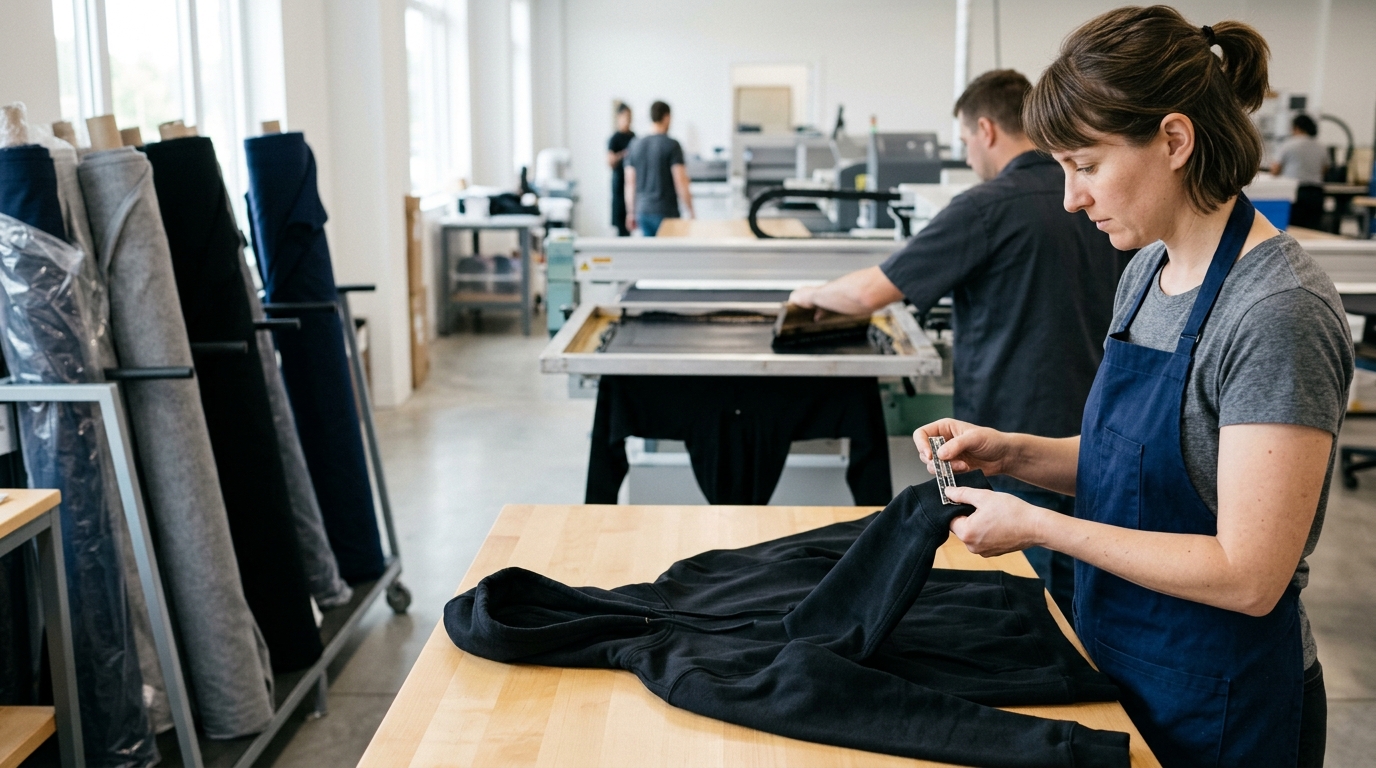
The quantity of “stations” (platen holding shirts) introduces the productivity factor. A 6-color, 4-station press prints multi-color jobs a lot faster than a 6-color, 1-station press. What more, if you have plans to cut and print specialty items like hoodies you must be sure that your machine will be compatible with the option of right platens. A reputable hoodie manufacturer can provide the garments, but you must print on them effectively.
Beyond the Press: Calculating Your True Startup Costs
Camouflaged financial problems are one of the major reasons new printers fail. Focusing on the screen printing machine for clothes press alone is inadequate. The functional and efficient mode can only be achieved with specific support apparatus.
Various vendors advertise complete startup screen printing packages that come as a bundle. This will not only save your money but also get you everything at once.
Your Must-Have Screen Printing Equipment & Supplies Checklist
- The Press: Your main machine and central investment.
- Curing Unit: Essential for professional results. Use a flash dryer for small-scale work or a conveyor dryer that ensures inks cure properly for wash durability.
- Exposure Unit: Uses UV light to burn your design onto emulsion-coated screens.
- Washout Booth: A backlit booth for cleaning ink from screens and washing out fresh stencils.
- Screens & Squeegees: Multiple screens in various mesh counts for different inks and design details, plus squeegees in different sizes.
- Inks & Emulsion: Starting set of plastisol or water-based inks and photo-sensitive emulsion for coating screens.
- Software & Film: Professional design software like Adobe Illustrator or CorelDRAW, and a printer for high-quality film positives.
- Chemicals: Essential supplies like emulsion remover, ink degradent for cleanup, and screen degreaser.
Key Features to Compare When Buying a Screen Printing Machine
When comparing different models, these features matter most for quality and efficiency.
-
Number of Colors / Stations
This appears as “X color, Y station” (like 6-color, 4-station). Colors determine design complexity you can print. Stations dictate workflow speed—more stations let you load and unload garments while others are being printed or flashed. -
Micro-Registration
This lets you make tiny, tool-free adjustments to screen position (up, down, left, right, and rotation). For multi-color printing, micro-registration is essential. It’s the key to perfect, crisp alignment between colors. -
Platen Size & Type
Make sure the standard platen size fits most of your work. Check for interchangeable specialty platens for youth sizes, sleeves, pant legs, or hoodies. -
Build Quality & Warranty
Look for solid, all-steel construction. Heavier presses are more stable, which reduces flex and improves registration. Reputable manufacturers back their work with solid warranties. This shows machine durability and company commitment to quality.