Introduction: From Idea to Branded Apparel
The process of turning creativity into real clothes, and branded clothes at that, is something that simply excites. The adventure comes with the toughest choice at the start: you need the right equipment to bring your designs to life. This decision will directly impact your product quality, production costs, and your company’s overall capability to grow.
The correct choice of a printing machine for clothing is a primary investment. It is what will bring your business long-term success. This decision is the foundation of your production process. Along with that, it is also the key part of the larger scheme of how to start your brand and choose your craft. The guide intends to help you think about every fundamental aspect. You will make the right investment by reading this guide.
The 4 Main Types of Clothing Printing Machines: A Quick Overview
Before going forward into the deeper explanations, it is crucial to understand the main technologies available. Each printing machine for clothing has its own strengths and weaknesses. Each also has its own typical uses. A high-level view of the market will make it easier for you to decide.
-
Direct-to-Garment (DTG): Imagine a high-tech inkjet printer that works exclusively for fabrics. This machine has an extraordinary capacity to create complex designs with multiple colors, and also photorealistic images directly on cotton clothing.
-
Direct-to-Film (DTF): This method attaches a design onto a special transfer film. The film is then treated with adhesive powder and ironed onto the clothing. It enables wide adaptability to different fabric types.
-
Screen Printing: This is the default technology for commercial production. The process comprises a stenciled mesh screen through which ink is pushed onto the clothing. High-volume orders with limited colors are the strongholds of the method.
-
Heat Press (with Vinyl/Transfers): The most accessible starting point for newcomers. A heat press is used to transfer designs cut from heat transfer vinyl (HTV) or printed on transfer paper. Perfect for beginners interested in simple text graphics and one-off personalization styles.
Head-to-Head Comparison: DTG vs. DTF vs. Screen Printing
When it comes to the clothing business of serious magnitude, the main contenders are reduced down to three high-end technologies: DTG, DTF, and Screen Printing. All of them fulfill different market needs and answer to different business models. It is significant to comprehend the contrasts between them. Your garment printing machine has to fit your business goals.
To help you make the best analysis, here is a matrix that directly compares these systems.
| Feature | Direct-to-Garment (DTG) | Direct-to-Film (DTF) | Screen Printing |
|---|---|---|---|
| Best For | Photorealistic prints, one-offs, small batches | Fabric versatility, vibrant colors on any fabric | High-volume bulk orders, simple designs |
| Print Feel/Hand | Very soft, ink dyes the fabric fibers | Sits on top of fabric, can feel slightly plastic | Can be soft or thick depending on ink type |
| Fabric Compatibility | Best on 100% cotton; struggles with polyester | Excellent on cotton, poly, blends, leather | Versatile, works on most fabrics |
| Color Capability | Unlimited, full-color spectrum (CMYK) | Unlimited, full-color spectrum (CMYK) | Limited by the number of screens (colors) |
| Upfront Cost | Medium to High ($3k – $20k+) | Medium ($3k – $15k+) | High for automated setups ($5k – $50k+) |
| Cost-per-Print (Low Volume) | Low | Low | Very High |
| Cost-per-Print (High Volume) | Medium | Medium | Very Low |
| Speed/Labor | Fast for one-offs, minimal setup | Multi-step process, moderate labor | Labor-intensive setup, very fast per piece |
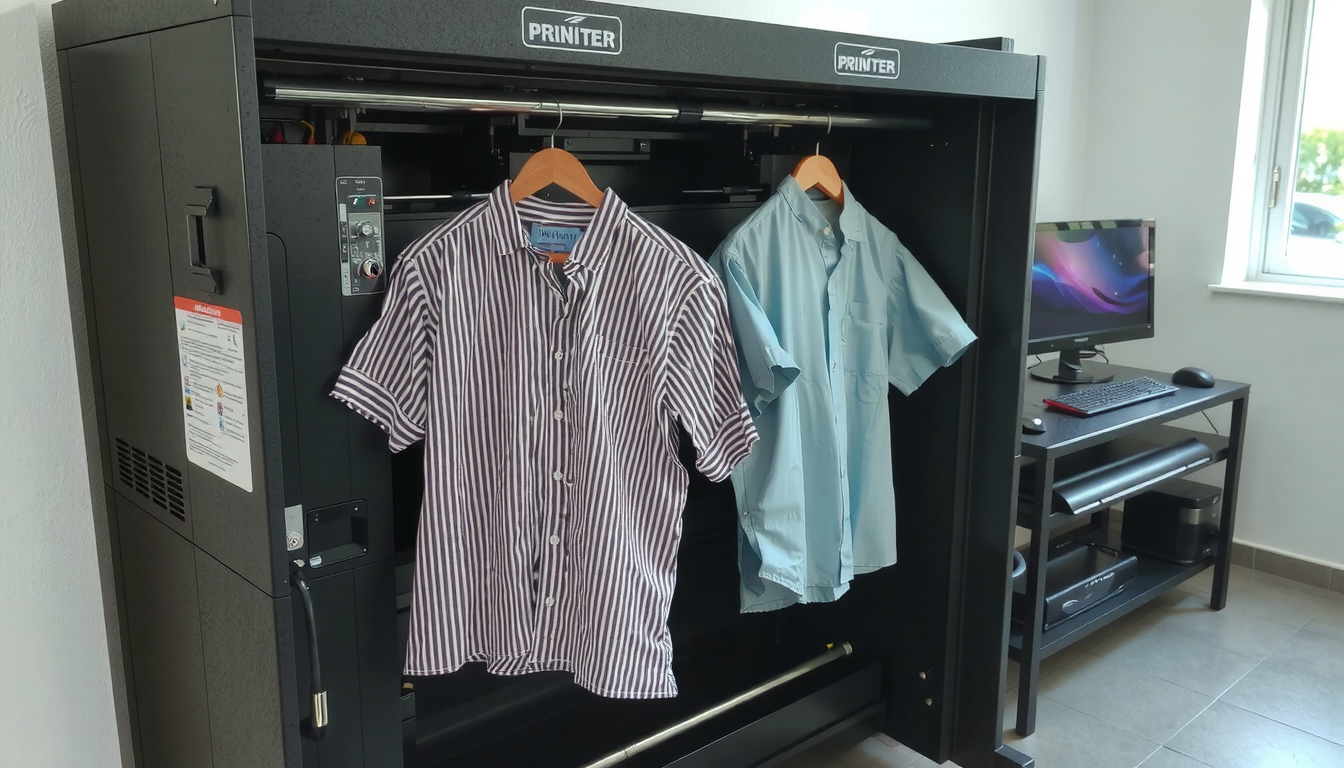
Direct-to-Garment (DTG) Printing Explained
A DTG printer makes it possible to inject water-based textile inks directly among the garment fibers, which then lead to full-color, vivid, and soft prints. The ink blends in with the fabric, thus it lacks the print’s texture.
DTG’s main advantage is its ability to reproduce intricate details and a vast array of colors. That is why this printing technology is meant for photos or other types of graphics that contain a lot of detail. The downside of this process is that it only works best on cotton and it poses an additional workflow step. It requires that the garments are pre-treated with a solution for the ink to stick to them. However, technology from leading brands like Roland DG has made DTG printing more reachable.
Direct-to-Film (DTF) Printing Explained
The flexibility of DTF makes it one of the most sought-after processes, and it has gained popularity rapidly. The steps involve printing a design on PET film, putting adhesive powder on wet ink, and finally curing it. This finished transfer can then be pressed onto any fabric, including cotton, polyester, blends, and even hard surfaces.
The two major benefits of it are the versatility of fabrics and not requiring any pre-treatment of the garment. The transfer products are vivid, long-lasting, and elastic. Its primary drawback is that the prints stay on top of the fabric rather than being absorbed, which minimizes the breathable feel compared to DTG. The workflow is also characterized by distinct phases: printing, powdering, curing, and then pressing. DTF is becoming more and more popular, and you can find many suppliers who specialize in printers for garment businesses offering solid solutions for it.
Screen Printing Explained
Screen printing has long been the backbone of the garment industry. It involves the creation of a stencil (or “screen”) for each color used in a design. The ink is then pushed through the screen onto the piece of clothing one color at a time.
Its main strength is the competitive low price for large quantities. When the screens are prepared, printing more than a hundred or a thousand units is very fast and cheap per piece. This is the key for the distribution of merchandise, uniforms, and large retail brands. However, the extensive setup makes it unproductive and impractical for smaller runs or designs with several colors in them. Brands that plan to produce significant quantities using the same design, however, will find traditional screen printing to be the cheapest method available.
Which Printing Machine is Right for Your Business Model?
A printing machine for clothing is not a universal solution for everyone. Your ideal selection will wholly depend on your precise business aims, target market, and your operational plans. Let’s do the analysis via business models.
For the Print-on-Demand / E-commerce Startup
Your main concern is minimizing risk, offering many designs, and printing in small batches only if required. You need flexibility and full-color capability without high setup costs.
The ultimate choice will be a DTG or DTF printer. Both alternatives have no setup cost per design, thus allowing for profitable single-shirt printing. DTG is the right choice if you prefer a product made of 100% cotton with a premium soft feel. On the other hand, DTF technology is a huge added-value source for product diversity. If you plan to make a variety of items, such as specialty garments from a dedicated hoodie manufacturer, DTF with its fabric adaptability is the right solution.
For the Local Custom Apparel Shop
Your company has diverse local clients like sports teams, small businesses, schools, and events. You will be dealing with a mixture of small and medium-sized orders with different artwork and fabric needs.
You could probably start best with a DTF printer or a high-quality Heat Press setup. DTF is the one to go for since it combines DTG’s full-color capabilities with the fabric versatility that will let you handle polyester jerseys, cotton-poly blend hoodies, and plain cotton tees all with just one machine. A professional heat press with pre-made transfers is also a viable, lower-cost entry point to test the market.
For the Established Brand or High-Volume Seller
Brand uniformity and the lowest cost-per-unit are your main concerns. At this time, you are making thousands of pieces of a few basic designs.
For this case, the crystal-clear choice is automated Screen Printing. No other economy of scale can beat the one driven by this model. While the initial investment for an automatic press and dryer is substantial, the price per print comes down to pennies at high volumes. Alternatively, businesses at this level can consider industrial-grade digital textile printers that provide high throughput for digital printing, combining speed with full-color capabilities.
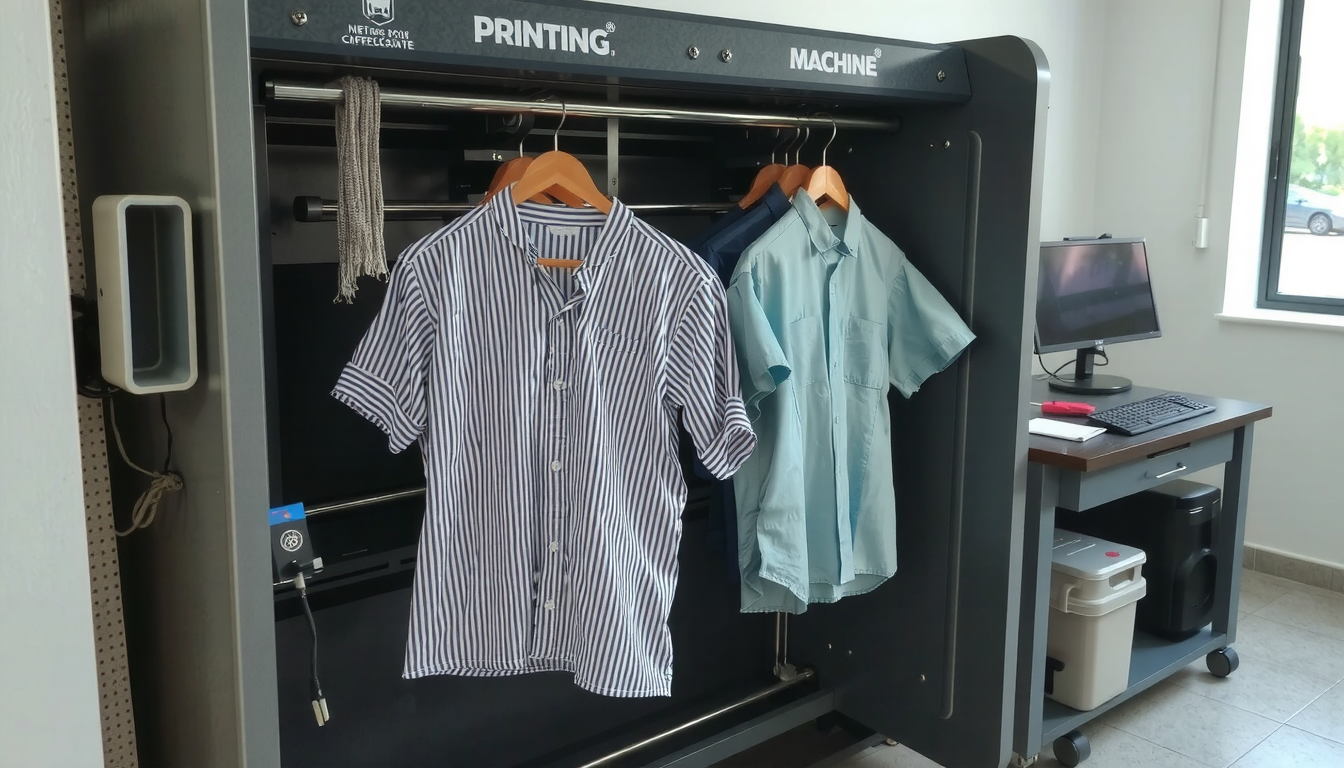
The Real Cost: What You Need for a Complete Setup
It is a well-known fact that first-time buyers usually forget to budget properly for the essential supporting equipment. This equipment makes a printing operation functional, and the printing machine for clothing itself is just the starting point. Here’s a realistic take on a complete starter package.
Your DTG/DTF Starter Kit
- The Printer Itself: This stands tall as the number one single expenditure.
- Heat Press: It must be there. This aids in curing DTG inks and applying DTF transfers. This is not optional.
- Consumables: The starter stock should include inks, pre-treatment solution (for DTG), transfer films, and adhesive powder (for DTF).
- Software (RIP): The Raster Image Processor software that controls the printer. It is frequently bundled with the hardware, but advanced versions cost more.
- Maintenance & Cleaning Supplies: Specialized swabs, cleaning products, and waste ink tanks are required for daily upkeep.
- Ventilation/Fume Extractor: A must-have safety feature for DTF. The powder curing process can release fumes, so you should have a fume extraction system.
- A Reliable Computer: You will need a dedicated and powerful computer to run the RIP software smoothly.
Your Screen Printing Starter Kit
- The Press: A manual press (e.g., 4-color, 1-station) is a common initial option.
- Screens & Emulsion: For multi-color jobs, you need multiple screens, and for the creation of stencils, photo emulsion is required.
- Exposure Unit: This is a light source that’s used to “burn” the design from a film positive onto the emulsified screen.
- Inks & Squeegees: A general assortment of plastisol or water-based inks along with various sizes of squeegees.
- Flash Dryer or Conveyor Dryer: A flash dryer cures the ink between colors. For final curing, you need a conveyor dryer. The conveyor dryer is a significant investment but is a necessary tool for production speed.
- Washout Booth & Chemicals: A dedicated space and chemicals required for cleaning ink from screens and reclaiming them for reuse.
The Final Check: Buying a Machine vs. Using a Partner
Ask yourself yet another question before sinking capital into a machine: is this the right time to purchase your own machine? For some businesses, entering into a production partnership is a more advantageous thing to do.
When to Buy Your Own Machine
You can invest in your own printing machine for clothing when high-quality control and fast lead times matter the most to you. It also makes sense to do it when your consistent order volume means in-house production is more cost-effective than outsourcing. Finally, owning the equipment gives you the flexibility to provide on-the-spot printing services for local customers.
When to Work with a Production Partner
If you are a beginner, you might want to test your brand and the market with zero inventory risk. You can use a print-on-demand or fulfillment partner. This strategy will let you focus entirely on design, branding, and marketing without getting tied up with production logistics. This is also the best route in case you lack physical space or initial capital for a full equipment setup. Partnering with an experienced partner like TZ Streetwear can be an excellent way to launch your brand without the heavy upfront equipment investment.
Frequently Asked Questions (FAQ)
1. What is the easiest printing machine for clothing for a beginner?
For an absolute beginner on a tight budget, a simple heat press combined with high-quality heat transfer vinyl (HTV) or pre-made DTF transfers is the easiest entry point. This method has the lowest initial cost and the shallowest learning curve. You can start producing simple designs almost immediately.
2. Can I use a regular inkjet printer for clothing?
No, you cannot. A standard office inkjet printer uses dye-based inks that aren’t formulated to bond with fabric and will wash out. For direct printing, you need a dedicated DTG printing machine for clothing. These use specialized textile pigment inks and a transport system designed to handle garments.
3. How much does a good T-shirt printing machine cost?
Entry-level, professional-grade DTG or DTF machines typically start in the $3,000 to $8,000 range. More robust, commercial-grade T-shirt printing machines designed for higher volume can cost anywhere from $15,000 to over $30,000. This price doesn’t include the mandatory heat press and other essential supplies.
4. What is more durable: DTG or screen printing?
When done correctly, both methods produce highly durable prints. A properly cured plastisol screen print is often considered the gold standard for longevity and can easily outlast the garment itself. A professionally pre-treated and cured DTG print is also very resilient to washing and cracking and has the added benefit of a softer feel.
5. Do I need a heat press for DTG printing?
Yes, a heat press is absolutely essential for both DTG and DTF printing. For DTG, the heat press cures the water-based ink, permanently bonding it to fabric fibers and making it washable. For DTF, the heat press transfers the design from film onto the garment. It is not optional equipment in any professional garment decoration setup.